🔥 World Briefing Hot Take
China’s campaign against the sprawling scam economy along its southern periphery has entered a far harsher phase - and the signal could hardly be clearer. As recently as December 2025, Beijing was still carrying out mass repatriations of Chinese nationals from scam hubs in Myanmar. Now, with the execution of key figures behind those networks, China is demonstrating that this is not just a policing operation, but a full-spectrum crackdown with strategic, economic and geopolitical implications.
According to China’s Ministry of Public Security, 1,178 Chinese nationals linked to alleged telecom fraud operations in Myawaddy, Myanmar, were repatriated in batches via Thailand beginning December 1, 2025, under Chinese police escort. The figures, released through Xinhua, followed a Nov. 14 ministerial meeting involving China, Cambodia, Laos, Myanmar, Thailand and Vietnam, aimed at coordinating regional crackdowns.
Those December transfers were only one slice of a much larger effort. Beijing says more than 6,600 Chinese nationals suspected of involvement in telecom fraud were escorted back to China between February and December 2025. In 2023, the United Nations estimated in a report that more than 220,000 people had been forced to work as scammers in Myanmar, Laos and Cambodia.
The numbers alone point to the extraordinary breadth of the scam economy - a transnational system spanning borderlands, conflict zones and weakly governed areas across mainland Southeast Asia.
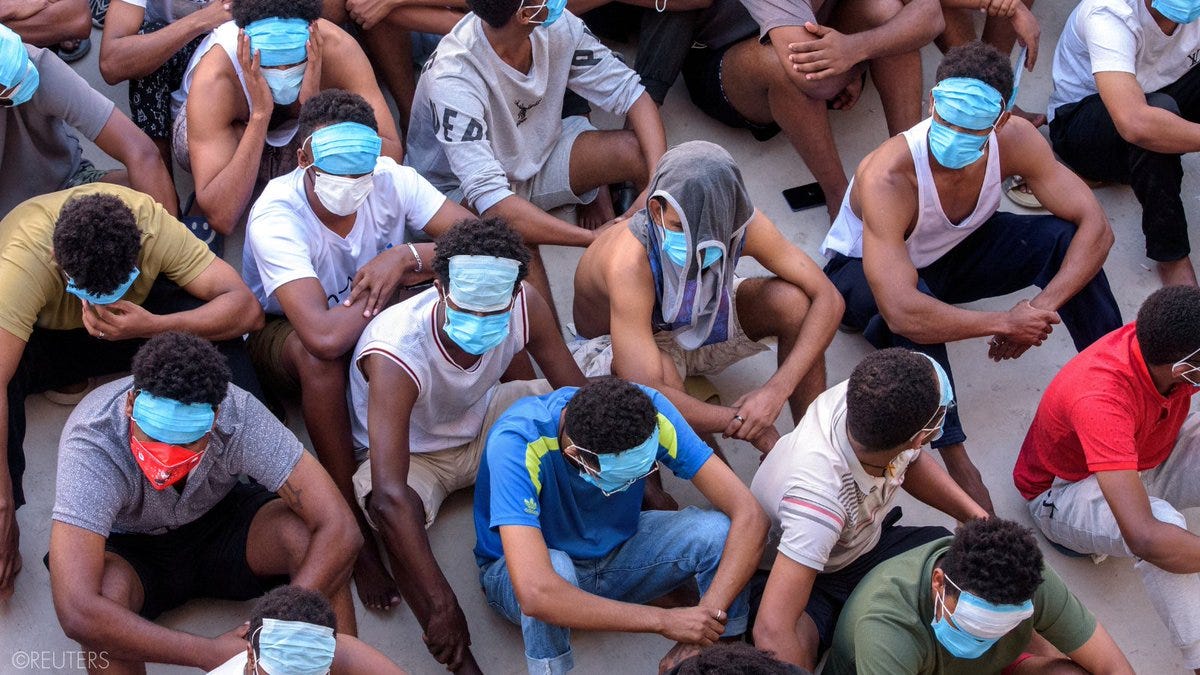
Crucially, Chinese authorities and outside investigators alike acknowledge that “telecom fraud suspect” is an imprecise label. Many of those swept up were not willing participants. Vulnerable people were said to have been deceived by recruiters, trafficked across borders and then coerced into working inside heavily guarded scam compounds. Accounts of confinement, physical abuse, torture and forced labour have led some survivors to describe these centres as prisons in all but name.
That darker reality is now being underscored by Beijing’s use of capital punishment. State media reported that China has executed 11 members of the Ming family, a powerful clan that ran scam centres, casinos and gambling dens in Laukkaing, a town in northern Myanmar near the Chinese border. A court in Zhejiang province sentenced the family members in September 2024 for crimes including homicide, illegal detention, fraud and operating illegal gambling operations. China’s top court later rejected their appeals.
The Ming family was one of several clans that effectively ruled Laukkaing for years, transforming a poor border town into a flashy hub of casinos and red-light districts. Their criminal empire collapsed in 2023, when ethnic militias seized control of the area amid Myanmar’s civil war and handed the family over to Chinese authorities. According to China’s highest court, the Ming network generated more than 10 billion yuan (about US$1.4 billion) between 2015 and 2023, and its crimes were linked to the deaths of 14 Chinese citizens, with many others injured.
The human cost - and the political fallout - rippled far beyond Myanmar. In 2024 and 2025, a surge of cases involving Chinese nationals trafficked into scam centres sparked public anger at home. That outrage peaked after a viral case in which a little-known Chinese actor, Wang Xing, travelled to Thailand for what he believed was an acting job, only to be abducted and forced to work in a Myanmar scam compound. The episode badly damaged confidence in regional travel and delivered a sharp blow to Chinese tourism to Thailand, which relies heavily on visitors from China (In 2024, Thailand welcomed 35.5 million foreign arrivals, with 6.7 million from China).
Ahead of Lunar New Year 2025, then-prime minister Paetongtarn Shinawatra took the unusual step of releasing a video message dubbed into Chinese, personally urging tourists to return and assuring them Thailand was safe.
Analysts say the scam industry behaves less like a single cartel and more like a disease: eradicate it in one location and it re-emerges elsewhere, exploiting new conflict zones or regulatory gaps. That pattern continues today, despite repeated raids and mass arrests, a UN official in Thailand told me.
Seen in that light, China’s actions send multiple messages at once. The mass repatriations of December 2025 show how seriously Beijing views the problem - and how recently it has been acting. The executions of the Ming family demonstrate a willingness to apply the harshest penalties available, both as punishment and deterrence. And together, they underline a broader point: China is asserting itself as the decisive power shaping the regional response, signalling to neighbours, criminal networks and its own citizens that involvement in the scam economy - voluntary or otherwise - now carries life-and-death consequences.
China has executed 11 members of a notorious family that ran scam centres in Myanmar, state media report. A court in Zhejiang province sentenced the Ming family members for crimes including homicide, illegal detention, fraud and operating gambling dens last September. The Ming family was one of several clans that ran Myanmar’s sleepy town of Laukkaing, close to the border with China. Under their rule, the impoverished backwater was transformed into a flashy hub of casinos and red-light districts. Their scam empires came crashing down in 2023, when they were detained and handed over to China by ethnic militias that had taken control of Laukkaing in the ongoing civil war. The scam operations in Myanmar have trapped thousands of Chinese workers over the years - they are among the hundreds of thousands who have been trafficked into these compounds, where they are forced to scam people overseas. Last year, the Chinese internet saw a viral search for a small-time Chinese actor who had flown to Thailand for an acting gig but was instead taken to a scam centre in Myanmar. Stories like these added to the frustration in Beijing, which had long been demanding that Myanmar’s junta rein in the scam mafia. In the end, it was an escalation in the junta’s conflict with ethnic armies that led to the downfall of the mafia in Laukkaing. The Ming mafia’s scam operations and gambling dens brought in more than 10bn yuan ($1.4bn; £1bn) between 2015 and 2023, according to China’s highest court, which rejected their appeals in November. Their crimes resulted in the deaths of 14 Chinese citizens and injuries to many others, the court said - BBC
Human rights groups say dozens of Bangladeshi workers employed at a Chinese-owned tire factory in northeastern Serbia were subjected to labor abuses that may amount to human trafficking, renewing scrutiny of a flagship Chinese investment that has faced years of controversy over its treatment of foreign workers.
Serbian prosecutors confirmed on January 28 that they received a report alleging human trafficking and labor rights violations involving Bangladeshi workers at the Linglong tire factory near the city of Zrenjanin. The case is under review, Serbian authorities said, but no formal charges have been announced. “A number of workers, with legal assistance, managed to receive their outstanding wages, and all workers had their passports returned,” Marija Andelkovic, the director of Astra, a Serbian NGO that supports victims of human trafficking, told RFE/RL. She added that several workers were transferred to Serbia’s state-run Center for the Protection of Victims of Human Trafficking. The allegations are the latest in a series of claims of forced labor linked to the Linglong factory, a cornerstone of Serbia’s economic partnership with China.
Nearly eight in ten Filipinos view China as the country’s greatest external threat, according to a new survey by OCTA Research published by the Philippine Star.
The poll, conducted Dec. 3–11 among 1,200 respondents, found 79 percent identified China as the top threat, far ahead of Russia (5 percent) and the United States (4 percent). Separately, 60 percent of respondents said they distrust China, while only 13 percent expressed trust. The survey has a margin of error of ±3 percent. OCTA said the findings reflect a “clear and intensifying trend,” noting that perceptions of China as the Philippines’ greatest threat have steadily increased since 2021, rising from 74 percent in July 2025 to 79 percent in December. House Deputy Speaker Paolo Ortega V said the results reflect public support for President Ferdinand Marcos Jr.’s law-based defense of Philippine maritime rights, while Senator Imee Marcos urged restraint in official rhetoric to avoid harming bilateral relations.
Fresh off a packed FCC ‘Year Ahead’ panel in Hong Kong, one thing is clear: the old headlines aren’t enough.
For a limited time, World Briefing is offering 50% off new annual subscriptions - a one-time offer ending January 31.
✔️ Exclusive geopolitical analysis videos
✔️ Weekly (soon twice-weekly) behind-the-scenes insight
✔️ The dots connected — so you don’t have to
Independent. Global. Unfiltered.
⏳ This offer expires soon. Upgrade now. Click here!
President Trump sharply intensified his threats against Iran, suggesting that if it did not agree to a set of demands the administration had made of the country’s leaders, he could soon mount an attack “with speed and violence.” Mr. Trump’s threat of a second direct attack on Iran by U.S. forces in eight months came as the aircraft carrier Abraham Lincoln, along with other naval ships, bombers and fighter jets, took up positions in the region in striking distance of the country. Mr. Trump explicitly compared the buildup to the forces he amassed near Venezuela late last year, just ahead of the operation that seized Nicolás Maduro and his wife in the middle of the night early in January. Mr. Trump gave no specifics about the deal he was demanding, saying only that a “massive Armada” was heading toward Iran and that the country should make a deal. But U.S. and European officials say that in talks, they have put three demands in front of the Iranians: a permanent end to all enrichment of uranium and disposal of its current stockpiles, limits on the range and number of their ballistic missiles, and an end to all support for proxy groups in the Middle East, including Hamas, Hezbollah and the Houthis operating in Yemen. Notably absent from those demands — and from Mr. Trump’s post on Truth Social on Wednesday morning — was any reference to protecting the protesters who took to the streets in Iran in December, convulsing the country and creating the latest crisis for its government. Mr. Trump had promised, in past social media posts, to come to their aid, but has barely mentioned them in recent weeks - NYT
The International Olympic Committee said Tuesday it has cleared 13 Russian athletes to compete at the 2026 Winter Olympics in Milan and Cortina as neutrals, marking a limited return for Russian competitors after years of suspension. Athletes, teams and officials from Russia and Belarus were barred from the Olympics in 2022 after President Vladimir Putin ordered the full-scale invasion of Ukraine, thus violating the Olympic Truce, a tradition requiring warring states to suspend hostilities during the Olympic period. The IOC said in September that Russian and Belarusian athletes could compete at the 2026 Winter Games under strict conditions, including competing as neutrals and passing background checks to confirm they do not support the war against Ukraine or have ties to the military. Athletes competing as neutrals are not permitted to use national flags, anthems or emblems, and their medals will not count toward Russia’s overall tally. They are also barred from participating in the opening ceremony. The Games in Milan and Cortina will be held on Feb. 6-22. At the 2024 Paris Summer Olympics, Russian neutrals won only one medal — a silver in women’s doubles tennis by Diana Shnaider and Mirra Andreeva - Moscow Times
The journals….