Ukrainians have started using a new phrase for their capital: frontline city. Kyiv sits hundreds of kilometres from the nearest trenches, but after countless hours of continuous air-raid alerts, that is how residents now describe it in videos posted overnight. Russian strikes hit the Southern Bridge over the Dnipro, one of the capital’s main arteries. It was closed, traffic was restricted on two other bridges, and hundreds of people were forced to cross the river on foot, BBC News Ukrainian reported.
“Just when it seemed things couldn’t get any worse,” one resident posted on TikTok, “the capital has been split in two.”
Kyiv calls it the opening salvo, and there’s a blueprint behind it. The New York Times has obtained what Ukraine says is an intercepted Russian plan, dated August, which Energy Minister Denys Shmyhal showed European partners in Paris last month. The Times could not authenticate it. It lays out up to 1,000 missiles, drones and glide bombs, launched in three stages:
Knock out the substations near the western border that import power from Europe.
Destroy the hydroelectric plants.
Force Ukraine’s three working nuclear plants offline by striking the switchyards that connect them to the grid, which sit less than a mile from the reactors.
Water is a target too: pumping stations and sewage treatment plants, which Russia has never hit at scale. Kyiv, Kharkiv and Odesa are singled out, with targets of up to 90% cuts in power and heat.
The document is dated August, so it is a blueprint rather than a battle report. But it is playing out in real time. And speaking of blueprints, Moscow has plenty. Much of Ukraine's critical infrastructure, from Kyiv's metro lines to its power grid, substations and sewage networks, was designed and built in the Soviet era, often by design institutes based in Moscow. Russia doesn't need to guess where the weak points are. In many cases, it drew them.
Ukraine has spent heavily on repairs and protective shielding over critical sites. One Kyiv energy analyst likened getting through a fifth war winter on this grid to “running a marathon with only one lung.”
Why this is Europe’s problem
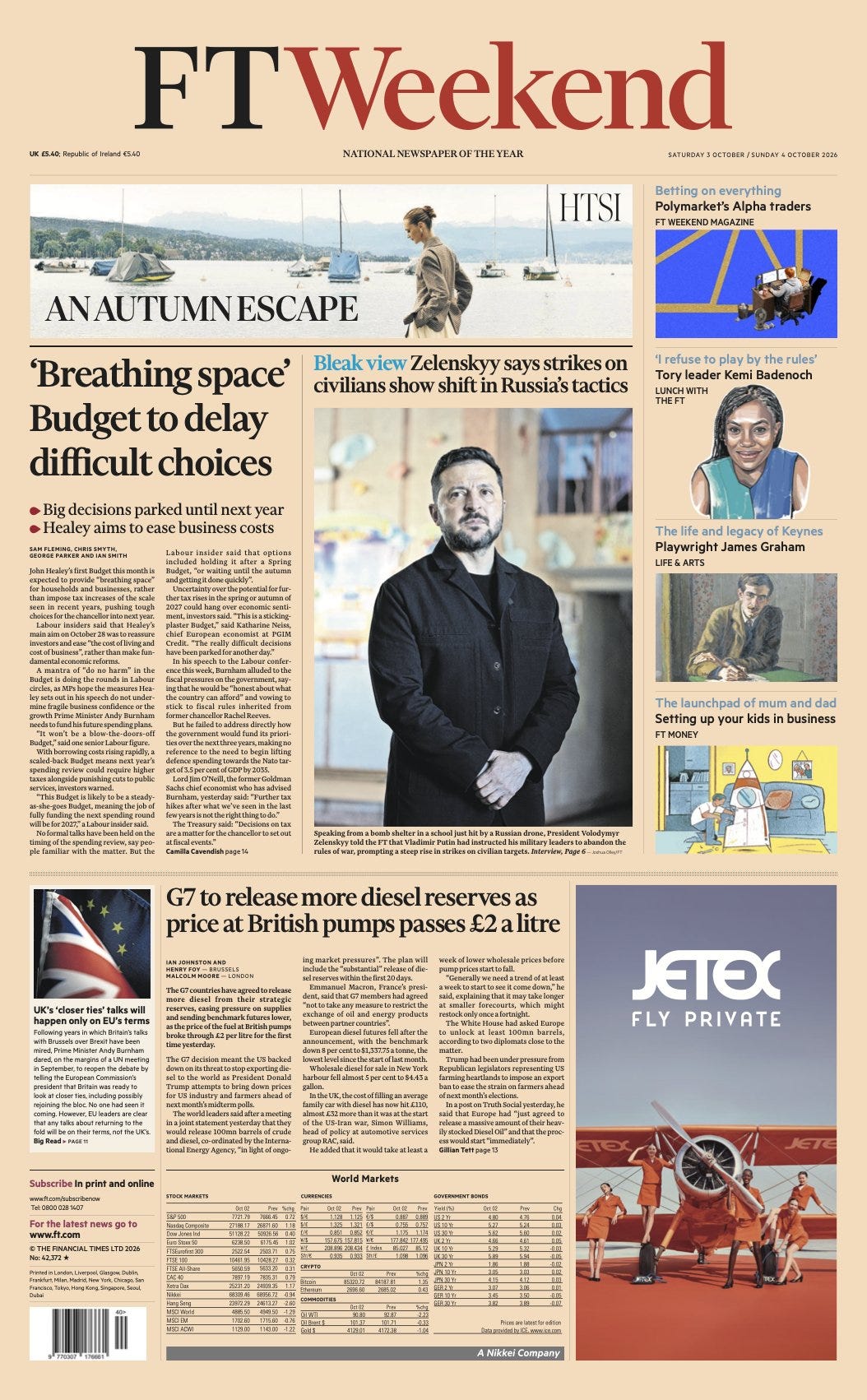
Putin has publicly framed the grid campaign as payback for Ukraine’s drone strikes on Russian refineries. At Valdai on Thursday he admitted those strikes have cost Russia about 1% of GDP. In the same speech he threatened nuclear retaliation over Kaliningrad, days after Moscow put that threat in writing to NATO. The two campaigns aim at the same target: Europe’s nerve.
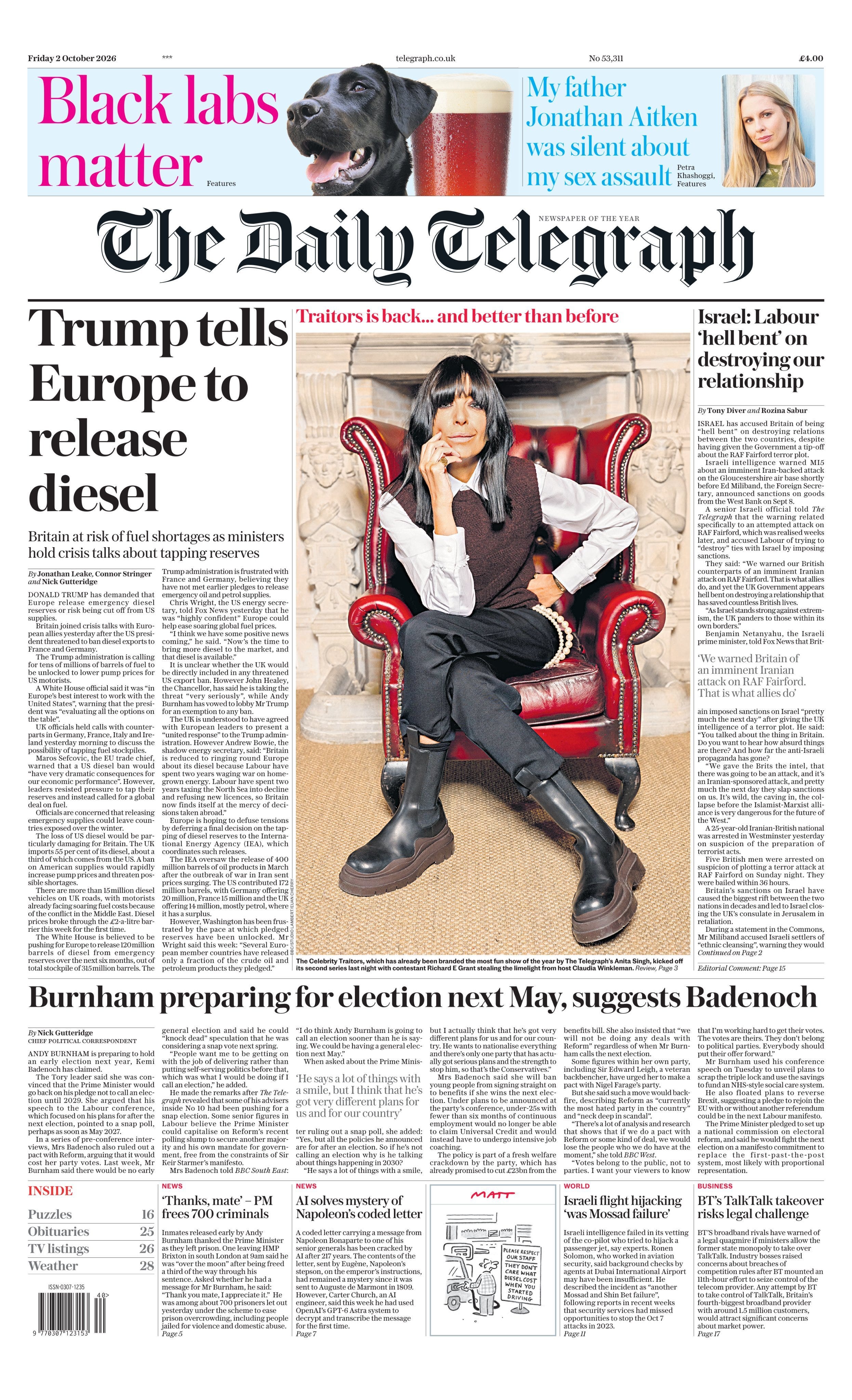
Zelensky, speaking to the Financial Times from a bomb shelter in a school just hit by a Russian drone, went further: he says Putin has ordered his commanders to abandon the rules of war, and that strikes on civilians are rising steeply as a result.
A city without heat, water or working sewers in January cannot be lived in. People will leave. In the TikTok videos coming out of Ukraine, and in my conversations with contacts there, people are already making plans, and online, the chatter about leaving Kyiv has grown loud. Some are heading for relatives in the western regions; others are looking across the border.
Europe has been here before. A record 4.41 million Ukrainians already hold temporary protection in the EU, more than 1.2 million of them in Germany and nearly a million in Poland. Brussels has just extended that protection to March 2028, but host-country patience is thinner than in 2022, and the politics of migration are far harsher.

And Canada?
Writing this from Ottawa, I’m struck by how little the debate here reflects what’s coming. Roughly 300,000 Ukrainians came to Canada under the emergency CUAET program. They arrived as temporary residents, not refugees. One Ukrainian community member here on a work permit estimates that only about half remain; the rest have gone home or moved on.
Those who stayed live by the deadline. Work permits can be renewed once more, potentially to 2030. But the application window has been extended at the last minute, year after year, and the family route to permanent residence closed in 2024.
“There’s no stability for Ukrainians here,” she told me. “No one can plan for the future, because you don’t know whether you’ll go back, move on or stay. It’s extremely hard psychologically.”
Their children finish Canadian high schools and then hit a wall: international student fees. “We’ve paid taxes for four years like any Canadian,” she said. “What ordinary Canadian can pay $50,000 a year for their child’s education?”
Did President Zelensky ask Prime Minister Carney to keep permanent residence off the table, to encourage Ukrainians to eventually return home? My source doubts we’ll ever know. “No one will ever say whether he asked,” she said. Ottawa’s line, they predict, will be that Ukrainians are no different from anyone else and should use existing programs.
Indeed, the Prime Minister's Office referred World Briefing's questions - including whether Zelensky had asked Carney to keep permanent residence off the table - to Immigration, Refugees and Citizenship Canada. IRCC said the question about the Prime Minister should be answered by his office, and that it would respond to the remaining questions as soon as possible. No answers had been received by publication time.
If even part of Moscow’s plan works, the next wave won’t wait for spring, and Canada won’t be spared the question.
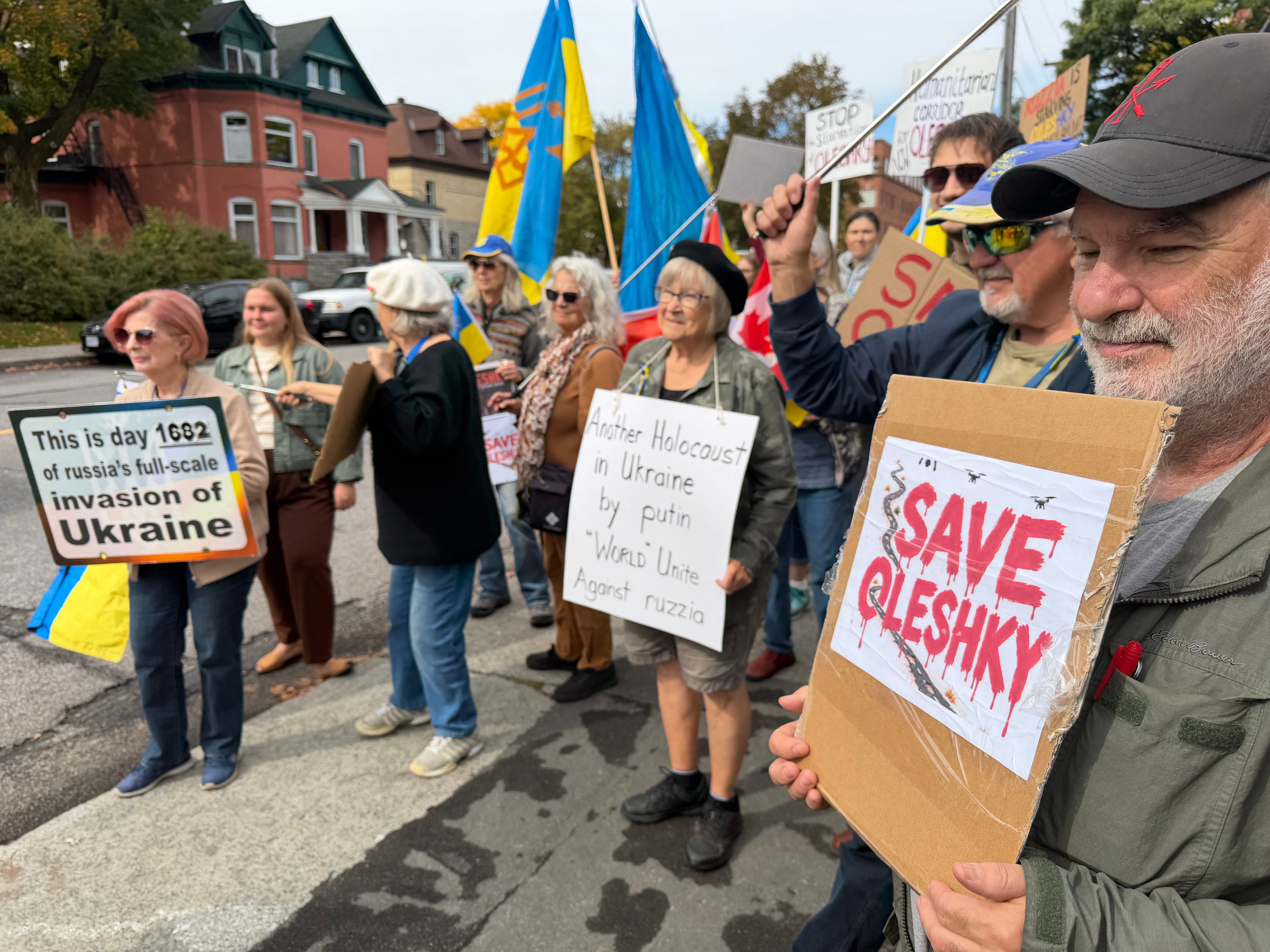
Voices from Kyiv: “We don’t know when, how or where”
Posted to social media in the past 24 hours
“All of Kyiv is burning.” Khrystia, posting at 6 a.m. after 40 minutes’ sleep.
“How are we supposed to get to work, and even if we make it, how are we meant to function?” A Kyiv resident on bridge closures cutting the left-bank districts off from the city centre.
“I don’t know whether to stay or go.” Alina, who works online from home, after air-raid alerts sounded for 13 hours straight.
“We now live constantly to a rhythm of air-raid sirens and explosions. Before it was from time to time — now it’s permanent.” Inna Tsaruk, radio host.
September is normally for planning, at work and at home. Not this year. “Life has been turned completely upside down,” says Anna Rizatdinova, the Olympic gymnast. “We don’t know when, how and where.”
Getting out isn't easy either. A Ukrainian charter flight attendant says air-raid alerts can shut crossings into Poland, stretching delays to a full day. On Friday, travellers routing through Moldova were held up when Chișinău airport suspended operations over a bomb threat, which proved false, a day after drone debris was found near the Moldovan capital.

News Briefs
Vladimir Putin used his annual Valdai Forum appearance on Thursday to tell the West the world is living through a “dangerous moment.” According to Moscow Times reporting, he warned that any threat to Kaliningrad, Russia’s heavily militarized Baltic exclave wedged between Poland and Lithuania, would put the use of “all the weapons at our country’s disposal” on the agenda “inevitably and immediately.” Days earlier, Russia sent NATO a diplomatic note, seen by Reuters, warning that it was ready to use nuclear weapons if the alliance tried to isolate Kaliningrad. The note also raised the prospect of strikes on “decision-making centers” in alliance capitals from the outset of any conflict. Russian embassies in at least three European countries followed up with public statements accusing NATO of rehearsing Kaliningrad scenarios. Kremlin spokesman Dmitry Peskov called them reminders to “hotheads in Europe.” NATO replied in writing that it is a defensive alliance and told Moscow to cease its “irresponsible nuclear rhetoric.” Not everyone is shrugging it off: a senior European defence official told Reuters it was the first time since the Cold War that Russia had threatened Europe this way. Buried in Putin’s remarks, the report said, was a rare admission: he said Ukrainian strikes on Russian refineries had cost the country about 1% of GDP. It landed the same week the government submitted a budget projecting a record $88 billion deficit for 2026, and as Moscow mulls easing its diesel export ban. He also ruled out halting Russian strikes on Ukrainian targets in the Black Sea area, so the pressure on Odesa’s export lifeline continues. He said he was ready for a three-way meeting with Donald Trump and Xi Jinping, but only once a proper agenda is agreed. And he said Russia was not planning to hit the European arms plants supplying Kyiv “tomorrow.” That last word is worth noting. Nuclear signalling has long been the Kremlin’s tool of choice when the conventional picture is going badly. This week the threats escalated in form, from podium remarks to formal diplomatic notes, while the economic damage became something Putin himself now quantifies in public.
US authorities designated the A7 financial network as a “significant transnational criminal organization” in the latest step by Western authorities to try and choke the sprawling Kremlin-backed scheme to evade sanctions. The move, announced by the US Treasury Department on October 1, comes as A7 -- backed by a fugitive Moldovan oligarch and a major Russian Defense Ministry-linked bank -- continues to grow, by some expert accounts, exponentially. Treasury said the A7 network of companies, known as subagents, disguised payments involving sanctioned entities as legitimate commercial transactions, helping Russian and Iranian entities move money outside traditional banking channels, including to facilitate Iranian oil sales and weapons procurement. “Treasury is dismantling the financial infrastructure that allows Iran and other adversaries to evade sanctions, move illicit funds, and undermine the integrity of the global financial system,” Treasury Secretary Scott Bessent said. **Read World Briefing’s special reporting on the A7 financial network here
Big news out of the G7 meeting, with US president Donald Trump saying that Europe has agreed to release some of its diesel reserves “immediately.” Indeed, France’s Emmanuel Macron said G7 leaders agreed “to work in a coordinated manner to help bring down the prices of petroleum products, particularly diesel.” He says: “We have decided to: make production more flexible to produce at the maximum capacity of our refineries; release our strategic reserves up to 100 million barrels, within 4 months, with our partners, under the coordination of the International Energy Agency; take no measures to restrict the exchange of energy and petroleum products between partner countries.” The European Commission president, Ursula von der Leyen, responded to the G7 announcement, stressing the citizens “need and deserve affordable energy.”

Your support is what keeps me on the front lines, in the rooms where decisions get made and the backrooms where secrets are shared, and able to report on what others miss. If you value independent, on-the-ground analysis, please consider upgrading today. For a limited time, annual subscriptions are 30% off. It makes a real difference.
South Korean President Lee Jae-myung said on Friday that Seoul would take "further measures" if Ukraine refuses to publicly apologise over what he called its unilateral disclosure of North Korean prisoners of war being sent to South Korea. Seoul has taken a hard stance on Ukraine disclosing the transfer of two soldiers captured fighting for Russia, warning that their families could be targeted by Pyongyang. North Korea is known to retaliate against defectors and their families. Both POWs are identifiable as they had been photographed by South Korean media before their arrival to the South. The POWs were captured by Ukrainian forces early last year after being deployed alongside thousands of North Korean troops to support Russia’s war against Ukraine, in exchange for economic and military assistance to Pyongyang. Hours after Ukrainian President Volodymyr Zelenskyy disclosed last week the transfer in remarks at the United Nations, Lee expressed his dismay, with Seoul claiming confidentiality was key to protecting the POWs’ relatives. Analysts say that from South Korea’s perspective, keeping the transfer of the POWs confidential may have partly been for Ukraine’s sake, as making it public could have complicated Kyiv’s own prisoner exchanges with Russia - Euronews
German Chancellor Friedrich Merz came under growing pressure from allies and rivals alike over electoral and legislative failures, raising the possibility that the leader of Europe’s biggest economy could be ousted. His government yesterday withdrew a key tax proposal, while labor and pensions plans that economists regard as necessary to bolster the country’s languid growth are also under pressure. His party’s retreat comes after a series of embarrassing election showings in which the far-right AfD made huge inroads. Germany has little record of a mid-term change in federal leadership, but at least two European capitals have held internal war games on the implications of Merz’s chancellorship ending, Politico reported, while Handelsblatt described him as a “pseudo-dead man.”
Meghan Markle is selling a $148 advent calendar decorated with a picture of the Montecito house she no longer lives in. The limited-edition set includes 24 chocolates, about $6.17 each, made by Los Angeles chocolatier Compartés. The countdown numbers on each piece are painted in edible gold in a replica of Meghan’s own handwriting. The duchess said the treats were “thoughtfully inspired by our Montecito garden.” The box carries a representation of their $14.6 million California home, while the inside says the chocolates are there to “sweeten each day.” It is the latest addition to her As Ever range, along with her tea, candles, jams, bookmarks and wine. Her behind-the-scenes promotion video, filmed in a golf cart with Compartés’ boss, was made in California this summer. She captioned it “Christmas planning in June,” indicating it was all done before she left for the U.K. She and Harry returned to Britain in August with their children, Archie and Lilibet - The Daily Beast
The journals…