

Asked on CNN’s State of the Union whether he accepts responsibility for US measles cases reaching a 35-year high, Health Secretary Robert F. Kennedy Jr. reached for the world map. Mexico, he told Dana Bash, has fifteen times the per-capita rate. Canada four times. England two. This is an international outbreak, he argued, and America is handling it better than anyone.
The numbers are broadly right. The defence is not. Canada lost its measles elimination status in November 2025 after more than a year of endemic transmission and 5,425 confirmed cases (The Public Health Agency of Canada was contacted for comment and said it would respond later this week). The United Kingdom followed in January. Mexico, like the United States, remains under review. Kennedy benchmarked America against countries that have already failed the test it is currently sitting.
And America has already lost part of what he was defending. When PAHO stripped Canada, the entire Region of the Americas forfeited its certification as free from endemic measles - under the regional framework, transmission in one member state ends it for all. The Americas is the only WHO region ever to have eliminated measles, a distinction it has now surrendered twice. Kennedy’s benchmark country is the reason the hemisphere, the United States included, no longer holds it.
Armenia shows why national statistics mislead. In January, WHO's European verification commission delisted Armenia, Austria, Azerbaijan, Spain, the UK and Uzbekistan for sustained transmission. Yet Armenia was simultaneously one of only ten countries in Europe that WHO and UNICEF estimated had reached 95 percent coverage for both MMR doses. Strong national averages conceal weak communities. When we ran polio vaccination campaigns in northern Nigeria with UNICEF, one stubborn village head was enough to create a hotspot.
Washington’s own agencies behave accordingly. The CDC’s Level 1 global measles travel health notice remains in force, and its country list includes Armenia, the UK, Austria, Azerbaijan, Uzbekistan, Romania, Türkiye, Russia, Kazakhstan, Georgia and Belarus. One arm of the US government treats measles as an active international threat. Its health secretary treats it as a talking point.
Kennedy’s second argument is that today’s outbreaks trace to children who missed shots during COVID. There is truth in it, but the CDC’s own data show something wider: half of this year’s cases are among five-to-nineteen-year-olds, a fifth in children under five - many born after restrictions ended - and nearly a third in adults over twenty. That is not the aftershock of one disrupted cohort. It is cumulative erosion, and it is measurable. Kindergarten MMR coverage has fallen from 95.2 percent in 2019-20 to 92.5 percent in 2024-25, below the threshold required to stop one of the most contagious viruses known.
Honesty requires conceding the other half. Much of today’s skepticism was manufactured not by activists but by governments - the heavy-handedness of COVID-era mandates, the jurisdictions where refusing a shot cost people work or travel. That coercion left a residue of resentment now attaching itself to vaccines with nothing to do with COVID. Rebuilding coverage means reckoning with that, not dismissing it. That’s my take.
Years ago PAHO commissioned me to work on a book marking the Americas' elimination of measles, which put me across the table from many of the world's leading MMR researchers. It was never published. Eliminated 2016. Lost 2018. Regained 2024. Lost again a year later. Elimination is not a trophy. It is a receipt.
Covering immunization in Ukraine taught me the rest: the enemy of vaccination is rarely the needle. It is the rumour. Bad information outruns any outreach campaign, parents grow frightened, coverage slips a few points - and the slippage stays invisible until an outbreak reveals it. Ukraine learned this. Canada learned it. America is learning it now, from a health secretary who spent years amplifying the doubt his department must now overcome.
Nor is measles a routine childhood illness. Between one and three infected children per thousand die, according to the CDC. About one in a thousand develops encephalitis, which can cause permanent neurological damage. One in five unvaccinated Americans who catch it is hospitalized. The virus also induces immune amnesia, degrading protection previously acquired against other diseases. Surviving measles is not the same as escaping it.
The global picture is worse. Fifty-seven countries recorded outbreaks in 2025. First-dose coverage is stalled near 84 percent against the 95 percent needed, leaving 13.5 million children with no dose at all. More than half of them live in fragile or conflict-affected states, where insecurity and displacement break the routine schedule before misinformation ever gets a chance to. I write this from a city, Odesa, under regular air attack, in a country that has spent four years trying to keep clinics running through it. Sudan, of all places, posted one of last year's largest coverage gains - even war is not destiny, provided someone funds the access. WHO warns that cuts to global health funding will widen these gaps. Kennedy is right that measles ignores borders. That is an argument for surveillance and vaccination, not against them.
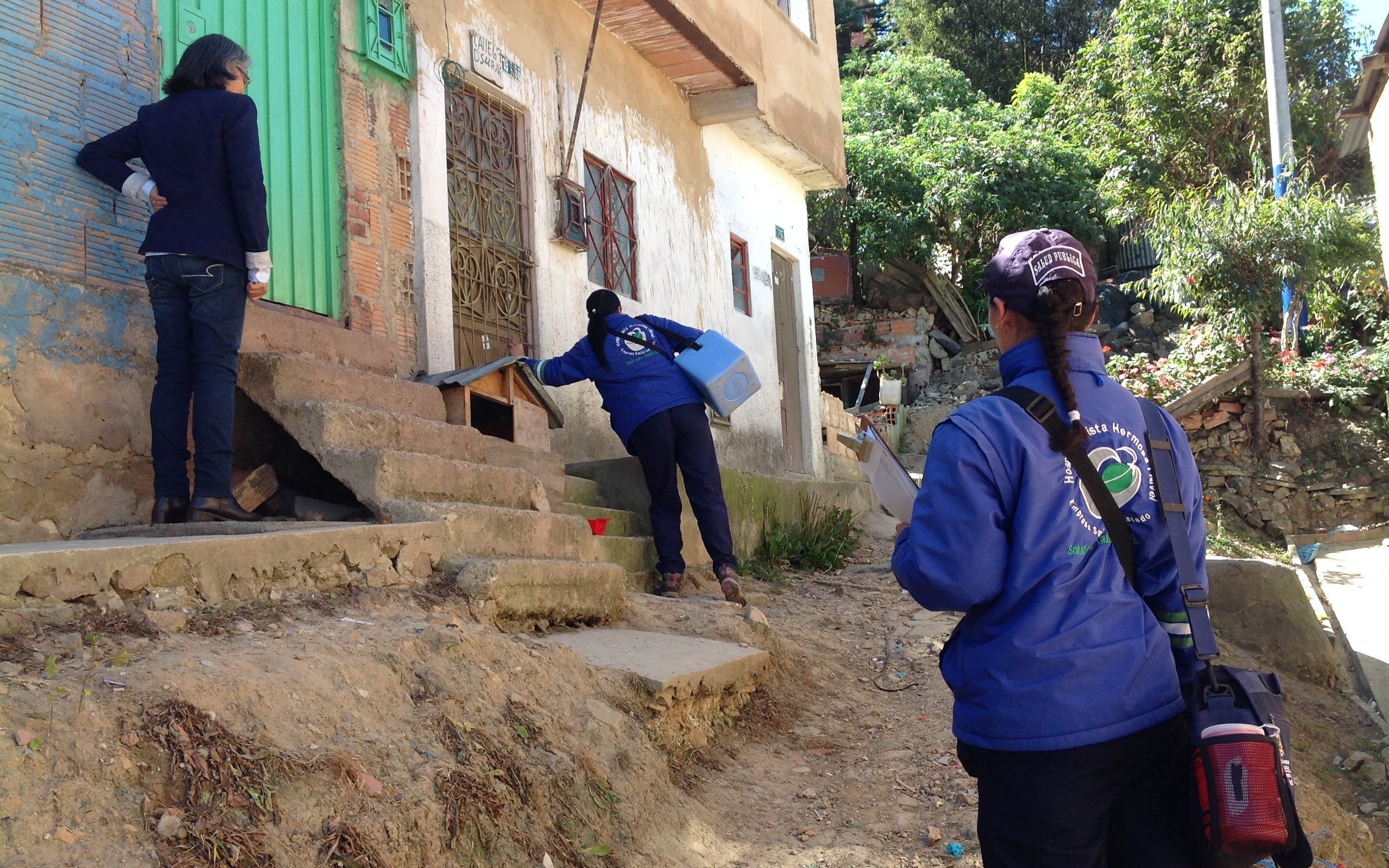
Reporting on that book I mentioned earlier took me to a Bogotá mega-slum, following a vaccination campaign through neighbourhoods where a printed leaflet was useless. What worked was a billboard you could read at a glance and a man in a Spider-Man suit, posing with a child who had just taken the needle. What made the hemispheric achievement possible, I was told repeatedly, was unity - first ladies across the Americas, Hillary Clinton among them, publicly urging parents to vaccinate. Elimination was won by governments that agreed with each other and by campaigns built for people who couldn't read the pamphlet. Neither condition holds now.
PAHO's verification commission meets again in November to decide whether the United States keeps a status it currently records as "sustained with major concerns." Until last year, the commission had consistently designated the US as having sustained elimination outright. The second half of that new phrase is getting harder to ignore.

“I do hope the Ukrainians do wake up and see Trump for who he really is, someone who can't be relied upon…you know, maybe it's a good time for Mr. Zelensky to give a call to Beijing.” Michael Bociurkiw says that he hopes the “Ukrainians do wake up and see Trump for who he really is” and should think about “calling Beijing” to end the war. He was speaking to Kate McCann and Stig Abell on Times Radio Breakfast
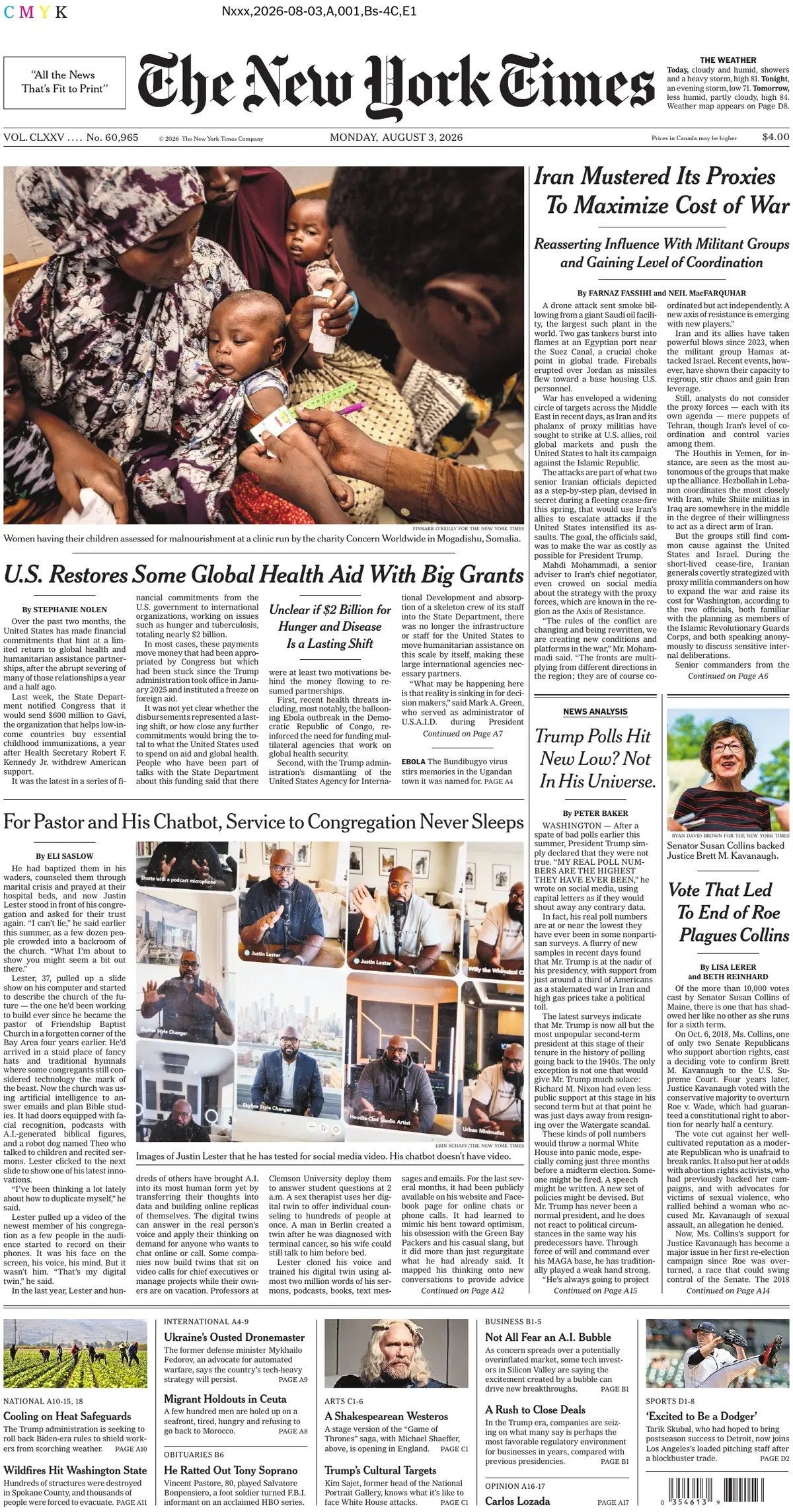
Donald Trump insists negotiations with Iran are under way, calling the current moment Tehran’s “last chance” to reach an agreement. The US president says reopening the Strait of Hormuz is the immediate priority, followed by what he describes as a longer process of negotiating Iran’s denuclearisation. Tehran, however, continues to deny any direct US-Iran talks are taking place, saying its current diplomatic engagement is focused on regional consultations and separate negotiations with Oman over shipping arrangements in the Strait. Analysts say Washington faces an increasingly difficult choice between prolonging a costly confrontation or accepting a compromise neither side finds entirely satisfactory. Meanwhile, Iran maintains it remains open to diplomacy while warning it is prepared to defend its security and territorial integrity if tensions escalate. Five months of oscillation between bombing and negotiation have left Trump with no good options. “He’s looking for a knockout blow when there is none,” one analyst told The New York Times
A drought gripping central Europe has seen record-low water levels in the Danube River, forcing governments across the region to take drastic action to prevent a looming energy crisis. In Romania, where the Danube’s water flow has reportedly dropped to 1,500 cubic meters per second, the country’s navy has carried out a controlled explosion to clear rock near the river’s Bala Canal in an effort to maintain the required water flow for the safe operation of Romania’s Cernavodă nuclear power plant. The drastic action came after authorities had already shut down one reactor unit at Cernavodă. Romania’s energy sector has been under a state of alert since Friday, when acting Prime Minister Ilie Bolojan called on residents to voluntarily lower their electricity usage during peak evening hours and warned that the low level of the Danube could lead to the shutdown of the second reactor at the Cernavodă power station. In Serbia, the government has made moves to reduce energy production from some of the country’s hydroelectric plants. The two biggest, Djerdap I and Djerdap II - which provide around 18% of Serbia’s electricity generation - have reduced output to 20% and 30% of their respective capacities, Serbian Energy Minister Dubravka Đedović told local media. Hungary is also facing energy-production challenges. On Sunday, Hungarian Prime Minister Péter Magyar announced that the nation’s only nuclear power station was expected to shut down amid soaring temperatures across the region - Euronews
A Paris court on Monday rejected Russian television star Xenia Fedorova’s appeal against a ruling that she must leave the country, a week after French authorities accused her of acting as “a conduit for disinformation campaigns” orchestrated by Moscow to “destabilize public order.” The former head of Kremlin-backed RT France, who has been under house arrest in Paris since Wednesday, challenged three government measures: the expulsion order, a requirement that she remain in Paris and report to police daily, and a six-month asset freeze. But an administrative court ruled she had failed to demonstrate any of these measures caused her immediate and serious harm. The former RT France chief was a regular commentator on media platforms owned by conservative French billionaire Vincent Bolloré — including CNews and Europe 1 — where her Russia-friendly views on Ukraine, NATO and European security had come under growing scrutiny ahead of the country’s 2027 presidential election.
BBC Verify has been checking footage of a drone hitting a beach near the Russian Black Sea resort town of Gelendzhik. Krasnodar Krai regional governor Veniamin Kondratyev posted on his Telegram account that seven people had been killed, including three children. He said 40 more had been injured and blamed Ukraine for the attack. The Ukrainian military has so far not commented on the incident. It’s been reported the drone may have been targeted at the Russian naval base at Novorossiysk which is around 40km (25 miles) from Gelendzhik. BBC has geolocated the incident to Arkhipo-Osipovka, near Gelendzhik. Recency and AI checks confirm the footage is current and genuine.

Upgrade via this link— and lock in 30% off an annual subscription to World Briefing Plus.
Myanmar’s detained former leader Aung San Suu Kyi met with a representative of the International Committee of the Red Cross on Monday, a spokeswoman for the Myanmar government said, amid concerns over the health of the 81-year-old Nobel Peace Prize winner. Aung San Suu Kyi has been in detention since February 2021 when an elected civilian government led by her was ousted by Myanmar’s military in a dawn coup, plunging the impoverished Southeast Asian nation into turmoil. Since then, her exact whereabouts and health conditions have been difficult to determine, with no foreign leader or envoy having publicly met her despite requests for contact from countries in the region that have excluded Myanmar’s leadership from their summits. On Monday, Aung San Suu Kyi met with Arnaud de Baecque, Resident Representative of the International Committee of the Red Cross (ICRC) to Myanmar in the capital Naypyitaw, government spokeswoman Khine Khine Soe said in a message via Telegram. The ICRC confirmed a delegate had met with Suu Kyi, without naming the official, while her son described the visit as the first positive development concerning his mother in more than five years - CNA
The journals…

I had no idea how anomalous measles data can be!
Separately, you're the only voice I've heard calling for Zelenskyy to reach out to Beijing so overtly.