

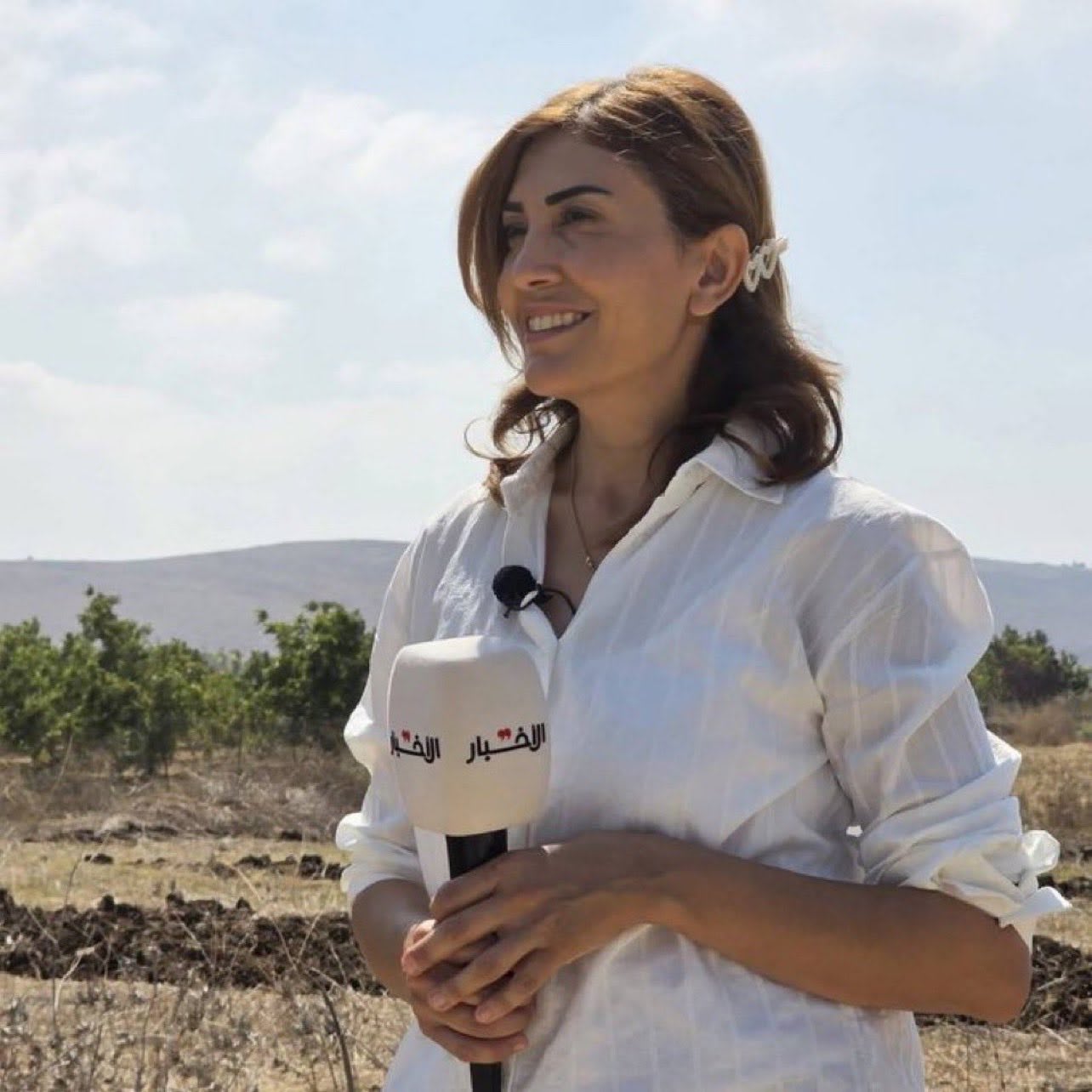
Israel’s killing of a prominent Lebanese journalist in a double-tap strike has been greeted with international outrage as Lebanon’s prime minister described the attack as a “war crime”. Amal Khalil, 43, who worked for al-Akhbar newspaper, was buried on Thursday. She was killed in what colleagues described as a sustained attack by Israeli forces, with rescuers attempting to dig her out of the rubble of a building also targeted and prevented from providing life-saving assistance. Her death prompted renewed accusations that Israel has a policy of targeting media workers, despite its repeated denials. Khalil had previously spoken of receiving a threat via an unidentified Israeli phone number that she would be killed if she did not leave southern Lebanon, where she had long been based. Khalil’s killing was condemned by senior figures from across Lebanese politics even as they prepared for fresh talks in Washington on Thursday aimed at extending a fraught ceasefire with Israel. Khalil was the ninth journalist killed in Lebanon this year. Last month three journalists were killed in a double-tap attack. As further details of the killing emerged on Thursday, it became clear that the group Khalil was with had come under sustained attack over several hours – and that Israeli forces had apparently been aware of their identities. Adding to the sense of horror was the fact that Khalil was trapped for hours in a house that had been bombed by Israeli forces. She died despite frantic efforts by her family, her editors and Aoun to organise a rescue. According to her employer and the Lebanese health ministry, Khalil was working near the village of al-Tiri when a vehicle she was driving behind was hit by an Israeli airstrike, killing two people and wounding her and her colleague Zeinab Faraj, a freelance photographer. Colleagues said Khalil and Faraj had been bearing protective equipment prominently marked with press signs and that Khalil had managed to call her office to say she was taking cover in a house and was under threat. The house in which they were sheltering was hit by a second Israeli airstrike. Rescue workers reached the scene and recovered Faraj but Israeli forces fired on those attempting to free Khalil. The Union of Journalists in Lebanon said that when medics attempted to rescue her, Israeli forces prevented access to the site and used stun grenades. Khalil’s body was eventually retrieved shortly before midnight, at least six hours after the strike - The Guardian
“The repeated strikes on the same location, the targeting of an area where journalists were sheltering, and the obstruction of medical and humanitarian access constitute a grave breach of international humanitarian law,” said the Committee to Protect Journalists (CPJ) Regional Director Sara Qudah. “CPJ holds Israeli forces responsible for the endangerment of Amal Khalil’s life and the injuries Zeinab Faraj sustained after the targeted strike on their location.”
Amal Khalil’s newspaper, Al Akbar, has put out a video tribute. Lebanon’s Minister of Information condemned the incident describing the targeting of journalists as a blatant violation of international humanitarian law and calling for international action.
“The body of the Lebanese journalist Amal Khalil was found by rescuers after several hours of digging in the rubble after an Israeli strike. She is the fourth journalist to have been killed by Israeli forces in seven weeks. This is why the word ‘journacide’ is now being used” - UK broadcaster John Simpson
“Amal Khalil was a professional, kind and dedicated journalist, and always a pleasure to run into in the field” - Will Christou, The Guardian
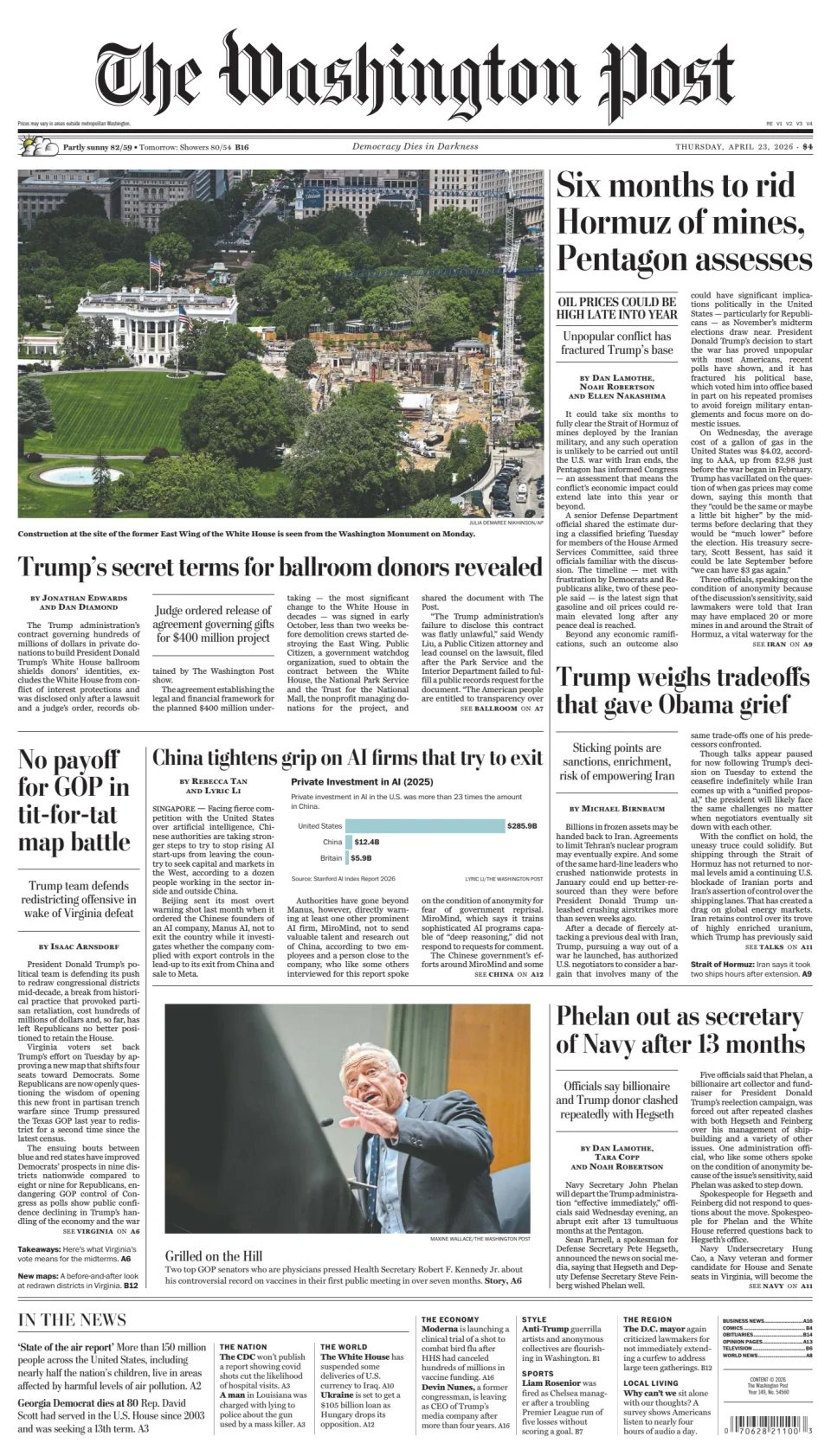
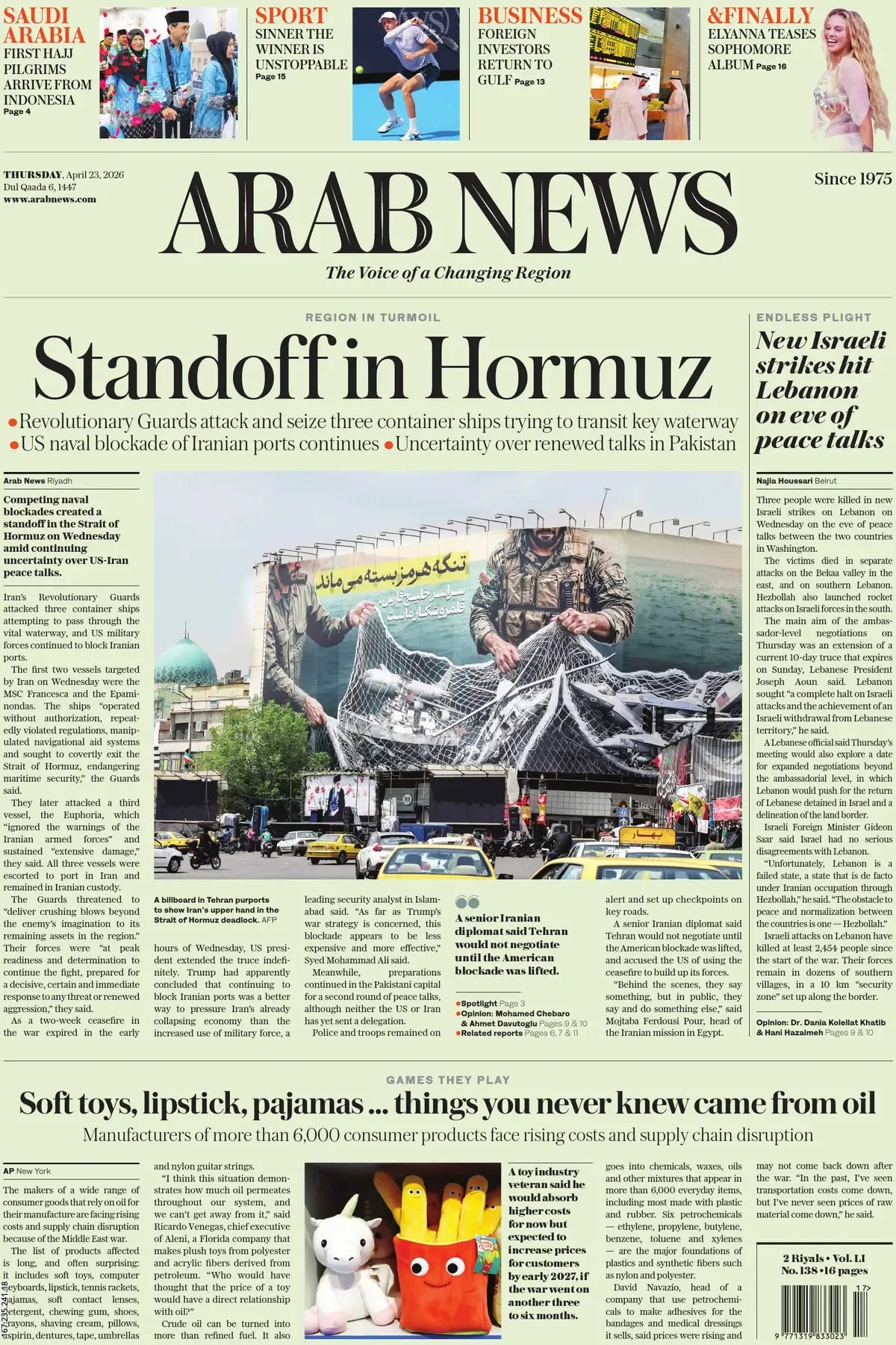
An oil market data analysis firm reported on April 23 that “more than 10 million barrels of Iranian crude left the Persian Gulf” since the US military began its naval blockade of Iranian ports. Citing an assessment by Vortexa, Reuters wrote that from April 13 to 21, approximately 10.7 million barrels of Iranian crude oil were shipped and exited the Strait of Hormuz. According to this report, this amount of crude oil was transported by six tankers. The US government announced that it would blockade Iranian ports and prevent the passage of ships to Iran in response to the closure of the Strait of Hormuz by the Islamic Revolutionary Guards Corps. However, Vortexa wrote that the US blockade “is not necessarily implemented close to Iranian ports…but flexibly around an area about 300 miles to the west between the Pakistan/Iran border and the westernmost corner of Oman.” Since the blockade began, Iran-related traffic through the Strait of Hormuz has decreased, reaching “one to two tankers per day,” down from “around two to three per day” in the month before that period, according to Vortexa - RFE/RL
The U.S. blockade of the Strait of Hormuz is influencing Washington’s relations with Beijing. The waterway is of vital importance to China’s oil-hungry economy as about 40% of the crude that the country consumes comes from the Middle East. Despite the Iranian blockade of the strait, some China-bound tankers could pass through it under a backroom deal. But such an arrangement is not possible with the U.S. military. Chinese leader Xi Jinping has begun to implicitly criticize the U.S. for the blockade, while U.S. President Donald Trump says he has asked Xi not to provide arms to Iran. This diplomatic maneuvering is happening ahead of Trump’s much-publicized planned visit to Beijing in mid-May. The Hormuz issue may be high on the agenda when the sides assemble to arrange the Trump-Xi summit, although the meeting could be rescheduled at any time, depending on the situation in the Middle East - Nikkei Asia
The European Union has given final approval to the €90 billion loan for Ukraine after Hungary lifted its veto, ending an explosive saga that saw Prime Minister Viktor Orbán, in his last months in office, push the bloc’s internal norms to the breaking point. The internal procedure was launched by ambassadors on Wednesday and finalised on Thursday. No objections were raised, and the last pending regulation, which needs unanimity to amend the EU budget, was approved. The sought-after breakthrough came two days after Ukrainian President Volodymyr Zelenskyy announced that the Druzhba pipeline which carries cheap Russian oil to Hungary and Slovakia, had been repaired and could resume operations. The interruption of oil flows through Druzhba was at the core of Orbán’s decision to veto the €90 billion loan in February. The last-minute blockage outraged other EU leaders who furiously condemned it. The European Commission, which will manage the financial scheme, says the first disbursement to Kyiv will be made as soon as possible - Euronews
As China deepens support for Russia through dual-use technology and political cover during the war, Ukraine appears to be making a subtle but notable shift in its long-standing One China posture. In Lviv, Ukrainian authorities accepted one of the largest emergency aid transfers yet from Taiwan - 68 vehicles including fire, medical and specialized transport for frontline and rescue services.
The symbolism runs deeper given recent history. In 2021, Kyiv withdrew its support for a U.N. statement criticizing Beijing’s treatment of Uyghurs after reports that China threatened to withhold around 500,000 COVID-19 vaccine doses. What was once vaccine coercion is now being met by wartime pragmatism: if Beijing backs Moscow, Kyiv may increasingly look to Taipei.
The US military has reportedly started using Ukrainian anti-drone technology to protect an air base in Saudi Arabia, highlighting a broader shift in defense away from expensive solutions to low-cost threats. The “Sky Map” system detects incoming attacks, often cheap Iranian Shahed drones, and responds with its own interceptors according to Reuters. Ukraine has become a leader in anti-drone countermeasures after four years of facing mass-produced Russian ordnance. The US move follows President Donald Trump last month saying “we don’t need their help in drone defense.” Existing US anti-air systems, though capable, are expensive: A $5 million Patriot missile destroying a $50,000 Shahed is not cost-effective. “We cannot keep throwing Ferraris at frisbees,” a U.S. lawmaker told Congress - Semafor
Armenia heads to the polls in early June - and what once looked like an easy path to re-election for incumbent Prime Minister Nikol Pashinyan is beginning to look far less certain.
After nearly a decade in power, frustration is growing among voters who believe he has conceded too much to Azerbaijan, Turkey and even the United States in pursuit of a peace many here fear may prove anything but peaceful.
If he falls, it would echo a wider regional trend: long-entrenched leaders discovering that patience, pride and promises eventually run out.
My curtain-raiser from Yerevan on one of the most consequential elections in the Caucasus this year.
Potentially millions of Americans suddenly have a much easier path to Canadian citizenship, prompting a rush of people to explore their ancestry and file paperwork seeking dual citizenship. Since s new law took effect Dec. 15, immigration lawyers in the United States and Canada say they have been overwhelmed by clients seeking help submitting proof of citizenship applications. Driven by politics, family heritage, job opportunities and other factors, thousands of Americans are exploring whether the easier process makes now the right time to gain dual citizenship. Nicholas Berning, an immigration attorney at Boundary Bay Law in Bellingham, Washington, said his practice is “pretty much flooded with this.” And immigration attorney Amandeep Hayer said his Vancouver, British Columbia, area practice went from about 200 citizenship cases a year to more than 20 consults per day.
The journals….
News literacy is sexy but seems like you’re not well aware of the Armenian politics and the Armenian society and not literate in this matter.
You made many false statements and honestly I don’t even know from where you’ve got that information and I really don’t wanna think you’re biased.
Here’s my corrections for you.
1. You said about Pashinyan:
“He has been criticized by a lot of people.
I’ve talk to about capitulation to Azerbaijan, to Turkey for the deal over the Nagorno-Karabakh.
Also for so-called agreement with United States for energy corridors.”
In Armenia the TRIPP project (initiated by Trump) is very welcomed and all of the population is happy with FINALLY having peace with the neighbors and now they live with much peace as there are no threats like in the past.
The capitulation I agree many blame Pashinyan but at the same time they understand that given the circumstances he had no other choice and also Armenians started to realize that Russia didn’t help as everyone was expected.
2. “There are also concerns about corruption, cost of living and the polls are not convincing yet that he will get in, he may get in but not with the majority, we’ll see.”
There’s absolutely no concern about corruption. After the revolution in 2018 which brought Pashinyan into power Armenians haven’t seen corruption like they have been experiencing for over three decades.
So corruption is not a big deal for Armenian voters because he finally fought against corruption and he did successfully.
Cost of living has ALWAYS been a concern in Armenia and that’s not really a turning point for Armenian voters because they’ve been living with these hardships all the time and nobody even expecting a solution for the cost of living issues.
3. “But yeah interesting candidates too. Some more aligned with Russia. Pashinyan portrays himself as pro European but to be honest I don’t think EU membership is a big deal here.
But there is a lot of concern, I’d say even a lot of anger about the deal that was made over Nagorno-Karabakh and the expulsion of thousands of thousands Armenians.”
Yes, Pashinyan IS pro EU or just pro West and it’s a fact and the West is openly endorsing him!
This is a BIG DEAL for Armenians because Armenians take the Western alliance so seriously and they so much like the idea that major countries in the West cooperate with Armenia and actually respect Armenia and this is something that never happened before. Both US and EU said that our relations have never been this close and friendly.
Armenians always cared about the positive reaction about their country by the West.
Yes EU membership is a big deal too but everyone knows that it’s a long journey.
Armenians appreciate being a democracy and cooperating with other democracies rather than dictatorships like Russia so it matters for the voters if you’re aligning with Russia or not because they’ve been so fed up with the previous regimes that were being governed by Russia.
And the Karabakh conflict is over, people moved on.