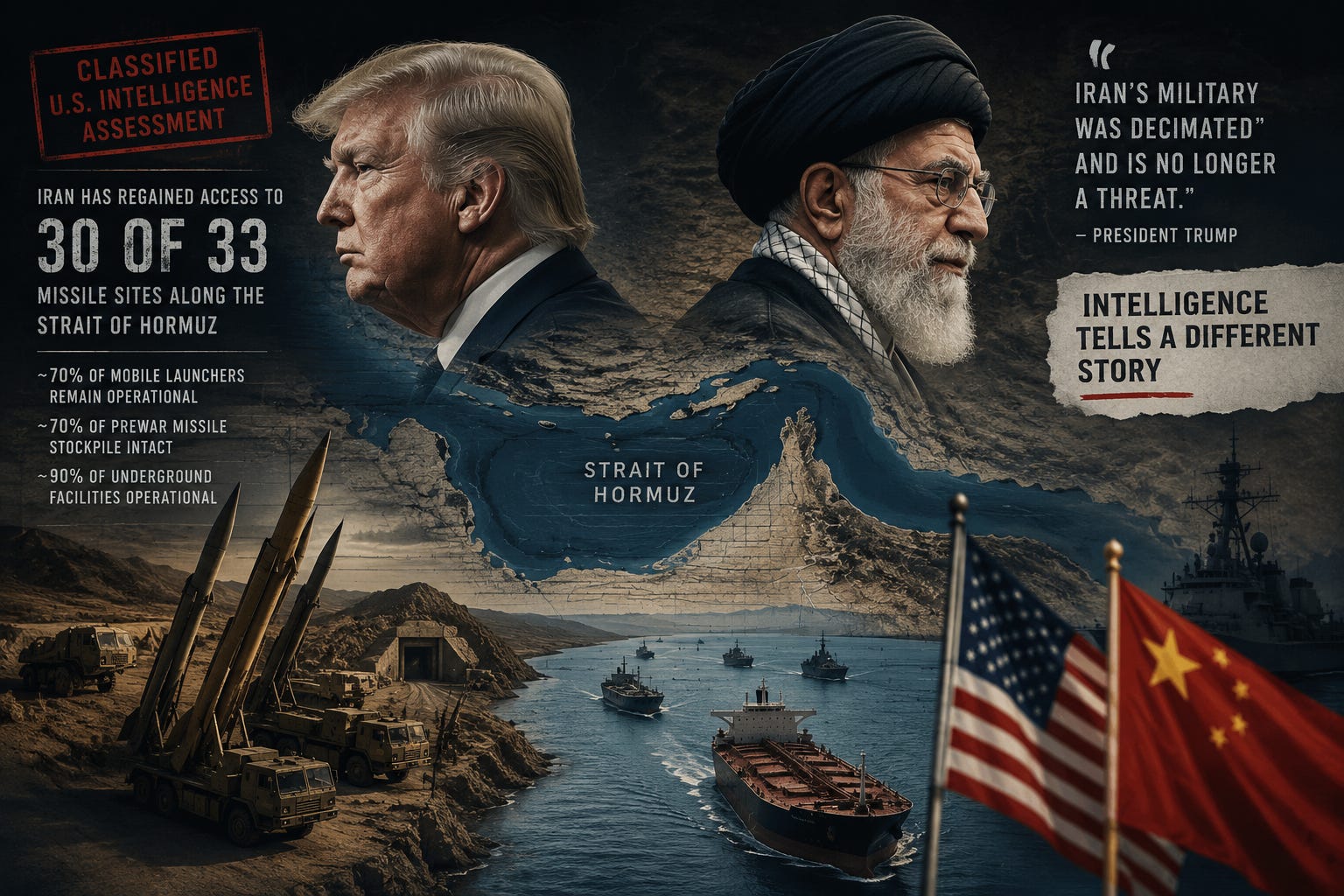
The Trump administration’s public portrayal of a shattered Iranian military is sharply at odds with what U.S. intelligence agencies are telling policymakers behind closed doors, according to classified assessments from early this month that show Iran has regained access to most of its missile sites, launchers and underground facilities. Most alarming to some senior officials is evidence that Iran has restored operational access to 30 of the 33 missile sites it maintains along the Strait of Hormuz, which could threaten American warships and oil tankers transiting the narrow waterway. People with knowledge of the assessments said they show — to varying degrees, depending on the level of damage incurred at the different sites — that the Iranians can use mobile launchers that are inside the sites to move missiles to other locations. In some cases they can launch missiles directly from launchpads that are part of the facilities. Only three of the missile sites along the strait remain totally inaccessible, according to the assessments. Iran still fields about 70 percent of its mobile launchers across the country and has retained roughly 70 percent of its prewar missile stockpile, according to the assessments. That stockpile encompasses both ballistic missiles, which can target other nations in the region, and a smaller supply of cruise missiles, which can be used against shorter-range targets on land or at sea. Military intelligence agencies have also reported, based on information from multiple collection streams including satellite imagery and other surveillance technologies, that Iran has regained access to roughly 90 percent of its underground missile storage and launch facilities nationwide, which are now assessed to be “partially or fully operational,” the people with knowledge of the assessments said. The findings undercut months of public assurances from President Trump and Defense Secretary Pete Hegseth, who have told Americans that the Iranian military was “decimated” and “no longer” a threat. The new intelligence assessments suggest that Mr. Trump and his military advisers overestimated the damage that the U.S. military could inflict on Iranian missile sites, and underestimated Iran’s resilience and ability to bounce back - NYT
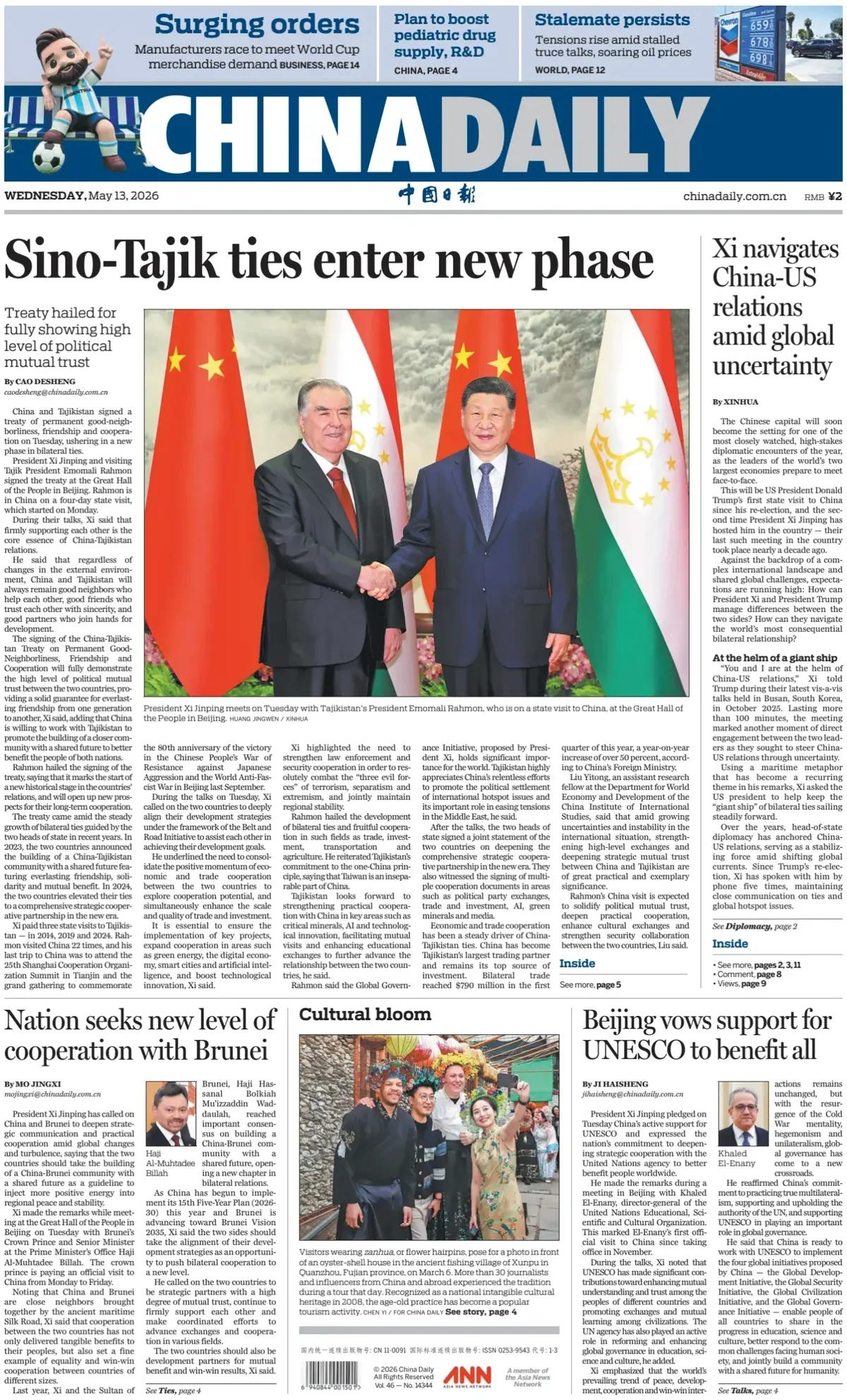
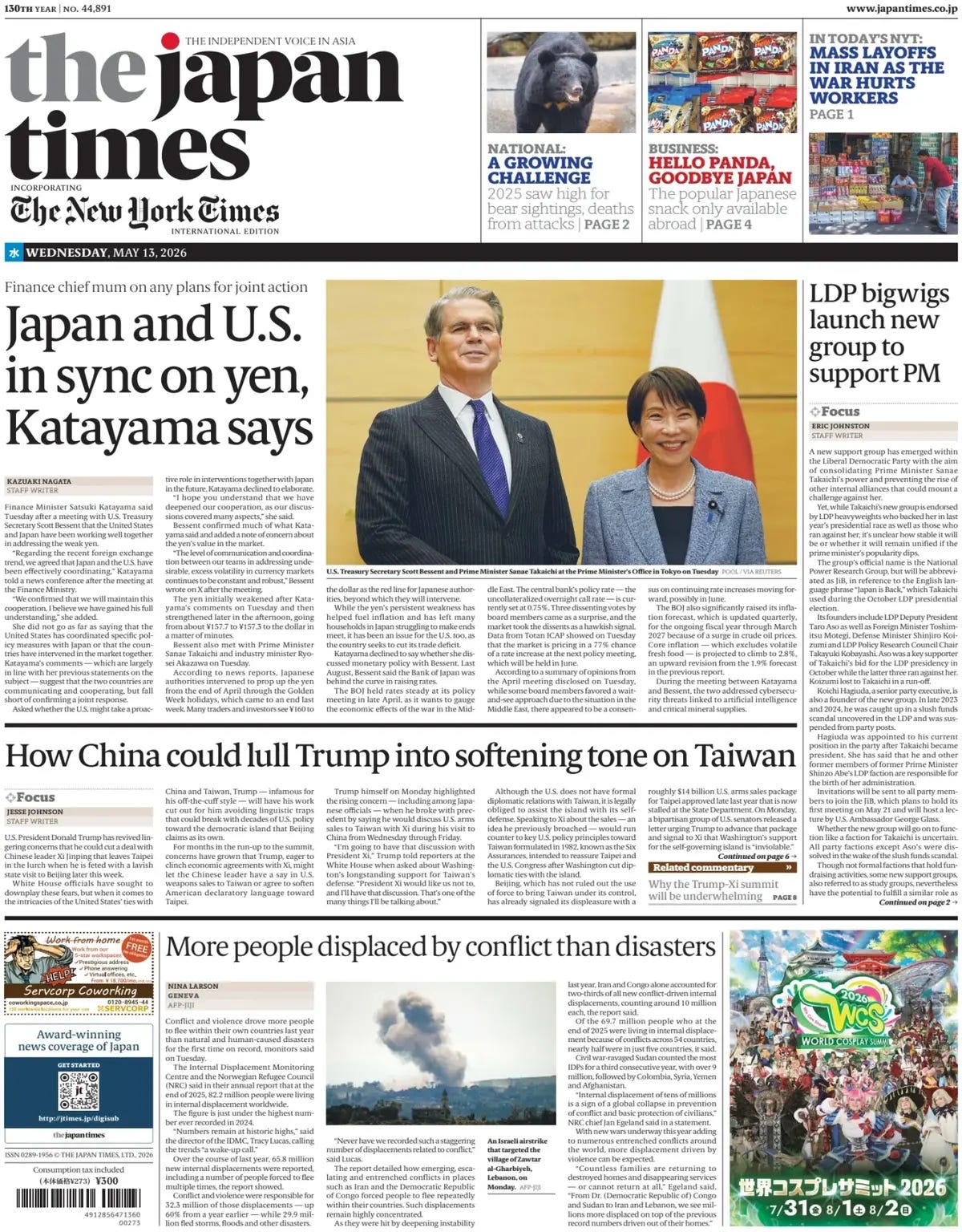
Senior US and Chinese officials agree that no country can be allowed to exact shipping tolls in the Strait of Hormuz, the State Department told Reuters on Tuesday, in a sign that the two countries are trying to find common ground on efforts to pressure Iran to give up control of the vital waterway. The statement by the State Department comes ahead of a high-stakes summit between President Donald Trump and Chinese President Xi Jinping later this week, where Iran’s chokehold on the strait will be on the agenda. The State Department said Chinese Foreign Minister Wang Yi and US Secretary of State Marco Rubio discussed the issue in an April phone call. “They agreed that no country or organization can be allowed to charge tolls to pass through international waterways like the Strait of Hormuz,” department spokesman Tommy Pigott told Reuters in response to questions about the call. China’s embassy did not dispute the US account of the discussion, saying it hoped all sides can work together to resume normal traffic through the strait, which before the war handled one-fifth of the world’s oil and gas supply. “Keeping the area safe and stable and ensuring unimpeded passage serves the common interest of the international community,” embassy spokesperson Liu Pengyu told Reuters.
Gulf states have been quick to insist that the Iran conflict won’t drive a wedge between them and Washington, but the reality is more layered, Semafor writes. While the US remains the dominant power in the region - its military strength and air defense technology having shielded the Gulf from far worse during the war - the conflict has quietly opened a door for China to deepen its foothold.
Beijing’s leverage was on display early: it was reportedly China that pressed Tehran to accept a ceasefire, and as Iran’s key ally and the Gulf’s largest trading partner, it has more to lose economically from a prolonged conflict than Washington does. That combination of economic weight and diplomatic access is giving Gulf states reason to look east, even as they maintain that the US remains their preferred partner.
The numbers tell part of the story. Bilateral trade between the Gulf and China surpassed Gulf trade with the West for the first time in 2024, and has grown over 250% since 2010. Chinese foreign direct investment into Saudi Arabia has surged, making Beijing one of the kingdom’s top investors behind the US. Saudi Arabia’s Public Investment Fund recently opened a second mainland China office to facilitate dealmaking. Abu Dhabi’s Crown Prince visited Beijing in April, with the emirate now reportedly considering consolidating its Chinese assets into a new investment vehicle to boost exposure — a move Chinese state media framed as the UAE seeking more reliable partners.
Part of what makes China attractive is predictability. US-Gulf relations have been shaped by shifting administrations, domestic politics, and at times jarring personal diplomacy — from Biden’s “pariah” remark about Saudi Arabia to Trump’s recent crude comments about Crown Prince Mohammed bin Salman before the Saudi business elite. Beijing offers none of that volatility.
China isn’t positioned to replace the US. Washington’s military dominance, its lead in AI, and the Gulf’s ambitions in the technology sector all keep the region anchored to America. But Beijing is carving out space in areas Washington has less interest in defending — automotive, manufacturing, renewable energy, and now post-war reconstruction. As the Gulf looks to recover from the conflict and the closure of the Strait of Hormuz, China is expected to play a significant role in rebuilding infrastructure, developing new trade routes, and tapping into the region’s critical minerals ambitions in ways that serve its own global strategy.
Trump returns from his Gulf visit having secured trillions in investment pledges, and heads to Beijing this week seeking deals. China, meanwhile, is pursuing its regional influence more quietly — and, the piece suggests, potentially more effectively.
Source: Semafor
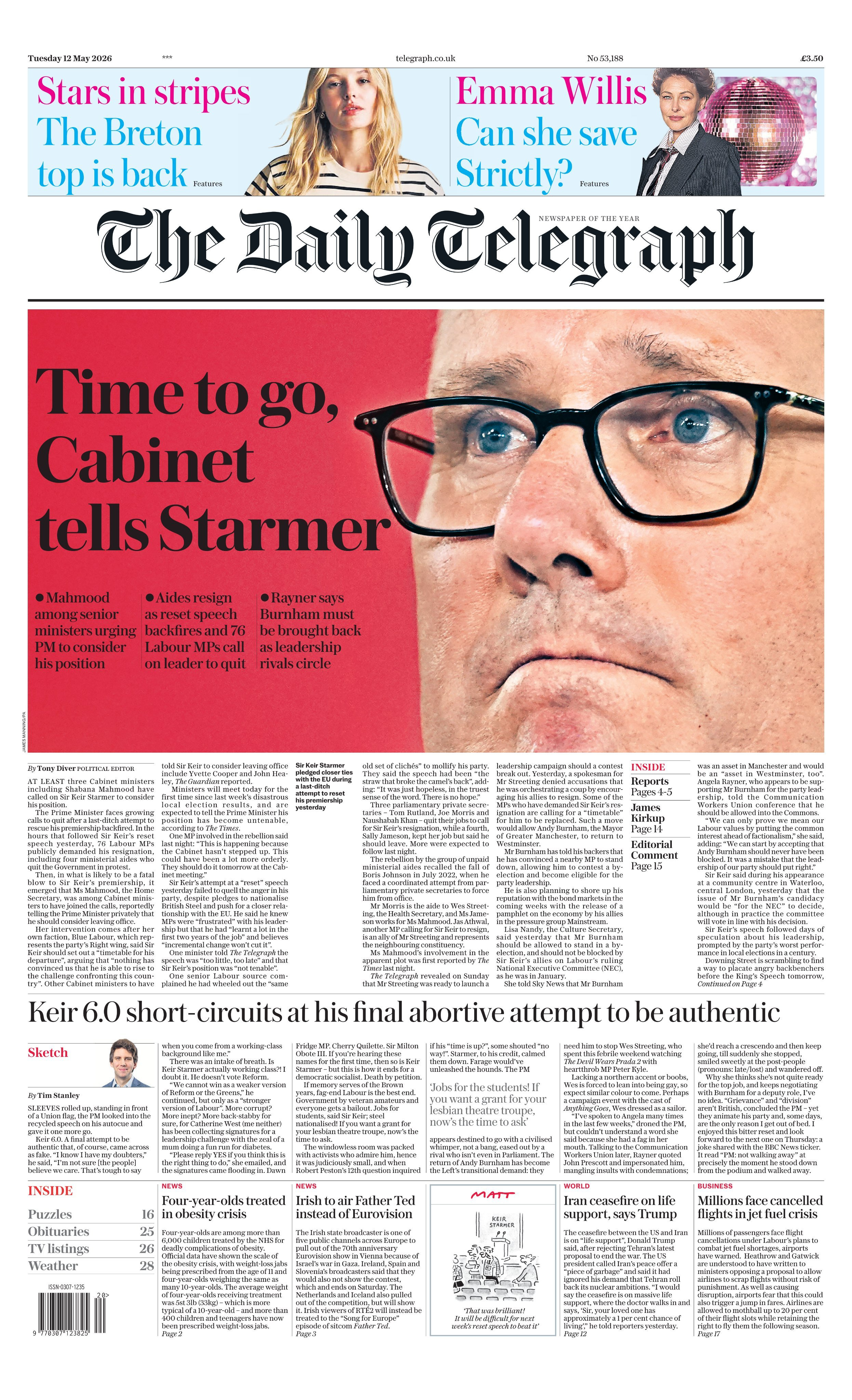
UK Prime Minister Keir Starmer is facing a significant internal revolt, with four ministers resigning and calling for him to step down, joining over 80 Labour MPs demanding he quit immediately or set a timetable for his departure. At the same time, BBC reported that more than 100 Labour MPs have signed a statement backing Starmer, arguing this is not the moment for a leadership contest. Starmer told cabinet he would “get on with governing” and that no leadership contest had been triggered. Deputy PM David Lammy sought to cool tensions, telling colleagues no one appears ready to mount a challenge and urging them to “take a breath.” Starmer is set to meet Health Secretary Wes Streeting — considered a potential leadership rival — on Wednesday morning.
Fourteen of the EU’s 27 member states have condemned Russia’s return to the Venice Biennale, with culture ministers holding what was described as a “heated discussion” in Brussels on Tuesday. Latvia raised the issue, calling for action against what it framed as the instrumentalization of cultural institutions by Russia, Euronews reported. Countries including Belgium, Spain, and Poland argued that culture cannot be used to whitewash Russia’s war against Ukraine. The European Commission has moved to freeze a €2 million grant to the Biennale Foundation, citing a breach of grant conditions, and both Brussels and the Cypriot EU presidency called for the funds to be redirected toward Ukraine’s reconstruction. The Biennale Foundation has pushed back, arguing it cannot bar a country recognized by the Italian state from participating and that the event must remain a place of artistic freedom and dialogue. The controversy has also exposed divisions within Italy’s own government — Culture Minister Alessandro Giuli boycotted the opening ceremony, while Deputy Prime Minister Matteo Salvini visited the Russian pavilion in a show of support. Russia’s pavilion reopened this year after its artists voluntarily withdrew in 2022 and the country skipped 2024 entirely. The Biennale’s international jury has since resigned collectively, following criticism over its decision to exclude from prize consideration countries whose leaders face ICC charges.
President Donald Trump on Tuesday called MS NOW’s Akayla Gardner “a dumb person” for accurately pointing out that the cost of his ballroom had doubled since it was first announced. The exchange occurred while Trump was speaking with reporters on the South Lawn of the White House on Tuesday afternoon before he left for China for several days of events and meetings. “You wanted [Federal Reserve Chair] Jerome Powell fired for cost overruns,” Gardner pointed out to Trump, referring to the Fed’s ongoing renovation project of its Washington headquarters. “How is that different than your ballroom and the reflecting pool?” “What happened is that we have a ballroom that’s under budget,” Trump replied. “It’s going up right here. I’ve doubled the size of it because we obviously need that, and we’re right now on budget, under budget, and ahead of schedule.” “The price has doubled,” Gardner pointed out. The price of the ballroom has doubled from $200 million when it was first announced last summer to $400 million. Congressional Republicans have also proposed more than $220 million to go toward security features for the ballroom as part of their reconciliation package, according to a memo obtained by MS NOW that breaks down the funding. “I doubled the size of it, you dumb person,” Trump replied. “I doubled the size.” “What about the reflecting pool?” Gardner asked, referring to the cost of the Lincoln Memorial Reflecting Pool renovation snowballing from $1.8 million to more than $13 million. “You are not a smart person,” Trump responded. It’s the latest in a string of attacks the president has launched at female journalists. Earlier this month, Trump called ABC News’ Rachel Scott a “horror show” after she asked why he is focused on renovation projects while gas prices soar as a result of the war in Iran - MS Now
The promised economic boon from the World Cup hasn’t matched expectations, at least not yet, for U.S. hotels. Room bookings have been lighter than expected in most of the 11 U.S. cities hosting the world’s most watched sporting event, according to an April survey by the American Hotel & Lodging Association. In several cities, including Kansas City, Boston, Philadelphia, San Francisco and Seattle, a majority of hotel operators said bookings were actually running behind typical seasonal demand. In others, including New York City, Los Angeles, Dallas and Houston, demand was flat so far compared with a regular spring and summer, according to the association. The hotel association blamed travel concerns from international fans, worries about wait times for a U.S. visa and the cost of attending the tournament — including high ticket prices and transit costs in some cities— as major factors in the softer-than-expected demand. Concerns about softer-than-expected bookings extend to Mexico, which is co-hosting the games with the U.S. and Canada. Hotels in Mexico City, which hosts the tournament’s opening match on June 11, are about 30% to 36% booked, according to the Asociación de Hoteles de Ciudad de México. In Vancouver, Canada, which is hosting seven matches, hotel occupancy is down from the same time last year, but the industry is optimistic business will pick up closer to the games, says Paul Hawes, CEO of the British Columbia Hotel Association - AP
The journals….