FIFA likes to talk about money it has. Lately it’s having a harder time explaining money it hasn’t paid.
In the United States, executives at four World Cup host-city committees say FIFA management repeatedly promised - verbally, in meetings, never in writing — that each city would receive the same $1 million “legacy contribution” Gianni Infantino publicly pledged to Club World Cup host cities in 2025. Eleven cities got that money for hosting a warm-up tournament. Eleven World Cup cities — Seattle, the Bay Area, Los Angeles, Dallas, Houston, Kansas City, Atlanta, Philadelphia, New York/New Jersey, Miami, Boston — did the far heavier lifting of a 39-day tournament and are still waiting, the New York Times reported. FIFA declined to comment when asked.
In Jordan, the unpaid bill has a sharper edge. Prince Ali bin Hussein, president of the Jordanian Football Association and one of Infantino’s most credible past rivals for the FIFA presidency, says his federation went into its first-ever World Cup with a threadbare budget and no help from Zurich: fans denied visas despite holding tickets bought at inflated prices; a US tax bill on FIFA participation that teams based in Canada or Mexico never faced; and Arab Cup prize money from Qatar that still hasn’t arrived, months after Jordan reached the final. Then, he says, came the offer - delivered verbally during the World Cup - that an endorsement of Infantino’s re-election would help move all three problems along. Prince Ali is calling it blackmail, and he’s refusing it, again: he declined to back Infantino in the past and says he won’t now.
FIFA’s response so far: silence. No comment to the cities, no comment to Prince Ali as of Tuesday evening. The reaction elsewhere has been louder: Henry Winter, the veteran football journalist with 1.1 million followers, called Prince Ali’s allegation fascinating and said it adds to the case that Infantino “has to go.”
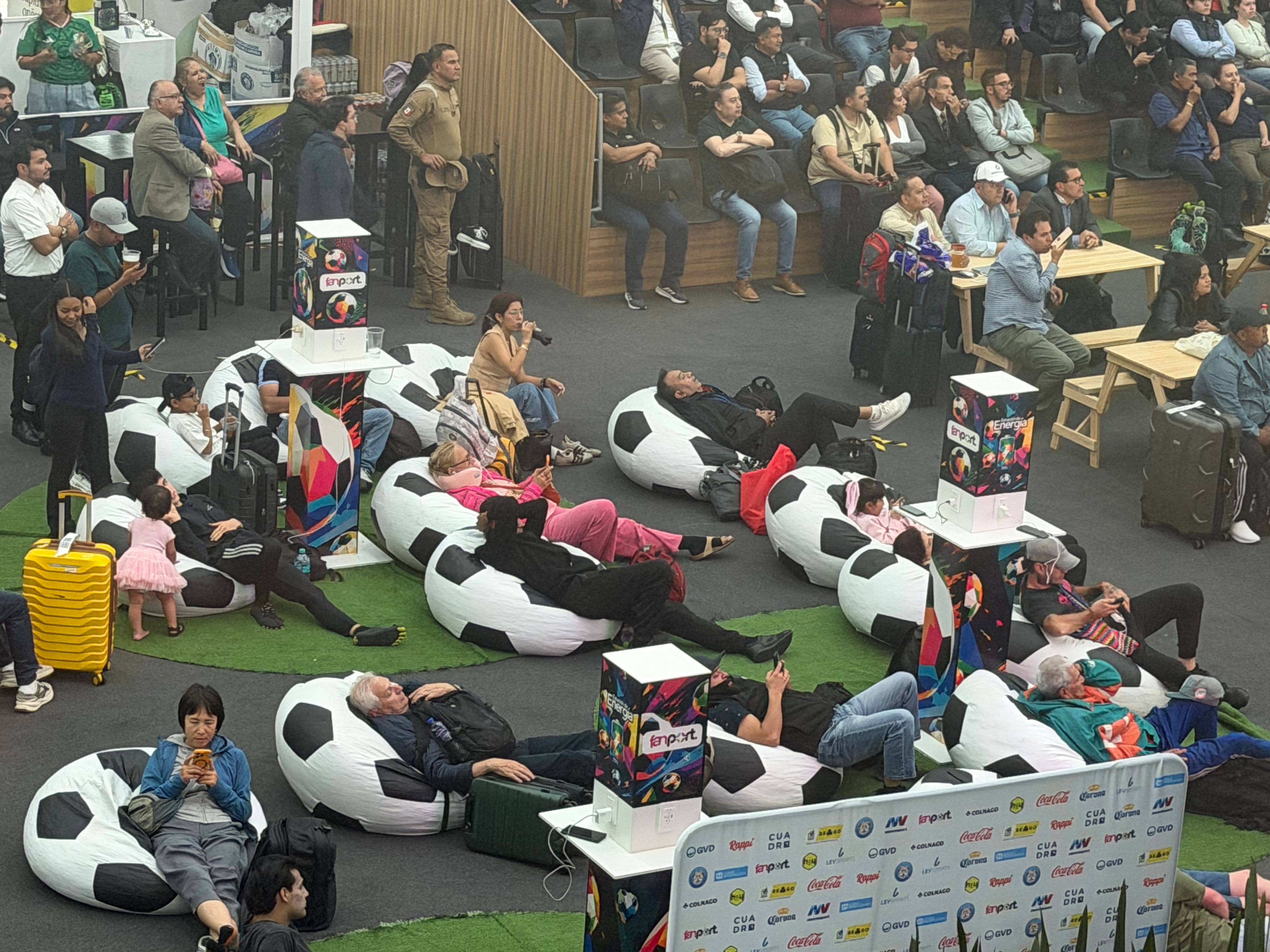
The math looks just as lopsided north of the border. Canadian host cities Vancouver and Toronto are still tallying what the tournament actually cost them. Visa’s own spending data shows tourist spend was up in both cities - but as World Briefing has reported previously from the ground in Vancouver, Toronto and Mexico City, the gap between what those cities spent to host and what they handed over to FIFA in fees and guarantees is staggering. The pattern is consistent across all three co-host countries: the host absorbs the bill, FIFA books the revenue, and the “legacy” money that’s supposed to flow back stays exactly where the World Cup 2026 cities promised $1 million is - unpaid.
The allegation lands at the worst possible moment for Infantino. He was just forced to abandon a plan to sell a minority stake in FIFA's tournament commercial rights to private investors, after UEFA threatened a boycott (and later legal action). Worse, officials inside his own organization began putting daylight between themselves and him - his own senior adviser resigned calling the plan "a bad deal for football," and FIFA's chief operating officer said staff had been "deceived." England and Wales have pulled support for his re-election bid. Sky News Sports is now reporting that senior FIFA staff are being called into a crisis meeting with Infantino — the clearest sign yet that the mutiny has moved from leaks to the boardroom. An unopposed path to a fourth term at next March's vote in Rabat, which looked assured a month ago, now looks considerably rockier - and Prince Ali, an Asian-confederation vote with real institutional standing, is exactly the kind of defection that could embolden others.
Then there’s Trump. FIFA is already denying, as “pure fiction,” a separate report that Infantino sought Trump administration backing to help save his presidency - a denial that lands awkwardly given how visibly the two men have leaned on each other. Infantino’s alliance with the US president has been the defining relationship of his FIFA presidency - a red-card gift in the Oval Office in 2018 that grew into a standing joke, a “FIFA Peace Prize” invented and awarded to Trump at last December’s World Cup draw, reported lobbying by Trump to make Infantino the next UN secretary-general, and a summer of photo-ops that culminated in Trump refusing to leave the podium during Spain’s trophy lift while Infantino visibly tried to usher him off stage - a moment that went viral for how little Trump seemed to care what Infantino wanted. The closeness has been the story for two years. What’s newer is the sense, circulating in clips and commentary since the World Cup final, that even Trump treats the relationship as disposable once the cameras find a better angle - a small, telling coda to a presidency now facing bigger questions about what FIFA actually pays the people who make its tournaments happen.
News Briefs
The US military has exhausted nearly 80% of its interceptors for a key missile defense system as senior US military commanders are warning that the Pentagon’s munitions stockpile is “dangerously low,” according to multiple sources familiar with the matter. Stockpiles of key air defense systems have been particularly depleted during the war with Iran. The US military has burned through nearly four-fifths of its THAAD missile inventory compared to pre-war numbers and roughly half of its Patriot interceptors since the start of the war, according to two sources familiar with the latest inventory report. The disclosure of the low THAAD inventory has not been previously reported. The Center for Strategic and International Studies estimates the United States had around 2,200 Patriots (of the platform’s two most-modernized variants) and 452 THAAD missiles in its stockpile before the Iran war started. Gulf countries have also raised fresh concerns about how a shortage of air defense systems could impact their ability to ward off potential Iranian retaliation if President Donald Trump decides to escalate the ongoing conflict. Several of those countries rely on US air defense systems and have acknowledged the stockpile shortage could hinder their own ability to intercept incoming Iranian missile and drone attacks – particularly if they are targeted in response to any American escalation, multiple officials said. Replenishment rates are low for key missiles, analysts tell CNN - according to current fiscal year delivery schedules, the Pentagon is receiving roughly 15 new Tomahawks and 20 new Patriot missiles per month. The Center for Strategic and International Studies estimated it would take three or more years to rebuild THAAD inventories to pre-Iran war levels - CNN
Elbit Systems, Israel’s largest defense contractor, reportedly discussed selling the UAE more than $1 billion of gear, as military ties between the two countries warm. Abu Dhabi requested drones worth $180 million after Houthi missiles killed three in January 2022, Haaretz reported, based on leaked documents. The UAE then explored 45 more aircraft, worth roughly $1.3 billion. A previous investigation revealed Elbit’s $2.3 billion contract last November — one of Israel’s largest ever - was with the UAE. Ties have improved since the 2020 Abraham Accords: Several Israeli defence companies have opened Emirati offices or joint ventures, while Israel sent equipment and crews to the UAE during the Iran war. The US called it “a benefit” of a deal - Semafor
Turkish officials on Tuesday said a drone attack on two civilian vessels in the Black Sea had left crew members injured. The foreign ministry said the ships were attacked after leaving the Russian port of Novorossiysk late on Monday and several personnel were wounded, adding that “their situation is being closely monitored.” It added: “We are deeply concerned about the escalating conflict between Russia and Ukraine in the Black Sea, which is affecting civilian shipping despite our numerous warnings.” It called on all parties to “urgently implement concrete measures to ensure the safety of navigation in the Black Sea” and warned that food supplies could be affected otherwise. According to monitoring site MarineTraffic, the two ships, identified by the ministry as Yasar and Nadezhda, sail under the Panamanian and Cameroonian flags respectively but are owned by Turkish companies. Russia and Ukraine have been stepping up strikes on cargo vessels for several weeks - Euronews
Two Wildberries warehouses were hit by Ukrainian strikes overnight on Monday, with another site apparently linked to Russia’s largest online retailer also damaged near Moscow. Ukraine has been targeting facilities operated by the company - often dubbed the “Russian Amazon” - in recent weeks. At least five people were killed and 10 more injured at an industrial site about 69km (43 miles) south of the Kremlin, local officials said, without confirming it was run by Wildberries. Elsewhere, officials did confirm two other Wildberries sites were hit in the St Petersburg and Tver regions. Kyiv says the depots supply the Russian military, which Moscow denies. Russia’s defence ministry said it had intercepted and destroyed 320 drones overnight. Meanwhile, strikes launched by Russia across Ukraine killed at least four people - BBC
US Treasury Secretary Bessent says deal to open the Strait of Hormuz could come as early as “today or tomorrow”; deal would allow “freedom of movement” for commercial vessels. Qatar’s Foreign Ministry says diplomatic efforts are ongoing to find a solution to the US-Iran conflict and all mediators are working closely to facilitate negotiations and exchange proposals between the two countries. Speaking to reporters at the White House, Marco Rubio reiterated the US position that the Strait of Hormuz remains open and that vessels are continuing to pass through it. However, he said Washington is working on an agreement that would allow more ships to transit the waterway safely. “I think there is a conversation and a negotiation that we are involved in between Iran and Oman on how more ships can be able to go through there safely in the short term, as we move towards… longer-term talks about [Iran’s] denuclearisation,” said Rubio. He added that the “denuclearisation of Iran” is the “ultimate deal” - Al Jazeera

Upgrade via this link— and lock in 30% off an annual subscription to World Briefing Plus.
A Malaysian politician has called on Malaysian airport authorities to release CCTV footage showing the security screening of a pilot who allegedly left the country with more than 70,000 ecstasy pills before being arrested in Indonesia. His call came after the Border Control and Protection Agency (MCBA) yesterday confirmed that the 39-year-old Malaysian had passed all mandatory security checks at Kuala Lumpur International Airport before departure. The pilot was arrested at Jakarta’s Soekarno-Hatta International Airport on July 28 after flying 170 passengers there. The Malaysian Embassy in Jakarta is seeking consular access to the suspect, who could face the death penalty if convicted - Malaysiakini
The journals…