

🔥 World Briefing Hot Take
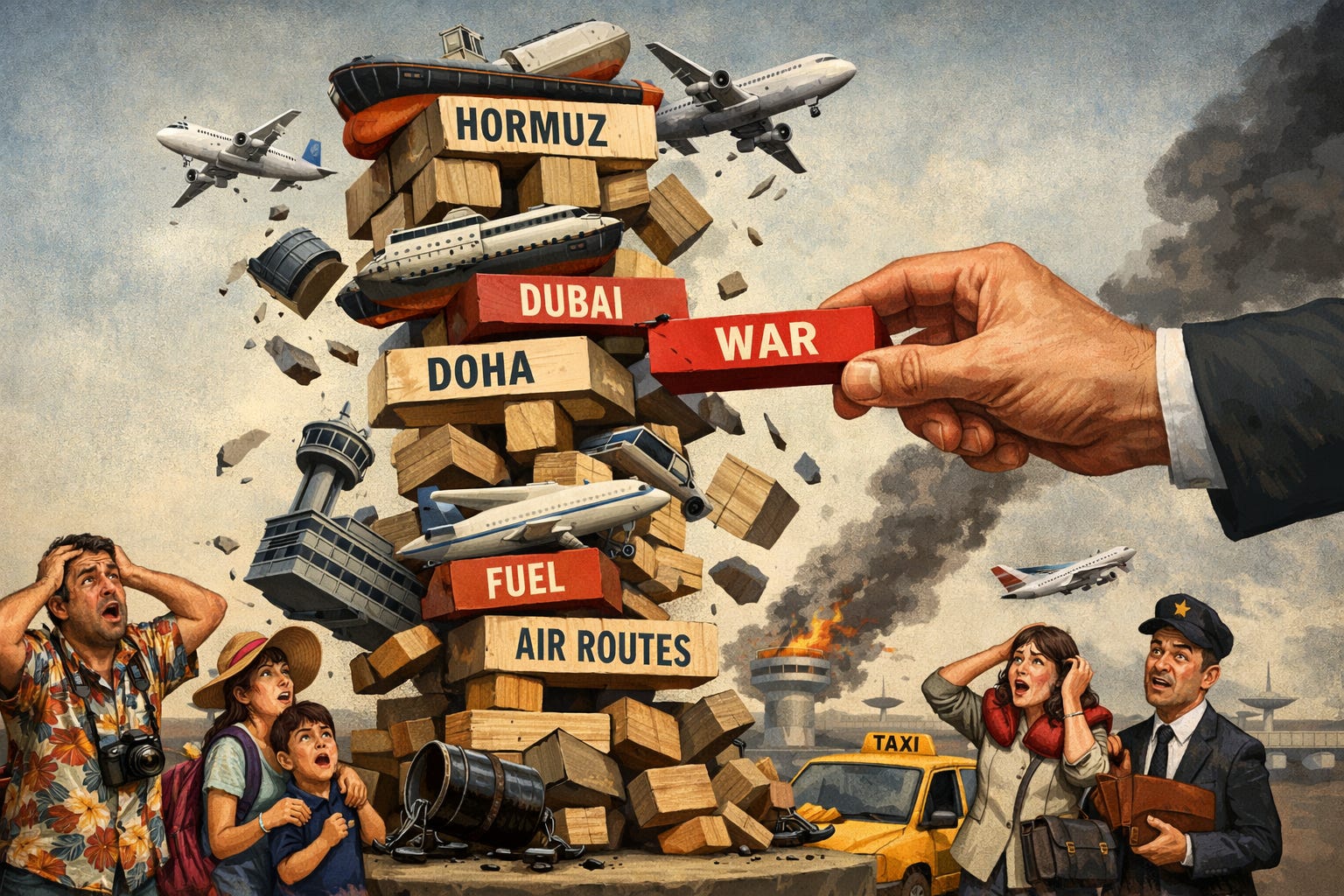
Only three weeks into the war with Iran, the economic shockwaves are already hitting the most visible part of globalization: travel. With tanker traffic disrupted in the Strait of Hormuz and oil prices spiking (the price of Brent crude, the global benchmark for oil, was about $103 a barrel on Monday), airlines have moved quickly to impose fuel surcharges - and passengers are being rerouted away from the Gulf’s giant aviation hubs of Dubai, Doha and Abu Dhabi. The result is chaos in the skies. Our editorial partner, My Savvy Traveller, has found that airfares on some Asia–Europe routes have already tripled - that’s if you can even secure a seat. And even when Gulf carriers attempt to restore services, fresh attacks and airport disruptions - including damage today near Dubai’s airport’s fuel infrastructure - are triggering cascading cancellations across global networks.
For travellers planning Easter holidays or school-break trips, the timing could not be worse. But the pain runs far deeper than delayed vacations. Taxi drivers in Dubai, tourism operators in Phuket, and families across Asia are already feeling the squeeze as travel demand shifts and fuel prices ripple through everyday life (fuel prices will rise in the Philippines by as much as PHP23.90 - or about US$0.38 - per liter this week). Even a historic strategic oil reserve release of 400 million barrels of oil, the largest coordinated drawdown in the International Energy Agency’s history, is barely calming markets.
The brutal reality is this: when a war closes one of the world’s most important energy chokepoints, the first casualties are not only on the battlefield - they’re in the departure lounge, the taxi queue, and the small businesses that depend on global mobility.
News Briefs
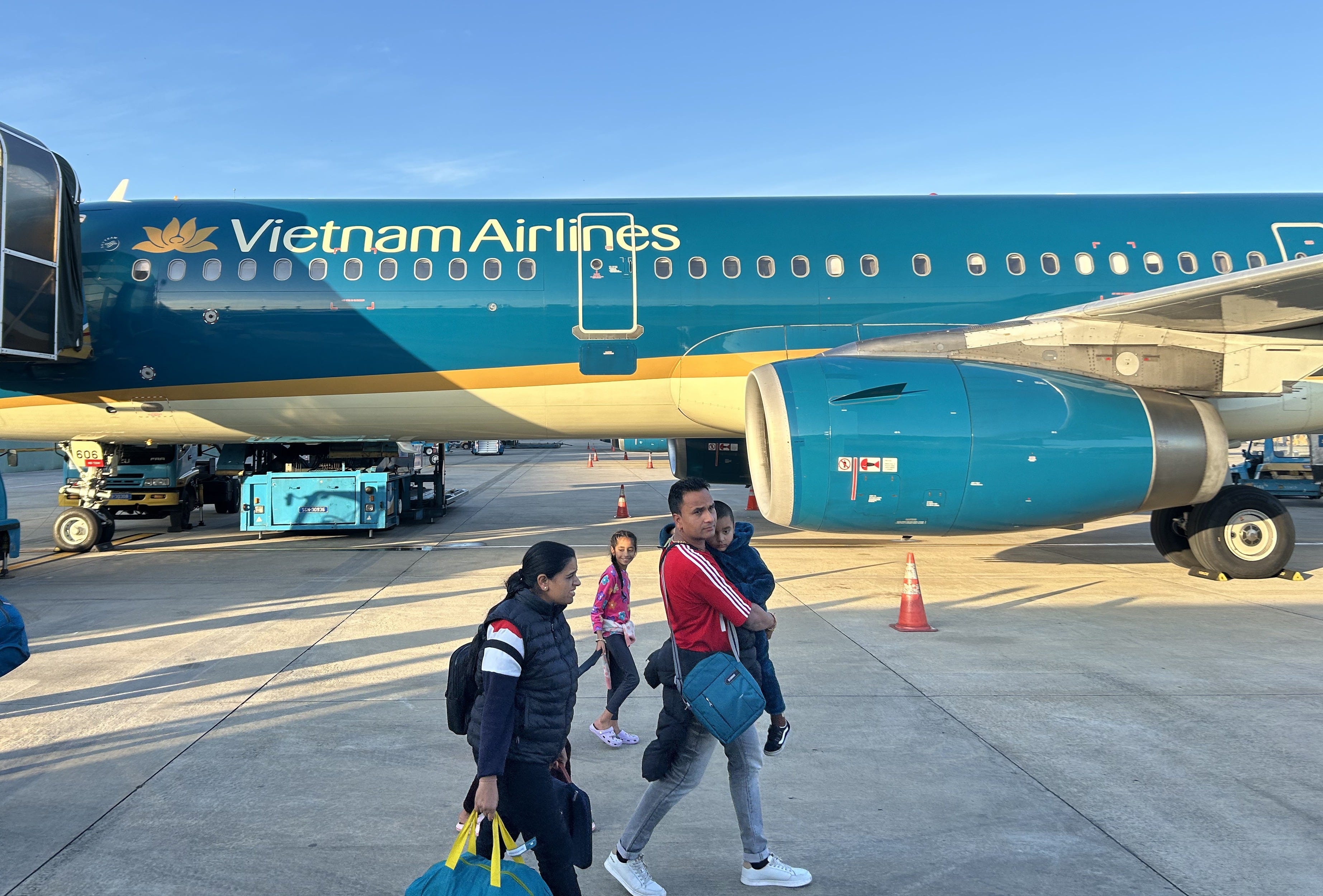
The ongoing conflict involving Iran has added a new pain point for travellers: surging airfares, driven by a sudden drop in airline capacity on key global routes and rising fuel costs. More than 46,000 flights have been cancelled across the region since the conflict began on 28 February, according to aviation data firm Cirium. At its peak earlier this month, the disruption wiped out around 10% of global airline capacity, marking the biggest aviation shock since the Covid-19 pandemic. Airlines are already responding with fare hikes and operational cuts. Thai Airways will raise prices by up to 15%, which may go higher if prices continue to climb. Cathay Pacific will double its passenger fuel surcharge from 18 March. Meanwhile, Hong Kong Airlines has one of the steepest airfare hikes at up to 35.2%. Qantas Airways would hike their fares for international routes for the week ending 15 March, subject to further announcements. Malaysia Airlines will also be increasing ticket prices. While Singapore Airlines and Scoot has not imposed fuel surcharges on flights, the price of a one-way Heathrow-Singapore economy ticket cost S$10,900 – 900% more than fares later in March. A select few carriers, including Lufthansa and Air France, which purchased jet fuel at a fixed price in advance, have thus far not announced ticket changes. Meanwhile, many airlines have suspended flights to the Middle East until the end of March, offering affected passengers full refunds or rebooking options. The conflict is also hitting tourism demand. The war has already cost the Middle East at least US$600 million per day in international visitor spending, according to estimates from the World Travel & Tourism Council (WTTC). The Middle East plays a vital role in global travel with the region accounting for 5% of global international arrivals and 14% of global international transit traffic - Travel Weekly Asia
Travel agencies in Singapore are facing mounting losses as tour groups cancel or postpone trips to Europe due to the Middle East conflict. With fewer flights passing through the region, operators say some travellers are reluctant to rebook amid uncertainty. One agency expects to pay about S$270,000 in cancellation costs. Holiday makers are now turning to destinations like China and Taiwan instead, driving up demand and airfares - CNA
From the Gulf to Ukraine, the geopolitical dots are multiplying by the day.
Upgrade to World Briefing Plus and stay ahead of the headlines — or support independent global reporting through Patreon or PayPal.
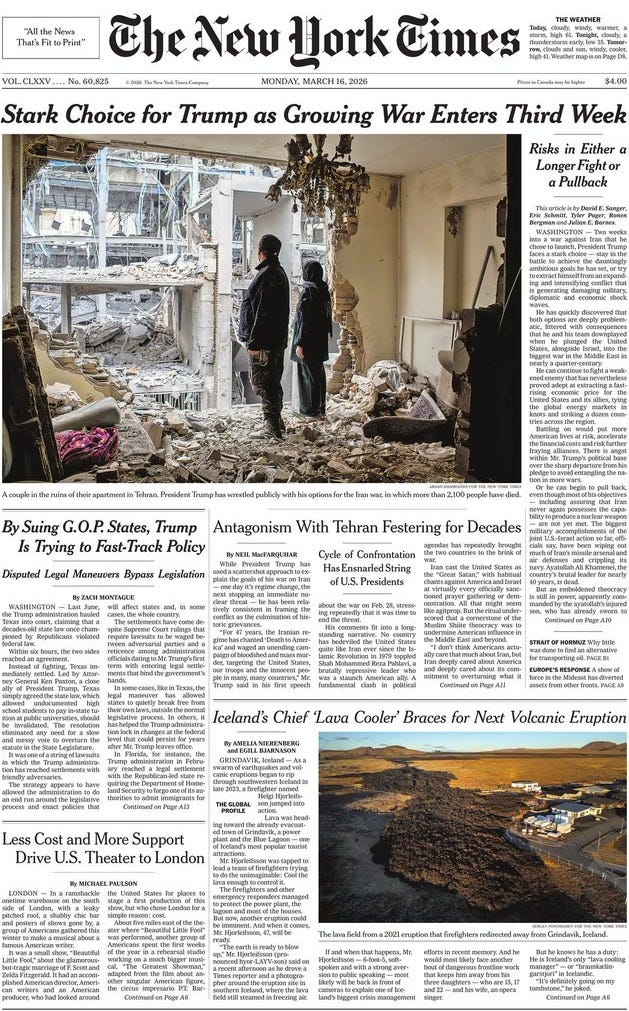
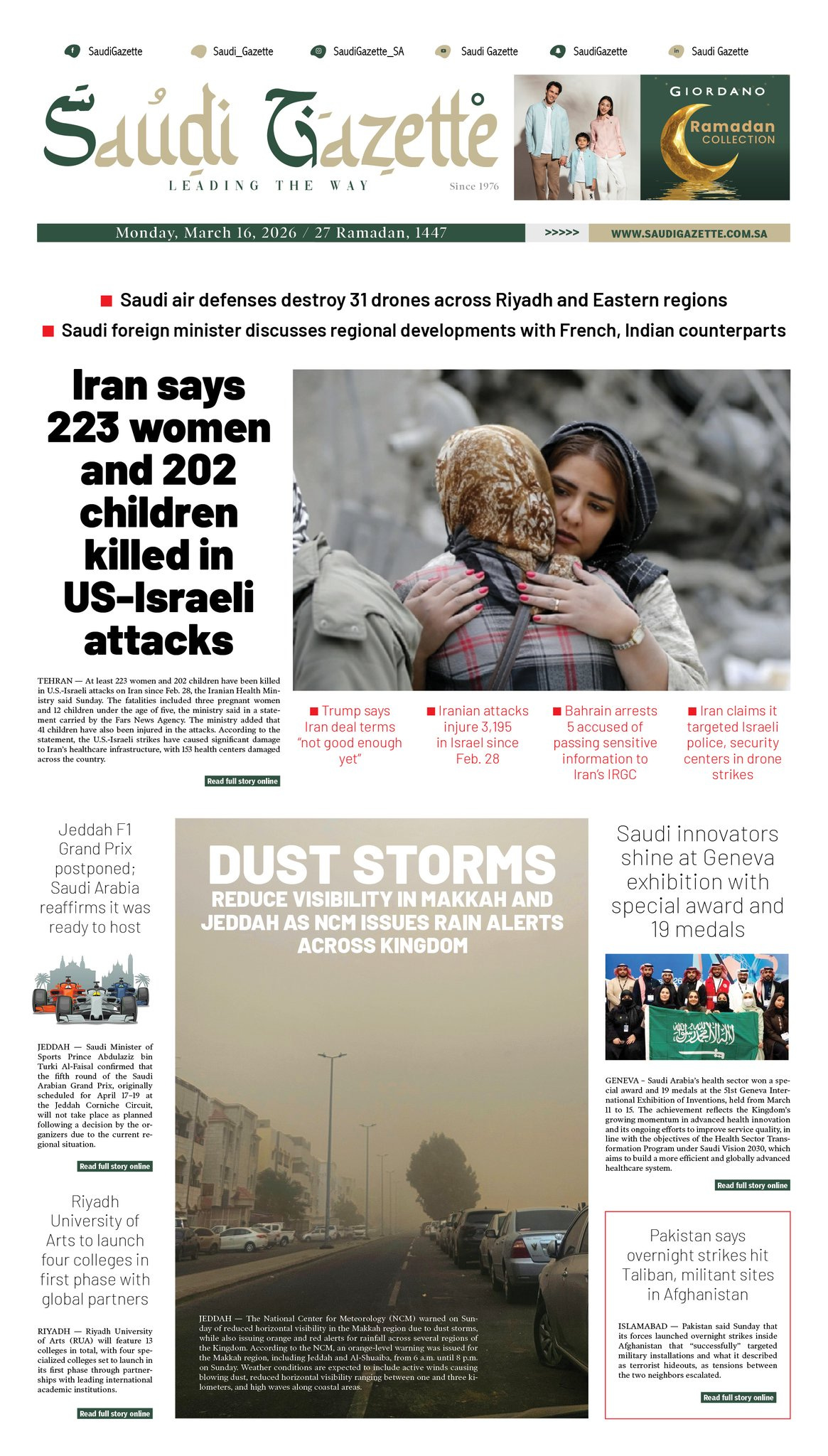
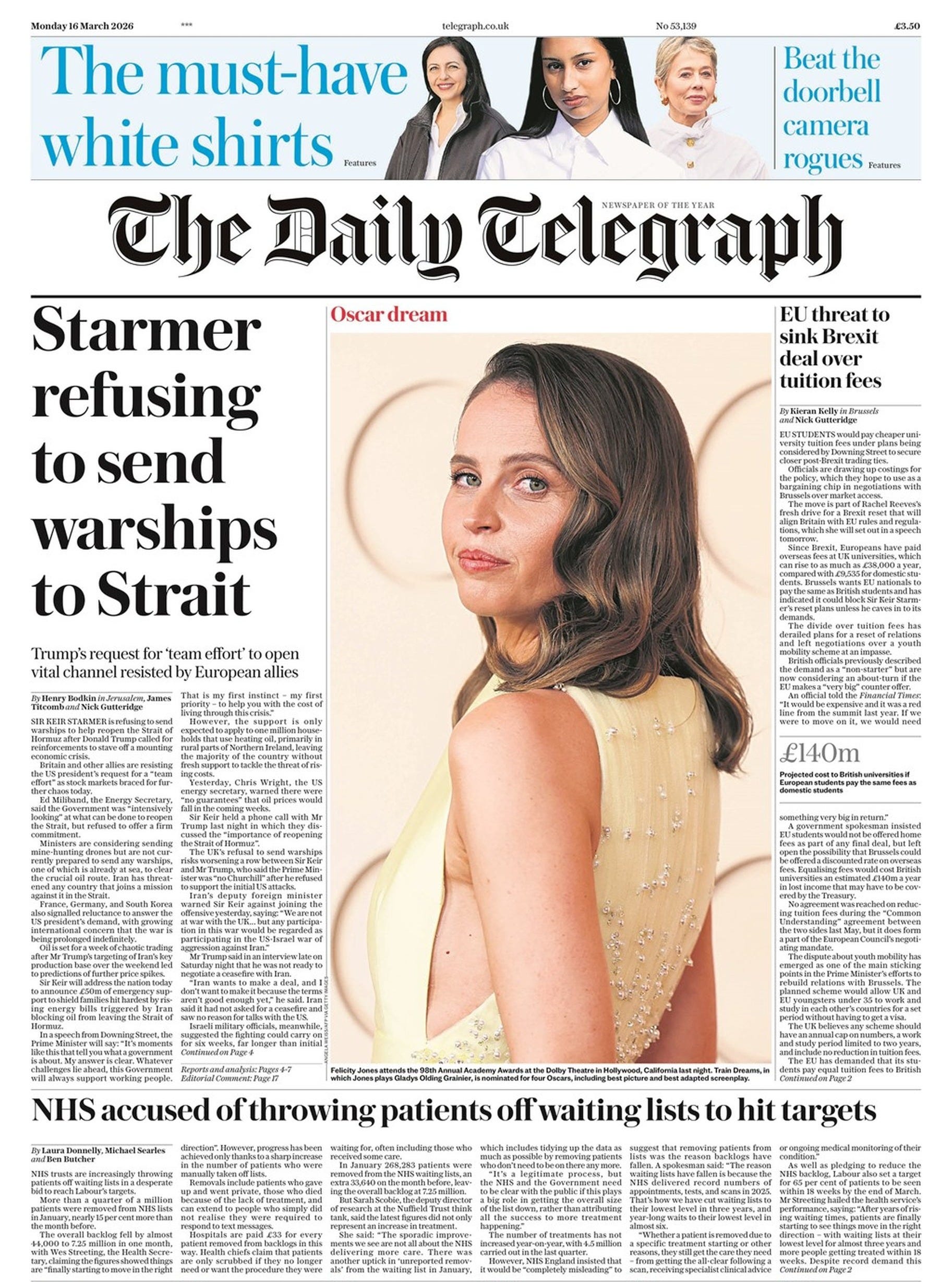
The Israeli military said on Monday that it was expanding its ground assault in southern Lebanon against the Iran-backed armed group Hezbollah, as countries responded cautiously, if at all, to President Trump’s demand that they send warships to break the de facto Iranian blockade of the Strait of Hormuz. The American-Israeli air war against Iran, now in its third week, has drawn in much of the Middle East and killed over 2,000 people, mostly in Iran and Lebanon. Global energy prices have skyrocketed with tanker traffic all but stopped through the Strait of Hormuz, a conduit for around a fifth of the world’s oil shipments. The price of Brent crude, the global benchmark for oil, briefly reached $106 on Monday. And there are few signs that the conflict is easing. Israeli forces announced that they were widening their ground attacks in southern Lebanon, adding to fears that they could soon launch a more sweeping invasion. Israeli leaders have rebuffed Lebanese and French initiatives to negotiate a de-escalation of the conflict, which began when Hezbollah fighters fired rockets at Israel in solidarity with Iran.As Iran on Monday repeated its threat not to let ships from “hostile” nations through the Strait of Hormuz, concerns are growing about the global economic fallout. Mr. Trump’s latest attempt to reopen the strait — calling on other countries, including China, to send warships there — did not immediately yield any commitments to do so. Officials in Japan and Australia said that they did not plan to send ships. Britain, France, the European Union and South Korea were noncommittal. Iran is allowing ships carrying oil to China to cross the strait, but other oil tankers have been attacked by projectiles. Mr. Trump threatened to postpone a planned summit in Beijing with Xi Jinping, China’s leader, if it did not comply. Mr. Trump said NATO member nations should help too. “If there’s no response or if it’s a negative response, I think it will be very bad for the future of NATO,” he told The Financial Times on Sunday - NYT
A quick end to the war in Iran is unlikely, and Tehran’s hand is strong despite heavy losses, analysts said. Initially, most observers expected a short, sharp operation, Bloomberg’s senior markets editor argued: US President Donald Trump was elected on an anti-interventionist platform and feared price rises ahead of the midterm elections. But Iran’s stiff resistance means Trump now needs a clear win to save face before taking an off-ramp. He faces a stark decision, the head of a prominent Washington think tank agreed: Stopping now leaves a “hostile and wounded, but not destroyed” Iranian regime able to block the Strait of Hormuz, whereas reopening the waterway could be long and costly - Semafor
Russia’s consulate in central Iran said Sunday that it would temporarily suspend operations due to ongoing U.S.-Israeli attacks. The consulate is located in the city of Isfahan, where a missile strike on an industrial area on Saturday killed15 people, according to Iranian media. “Due to the current situation, the Russian Consulate General in Isfahan is temporarily suspending its operations. Further information on the resumption of consular services will be provided,” the consulate said in a statement. Russia’s Foreign Ministry said on March 11 that the consulate in Isfahan was damaged in an attack on a nearby government building. It called the incident a “blatant violation” of international norms - Moscow Times
The film “Mr. Nobody Against Putin” -- about a young Russian schoolteacher waging quiet resistance against the Kremlin’s war on Ukraine -- has won the Oscar for best documentary feature. Directed by David Borenstein and teacher Pavel Talankin, the film follows Talankin in his job at a school in the poor mining town of Karabash in the Urals. The film uses two years of footage shot by Talankin to show how the Russian government of President Vladimir Putin indoctrinates students with pro-war messages.At the request of Russia’s Education Ministry, Talankin, 35, helped film pro-war propaganda efforts at the elementary school in Karabash. But ministry officials did not suspect he would turn his videos into a documentary about Russia’s “patriotic education” campaign for schoolchildren. Talankin documents his own persecution and eventual exile in the film, called a “touching, intimate chronicle” by The Hollywood Reporter. “Mr. Nobody Against Putin” is about how you lose your country, and what we saw when working with this footage is that you lose it through countless small, little acts of complicity,” director Borenstein said on stage alongside Talankin. “When we act complicit, when a government murders people on the streets of our major cities, when we don’t say anything, when oligarchs take over media and control how we produce it,” Borenstein added.
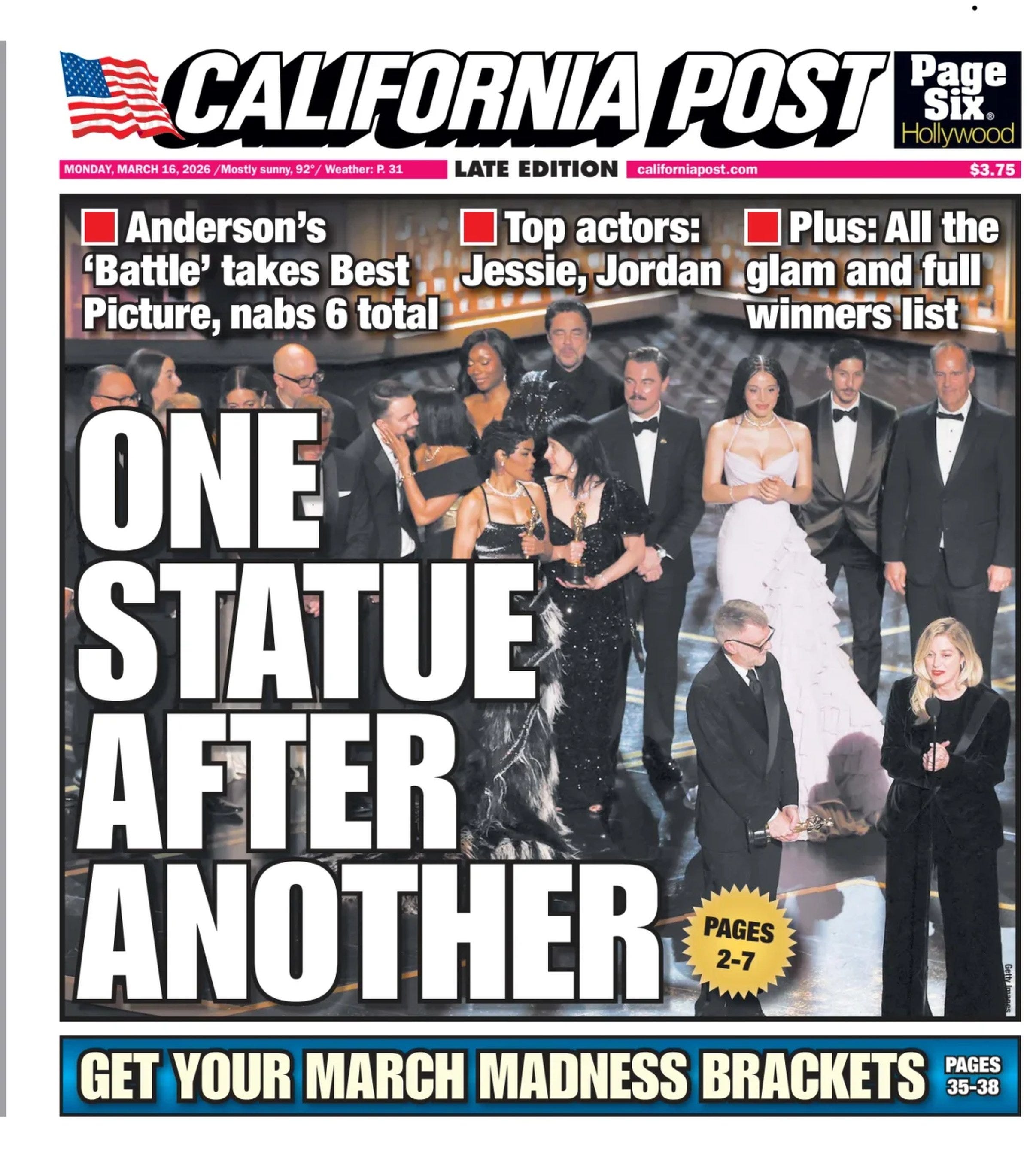
Host Conan O’Brien and presenter Jimmy Kimmel mocked Donald Trump from the stage. On the red carpet, stars could be seen wearing pins that said “ICE OUT.” And when Javier Bardem presented the award for Best International Feature Film, the actor said, “No to war. And free Palestine.” For the second time this century, the Academy Awards unfolded Sunday during the early stages of a U.S. war in the Middle East. And while Trump’s name went unmentioned throughout, the subtext was a collective snub of the president from an industry he has long battled. And Hollywood was not above going low. O’Brien, saying he was standing on the stage of “has-a-small-penis theater,” added, “Let’s see him put his name in front of that,” a nod to the president affixing his name to the Kennedy Center late last year. He joked that Kid Rock was putting on an alternate Oscars at the “Dave & Buster’s down the street,” a reference to the counterprogrammed Super Bowl halftime show put on by Turning Point USA last month. Kimmel, a frequent Trump irritant, lauded nominated documentary shorts for “telling the truth,” before landing a dig about films in which “you walk around the White House trying on shoes,” a reference to “Melania,” the documentary about the first lady. Moments later, while giving out the Academy Award for Best Documentary Feature Film, he said, “Oh man, is he going to be mad his wife wasn’t nominated for this.” - Politico
White House Communications Director Steven Cheung fired off a furious X post after watching Kimmel poke fun at Melania Trump during Sunday’s Oscars broadcast. Cheung shared a clip of Kimmel’s joke, calling him a “classless hack who is self-projecting his depression and sadness onto others.” He added, “He lives a pathetic existence where nobody—not even his family—enjoys his miserable company. The only people giving him any attention are Hollywood Elites. BUH-BYE!” The first lady’s documentary Melania made a brief appearance at the box office before being shunted to streaming on Amazon, which spent a reported $75 million on the project in a deal struck personally by its boss, Jeff Bezos - The Daily Beast
The journals….
If this conflict is not resolved soon it will be a catastrophe to world economy