Welcome to World Briefing.
For weeks now, we’ve spent time and effort tracking one central question: how the Middle East war is reshaping lives, economies, and power far beyond the battlefield itself. Right down to the front seats of Uber and Bolt drivers.
We’ve followed the shockwaves from the Philippines to Thailand, from Oman to Türkiye, from Ukraine - and now to Armenia, sitting right on Iran’s doorstep.
We’ve looked at what it means for the big players and the little guys alike: airlines rerouting fleets, oil producers cashing in, drivers paying more at the pump, remote workers searching for safer hubs, and ordinary families wondering what comes next.
Because war today does not stay where it starts. It travels through fuel prices, flight paths, jobs, markets, migration, and fear.
And here in Yerevan, a surprising new story may be emerging: as uncertainty grows elsewhere, Armenia’s capital could edge past Dubai on global rankings for remote working destinations - thanks to safety, affordability, connectivity, and freedom to create.
⬇️ Watch the video below on why Yerevan may be one of the unexpected winners of this war.
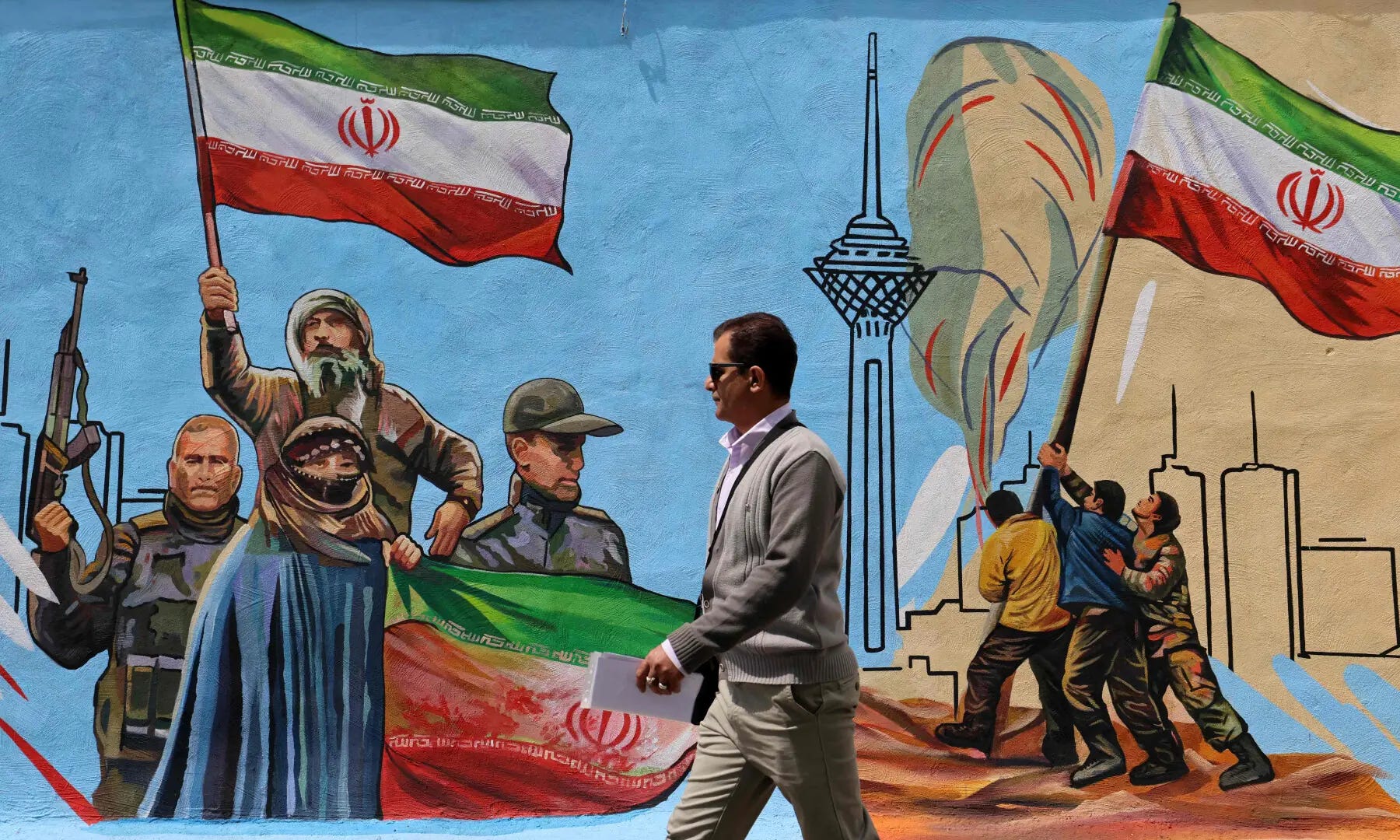
Iran’s Islamic Revolutionary Guards Corps (IRGC) says it has seized “two offending vessels” during an alleged “secret attempt to leave” the Strait of Hormuz. The naval arm of the IRGC said on April 22 that it had detained “two violating ships” that it claimed were attempting a “secret departure” from the Strait of Hormuz. According to the IRGC statement, the vessels were the MSC Francesca, which it described as belonging to Israel, and the Epaminodes. The IRGC said they were stopped on accusations that they intended to leave “without permission,” while committing “repeated violations,” tampering with navigational assistance systems, and endangering maritime security in an attempt to exit the strait “secretly.” The IRGC navy said the vessels had been transferred to Iran’s territorial waters for inspection of their cargo and documentation. The announcement came on a day when Iran’s armed forces said they had attacked and disabled three cargo ships off the country’s coast, according to state media. The IRGC, which has closed the strait to ships and oil tankers since February 28, briefly reopened the waterway for one day after a cease-fire in the war with the United States and Israel started on April 8, but shut it again after negotiations between the sides collapsed and a naval blockade of Iranian ports began - RFE/RL
Iran’s chief negotiator in talks with the US, Mohammad Bagher Ghalibaf, has just said it is “not possible to reopen the Strait of Hormuz considering all the blatant violations of the ceasefire”. Those “violations” include the US naval blockade of Iranian ports - which he says amounts to taking the global economy “hostage” - and “warmongering” by Israel “on all fronts”. Seemingly referring to the US and Israel, Ghalibaf posts on X that “they did not achieve their goals through military aggression, nor will they through bullying. The only way forward is to recognise the rights of the Iranian people.” - BBC
US Treasury Secretary Scott Bessent has extended sanctions relief on Iranian and Russian seaborne oil for 30 days because of requests from countries that are the most vulnerable to oil shortages from the closed Strait of Hormuz. Bessent told a US Senate Appropriations subcommittee budget hearing the requests came from finance leaders of about 10 countries during last week’s International Monetary Fund and World Bank meetings. The action reversed his comments last week that he would not renew expiring sanctions waivers - Al Jazeera
The EU will unlock its €90 billion loan to Ukraine on Thursday if, as officials now expect, oil flows restart via the Druzhba pipeline by then, according to five EU diplomats. The breakthrough hinges on the restoration of crude shipments through the Soviet-era Druzhba pipeline linking Ukraine to Hungary and Slovakia — a condition that outgoing Hungarian Prime Minister Viktor Orbán’s government used to block the loan. Ukrainian President Volodymyr Zelenskyy announced Tuesday that the line has been repaired. European Enlargement Commissioner Marta Kos said the latest developments had cleared the path for the money to be set free. “The oil is flowing in the Druzhba pipeline — this means that … we will be able to release the €90 billion loan,” she said Wednesday at the EU-Ukraine Business Forum. After initially agreeing to the loan in December, Budapest blocked it in February as a dispute flared over the pipeline. Orbán accused Zelenskyy of slow-walking repairs to the infrastructure in retaliation for Hungary’s friendly relations with Russia. Zelenskyy sounded optimistic the cash would finally reach Ukraine. “The unblocking is the right signal under the current circumstances,” he wrote on X on Wednesday. EU ambassadors gave preliminary backing to the package, according to Cyprus, which holds the presidency of the Council of the EU, after Ukraine’s repairs and the westward flows resumed. POLITICO spoke to five EU diplomats and officials, present in a meeting of ambassadors on Wednesday or briefed by those who were, and who were granted anonymity to speak freely about the deal. In the meeting, Hungary and Slovakia made clear their support depends on oil physically reaching their territory, according to three of the diplomats. “Some caution is needed as there might still be technical issues,” one diplomat said. “It should be fine,” another added, noting the EU pushed the deadline to Thursday afternoon based on “very scientific calculations” of when the oil is expected to arrive - Politico
Italy summoned Russia’s ambassador to Rome on Tuesday to protest a Kremlin-aligned pundit’s profanity-laced tirade against Prime Minister Giorgia Meloni. In a post on X, Foreign Minister Antonio Tajani said he had called Russian envoy Aleksey Paramonov to formally denounce the “extremely serious and offensive statements” recently made by presenter Vladimir Solovyov on Russian state television. During the one-minute segment that aired on April 16 this month, Solovyov tore into Meloni, calling her a “certified idiot” and “fascist scum.” After accusing her of betraying both her voters and U.S. President Donald Trump — who last week turned on Meloni after she criticized his attack on Pope Leo XIV — the presenter additionally referred to her as “PuttaMeloni,” or “Meloni the whore.” Russian Ambassador Paramonov dismissed Tajani’s protests in a post on Facebook, saying Rome had “missed the mark” by summoning him over comments made by a television host and insisting the remarks did not reflect the position of the Russian government. “No reasonable person would treat purely personal remarks as an official statement,” he added. Rome has firmly backed Ukraine efforts to end the Russian full-scale invasion of its territory, with Meloni standing out as one of Kyiv’s most reliable European allies. The prime minister has ramped up military cooperation and recently hosted Ukrainian President Volodymyr Zelenskyy for talks on expanding defense support, including drone production. That stance has exacerbated internal tensions in Italy, where far-right coalition partner the League, energy giant ENI and the opposition 5Star Movement have floated resuming Russian gas purchases amid mounting energy pressures - Politico
A court in Moldova sentenced oligarch Vladimir Plahotniuc to 19 years in prison on Wednesday in a case linked to the disappearance of $1 billion (€850 million) from the country’s banking system. The former businessman and lawmaker controlled Moldova as a “captured state” from 2013 to 2019, wielding de facto control over the legislative, executive, law enforcement and judicial authorities despite never holding top government positions. Plahotniuc, kingpin of the Democratic Party of Moldova, fled the country in June 2019 after his government collapsed and he faced a series of corruption charges. That included complicity in the scheme that led to money disappearing from Moldovan banks in 2014, which at the time was equivalent to around one-eighth of the country’s GDP, in a scandal that became known as “theft of the century”. He was extradited from Greece last year, after being arrested at Athens airport under an Interpol international alert. A Chișinău judge announced the ruling on Wednesday. The court also ordered the seizure of some $60 million (€51 million) from Plahotniuc’s accounts, said prosecutor Alexandru Cernei after the sentencing. Plahotniuc, 60, was not present in court on Wednesday. He had previously dismissed the charges, calling his trial “political” and “flawed from the outset.” - Euronews
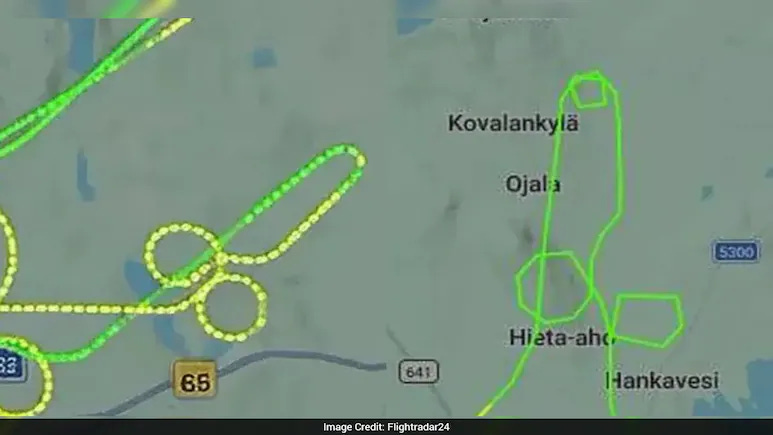
Finnish air force cadet pilots have landed themselves in trouble after a routine turning drill turned into an exercise in sky-scrawled smut. Graphic loops in the shape of large penises were spotted on Flightradar after two Grob G 115 propeller planes took off from the Finnish city of Jyväskylä on April 13 and made a series of unusual maneuvers, The Telegraph reported. The students behind the stunt are trainees on Finland’s pilot reserve officer course, based at the Tikkakoski academy. A Finnish air force spokesman said the cadets will face “disciplinary” measures, adding: “The air force requires soldiers to follow good manners and rules of conduct, and if these are deviated from, it will be responded to in an appropriate manner.” Officials stressed that no one was endangered and that the aircraft stayed on its assigned route throughout. It’s far from the first sexual airborne doodling scandal. RAF pilots carved a 40-mile phallus across the skies of Lincolnshire and north Wales in October 2021, while Russian carrier Pobeda managed a similar feat in November 2020—apparently in a tribute to footballer Artem Dzyuba - The Daily Beast
The journals….