What began as a campaign to cripple Iran’s military capabilities is rapidly morphing into something far larger and far more unpredictable. With thousands of strikes underway, the largest U.S. military buildup in the Middle East in a generation, and the Strait of Hormuz pretty much closed, the conflict is already spilling beyond the battlefield into global energy markets and fragile alliances. At the same time, the war is exposing a deeper strategic web: Russian upgrades to Iranian drones, Ukraine’s hard-earned expertise in drone warfare suddenly in demand in the Gulf, and Washington openly weighing militias - or even boots on the ground - to shape Iran’s political future. The message is unmistakable: this is no longer just about Iran. It is about the architecture of power across the Middle East, the resilience of global energy flows, and how quickly regional wars can become global shocks.
News Briefs
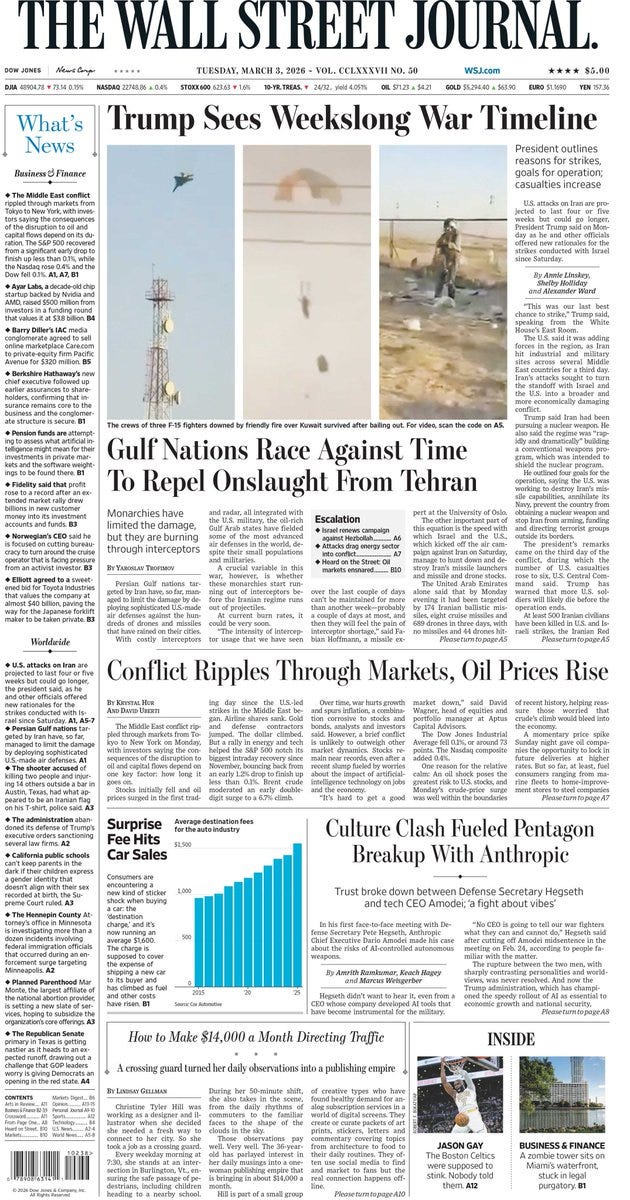
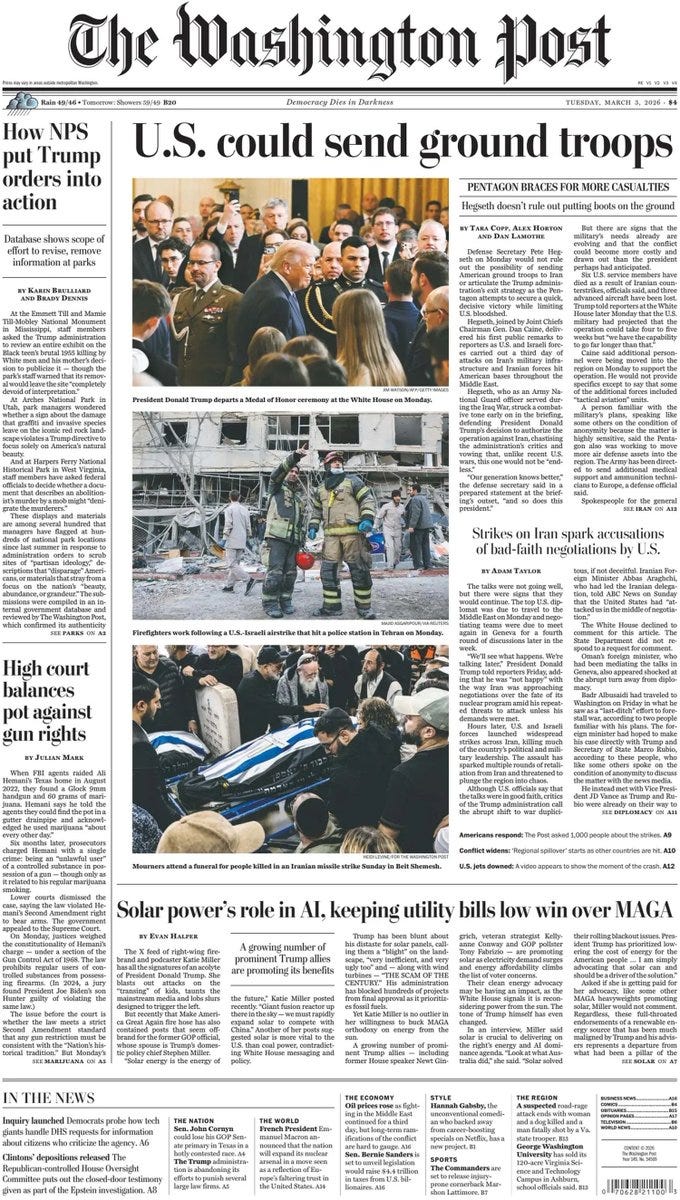
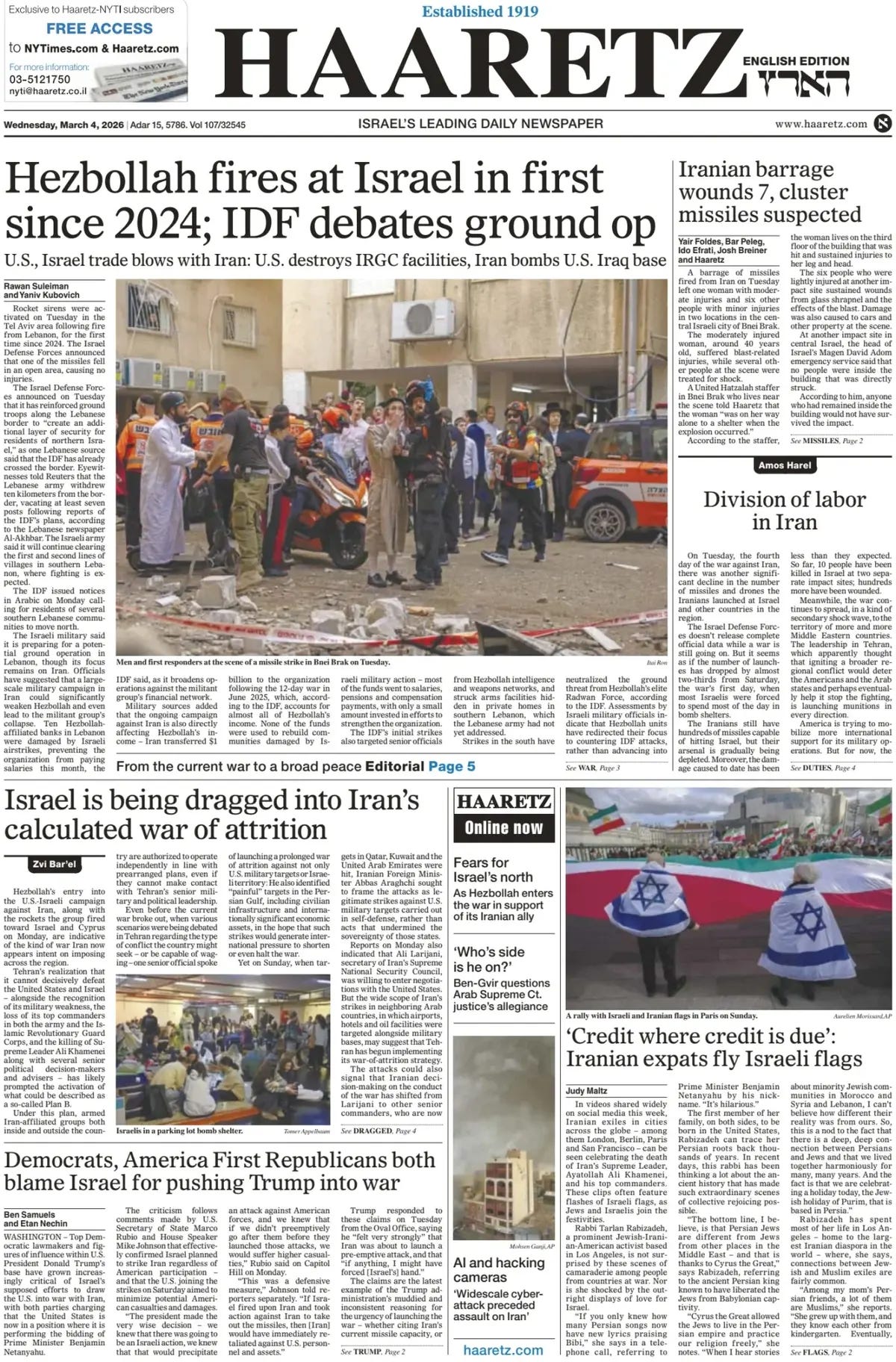
The United States and Israel vowed no letup in their military campaign against Iran, with Tel Aviv launching a fresh “broad wave of strikes” while US President Donald Trump said Tehran “is going to be in for a lot of hurt” in the coming days. “The big-scale hitting goes now,” Trump said on March 3 at the White House during a meeting with German Chancellor Friedrich Merz. “They no longer have air protections, they no longer have any detection systems left at all, so they’re going to be in for a lot of hurt,” he warned. Trump also reiterated that, along with Supreme Leader Ali Khemenei, much of the Iranian leadership had been killed in the US-Israeli attacks, leaving the regime in uncertain hands. “Most of the people we had in mind are dead. Now we have another group. They may be dead also, based on reports,” he said. After Trump spoke, the chief of the US military’s Central Command, Admiral Brad Cooper, said Operation Epic Fury represents the largest US buildup in the Middle East in a generation. More than 50,000 US troops, over 200 fighter aircraft, two aircraft carrier strike groups, and long-range bombers are participating in the operation, Cooper said. He described the opening phase as nearly double the scale of the 2003 “shock and awe” campaign in Iraq. “Today, there is not a single Iranian ship under way in the Arabian Gulf, Strait of Hormuz, or Gulf of Oman,” Cooper said, describing what he called an unprecedented effort to eliminate Iran’s ability to threaten US forces. “We’ve just begun,” he said. “But I have the utmost confidence that we, alongside our partners, will absolutely achieve our military objectives.” He said the US military has destroyed 17 Iranian naval vessels -- including a submarine -- and struck nearly 2,000 targets across Iran in less than four days, according to the commander of US Central Command. Separately, Israel said early on March 4 that it had launched a "broad wave of strikes," saying its latest targets on the fifth day of the joint US-Israeli attack included Iranian "launch sites, air defense systems, and additional infrastructure." Reports from inside Iran are difficult to verify. The US-based Human Rights Activists News Agency (HRANA) said that nearly 1,100 civilians, including 181 children, have been killed in the air strikes - RFE/RL
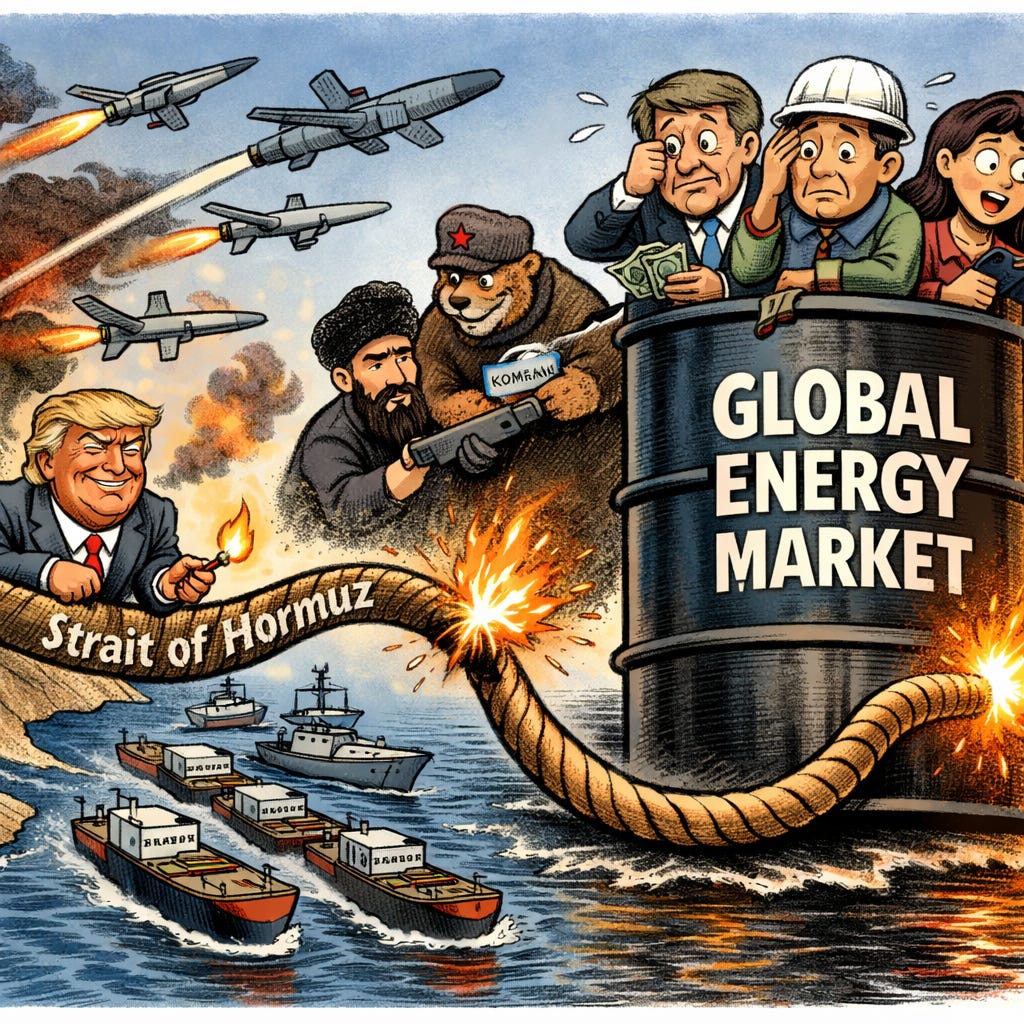
President Trump said earlier on Tuesday that the United States might deploy its Navy to escort commercial ships through the Strait of Hormuz, the waterway south of Iran through which a fifth of the world’s oil travels. Shipping companies are not sending oil and gas tankers through the strait because they fear they might be attacked - NYT
President Donald Trump is open to backing armed militias to help topple Iran’s government, US officials told The Wall Street Journal, as the expanding war raises questions about Washington’s endgame. Trump discussed the conflict with Kurdish leaders Sunday, Axios reported, though he hasn’t yet committed to providing material support to anti-regime groups. Trump also hasn’t ruled out putting US boots on the ground, a move that would further deflate the noninterventionist image he campaigned on: One Republican senator said it would cross a red line, Semafor’s DC team reported. Still, Republican lawmakers appear likely to vote down measures curtailing presidential war powers this week - Semafor
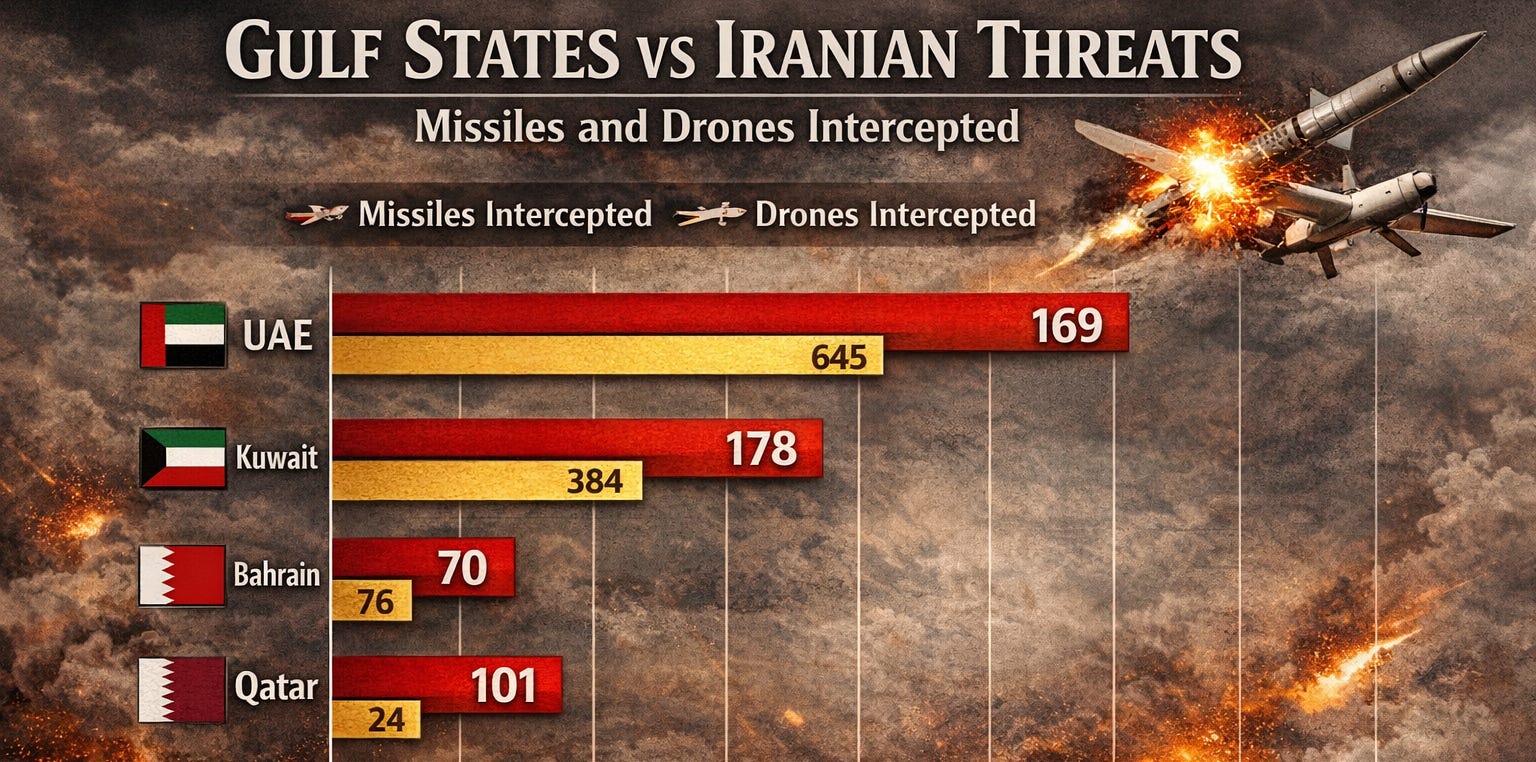
Attacks on key energy facilities in Qatar and Saudi Arabia, along with Iran’s blockading of the Strait of Hormuz, are sending global oil and gas prices soaring.
Analysts warn the disruptions could drive up energy costs worldwide, affecting gasoline, electricity, and heating - Al Jazeera
Fresh evidence suggests the drone pipeline between Tehran and Moscow may now run both ways. A Russian-made anti-jamming Kometa-M unit was reportedly recovered from the wreckage of an Iranian Shahed-136 drone that targeted the UK’s Akrotiri Air Base in Cyprus - a system previously documented in Russian-operated Shaheds fired at Ukraine.
Iran originally supplied the Shahed platform to Moscow. But since 2022, Russia has modified and upgraded the drones, including integrating the Kometa-M satellite navigation anti-jamming module, which has complicated Ukraine’s interception efforts. The appearance of this Russian system inside an Iranian-fired drone suggests a reverse transfer of battlefield innovation - and a deepening technological feedback loop between the two sanctioned states.
The Kometa units themselves also expose weaknesses in Western export controls. Designed to harden drones against electronic warfare, they have become a sanctions work-around, improving survivability while blurring supply chains. Visible in the same wreckage were Taoglas antennas - products of a well-known Irish-rooted company that has long been aware its components are appearing inside Shahed systems.
Ukraine, after years of confronting Shaheds - including variants equipped with Kometa modules - has developed layered, cost-effective countermeasures. As Iran increasingly deploys these drones beyond Ukraine’s battlefield, Gulf and Mediterranean states would be wise to consult Kyiv’s hard-earned expertise before the next swarm arrives.
UK Prime Minister Keir Starmer says Britain plans to deploy Ukrainian drone warfare specialists to the Middle East as part of international efforts to counter the growing threat posed by swarms of Iranian drones. For Ukrainian President Volodymyr Zelenskyy, Starmer’s proposal represents long overdue recognition of his country’s status as a military force to be reckoned with.
The Bank of Russia is suing the European Union for keeping its state assets frozen “for an indefinite period” to serve as collateral against a €90 billion loan to Ukraine. The lawsuit will test rare emergency powers that the European Commission used last year to keep Russian state assets across the bloc, worth some €210 billion, on ice through a qualified majority. The legal loophole nullified vetoes that Kremlin-friendly countries in the EU, such as Hungary, would otherwise have had. EU leaders agreed in mid-December to raise common debt without Hungary, Slovakia and Czechia to finance Kyiv’s defense against Russian forces. Ukraine will only have to pay back the loan once Moscow ends the conflict and pays war reparations. If the Kremlin refuses, EU leaders reserve the right to tap the cash value of the frozen assets to pay itself back. In a statement Tuesday, the Bank of Russia blasted the EU’s “unlawful actions against the Bank of Russia’s sovereign assets,” saying the regulation violates “the basic and inalienable rights to access justice” and the “principle of sovereign immunity of states and their central banks.” The central bank also argued the Council of the EU committed “serious violations” of its own procedures by adopting the measure by qualified majority rather than unanimity. A Commission spokesperson said it was “fully confident about the legality of this regulation and its compatibility with EU law and international law…This claim comes in the context of a growing number of Russian legal challenges concerning our support measures for Ukraine, therefore we’re of course not surprised,” the spokesperson said. Russia’s central bank filed a separate lawsuit in Moscow last year against Brussels-based financial depository Euroclear, where the bulk of its assets lie immobilized under EU sanctions after Moscow invaded Ukraine in 2022 - Politico
The European Union has reportedly urged Ukraine to allow access to pipelines carrying Russian oil. However, a senior Ukrainian official close to President Volodymyr Zelenskyy said that technicians from Ukraine’s state energy company, Naftogaz, had provided European counterparts with evidence that the Druzhba pipeline had been badly damaged. Emergency restoration work is ongoing, but Russia’s relentless attacks make safe operations difficult. The Ukrainian official noted that restarting flows would require sending repair crews into potentially dangerous areas and diverting limited resources. “Why must we repair the pipeline—in times of war and without a ceasefire—which delivers Russian oil to Russia’s friends?” a Ukrainian official asked.
The chaos in the world is a direct consequence of the Russian attack on Ukraine, said Italian Prime Minister Giorgia Meloni. “The explosive situation in the Middle East and drones in the skies over Cyprus are not separate conflicts, but a direct result of the destruction of international law. It all started in Ukraine, when Russia, a permanent member of the UN Security Council, cynically violated the borders of a neighboring country and signaled to the entire world that the rules no longer apply,” Meloni remarked in an interview with Tg5. The war in Europe is already underway, and to consider these events “distant” is a dangerous illusion. Without restoring the rule of law, which has been destroyed in Ukraine, the chaos will only worsen, she added.
Stranded in Dubai — and Scammed by Their Own
As thousands of Russians remain stranded in Dubai amid regional airspace disruptions, opportunists are moving quickly — offering bogus escape routes at extortionate prices.
According to Russian outlet Baza, scammers are targeting desperate tourists with so-called “transfers” to neighbouring countries, most commonly Oman, from where they promise onward flights home. Seats in cars are advertised from $260, but victims say final prices are deliberately vague, supposedly fluctuating based on the driver, vehicle type, and “additional services.”
The pitch escalates from there. The organisers claim they can secure guaranteed flights from the transit country - requiring a 70% upfront deposit in any currency, including cryptocurrency. “Premium” packages reportedly include private jet transfers starting at €20,000. In reality, no transport materializes. The money simply disappears.
Dubai’s airports were previously closed indefinitely due to the security situation, though Abu Dhabi has now resumed check-in for select flights, including routes to Moscow. In the meantime, the chaos has created fertile ground for fraud - a reminder that in moments of crisis, predators often move faster than planes.
President Donald Trump again appeared to confuse the birthplaces of his father and paternal grandfather during a media briefing Tuesday in Washington, repeating the incorrect claim that his father, Fred Trump, was born in Germany. Trump and German Chancellor Friedrich Merz spoke to reporters from the Oval Office early Tuesday following a long-planned bilateral meeting at the White House. Fred Trump was actually born in the Bronx, New York City. It was the president’s grandparents, Frederich Trump and Elizabeth Christ Trump, who immigrated to the U.S. from Germany. The president has made the same mistake publicly before. In 2018, he told CBS News that his father had been born in Germany. “My father is German — was German — born in a very wonderful place in Germany, so I have a very great feeling for Germany,” Trump said during another press briefing in 2019 - People
The journals…..