

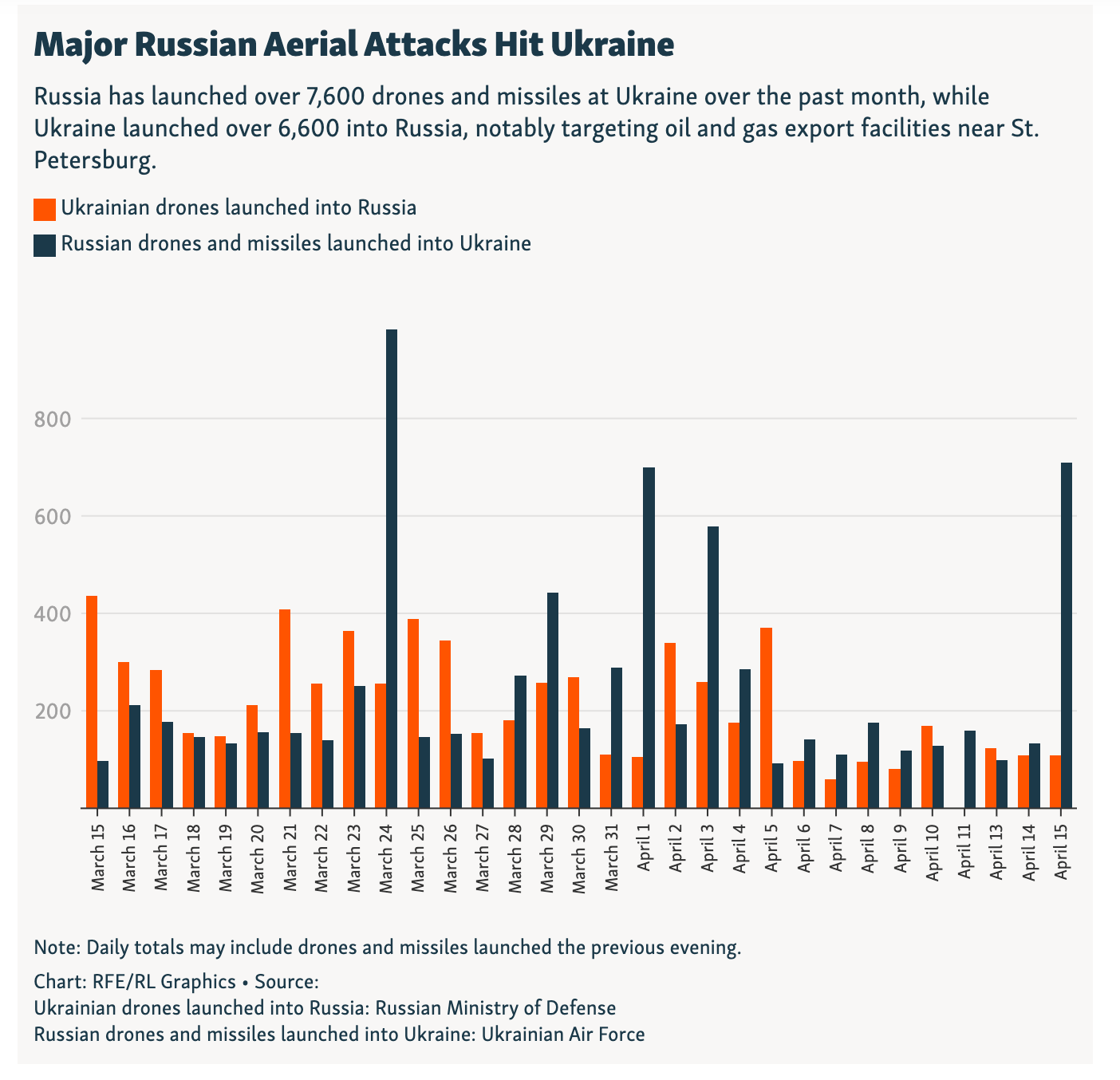
Russia unleashed one of its most intense bombardments in months, firing hundreds of drones and missiles at Kyiv, Dnipro, and cities across Ukraine - killing at least 19 people nationwide. Here in Odesa, where I’m reporting from Ground Zero, nine people were killed and at least 20 injured. My video report is above. If you value frontline, on-the-ground insight like this, please consider upgrading to a paid subscription to World Briefing.
🔥 World Briefing Hot Take
As the guns fall (briefly) silent in the Middle East, Ukraine is learning - again - what happens when global attention shifts and resources follow.
This is not coincidence. It’s choreography.
The same Iranian-made drones now terrifying Gulf states are the ones that have battered Ukrainian cities for years. But here’s the twist: Kyiv has become one of the world’s leading experts in stopping them. That hard-earned battlefield know-how is suddenly in demand - in capitals (i.e. Abu Dhabi) that, until recently, were happy to hedge, welcoming Russian money and influence while Ukraine burned.
That creates leverage. Real leverage.
President Volodymyr Zelenskyy now has an opening to press those same Gulf states to move beyond quiet cooperation and start exerting meaningful pressure on Moscow to come to the table in good faith. If they want protection, they should help deliver it - not just for themselves, but for Ukraine. Full stop!
And he should go further.
There are growing signs Zelensky is shedding the cautious deference that once defined his relationship with Washington. Good. Because the uncomfortable reality is that U.S.-led diplomacy - whether in Ukraine or the Middle East - has been inconsistent, transactional, and often ineffective. At a moment like this, Ukraine cannot afford to be tethered to that.
It’s time to pivot.
Time to tell the Americans, politely but firmly, to step aside - and bring in a mediator with real skin in the game: Recep Tayyip Erdoğan and Türkiye. Ankara has channels to both Kyiv and Moscow, a direct stake in Black Sea security, and a track record - however imperfect - of getting both sides to the table.
From here in Odesa, the consequences of not making that shift are visible everywhere. Apartment blocks ripped open. Power grids strained. A population exhausted by the randomness of nightly bombardments. And a growing, unmistakable truth: no inch of Ukraine feels safe anymore - especially after one of the most violent overnight Russian attacks in months.
This is the brutal asymmetry at the heart of the war. Russia can keep feeding the grinder - with manpower, with money, with time.
Ukraine cannot, as I suggested in my just-published Globe and Mail OpEd.
Which is why this moment matters. Not just on the battlefield, but at the negotiating table. Zelensky has new cards to play - the question is whether he plays them boldly enough, and fast enough, before the window closes.
News Briefs
Russia launched more than 700 drones and missiles at Ukraine in multiple waves overnight, killing at least 18 people in what local officials said was the deadliest attack in months. Officials said nine people had been killed in the southern port city of Odesa, five in the central city of Dnipro, and four - including a child - in the capital, Kyiv. In Russia, two people - including a child - were killed in a Ukrainian drone attack in the southern Krasnodar region, Moscow said. This comes after a brief ceasefire took place over Orthodox Easter last weekend - though both sides accused one another of hundreds of violations. Russia launched a full-scale invasion of Ukraine in February 2022. In Kyiv, warning sirens jolted people awake at 02:30 local time on Thursday (23:30 GMT on Wednesday), followed soon after by the first explosions. Images posted online by eyewitnesses show bright orange fires and huge plumes of black smoke in central areas of the city. In one video, a drone was filmed slamming straight into the side of an apartment block. Kyiv Mayor Vitali Klitschko wrote on Telegram that a 12-year-old boy was among four people killed. Another 45 people were injured. The mayor added that rescuers had pulled a mother and child from the ruins of a 16-storey residential building that collapsed in the city’s central Podil district. Four emergency medical workers were among those injured in the north of the capital. In Dnipro, regional head Oleksandr Ganzha said four people were killed and dozen had been injured in the Russian attack - before the city’s Mayor Borys Filatov said on Thursday that another body had been found. In the north-eastern city of Kharkiv, a drone strike injured a 77-year-old woman and a 66-year-old man, an official said. Two cities in the south, Mykolaiv and Kherson, have been left without power, according to local officials. Ukraine’s air force said on Thursday morning that Russia had launched 659 drones and 44 cruise and ballistic missiles in the prior 24 hours. It said that 636 drones and 31 missiles had been shot down - but there had been direct hits in 26 locations. Ukrainian President Volodymyr Zelensky warned earlier this week that Ukraine was facing a critical shortage of Patriot air defence missiles, the only means it has of intercepting Russia’s ballistic missiles. Global stocks of the US-made missiles are limited and many have been diverted to the Middle East since the US and Israel began attacking Iran in February. - BBC
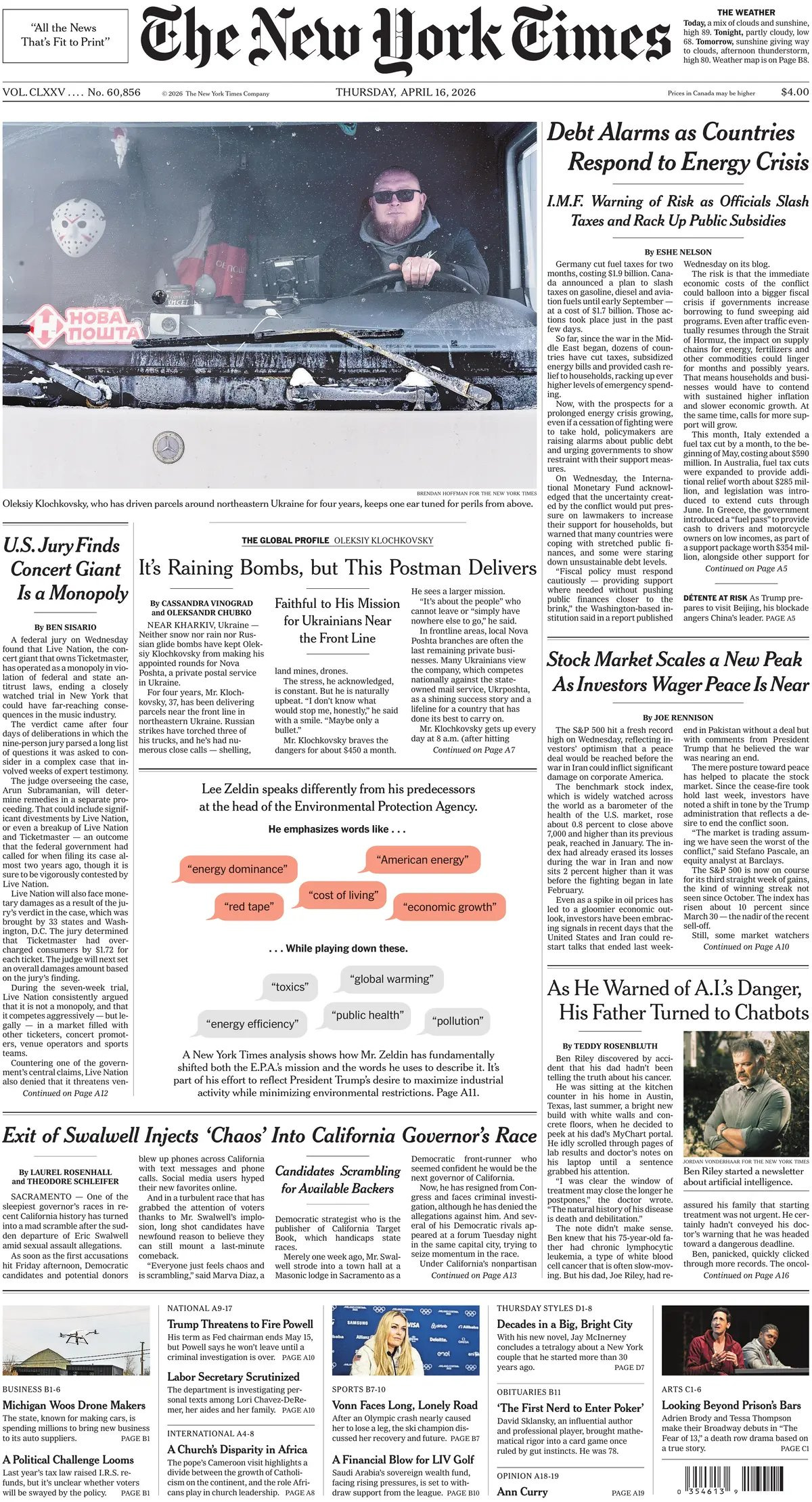
A 10-day cease-fire went into effect at midnight on Friday morning in Lebanon. The truce pauses fighting between Israeli forces and the militant group Hezbollah, removing a major obstacle to peace talks between the United States and Iran. Israeli and Lebanese officials had confirmed they would implement the truce, which was first announced by President Trump after a diplomatic push by the U.S. government earlier in the day. Hezbollah acknowledged the cease-fire in a pair of statements on Thursday, but did not directly address whether it would accept the truce, saying its actions would be “based on how developments unfold.” Israel and Hezbollah had continued to trade strikes in the hours before the cease-fire was set to take effect, according to statements from each military. The U.S. State Department, outlining the truce in a memo on Thursday, said that Israel would retain its right “to take all necessary measures in self-defense,” but would not carry out “offensive operations” against Lebanese targets by land, air or sea. The Lebanese government, with international support, is expected to take “meaningful steps” to prevent Hezbollah from carrying out attacks against Israeli targets. The Lebanese government does not have direct control over Hezbollah, an armed group considered more powerful than the state’s military. Still, Hezbollah has abided by some previous deals negotiated by the Lebanese government. The fighting between Israel and Hezbollah, Iran’s most powerful proxy, has threatened to upend the two-week cease-fire between the United States and Iran, which is set to expire next week. Iran has insisted the cease-fire must cover attacks on its ally Hezbollah, too. Mr. Trump told reporters at the White House that the next in-person negotiations with Iran might occur this weekend. Mr. Trump said he would consider extending the pause in fighting if the United States is close to a deal with Iran. He has repeatedly suggested a deal is near. More than 2,100 people have been killed in Lebanon during the current round of fighting, Lebanese authorities say, and over one million residents displaced - NYT
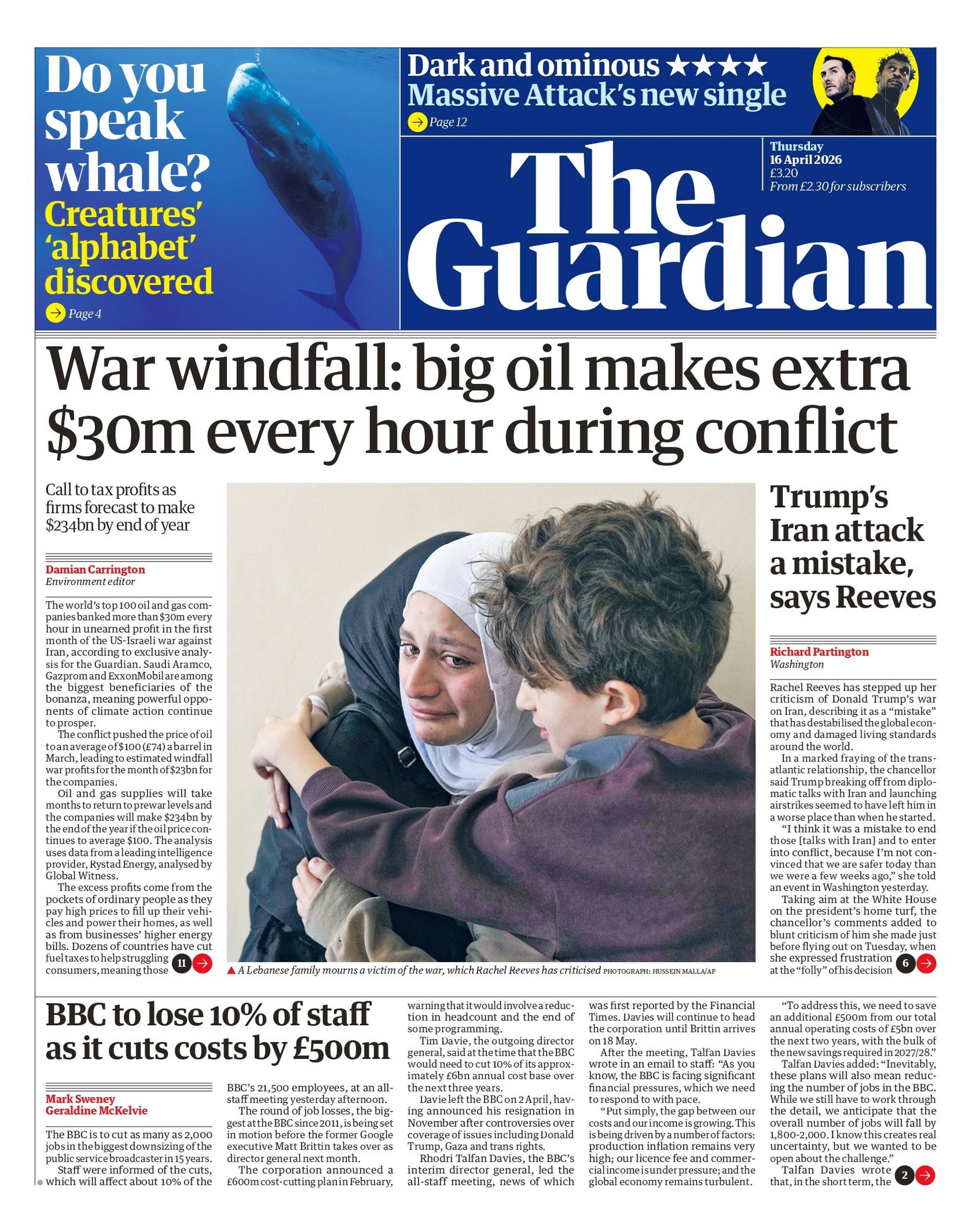
US oil bosses warn Donald Trump to block Iran’s Strait of Hormuz toll, saying it could set a dangerous precedent that other countries could exploit - FT
The Iran war is raising debt costs for African countries, sparking warnings that some economies could default as interest rates soar. Several nations on the continent are only just recovering from a post-pandemic shock that sent debt burdens soaring, and inflationary pressures set off by the war in the Middle East now risk unfurling that progress. The IMF this week forecast that economic growth will cool throughout the region in 2026, further compounding challenges: Citi’s chief Africa economist said Malawi, Mozambique, and Senegal could all default on their debts in the next two years. “The space countries have to weather this crisis is severely limited,” one expert told Bloomberg - Semafor
Russian influencers and public figures have issued a series of rare appeals to President Vladimir Putin, saying many Russians are afraid to speak up about problems they face and criticizing what they called “an intention to bring us back to the U.S.S.R.” The appeals began when blogger and influencer Viktoria Bonya called on Putin to address mounting social and economic pressures that have dominated national headlines in recent weeks. “The people are afraid of you, artists are afraid, governors are afraid,” she said, adding that she was not. “There is a huge wall between you and us ordinary people, and I want to break through that wall,” she said in the 18-minute video, which has garnered 24.1 million views and over 1 million likes in the past two days. “We consider you an excellent politician, but there is a lot you don’t know,” said Bonya, who is best known for appearing on the popular reality TV show Dom-2 (“House-2”) and lives outside Russia. She listed issues “that no governor would tell” Putin about, including devastating flooding in Dagestan, oil pollution along the Black Sea coast, the culling of livestock in Siberia and internet shutdowns, as well as rising prices and tax burdens on small businesses. “People are screaming out loud right now. They’ve been stripped of their last resources and they continue to lose more. Businesses are dying,” she said. “People are googling how to leave Russia. It’s one of the most popular search queries right now.” As the video went viral, some viewers speculated that she could be aligning herself with the Russian opposition or was even acting on the instruction of foreign intelligence. “I’m not some opposition figure. I never have been and I don’t plan to be. I’m just a person with a heart,” Bonya said in response to interview requests from exiled media. She later said she had not been paid to record the appeal. Other critics questioned whether the appeals to Putin were actually a PR campaign aimed at portraying him as a “strong president” unaware of problems on the ground or a more nuanced signal from competing factions seeking to ease restrictions in Russia. Public criticism of Putin or government policies can lead to prosecution and blacklisting by the authorities for both celebrities and ordinary citizens. Kremlin spokesman Dmitry Peskov on Thursday said Bonya had brought up “very significant issues,” but that authorities were already working to address them. “We have seen the video. It is quite popular and has received a large number of views,” Peskov said, adding that “none of these [problems] have been left without attention.” Also on Wednesday, popular blogger Aiza (also known as Aiza-Liluna Ai or Aiza Dolmatova) posted an eight-minute video in which she sharply criticized corruption among lawmakers as well as rising taxes and utility tariffs. In the since-deleted clip, Aiza suggested that Putin is likely “not actually aware” of what is happening and only receives information from specially prepared briefings - Moscow Times

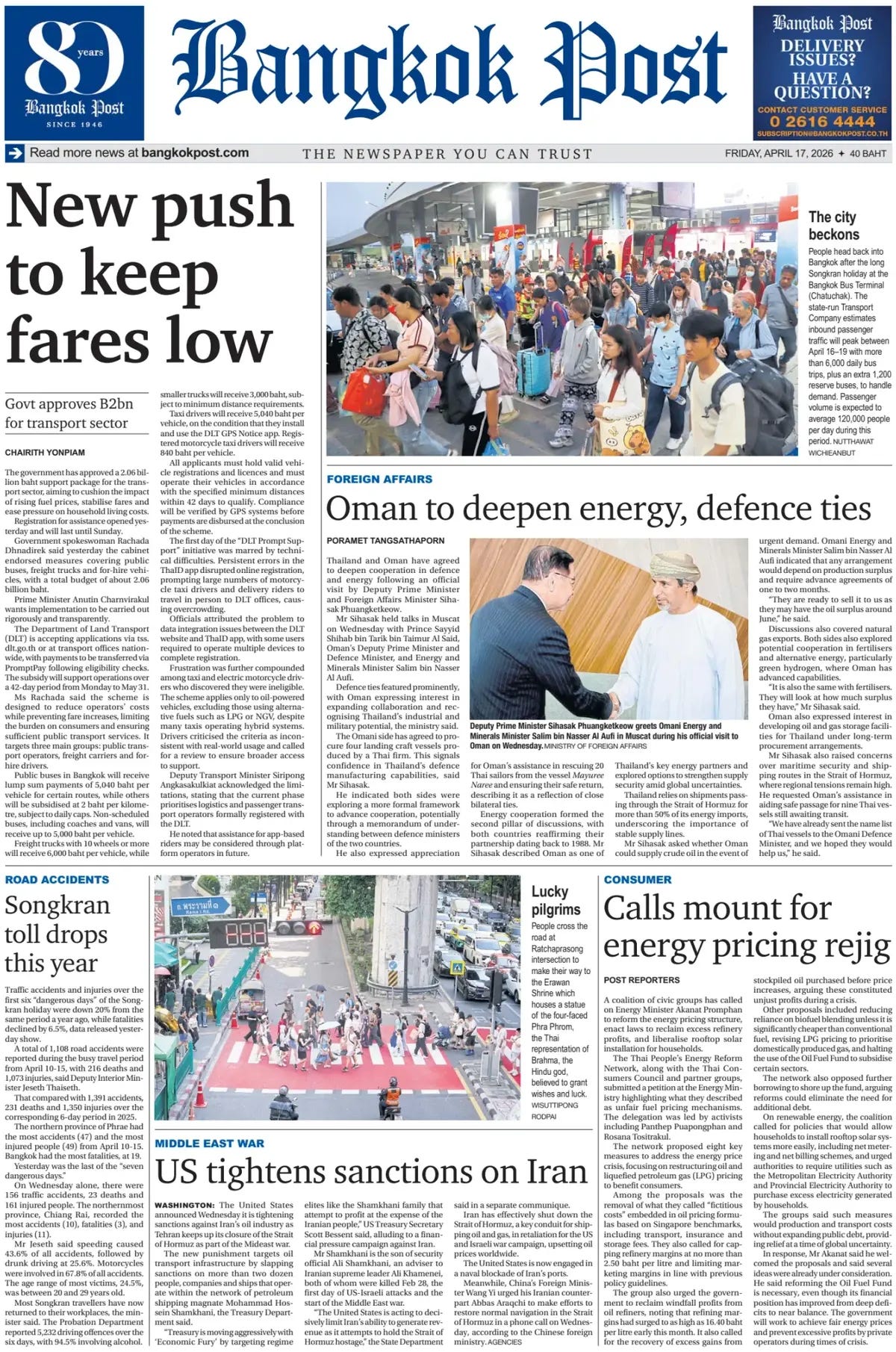
Europe has “maybe six weeks of jet fuel left”, the head of the International Energy Agency (IEA) has warned. Stocks would reach a tipping point in June if Europe was unable to replace at least half of its imports from the Middle East, the organisation said in a report this week. The Strait of Hormuz, a key route for jet fuel out of the Gulf, has been effectively closed by Iran for more than six weeks in response to US and Israeli attacks, sending the price rocketing and prompting fears of shortages. IEA executive director Fatih Birol told AP there could soon be flight cancellations if supplies remained blocked. In its monthly oil market report, the IEA- which advises 32 member countries on energy supply and security - said exports from the Gulf region were the largest source of jet fuel to the global market. Refineries in other major exporting countries, such as Korea, India and China were themselves highly dependent on crude oil imports from the Middle East. As a result, the crisis “has thrown a proverbial wrench into the inner workings of the aviation fuel markets”, it said. A spokesperson for the UK government told the BBC that it was working with fuel suppliers and airlines to “ensure people keep moving and businesses are supported” - BBC
The high cost of the fuel is prompting airline groups to cut less profitable routes and ground less efficient older aircraft. Lufthansa on Thursday announced it will retire the whole 27-plane fleet of its CityLine subsidiary this weekend.
While the group had already planned to retire the fleet, announcing the phase-out in 2024, “the current crisis is now forcing us to implement this measure earlier,” CFO Till Streichert said in the announcement. In addition to grounding CityLine’s planes, Lufthansa will withdraw its last four Airbus A340-600s and two Boeing 747-400s from its long-haul fleet as of October. But Lufthansa isn't the only airline affected. Shortly after its announcement, KLM said it “will operate 80 fewer return flights to and from [Amsterdam] Schiphol” Airport in May - Politico
The journals…..
I will try to subscribe soon, but just can’t yet. Thank you for all this great reporting and for all you do.