🔥 World Briefing Hot Take
If you want to understand how a global economic crisis actually begins, don’t start with the IMF spreadsheets - start in the Philippines.
I’ve just spent several weeks on the ground there, and the warning signs are no longer theoretical. Diesel prices have more than doubled. Cooking fuel is being subsidized just to keep daily life manageable. President Ferdinand Marcos Jr. is openly talking about the possibility of the country’s flag carriers grounding long-haul flights due to jet fuel shortages - an extraordinary signal of just how strained energy supply chains have become.
But the far bigger threat is what hasn’t happened yet.
The Philippine economy is deeply wired into the Middle East - not just through oil and LNG imports flowing through the Strait of Hormuz, but through its people. Millions of Filipinos work across the Gulf, sending home billions of dollars in remittances that keep entire families afloat - especially in “the provinces,” where the monthly wire transfer from a son in Dubai or a mother in Doha isn’t a bonus, it’s survival.
Now imagine that system under stress.
If the war drags on, if economies in the Gulf slow, or worse, if instability forces workers to return home, that steady flow of remittances could falter. And when it does, the impact won’t be felt first in central banks or stock markets - it will hit kitchen tables, school fees, medical bills. It will ripple through rural economies that have little to fall back on.
This is the blind spot in most global forecasts. The IMF talks about oil shocks, inflation, and downgraded growth. But for countries like the Philippines - and much of Asia - this is a double blow: an energy shock on the way in, and a remittance shock on the way out.
In other words, the global economy isn’t just slowing. In places like the Philippines, the fault lines are already cracking open.
News Briefs
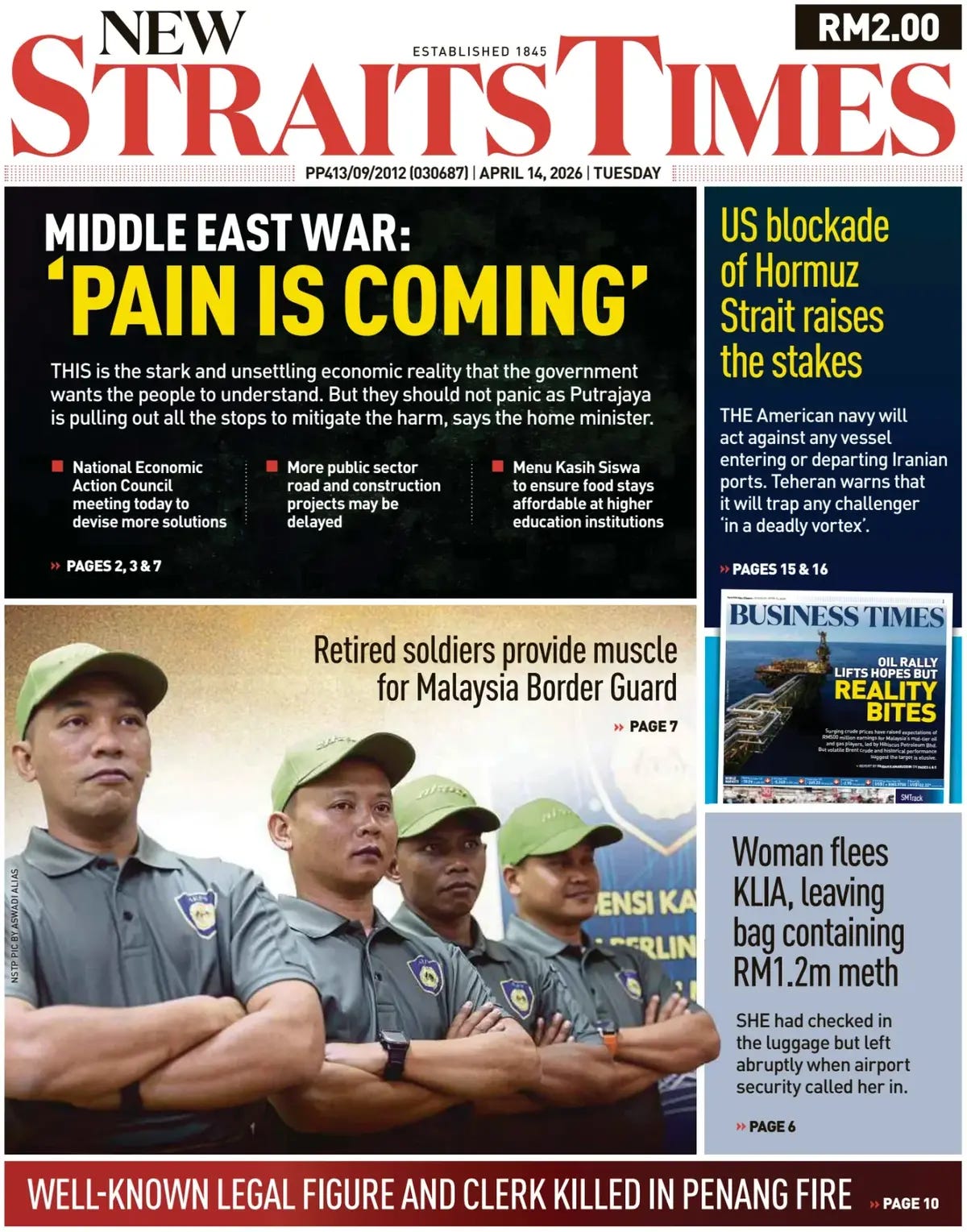
War in the Middle East has upended the world economy, the International Monetary Fund said on Tuesday, warning in a report that disruptions to oil markets could slow growth, fuel inflation and raise the possibility of a global recession. The sober message came after the global economy had largely weathered a pandemic, Russia’s war in Ukraine and soaring inflation without tipping into a recession. But President Trump’s decision to initiate a war in Iran has stopped the world economy in its tracks. In its latest World Economic Outlook, the I.M.F. sharply downgraded its growth forecasts, exposing the economic fallout from a geopolitical crisis that has roiled energy prices and injected a new bout of uncertainty into the global economy. “The global outlook has abruptly darkened following the outbreak of war in the Middle East,” Pierre-Olivier Gourinchas, the I.M.F.’s chief economist, wrote in the report. “The war interrupted what had been a steady growth trajectory.” The I.M.F. said that even if the war is short-lived, the damage to the global economy has been done. In that best-case scenario, the fund expects global growth to fall to 3.1 percent this year from 3.4 percent in 2025. That is down from the 3.3 percent that the fund projected in January. It is also lower than the 3.4 percent growth that it was prepared to project before the war broke out and oil shipments through the Strait of Hormuz were halted. The conflict has sent oil prices above $100 per barrel. Natural gas has spiked more than 80 percent, and surging fertilizer prices are raising costs for farmers. The I.M.F. laid out several scenarios for how the war could play out economically. The most severe case involves disruptions to energy markets that extend into next year. Such a scenario would drag global growth down to 2 percent and send inflation up to 6 percent. “The downside risks are tremendous,” Mr. Gourinchas said. Even a more optimistic case, in which the war concludes expeditiously and the Strait of Hormuz reopens, will leave behind economic carnage. The I.M.F. estimates that oil prices will increase by 21.4 percent this year and that energy commodity prices, which the fund had said would decline in 2026, will instead rise by 19 percent this year - NYT
“This really is a very, very treacherous moment for the world economy as we navigate the consequences of trying to secure a lasting peace in the Middle East” - Citadel CEO Ken Griffin
Chinese leader Xi Jinping said the global order was “crumbling into disarray” as the Iran war takes a toll on the world’s second-largest economy. Xi had so far largely refrained from commenting directly on the conflict, wary of harming ties with Washington ahead of a high-stakes summit with US President Donald Trump due next month. But while China has weathered the global fuel price spikes better than most — it has huge oil reserves and a world-beating green energy sector — its export-oriented economy has still been battered - Semafor
Philippine President Ferdinand Marcos said Monday excise taxes on LPG and kerosene would be trimmed to ease the fuel price shock wrought by the US-Israeli war on Iran. "We were hoping for a good outcome from the peace talks (between) the US and Iran, but it appears they were unable to strike a deal, which is why we will continue to help our people," he told a news conference. "We have reduced the tax on petroleum products directly used by our people in their everyday lives." Following the legislature's earlier passage of a law authorizing him to adjust fuel excise taxes, Marcos said the cost of liquefied petroleum gas, the country's fuel of choice for cooking, would be trimmed by 3.36 pesos (5.6 US cents) per kilogram from Tuesday. He said the price of kerosene, the cooking fuel used by poorer families, would drop by 5.60 pesos per litre. Marcos said he would convene a meeting of a government crisis committee Tuesday to discuss possible excise tax adjustments on gasoline and diesel, the main fuels for public transport. The Philippines sources its crude oil from the Middle East and imports refined petroleum products mainly from Asian refineries that are also dependent on crude oil shipped through the Strait of Hormuz that Iran has effectively closed. Local diesel pump prices have more than doubled to about 145 pesos ($2.41) a litre since the start of the war. The government revealed last week war-driven inflation figures that showed food prices had increased nearly twice as fast in March as the month before - Jakarta Post
Additional US-Iran peace talks “could be happening over next two days” in Pakistan’s capital, President Trump told The New York Post on Tuesday. In an initial phone interview, Trump had claimed that discussions were “happening, but, you know, a little bit slow” before indicating that a second round of direct negotiations to end the seven-week war would likely happen somewhere in Europe. About half an hour later, Trump called back with an update. “You should stay there, really, because something could be happening over the next two days, and we’re more inclined to go there,” he said of Islamabad. “It’s more likely, you know why? Because the field marshal is doing a great job.” Trump was referring to Pakistan Field Marshal Gen. Asim Munir, with whom he forged a connection last year while the country was in the throes of its own war with India, which ended after just four days thanks to a peace deal that the US helped to broker.
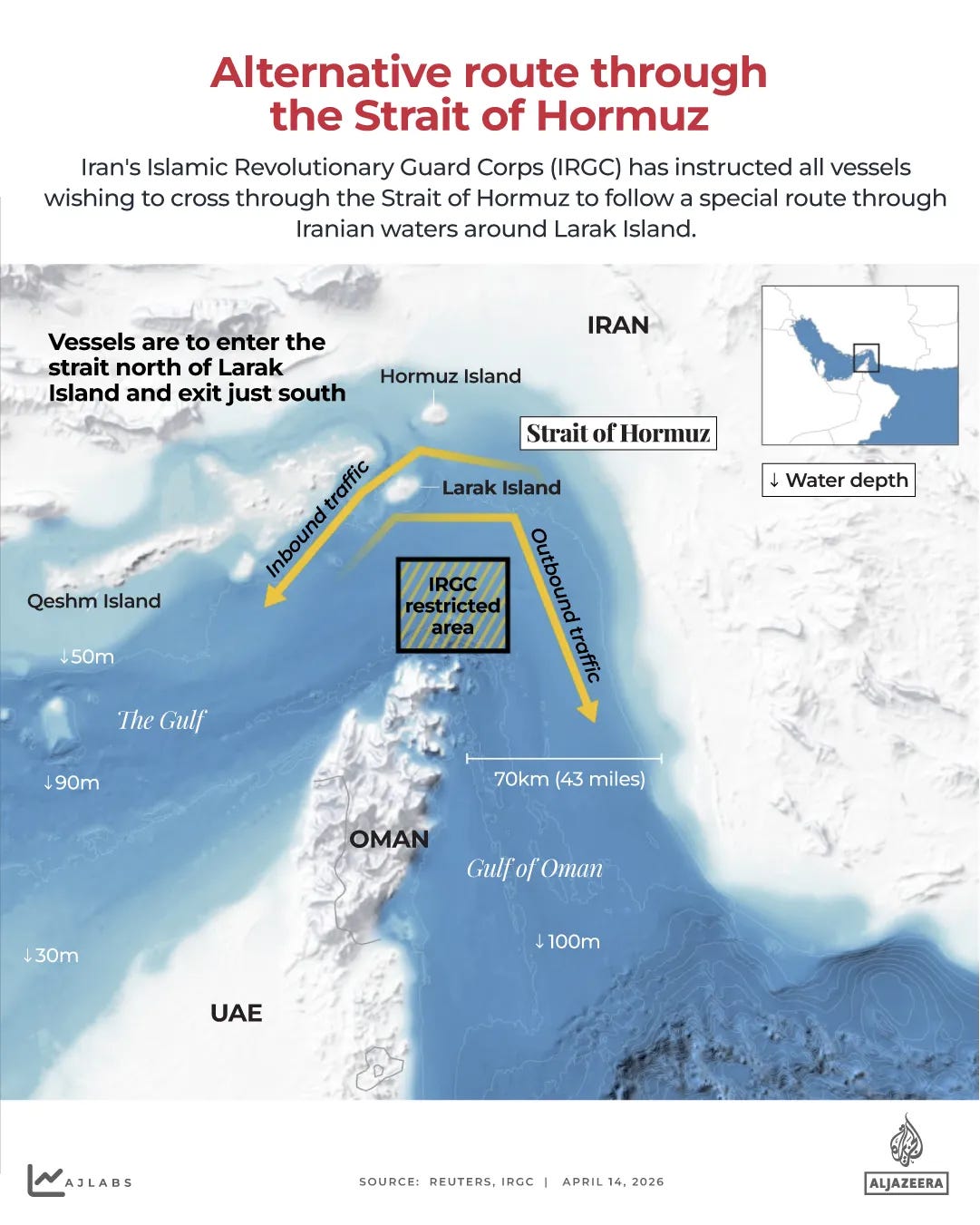
At least three tankers have entered the Gulf via the Strait of Hormuz on Tuesday, shipping data from LSEG and Kpler shows. The Panama-flagged Peace Gulf is heading to Hamriyah port in the UAE, after transiting the new route between the islands of Larak and Hormuz in Iranian territorial waters that the IRGC has ordered all vessels to take. Earlier, two US-sanctioned tankers passed through the strategic narrow waterway. As the three vessels transiting the strait were not heading to Iranian ports, they are not affected by the US blockade, which took effect on Monday - Al Jazeera
Autocrats beware: Moscow may be running out of dacha space.
My latest with Times Radio in London dives into the political earthquake in Hungary - where Viktor Orbán’s shock defeat reflects something deeper: years of alleged corruption, crumbling public services, and a younger generation no longer willing to tolerate it.
If the current trajectory holds, the Kremlin may soon face an unexpected housing crisis - too many toppled, pro-Putin strongmen… and not enough luxury dachas to go around.
We also connect the dots beyond Budapest:
- from the grinding realities of the war in Ukraine
- to the widening arc of instability in the Middle East
Because none of these stories exist in isolation.
🎥 Watch the full interview above — and if you value frontline analysis that goes beyond the headlines, consider upgrading to a paid subscription for World Briefing.
Russia’s oil export revenue surged in March, nearly doubling from the previous month after the United States issued a temporary sanctions waiver to stabilize global energy markets, the International Energy Agency said on Tuesday. In its monthly oil market report, the IEA said Russia’s revenue from crude and petroleum shipments rose to $19 billion last month, a sharp reversal from February, when revenues hit a post-invasion low of $9.75 billion. The rebound came as the U.S. Treasury Department issued a 30-day waiver for the delivery and sale of Russian crude oil and petroleum products loaded onto ships between March 12 and April 11. Russia’s total oil exports in March jumped to 7.1 million barrels per day, an increase of 320,000 barrels per day compared to February. Crude oil production also saw a modest increase, rising to 8.96 million barrels per day. Despite the revenue windfall, the IEA warned that Russian oil production could plateau in the near-term as Ukrainian drone strikes continue to degrade its port and energy infrastructure - Moscow Times
Ukrainian President Volodymyr Zelensky has said that Kyiv’s forces had, for the first time, captured a Russian position using drones and unmanned ground vehicles (UGVs) only. “For the first time in the history of this war, an enemy position was taken exclusively by unmanned platforms — ground systems and drones,” he said on Monday, adding that unspecified number of Russian troops surrendered. “The operation was carried out without infantry and without losses on our side,” Zelensky added. While experts told The Moscow Times that Zelensky’s statement was mainly a PR move, it also highlights how unmanned systems “are already transforming both tactics and strategy” in the war. “It was likely not a major breakthrough — probably the capture of a small, secondary position,” Ukrainian military analyst and former SBU security service officer Ivan Stupak told The Moscow Times. “However, the broader point is valid: we may be witnessing a significant shift.” Zelensky did not provide exact details on the location or scale of the operation. But “even if this involved capturing a small position, if it was done entirely without human involvement, then the next position that could be taken may be larger in scale,” Stupak said. Moscow and Kyiv are locked in a competition for drone technology and electronic warfare, with unmanned forces becoming a key tactical tool on the battlefield and beyond as both sides face mounting manpower challenges - Moscow Times
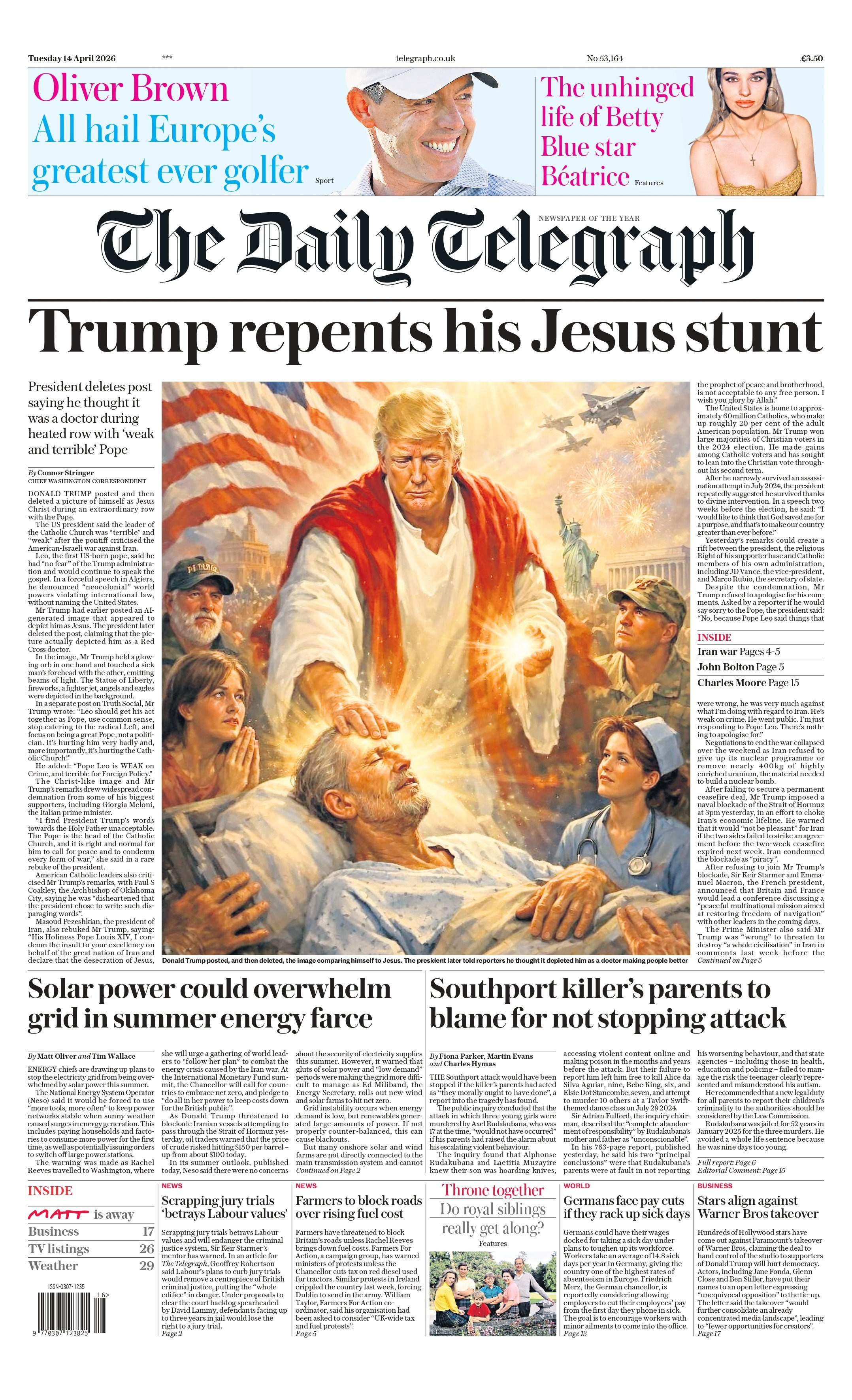
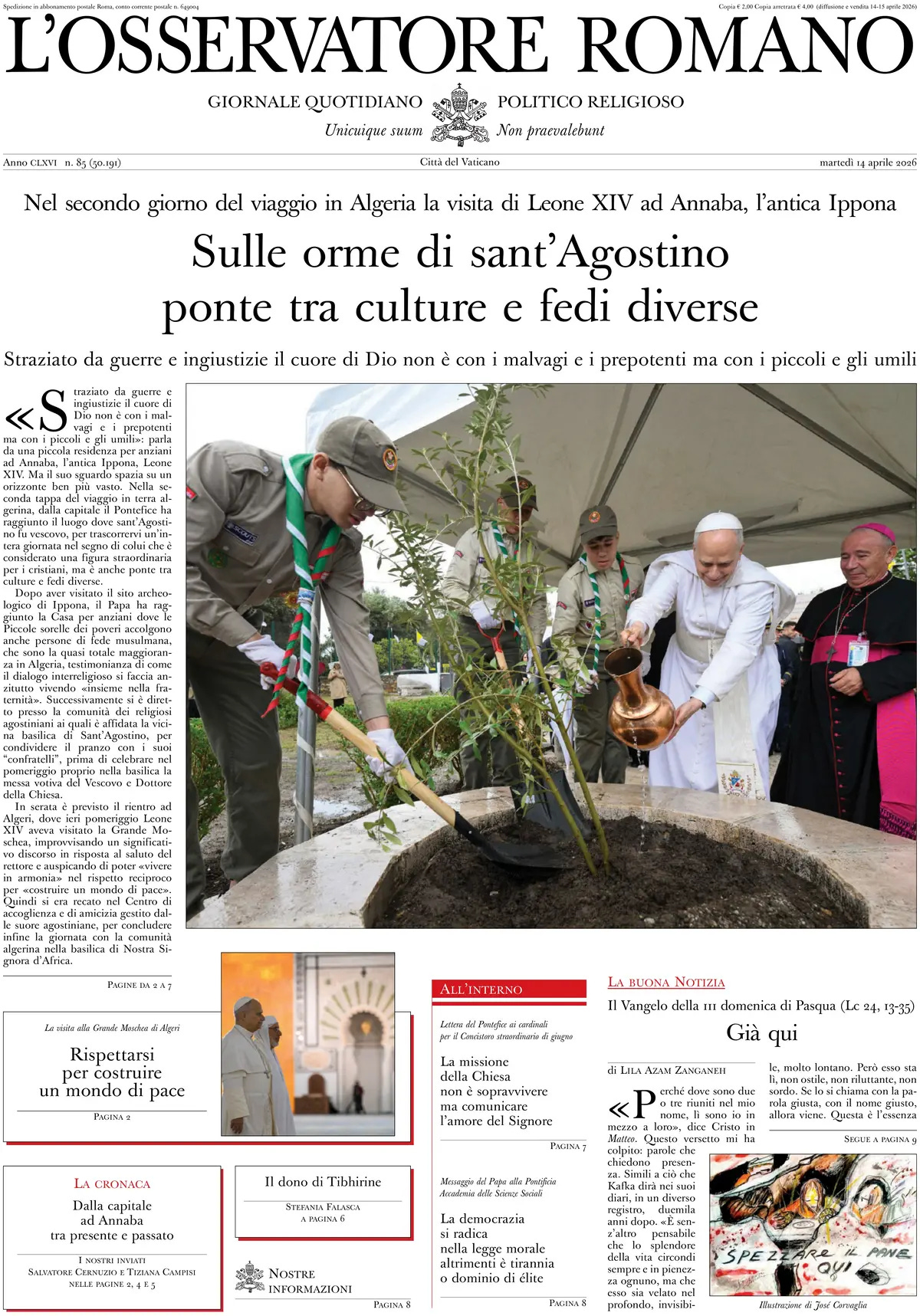
US President Donald Trump told an Italian newspaper on Tuesday he was “shocked” by Prime Minister Giorgia Meloni and had expected her to be more courageous, delivering a blunt public rebuke to one of his closest European allies. Meloni had been a vociferous supporter of Trump, but she has criticized his decision to go to war with Iran, and on Monday, denounced his weekend criticism of Pope Leo as “unacceptable.” Trump responded in an interview with Corriere della Sera, saying Meloni was “very different from what I thought” and denouncing her for refusing to help re-open the Strait of Hormuz, which has been blocked by Iran. “I’m shocked by her. I thought she had courage. I was wrong,” he is quoted as saying in the Italian-language article posted online. The criticism marks a dramatic change in tone toward Meloni, who was the only European leader to attend the president’s inauguration in 2025. Only last month he told Corriere della Sera that Meloni was “a great leader,” but on Tuesday he accused her of failing to back US efforts over energy security and Iran, and said Italy wanted America “to do the job for her.” - Al Arabiya
UK passengers are facing lengthy delays at airports as a result of the new post-Brexit Entry/Exit System (ESS) checks, which came fully into force on 10 April. The severe delays at the end of the Easter holidays have led to concerns about further travel chaos this summer. The new EES checks mean travel to the Schengen area requires third-party nationals – including British citizens after Brexit – to have facial photos and fingerprints taken. However, the phased introduction of the checks in recent months has been beset by IT problems and staff shortages, leading to queues of three hours or more in some cases. Airlines and airports have warned that lengthy queues could become even more common following the full EES implementation and have called for more flexibility for the system to be paused to avoid travel chaos for passengers. Both the Airports Council International (ACI) Europe and Airlines for Europe have pointed to waiting times of “between two and three hours” at airports across the Schengen area - iPaper
The journals….