Watch my explanatory video above as I connect the geopolitical dots in a world that’s becoming more complex - and more dangerous - by the day. These deep-dive briefings are normally reserved for paid subscribers. But given the gravity of this moment, I’ve opened this one up to everyone.
Iranian outlets, including the official IRNA news agency, have published a message from Iranian Parliament Speaker Mohammad Bagher Ghalibaf marking 30 days since the start of the war. In the message, Ghalibaf says “the enemy signals negotiation in public, while in secret it plots a ground attack”. He adds that the US, “with a 15-point list, is setting out its wishes and pursuing what it failed to achieve in the war”. Ghalibaf also says Iranian forces are “waiting for American soldiers to enter on the ground so they can rain fire upon them”. On the subject of Iran’s surrender, Ghalibaf says in Arabic that Iran’s message is “clear” and it will not accept “humiliation”. Some unconfirmed reports suggested the Trump administration considered Ghalibaf as a potential partner and possibly even a future leader - BBC
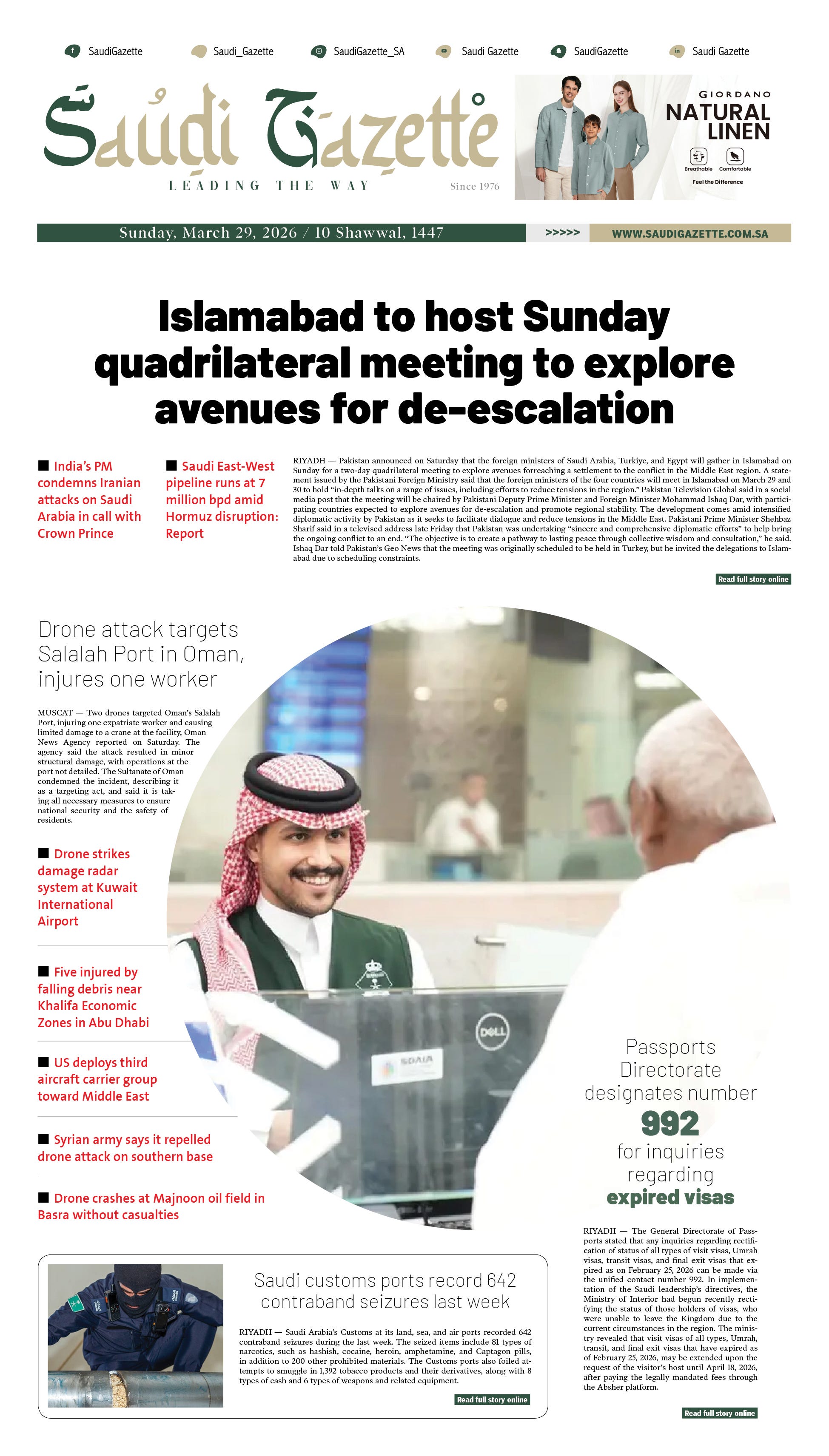
Pakistan hosted talks with Turkey, Egypt and Saudi Arabia on Sunday as part of its efforts to broker an end to the Iran war, with initial discussions focused on proposals to reopen the Strait of Hormuz to shipping, sources familiar with the matter said. Foreign ministers from the three regional powers landed in Islamabad for the talks as Iran warned the U.S. against launching a ground attack and global oil prices surged amid continued fighting between Iran, the U.S. and Israel. The countries meeting in Pakistan have floated proposals to Washington tied to maritime traffic and reopening the Strait of Hormuz, five sources familiar with the matter told Reuters, as part of wider efforts to stabilise shipping flows. Pakistan, which like Turkey borders Iran, has leveraged its close ties to both Tehran and Washington to emerge as a key diplomatic channel in the conflict, while Ankara and Cairo have also played a role - Reuters
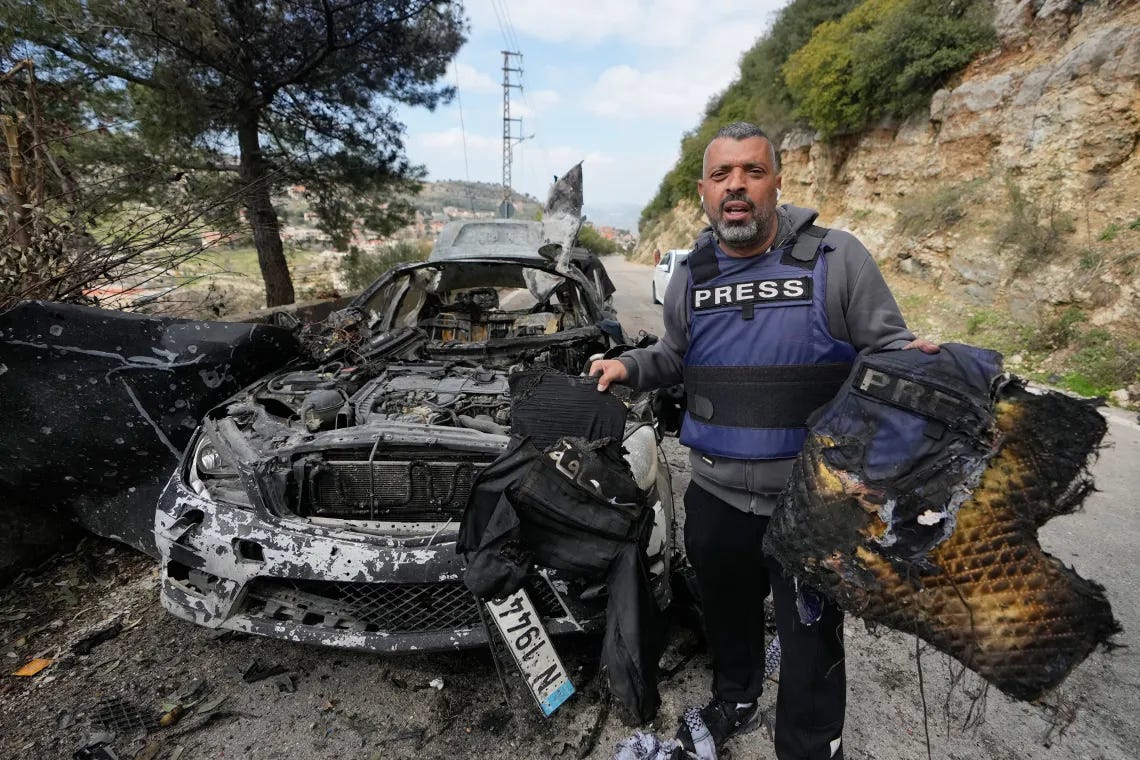
Hundreds gathered in Beirut’s southern suburbs for the funeral of three Lebanese journalists, Ali Shoeib, Fatima Ftouni and her cameraman brother Mohammed. All were killed in an Israeli strike on Jezzine in southern Lebanon on Saturday. Lebanese authorities have condemned the attack as a war crime. According to Al-Mayadeen TV, the Lebanese journalists were reportedly en route to cover an assignment at the time of the attack. Israel Defence Forces (IDF) Situation Room confirmed to the Committee to Protect Journalists (CPJ) it carried out the strike, saying that Shoaib (whom it referred to as Ali Hassan Shaib) was a member of Hezbollah’s Radwan Force. Said CPJ Regional Director Sara Qudah. “We have seen a disturbing pattern in this war and in the decades prior of Israel accusing journalists of being active combatants and terrorists without providing credible evidence. Journalists are not legitimate targets, regardless of the outlet they work for.”
Qatar and Ukraine have signed a defence agreement seeking joint expertise on countering threats from missiles and drones, according to Qatar’s Ministry of Defence, as Iran continues attacking its Gulf neighbours. The agreement was made on Saturday during Ukrainian President Volodymyr Zelenskyy’s visit to Doha, following his stop in the UAE earlier in the day. Earlier on Saturday, Zelenskyy said Ukraine and the United Arab Emirates had also agreed to cooperate on defence, a day after signing a deal with Saudi Arabia during his visit to the kingdom on Thursday. Kyiv has sought to leverage its expertise in downing Russian drones to help Gulf nations and has deployed anti-drone experts to the three countries Zelenskyy visited during his diplomatic tour. Tehran insists it is targeting only US assets in the Gulf in retaliation for the US-Israeli war on Iran, but the assaults have upset relations as Gulf nations say civilians are being put at risk. “The agreement includes collaboration in technological fields, development of joint investments and the exchange of expertise in countering missiles and unmanned aerial systems,” Qatar’s Defence Ministry said in a statement during Zelenskyy’s visit. “Ukraine is offering a cheap way of countering Iranian drones. Ukraine has been doing that for the past three and a half years because Russia has been firing Shahed drones since September 2023 at least, and it’s been downing them nearly every day,” said Al Jazeera’s Dmitry Medvedenko, reporting from Doha - Al Jazeera
Live from Bangkok, I joined CNN to break down a devastating escalation in the war in Ukraine - including a Russian drone strike on a maternity hospital in Odesa, once again placing civilians directly in the line of fire. But beyond the battlefield, a bigger geopolitical question is emerging. President Volodymyr Zelenskyy has just signed 10-year defense cooperation agreements with Gulf states including Qatar, United Arab Emirates, and Saudi Arabia.
👉 The key issue I raised on CNN:
Are these deals too one-sided?
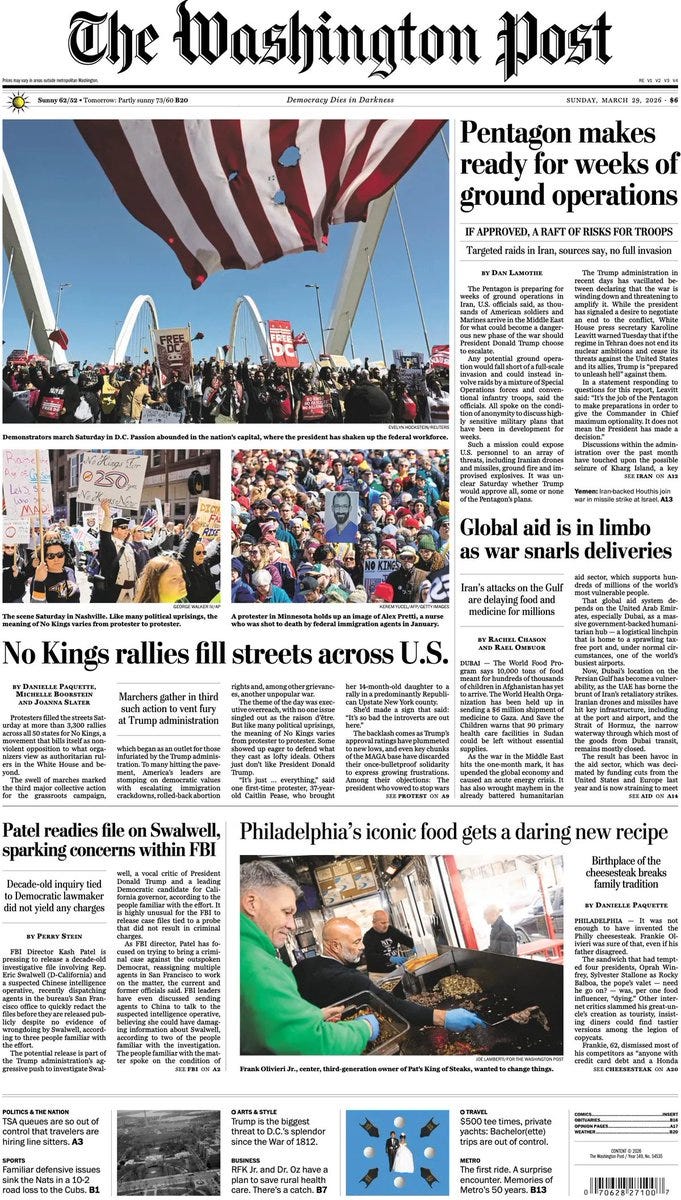
Millions of people have taken to the streets across the US - and to a lesser extent worldwide - on Saturday to protest against US President Donald Trump on a range of different issues, in what they see as his authoritatian style of governance, hardline immigration policies, climate change denial and the war with Iran. Organisers said the protests could add up to one of the largest demonstrations in US history, with more than 3,100 events held in major cities, suburbs and rural areas. They expect the total number of participants to top nine million. It is the third time in less than a year that people protest in the US as part of a grassroots movement called “No Kings”. The first such nationwide protest day took place last June on Trump’s 79th birthday and coincided with a military parade he organised in Washington. Several million people turned out, from New York to San Francisco. The second, in October last year, drew an estimated seven million protesters, according to organisers. In New York City, tens of thousands of people rallied on Saturday, including Oscar-winning actor Roberto De Niro who called the US President “an existential threat to our freedoms and security.” The event highlighted the deep political divide that currently exists in the US. While Trump is largely worshipped within his “Make America Great Again” movement, he is equally disliked by his foes, who decry his penchant for ruling by executive decree, use of the justice system to prosecute opponents, as well as his repeated climate change denial and apparent obsession wih fossil fuels - Euronews
Foreign ministers from the Group of Seven (G7) are discussing a major effort to repair damage to the protective shelter at Ukraine’s Chernobyl nuclear power plant, with costs estimated at around $575 million, a sign that Kyiv remains at the center of high-level talks despite competing global crises. Speaking to RFE/RL on March 27, French Foreign Ministry spokesman Pascal Confavreux rejected concerns voiced by some countries that escalating tensions in the Middle East are diverting attention away from Ukraine. “It could be a risk, but it’s not a reality,” he said. Confavreux stressed Ukraine is a core focus of the ongoing G7 meeting, noting ministers are holding a dedicated session on support to Kyiv, with Ukraine’s foreign minister set to join discussions. “This G7 was created to allow leaders to discuss in trust the most important international issues,” he said. “Among them, of course, there will be Iran and the Middle East -- but also Ukraine.” A central issue on the agenda is repairs to the massive protective dome covering the destroyed reactor at Chernobyl, which was struck by a drone in 2025. Ukraine has said the impact was a Russian drone carrying a “high-explosive warhead.” The Kremlin has denied the allegations, saying Kyiv made the claim to disrupt peace negotiations that were ongoing at the time. In 1986, Chernobyl’s No. 4 reactor exploded, creating the world’s worst-ever nuclear disaster. The $2.5 billion dome was built in 2019 to prevent further radiation leaks and to enable the eventual dismantling of the reactor remains - RFE/RL
Russia unleashed another wave of deadly overnight attacks across Ukraine, launching 273 drones, killing at least five people and injuring at least 16. While Ukraine’s air defense shot down 252 Russian drones, 21 made their way through, reported Ukraine’s Air Force. Ukrainians in Odesa suffered the most, with 60 drones swarming the city until the early hours of the morning. As emergency services continue to search through the rubble, two people are known to have been killed and at least 14 injured, including a child, according to reports from Odesa City Military Administration Head Serhii Lysak and regional Governor Oleh Kiper. In a night of “pure terror,” Russian forces targeted a maternity hospital, residential buildings, enterprises, and port and critical infrastructure, President Volodymyr Zelensky wrote. Estonian Foreign Minister Margus Tsahkna called the attack an “act of pure inhumanity.” - Kyiv Independent
Two sailboats that went missing carrying humanitarian aid from southern Mexico to Cuba landed in Havana on Saturday afternoon hours after Mexico’s navy said it had located the boats days after they went incommunicado because of bad weather. The vessels carrying at least eight people departed from Isla Mujeres in southern Mexico on March 20 and then lost contact, fueling concern in Mexico, Cuba and beyond. In a post on X on Saturday morning, the navy said an aircraft spotted the boats 80 nautical miles northwest of Havana, Cuba. Upon arriving to the island, Adnaan Stumo, the coordinator of the sailing convoy, said bad weather was responsible for the delay. He thanked Mexico’s navy for its support and making sure they were OK, and said they were “delighted” to start delivering aid to Cubans on the island. “We arrive with a simple but powerful message: solidarity with the Cuban people doesn’t stop at borders. It crosses oceans,” Stumo, a U.S. citizen, said. “Over the past week, our sailboats encountered difficult conditions at sea, during which we lost contact with convoy coordinators and maritime authorities alike.” - Politico
The journals….