World Briefing Hot Take 🔥
Canadian taxpayers are expected to spend more than $1 billion helping host the 2026 FIFA World Cup - a tournament that could become the most profitable in FIFA’s history. While soccer’s governing body pockets revenues from broadcasting rights, sponsorships, ticket sales and merchandise, local governments are left paying for security, transportation, fan zones and infrastructure. In other words: private profits, public costs. Supporters argue the tournament will generate tourism, international exposure and long-term economic activity. However, economists have repeatedly questioned whether mega-sporting events deliver the lasting returns promised by organizers.
The upcoming men’s World Cup is shaping up to be an unprecedented financial windfall for FIFA. As veteran soccer writer Leander Schaerlaeckens recently highlighted on PBS NewsHour, the organization selected North America fully understanding it would be where they could “make the most money”. According to Schaerlaeckens, FIFA has done “everything it can to just suck up every bit of cash that it possibly could”.
Breaking from the long-standing tradition of allowing domestic soccer federations to run the event, FIFA has centralized its operations to capture every possible revenue stream. They even set up a new headquarters in Miami - renting space in Trump Tower for what Schaerlaeckens described as “political reasons,” despite reports that nobody is actually working there. Through this tight control, the international governing body is retaining all income from broadcast rights, sponsorships, ticket sales, and even local concessions and parking.
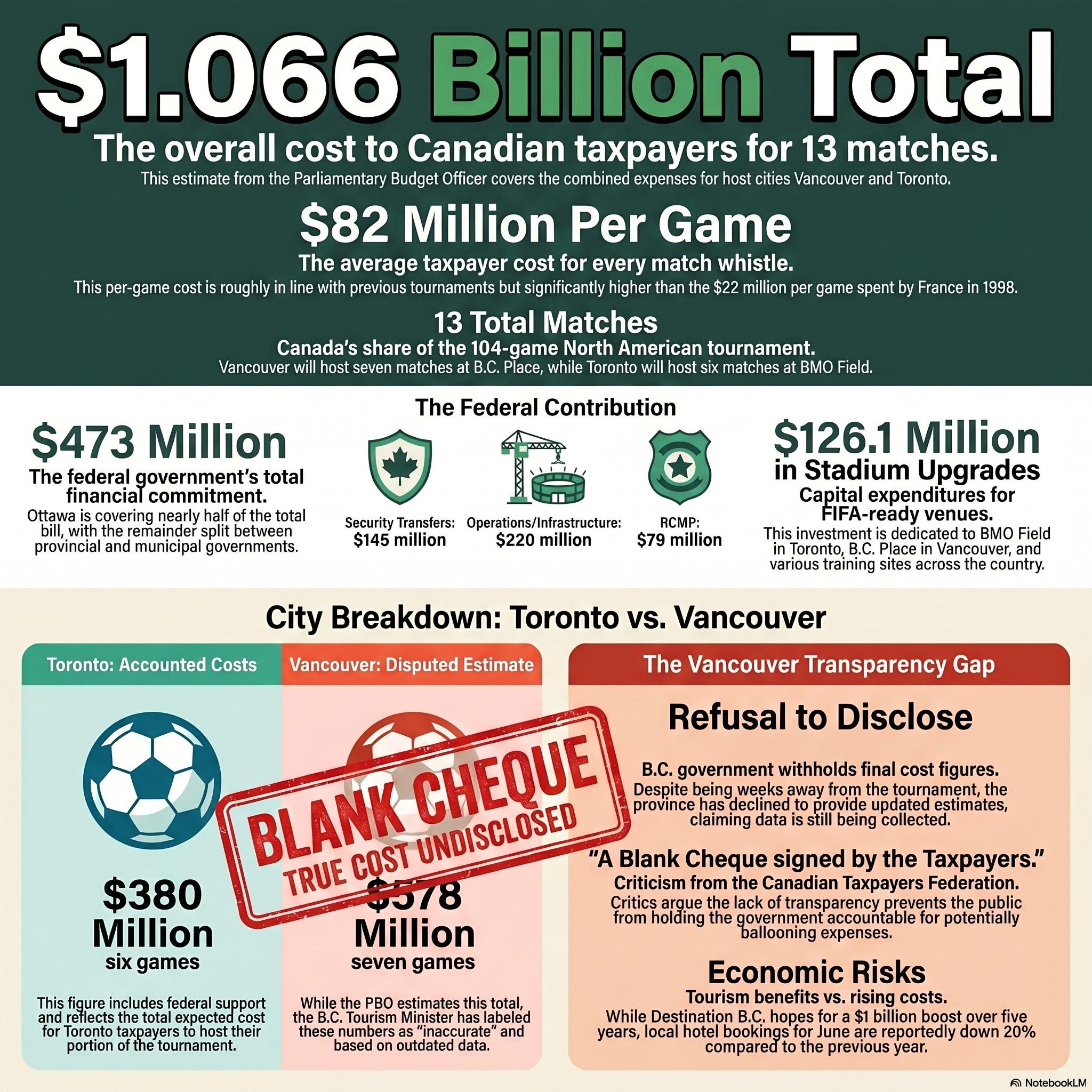
Meanwhile, the 16 local host cities across North America are being left to foot the bill for the most expensive, hard-to-monetize logistical challenges, such as security, fan fests, and transportation. Consequently, Canadian taxpayers are poised to end up holding the bag for matches that bring questionable local economic benefits. According to a new report from the Parliamentary Budget Officer (PBO), hosting the tournament will cost governments across Canada an estimated $1.066 billion.
The Local Burden and the Forgotten Olympic “Hangover”
With Canada hosting 13 of the 104 games, this puts the cost at approximately $82 million per game. While the federal government will cover $473 million - largely focused on infrastructure and security operations - the rest must be covered by other levels of government. Taxpayers in Toronto will face a total cost of $380 million for their six games, while Vancouver taxpayers are estimated to shoulder about $578 million for their seven matches.
For those of us who witnessed firsthand the massive disruptions, budget overruns, and security costs of the Vancouver 2010 Winter Olympics while covering the event for HUM News, this presents a staggering sense of déjà vu. Back then, Vancouver taxpayers were left to deal with a severe fiscal hangover and costly “white elephant” infrastructure. Yet, rather than approaching this new sports mega-event with caution, the British Columbia government is actively dodging accountability and refusing to disclose the final costs just weeks before the tournament begins.
B.C. Tourism Minister Anne Kang has dismissed the PBO’s $578 million estimate as “inaccurate,” yet repeatedly declined to provide an updated figure, stating the province is still collecting data. B.C. Conservative interim leader Trevor Halford bluntly suggested the government is intentionally “waiting till we’re out of session to produce that number”.
A “Blank Cheque” for Luxuries
This lack of transparency has sparked fierce backlash. Carson Binda of the Canadian Taxpayers Federation argued that the provincial government has essentially “handed FIFA a blank cheque signed by the taxpayers”. He criticized the government for spending millions - such as funding new VIP lounges at B.C. Place - on “outrageous luxuries for Swiss soccer executives that most British Columbians will never get to experience,” while everyday citizens struggle with the cost of living. Even Vancouver City Councillor Pete Fry expressed frustration that the city itself still lacks a “clear reckoning” of what local taxpayers are actually on the hook for.

Questionable Economic Returns
While organizers have promised an economic boost, the reality on the ground is painting a different picture. Destination Vancouver reports that hotel room bookings for June are actually down 20 percent compared to the same time last year.
Because local markets are desperately trying to find alternative ways to pay for massive infrastructure and security expenses without passing the entire cost directly onto taxpayers, attendees are also facing exorbitant secondary expenses, such as $150 train tickets. This financial burden on fans is compounded by “extraordinary” game ticket prices set directly by FIFA. The organization has justified the steep costs by arguing that they are essentially bringing “104 Super Bowls” to the continent, and are pricing the event accordingly.
As Canadians struggle with housing costs, food inflation and strained public services, governments are being asked to justify every dollar they spend. Yet when it comes to the World Cup, many still cannot say exactly what the final bill will be. FIFA already knows what it stands to gain. Canadian taxpayers are still waiting to learn what they will owe.
News Briefs
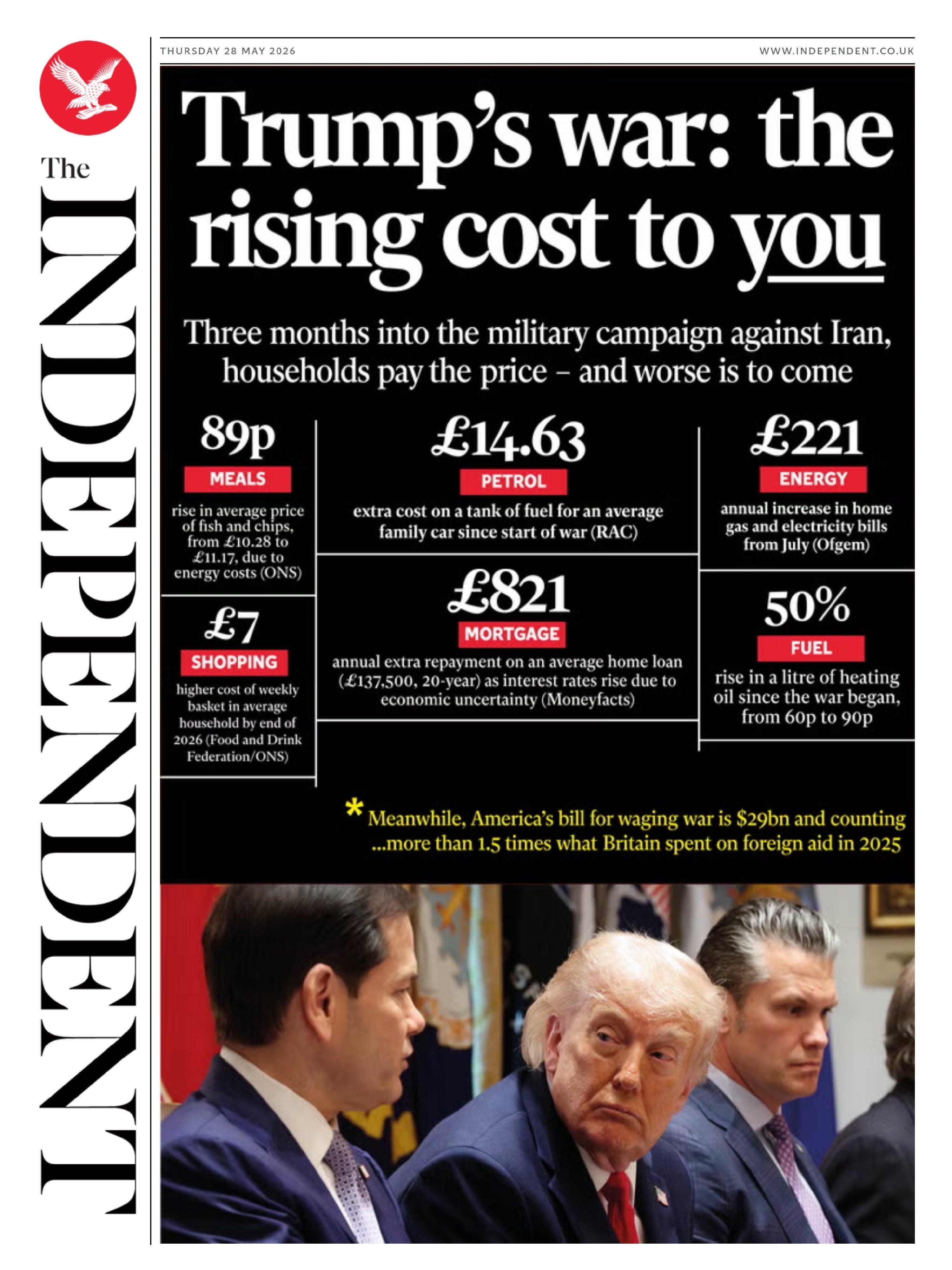
U.S. and Iranian negotiators have reached a tentative agreement to extend the ceasefire by 60 days and start negotiations on Iran’s nuclear program, according to a U.S. official familiar with the matter. The official, who spoke on condition of anonymity, said that President Donald Trump still needs to sign off on the emerging pact. Another U.S. official said the broad outlines of a tentative deal have been reached but stressed that until the president signs off on it, there is no deal. The official, who spoke on condition of anonymity to discuss the private diplomacy, said there are still questions about whether Trump will ultimately accept the agreement. Over the past two days, Washington and Tehran leveled their latest mutual accusations of ceasefire violation after Kuwait reported coming under attack from Iran, and U.S. forces carried out new “defensive strikes” against the Islamic Republic, according to a U.S. official. Earlier Wednesday, Trump asserted that Iran is “negotiating on fumes” and insisted that November’s U.S. midterm elections won’t make him rush into a deal to end the war - AP
Russia will suspend imports of fresh fruits, vegetables and herbs from Armenia, the country’s agricultural safety watchdog said Thursday, marking a sharp escalation in trade restrictions as Yerevan pursues closer ties with the European Union. “Rosselkhoznadzor is introducing temporary restrictions starting May 30, 2026, on the import of fresh tomatoes, cucumbers, peppers, fresh herbs and strawberries originating in or shipped from Armenia,” the agency said in a statement. While Rosselkhoznadzor cited safety concerns — claiming it documented 181 cases of contaminated Armenian produce so far this year — the move is likely political in nature, as Russian authorities recently suspended the import of flowers and sale of some Armenian alcoholic products in Russian stores. At the same time, Russia this week threatened to rip up a 2013 bilateral agreement guaranteeing Armenia duty-free natural gas and oil if it continues to pursue closer relations with the European Union, including membership in the bloc. Armenian Prime Minister Nikol Pashinyan shrugged off the energy threats. He argued that EU membership would eventually bring in far more money than Armenia would lose from an increase in Russian natural gas prices. Friction between the traditional allies has grown since Azerbaijan regained control of the breakaway region of Nagorno-Karabakh in 2023. Armenia accused Russia and its peacekeeping forces of failing to deter Baku’s military offensive. While Armenia still hosts a Russian military base, Yerevan has pushed to join the EU and rapidly expanded its domestic defense industry, booking $460 million in military orders over the last three years, according to Pashinyan. President Vladimir Putin has warned Armenia that closer European integration carries the same risks faced by Ukraine, which Russia invaded in February 2022. Putin is expected to address Armenia’s EU bid during the Moscow-led Eurasian Economic Union summit in Kazakhstan on Friday. The diplomatic spat comes just ahead of parliamentary elections in Armenia next month, where Pashinyan’s Civil Contract party faces a challenge from an array of pro-Russian opposition groups - Moscow Times
Russia and Afghanistan’s Taliban government have signed a military agreement, in a move that signals deepening cooperation between the sides, experts said.
The deal was signed on May 27 by Sergei Shoigu, secretary of Russia’s Security Council, and the Taliban’s defense minister, Mohammad Yaqub, on the sidelines of a security forum outside of Moscow, Russian media reported. Neither side has released the text of the military cooperation agreement or offered details about its scope, making it difficult to gauge whether the deal represents a substantive shift in military cooperation or a symbolic political gesture, experts said. Experts said Russia’s ability and willingness to deepen defense cooperation with the Taliban is constrained by Moscow’s ongoing war in Ukraine and the crippling impact of Western sanctions on the Kremlin’s coffers. “Russia is too economically stretched to provide free military aid to the Taliban government,” said Hameed Hakimi, nonresident senior fellow at the Atlantic Council. “Meanwhile, the Taliban government does not have deep coffers to purchase such a quantity of military equipment, which would make it a consequential military trading partner in Moscow’s eyes” - RFE/RL
A drone wounded two people after it struck an apartment building in Romania and exploded, the same time Russia launched an attack on a nearby Ukrainian city, Romania’s defense ministry said Friday. “During the night of May 28-29, the Russian Federation resumed drone attacks on civilian and infrastructure targets in Ukraine, near the river border with Romania,” the Romanian defense ministry said. The drone hit the roof of a building of Galați, near the border with Ukraine, according to CNN affiliate Antena 3. Galati sits on the border of Ukraine in Romania’s far southeast. Just across the border lies Izmail, home to the largest Ukrainian port on the Danube River, and a frequent target of Russian attacks. Around the same time as the drone crashed into the apartment in Galati, Ukrainian authorities said the Izmail port area had come under Russian drone attack. Romania is both a member of NATO and the European Union. NATO members have found themselves increasingly responding to Russian drones and missiles that have either entered their airspace or come down in their territory, ramping up tensions with Moscow. Russian drones have breached Romania’s airspace 28 times since Moscow began attacking Kyiv’s ports across the Danube river, Romania’s defence ministry said on Friday, according to Reuters - CNN
WORLD BRIEFING | HUMANITARIAN POWER PLAY
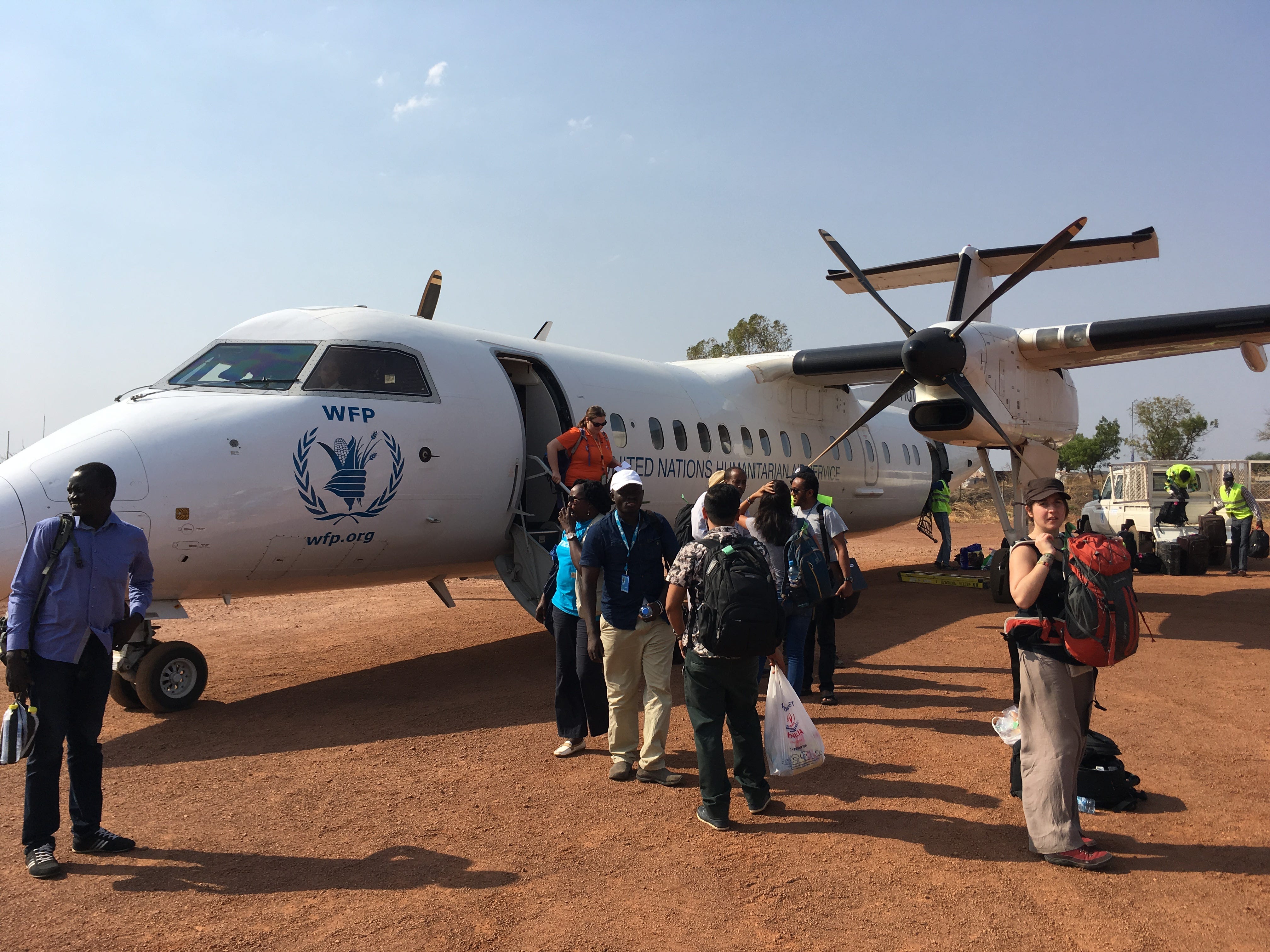
The race to replace departing World Food Programme Executive Director Cindy McCain is exposing a growing fault line inside the United Nations system: should countries that are retreating from multilateralism still dominate the leadership of global aid agencies?
For more than three decades, the top post at the WFP - the world’s largest humanitarian organization - has effectively been reserved for an American nominee, reflecting Washington’s traditional role as the agency’s largest donor. The same informal arrangement has long applied to UNICEF, a body which I served for many years. But that postwar power structure is now under increasing scrutiny after the Trump administration’s deep cuts to foreign aid and what critics describe as the political “arson attack” on USAID.
The Trump administration has nominated Luke Lindberg, a relatively little-known U.S. agriculture official with strong “America First” credentials, to replace McCain. Lindberg has been deeply involved in shifting U.S. food aid programs away from USAID and toward a more transactional “trade, not aid” framework championed by Trump allies. His nomination is already facing quiet resistance from European governments, which argue that countries slashing support for the U.N. system should no longer monopolize its most influential humanitarian posts.
“There needs to be an alignment between your political support, your financial commitment and the role you want to play in the U.N. system,” one European diplomat told Devex.
The irony, however, is difficult to miss. European powers themselves continue to dominate several major U.N. agencies, including UNESCO and the UN refugee agency, UNHCR - reflecting a decades-old culture of geopolitical horse-trading that has often mattered more than merit or representation from the Global South.
The stakes extend far beyond bureaucratic infighting in New York and Rome. By the end of this year, WFP is expected to face a funding shortfall of roughly 40 percent compared to previous levels, forcing cuts or suspensions to dozens of emergency operations worldwide - from Sudan to Gaza to Afghanistan.
For millions already on the edge of famine, the battle over who runs the humanitarian system may soon matter as much as the aid itself.
The journals….