World Briefing Hot Take
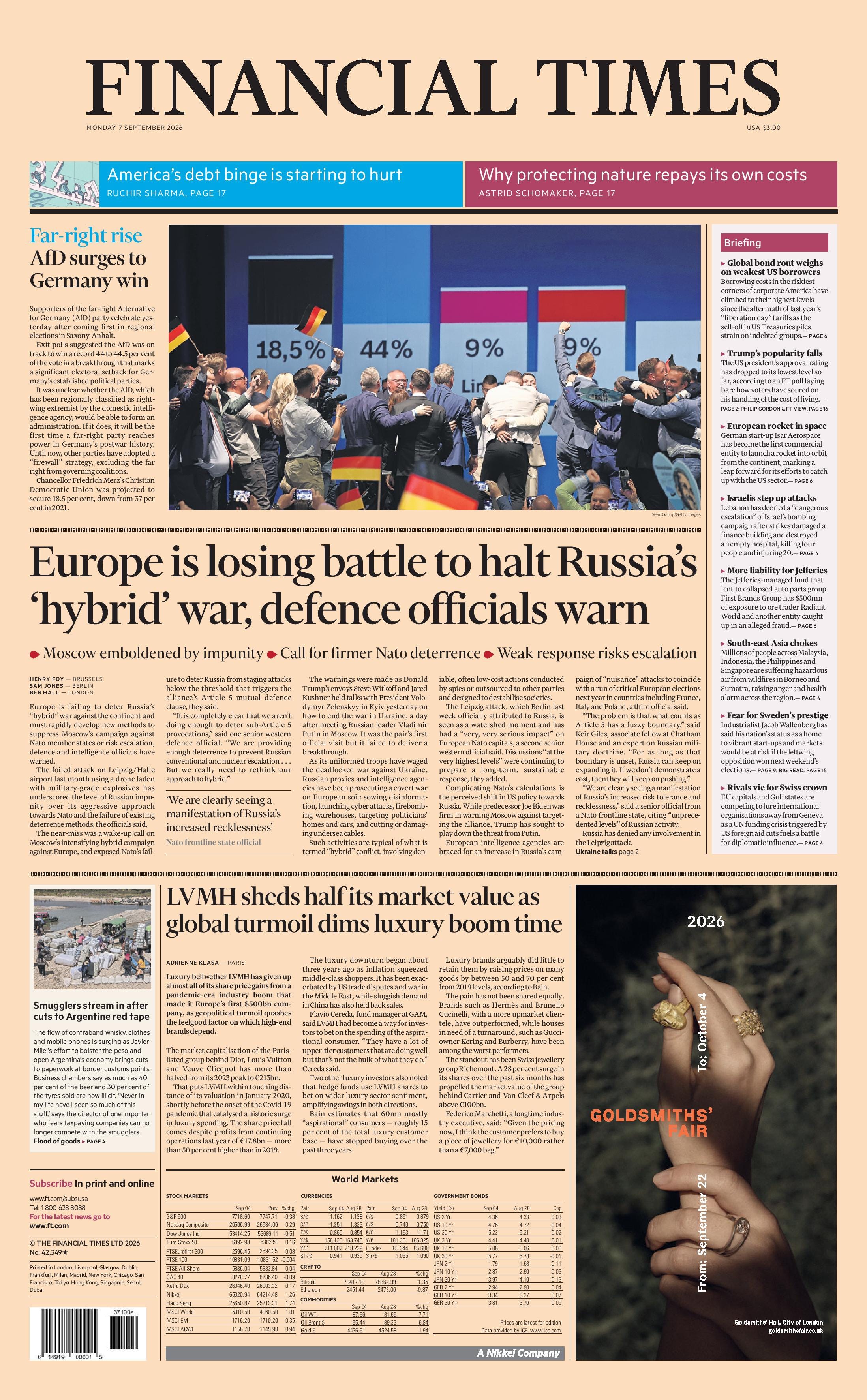
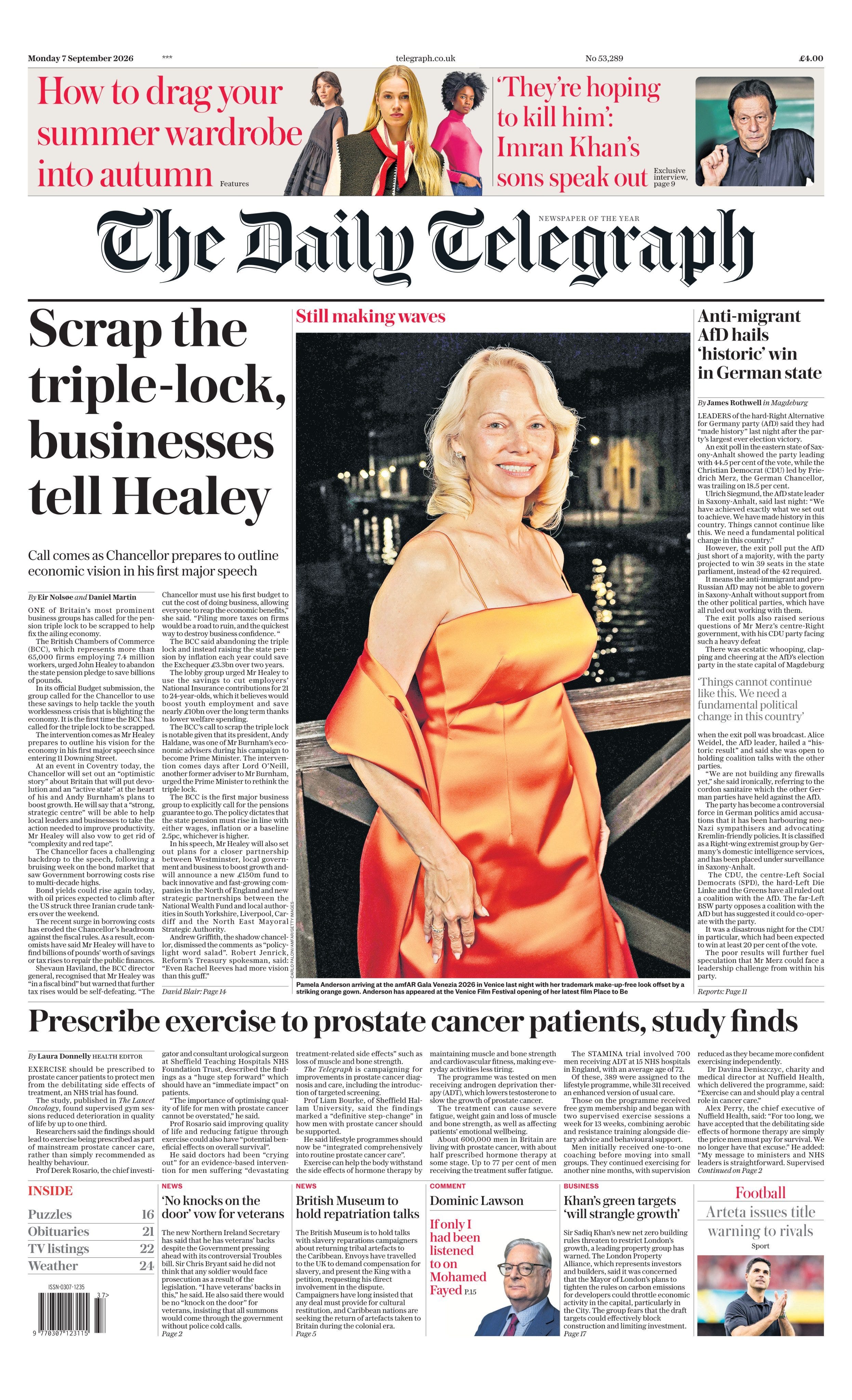
Voters in a small eastern German state gave the far right 43.8 per cent on Sunday, more than double its 2021 result. The governing centre-right party fell to 17.2, its worst there ever. Chancellor Friedrich Merz called it a turning point with consequences "on the international stage" - because the winners, and two other parties that did well, all want Germany to stop arming Ukraine. By his count that's about 60 per cent of the vote. Merz has an interest in framing his defeat as everyone else's extremism, and lumping the established Left Party in with the far right is a stretch. On Ukraine specifically, the arithmetic holds.
Before you file that under “Europe lurches right,” look at the rest of the year. Hungary ejected Viktor Orbán in April after sixteen years. Britain’s Reform UK has slid roughly nine points from its autumn peak. Sweden votes this Sunday with the incumbent right-leaning bloc trailing.
The pattern isn’t ideological. It’s that incumbents are losing, everywhere, on cost of living and immigration, and the beneficiary depends entirely on who was holding the job. Where the centre-right governs, the harder right collects. Where the nationalists govern, the liberals do.
Why this matters beyond Europe: two of the three insurgent movements gaining ground want immigration cut sharply and support for Ukraine cut with it. The elections that decide whether that becomes policy rather than noise:
Sweden — 13 September 2026, this Sunday
France — presidential, April–May 2027; Macron term-limited, National Rally leading polls
Italy — general due by autumn 2027
Poland — parliamentary, autumn 2027
Spain — general due 2027
Germany’s national elections are more than two years away, but DW says that Bundeskanzler Merz’s job is on the line after the humiliating results in Saxony-Anhalt. To make matters worse, two more state elections are on the horizon and bad results there for the the CDU could see another incumbent walk towards the exit door.
For now, nothing until Sunday, then a fourteen-month gap, then four in a row. Which is worth remembering when officials warn - as European defence officials did this morning - that Russian operations and grey zone warfare are timed to coincide with elections.
News Briefs
Berlin’s political establishment is staggering after the far-right Alternative for Germany scored a historic victory in Saxony-Anhalt on Sunday night, forcing mainstream parties to confront how to keep it from power — and explain its stunning rise. The AfD won 43.8 percent of Sunday’s vote, more than doubling its 2021 result. Chancellor Friedrich Merz’s center-right Christian Democratic Union crashed to 17.2 percent, its worst-ever showing in the eastern state. Thorsten Frei, leader of the CDU/CSU group in the Bundestag, called the result a “turning point for our country” and said conservatives must ask why they were no longer reaching voters. CDU Secretary-General Franziska Hoppermann rejected any debate over Merz’s future and again ruled out cooperation with either the AfD or The Left. The rout piles pressure on Merz, who once vowed to cut the AfD in half but has been chancellor while the far-right party has boomed in the polls. The AfD, meanwhile, claimed a mandate to govern. Co-leader Alice Weidel hailed a “historic result,” while fellow co-leader Tino Chrupalla declared: “Ulrich Siegmund will be our new minister-president,” referring to the party’s lead candidate in Saxony-Anhalt - Politico
The Russian Foreign Ministry announced on Monday that it is closing Germany’s consulate in St. Petersburg. The German consulate in St. Petersburg must cease its operations by September 18 at the latest, according to the Foreign Ministry. “It was the German authorities who, once again, provoked a new round of escalation in bilateral relations,” the Foreign Ministry said, adding Berlin “bears full and complete responsibility” for the consequences. The move is a direct response to Germany’s decision to close the Russian consulate in Bonn and Russia’s cultural center in Berlin, a decision Russia labeled “unfriendly.” Germany recently announced those measures after it said Russia was responsible for an attempted drone attack at Leipzig Airport. The EU, too, said the incident had all the signs of “state sponsored terrorism.” The Leipzig airport is an important international freight hub, also used for providing support to Ukraine. Russia Foreign Minister Sergey Lavrov rejected Germany’s allegations, calling them “the beginning of a real war.” - DW
Russia and North Korea opened the first road bridge linking the two countries on Monday, coming after months of construction delays. Prime Minister Mikhail Mishustin and North Korean Premier Pak Thae Song presided over a ceremony via video link to mark the official launch of traffic along the two-lane bridge, which stretches one kilometer (0.6 miles) over the Tumen River. Mishustin hailed bilateral relations as being at an “unprecedentedly high level of comprehensive strategic partnership,” adding that the bridge, which cost 9 billion rubles ($104 million), would boost trade and tourism. A rail bridge, built in the 1950s, already connects the two countries. Some observers have said that the bridge will provide Russia and North Korea an additional route through which they can discreetly move military cargo and personnel. In 2025, North Korea’s shipments of rocket artillery, shells and short-range ballistic missiles to Russia were estimated to be between $7 billion and $13.8 billion, according to the Institute for National Security Strategy, a government-funded research institute in South Korea. Russia and North Korea have deepened military ties since the 2022 invasion of Ukraine. In 2024, the two countries signed a mutual defense treaty that requires them to provide military support if either is attacked - Moscow Times
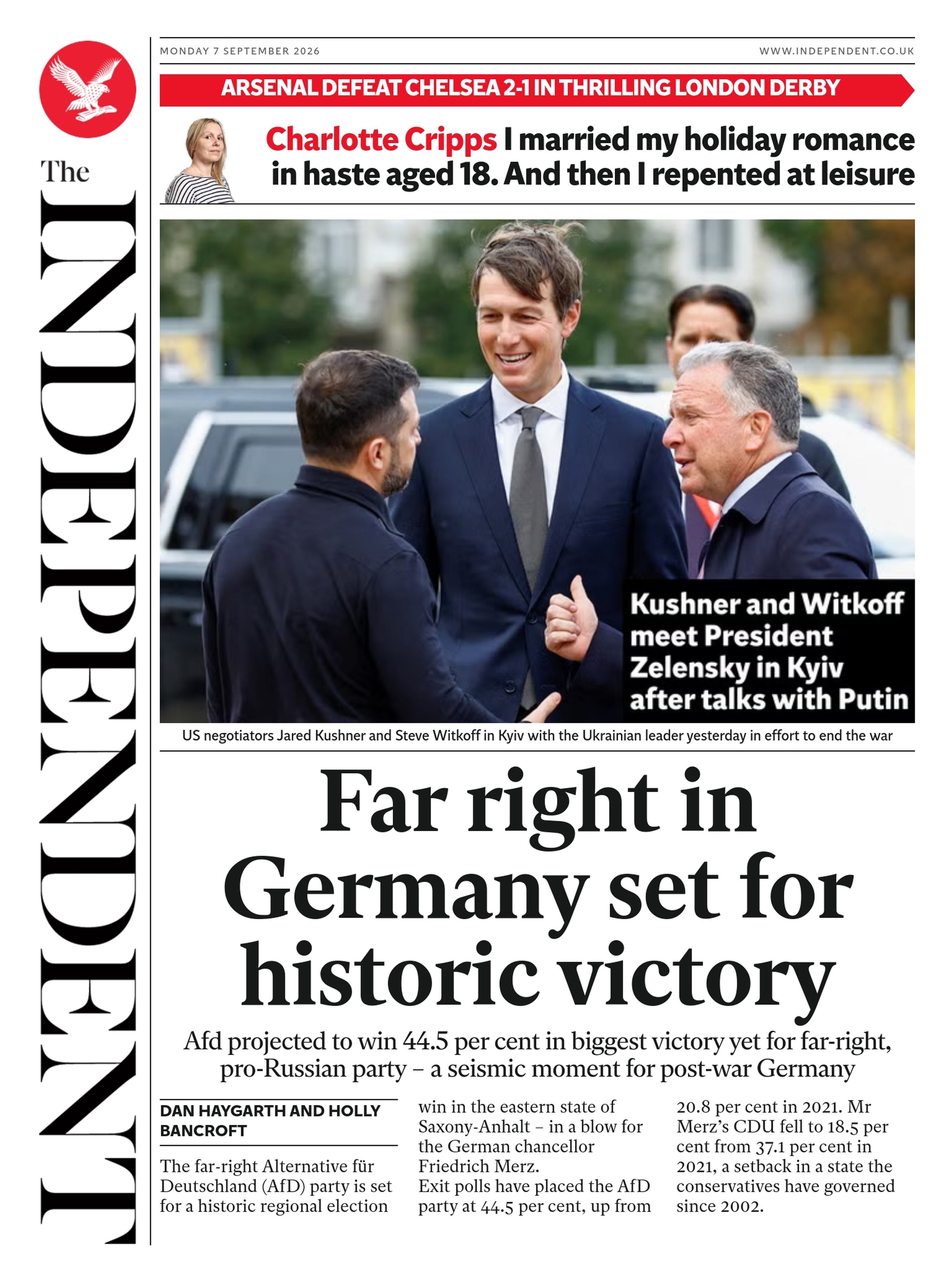
The headline from the talks: Volodymyr Zelensky expects the war to continue into the winter. Beyond that, little that’s new. In fact, Donald Trump’s envoys arrived in Kyiv with few fresh ideas, largely reviving earlier proposals. Asked on Times Radio this morning whether anything should be read into the fact that the delegation went to Moscow first, I was unequivocal. It’s the established pattern: Putin gets the stage first, front-loads the American side with his narratives, and only then do the envoys continue on to Kyiv. The result is a Russian leader repeatedly given the upper hand - including cases where Zelensky and Trump agree on something in person, only for a phone call from Moscow to follow and the decision to be reversed. Also discussed: the envoys’ framing of the war as a problem to be solved with a business approach - and how much good that has actually done.
China will inject $45 billion into its largest banks and insurers, its biggest recapitalization push in decades as Beijing looks to boost the country’s faltering economy. China’s growth target is already its lowest since 1991, and the economic picture is darkened further by a real estate downturn that is straining local government finances and undercutting spending capacity, Goldman Sachs said in a note to clients. A raft of property-sector measures unveiled last week, however, largely “rehash policies Beijing has already been rolling out piecemeal,” Trivium analysts said. Domestic consumption has also flatlined. Chinese leader Xi Jinping’s “insistence on preserving stability instead of addressing China’s serious structural problems threatens [China’s] ascent,” an Atlantic columnist argued - Semafor
Seven Indonesian airports, including two serving Jakarta, remained closed on Monday (Sep 7) because of volcanic ash from eruptions at Mount Anak Krakatau as around 341,000 travellers were affected by flight cancellations and delays, officials said. Ash from Anak Krakatau, which sits halfway between Java and Sumatra islands, has blanketed Jakarta and several surrounding areas since it erupted late on Friday, leading to the closure of the airports for safety reasons. Around 341,000 people have been affected by the delay, diversion, or cancellation of 2,961 flights, said Indonesia’s chief infrastructure minister, Agus Harimurti Yudhoyono. Jakarta’s main airport, Soekarno-Hatta, will remain closed until 11.59pm local time (12.59am, Singapore time), the airport’s operator said. Transport Minister Dudy Purwagandhi said the Jakarta airport’s closure aims “to give the airport time to clean the runway, taxiway and apron”, and give airline operators time to prepare their fleets. “We want to ensure that the volcanic ash is moving away from the airports located around Mount Anak Krakatau,” he said. It is unclear until when the remaining six airports would be closed. One other airport in South Sumatra has been reopened - CNA
President Trump appeared to suggest on Sunday that New Mexico should be renamed “New America,” prompting swift backlash from the state’s Democratic leaders over his latest effort to put an American stamp on geographic names. On social media, Mr. Trump shared an image of a map of New Mexico with the word “Mexico” crossed out with a red X and replaced with “America.” The White House re-shared the image shortly after on its official X account. The president posted again several hours later, with what appeared to be an A.I. video of him placing a label with the word “America” over “Mexico” on a “Welcome to New Mexico” road sign. Mr. Trump has no legal authority to rename any state, which in New Mexico’s case is written into its Constitution. Any proposed change would have to originate within the state, a prospect that New Mexico’s Democratic leaders rejected forcefully on Sunday. “New Mexico’s name isn’t up for debate — it’s been ours since before the United States existed,” Gov. Michelle Lujan Grisham wrote on social media. Representative Melanie Stansbury was more blunt: “Oh hell no!” she wrote on X, adding, “Our state’s name carries generations of history, culture, and family — and it belongs to us.” The origins of New Mexico’s name predate the founding of the United States. In the 16th century, Mexicans called the territory north and west of the Rio Grande “New Mexico,” according to the Bureau of Indian Affairs. The state’s name is also written into Article 1 of its Constitution: “The name of this state is New Mexico, and its boundaries are as follows,” the first page reads - NYT
The journals…