World Briefing Hot Take:
Brussels just showed its hand. Behind closed doors Thursday night - no phones, two hours over schedule - French President Emmanuel Macron and German Chancellor Friedrich Merz tore into European Council President António Costa for quietly testing a Kremlin back-channel, while a “huge number” of other EU leaders defended him. That’s not unity, it’s a turf war over who gets to represent 27 countries on the file that matters most.
And the candidates jockeying for the job aren’t exactly spotless. European Parliament President Roberta Metsola - floated by Italian Prime Minister Giorgia Meloni as a possible envoy, and insisting any Russia talks must include Kyiv - is the same official who exempted herself from the conflict-of-interest rules she championed after the European Parliament’s 2022 Qatargate corruption scandal, never disclosing that her husband, Ukko Metsola, lobbies for the cruise industry. Costa, meanwhile, stands accused by his own peers of concealing the extent of his Moscow contacts - carried out by his chief of staff, Pedro Lourtie - until they leaked to the press. Estonian Prime Minister Kristen Michal says the EU shouldn’t be mediating at all. Belgian Prime Minister Bart De Wever says only Costa can. Four institutions - the Council, the Commission, the EU’s foreign-policy arm, and the “E3” of France, Germany and the UK - are fighting for the mantle, and Russia hasn’t even said it wants to negotiate.
The Russia sanctions-with-a-shelf-life problem isn’t a vibe anymore - it’s structural. If Europe can’t agree who picks up the phone, the “ironclad support for Ukraine” rhetoric is doing a lot of work the politics aren’t backing up.
The clashes bring to light simmering tension at the heart of the EU over its approach to Russia and who should talk on Europe’s behalf - Politico
New Briefs
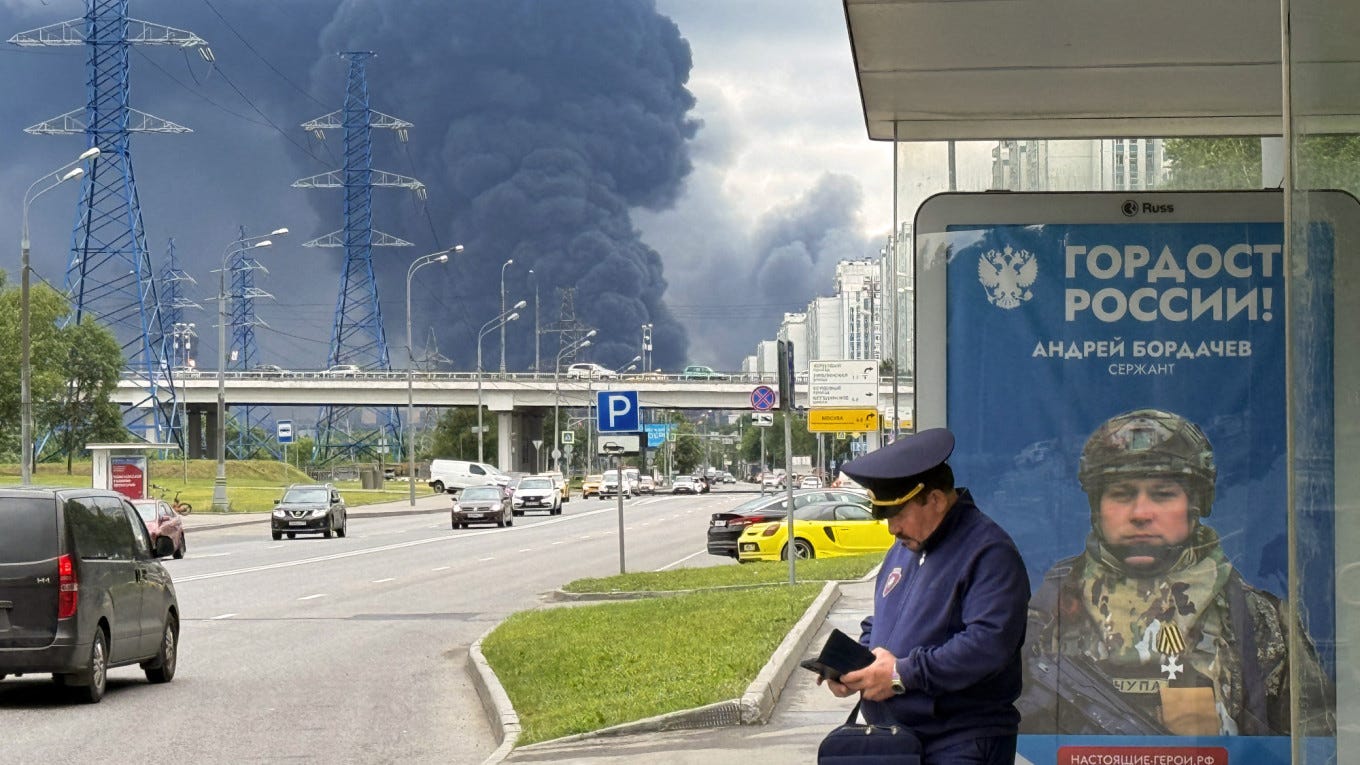
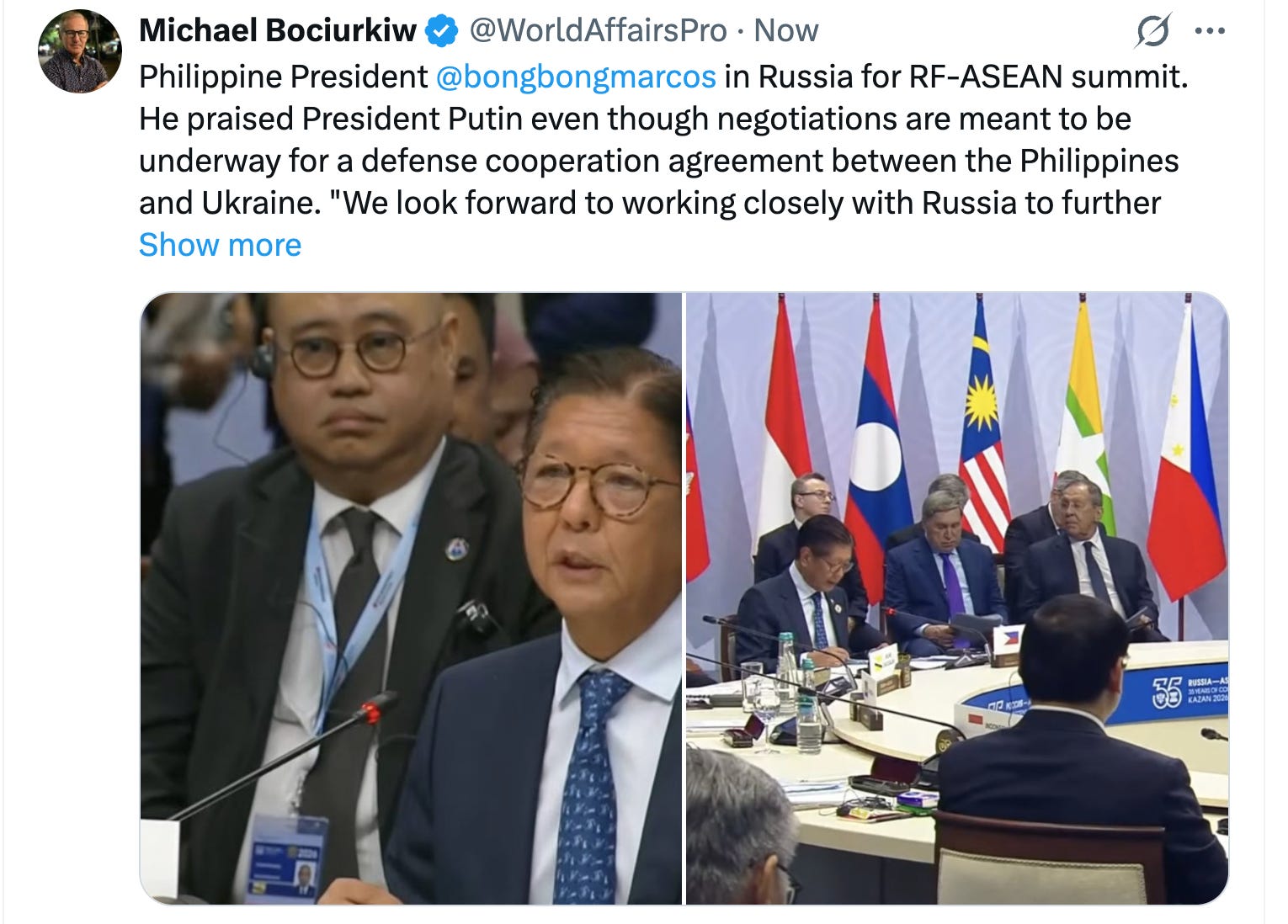
Black smoke blanketed the skies of southern Moscow on Thursday morning after Ukrainian drones struck and set fire to a major oil refinery, in what was the largest-ever attack on the Russian capital since the start of the war. Moscow Mayor Sergei Sobyanin said around 6 a.m. local time that air defense systems were “repelling a large-scale attack” and that “several drones” managed to strike the Gazprom Neft-operated refinery located about 15 kilometers (9.3 miles) southeast of central Moscow. Videos shared on social media showed huge columns of smoke and multiple large fires rising from the facility, which supplies around a third of Moscow’s gasoline and fuel. The refinery was also attacked on Tuesday, after which it reportedly halted operations. Sobyanin said nearly 200 Ukrainian drones were intercepted during the early morning barrage, eclipsing the capital’s previous record attack in March of this year, when 74 drones were downed. Ukrainian President Volodymyr Zelensky called strikes “a fully justified response to Russian attacks on our cities and communities.” “It is time the war ended, and Russia must take the necessary steps in diplomacy,” Zelensky wrote in a post on X. Moscow residents women told The Moscow Times that they did not receive an SMS alert warning of the incoming drone attack. In the Moscow region, Governor Andrei Vorobyov said 17 people, including two children, were wounded in the Ukrainian drone attacks. Some people living in the area around the Gazprom Neft refinery claimed there were downpours of “black rain,” or rainfall contaminated with pollutants like soot. Local authorities advised residents to minimize their outdoor exposure and wear masks if possible. Sheremetyevo Airport, Russia’s busiest airport, said it evacuated passengers to “safe locations” and suspended flights during the drone attack on Moscow. All major airports in the Russian capital halted but then later restored regular operations. Aeroflot and Rossiya airlines said they canceled more than 170 flights to and from Moscow. Flight restrictions were also temporarily imposed at airports in central Russia, including Kazan, where President Vladimir Putin was scheduled to meet Southeast Asian leaders at an ASEAN summit. Speaking alongside the president of the Philippines at the summit later in the day, Putin made no mention of Thursday’s attack. However, Foreign Minister Sergei Lavrov, who was also at the gathering in Kazan, told state media that Russia would carry out major strikes against Ukraine in response - Moscow Times
The Iran conflict produced an unexpected winner: Pakistan. The country, once cast as a diplomatic pariah by the West, took on a lead role mediating between the US and Iran to produce a deal. “Pakistan’s star turn is the diplomatic equivalent of Cabo Verde winning the World Cup,” a Wall Street Journal columnist argued. It also upstaged arch-rival India, which, as a Wire columnist bemoaned, “now has a North Stand seat in the global stadium of the Big Boys.” As Washington warms to Islamabad and cools on New Delhi, India is deepening ties with Israel — another US ally navigating its own turbulent relationship with President Donald Trump.
Brazil said it would scrap fuel subsidies if oil prices stabilized following the signing of the US-Iran deal, as countries worldwide scrambled to plot the fallout from the conflict’s apparent conclusion. Crude prices tumbled further after Washington and Tehran finalized their interim deal, but analysts predict it could take months for global energy markets to normalize. Chile — which imports the vast majority of its fuel — cut its 2026 growth forecast and increased inflation expectations. Elsewhere, France predicted its economy would remain sluggish, while Thailand said visitors from the Middle East had dropped by 25% in the first five months of 2026, hitting its critical tourism industry. “The world economy is going to end up being more jittery,” an expert said - Semafor
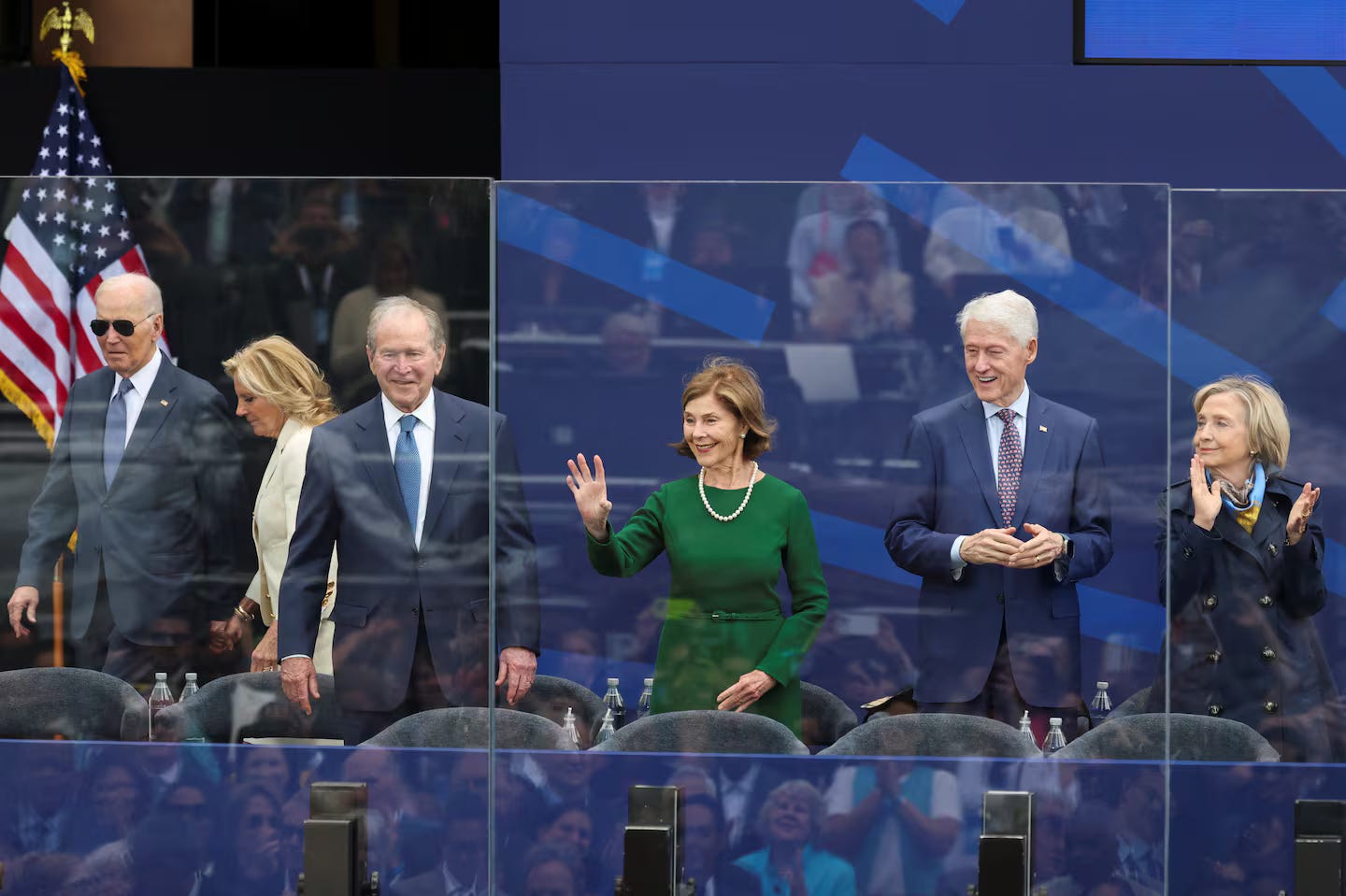
George W. Bush was all smiles at a star-studded ceremony honoring one of President Donald Trump’s least-favorite predecessors. The former Republican president, 79, walked out onstage hand-in-hand with his wife, Laura, at the opening of the Barack Obama Presidential Center in Chicago, Illinois, on Thursday. The Bushes sat with Bill and Hillary Clinton to their left, and Joe and Jill Biden to their right. Only Trump and Melania were missing from the lineup of living presidents and first ladies, despite Obama Foundation CEO Valerie Jarrett saying that Trump would be “welcome” to a tour. Reached for comment, a White House official referred the Daily Beast to Trump’s latest Truth Social posts. Over the weekend, Trump wrote, “The Obama Library ten years from now will be a ‘Mecca’ for those who hate America!” The packed guest list was treated to performances from Bruce Springsteen, Christina Aguilera, Stevie Wonder, U2’s Bono and The Edge, and Jennifer Hudson, among others. Barack and Michelle treated the Bushes, Clintons, and Bidens to a private tour of the museum ahead of the Thursday ceremony. The Obama Presidential Center is a 19.3-acre campus in Jackson Park that houses a museum, a library, and a basketball court. It also boasts a vegetable garden, playground, and massive lawn. The museum also features a replica of the Oval Office, which contains a letter that Bush wrote to Obama during their transfer of power in 2009. During their reunion, Bush gifted Michelle a tin of Altoid mints in a throwback to their lighthearted exchanges at the funerals of Sen. John McCain and former President George H. W. Bush in 2018. Bush and Michelle have been unlikely pals since 2009.
Visitors to the Acropolis can now see the Parthenon’s western side looking whole for the first time in about 220 years. Officially unveiled Thursday, restorers have slotted two new marble blocks into long-empty gaps high on the temple’s western end - the view visitors see when they first enter the ancient monument in Athens. The 25-century-old monument overlooking the Greek capital attracted about 4.6 million visitors last year. Long-term restoration projects address damage caused by war, weather and looting, including the broken outline of the western side. Culture Minister Lina Mendoni described the sight after the latest restoration as “truly stunning.” The two new stones, she said, do more than fill a gap. “They allow the unique proportions and the geometric perfection of the Parthenon’s western face to be seen once again,” she said. The project was funded through a European Union program. It is part of a broader restoration effort that began in 1975.
The journals…..