A special preview of the kind of in-depth analysis our paid subscribers receive each Saturday - and increasingly during the week as global events demand deeper context.
In this briefing recorded in Calgary Canada, I unpack Vladimir Putin’s high-profile visit to China, why Xi Jinping is likely to emerge publicly as the unmistakable senior partner in the relationship, the strategic importance of a major new Russia-China gas pipeline, and why Washington’s latest sanctions waiver on seaborne Russian oil risks giving Moscow yet another economic lifeline in its war against Ukraine.
A heartfelt thank you as well to the many readers who recently upgraded to support independent, on-the-ground journalism and analysis. Your support helps make this possible.
Upgrade anytime to access full video briefings and deeper geopolitical analysis as we connect the dots so you don’t have to.
US President Donald Trump has announced he is standing down a military attack on Iran - reportedly planned for Tuesday - following personal appeals from the leaders of Qatar, Saudi Arabia and the UAE, as diplomatic efforts to resolve the ongoing conflict enter a fragile new phase. In a post on Truth Social, Trump said Gulf leaders had asked him to hold off while “serious negotiations are now taking place,” and that he had been assured a deal “very acceptable” to the United States was within reach. He was emphatic that Iran would not be permitted to acquire nuclear weapons, but warned that a “full, large scale assault” remained on the table and could be launched “on a moment’s notice” if talks broke down. Iran has not publicly responded. News outlets cited analysts as characterising the pause as a stay of execution - significant, but conditional. The two sides are reported to remain far apart across a wide range of issues, and the Gulf states pressing for diplomacy are not natural allies of Tehran, making their intervention notable but not necessarily decisive.
How we got here: Israeli and US forces launched major air strikes on Iran on 28 February. Tehran responded with drone and missile attacks against Israeli and American targets across the Gulf region. A ceasefire agreed in April has largely held, with sporadic exchanges continuing, but substantive talks have stalled — prompting Trump’s warning over the weekend that “the clock is ticking.”
The Hormuz dimension: Iran has kept the Strait of Hormuz effectively closed since the strikes began, framing the move as retaliation for US and Israeli attacks. The strait carries roughly 20% of the world’s oil and liquefied natural gas, and its disruption has driven energy prices sharply higher worldwide. A newly created Iranian body - the Persian Gulf Strait Authority - has now declared that any vessel transiting Hormuz without its authorisation will be acting illegally, Al Jazeera reported. The US military says it has redirected at least 85 ships since imposing its own blockade on Iranian ports.
Diplomatic signals: Qatar’s Prime Minister Sheikh Mohammed reaffirmed Doha’s full backing for Pakistan-led mediation efforts between Washington and Tehran, calling on all parties to engage constructively to build conditions for progress.
Also in the region:
The death toll from Israeli strikes on Lebanon since 2 March has exceeded 3,000, per the Lebanese Health Ministry.
Israeli forces have seized at least 47 vessels from the Global Sumud Flotilla attempting to deliver humanitarian aid to Gaza; 30 ships remain at sea.
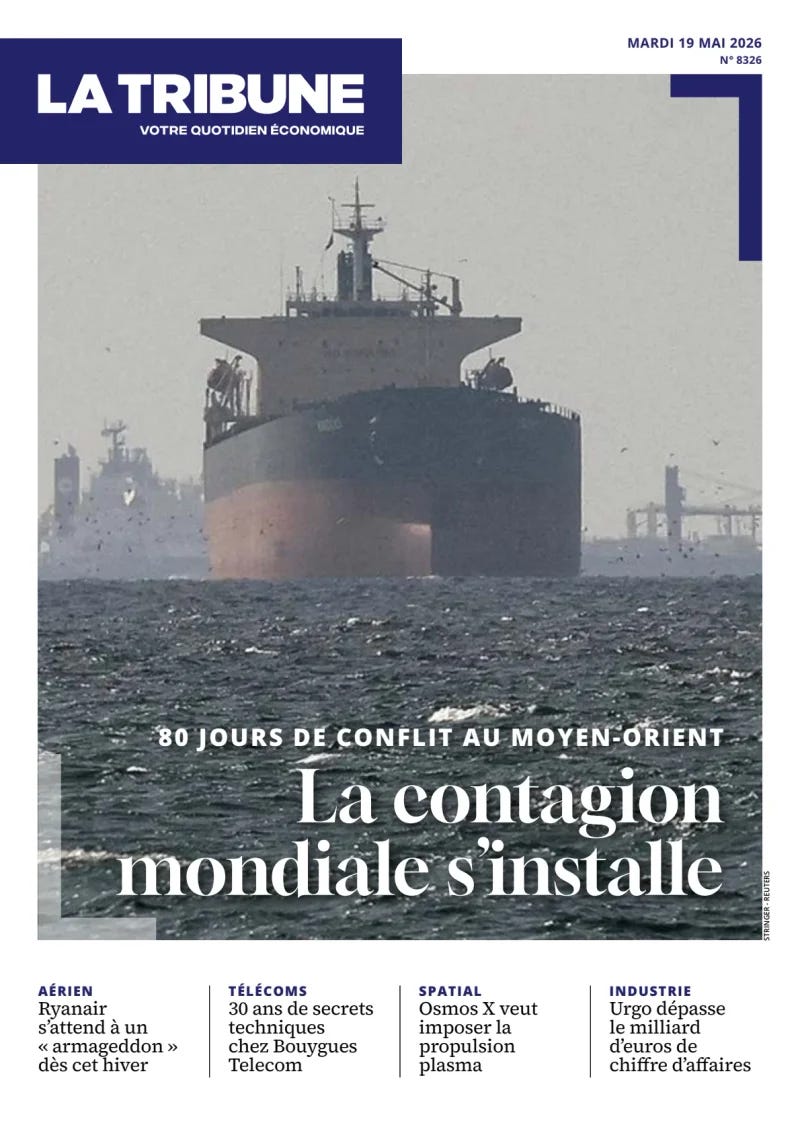
The US Treasury Department has extended for another 30 days a sanctions waiver allowing at-risk countries to purchase Russian oil shipments at sea, as supply disruptions linked to the US-Israeli conflict with Iran continue to roil global energy markets. “US Treasury is issuing a temporary 30-day general license to provide the most vulnerable nations with the ability to temporarily access Russian oil currently stranded at sea,” Treasury Secretary Scott Bessent said in a post on X. Bessent said the waiver would “help stabilize the physical crude market and ensure oil reaches the most energy-vulnerable countries” while limiting China’s ability to stockpile discounted Russian oil. The decision highlights the increasingly difficult balancing act facing Washington and its allies as they seek to sustain pressure on Moscow over its war against Ukraine while also trying to prevent a wider energy shock tied to escalating tensions with Iran. The waiver expired over the weekend before being renewed after several poorer countries requested more time to secure supplies disrupted by the closure of Persian Gulf shipping routes, according to a source familiar with the decision. The countries were not identified. Oil markets remained volatile despite the extension. Brent crude rose about 1.5 percent on May 18 to roughly $111 a barrel amid continuing concerns over Gulf supplies. Ukrainian Finance Minister Serhiy Marchenko urged allies to impose additional sanctions on Russia. “We need to continue to pressure Russia, to put additional sanctions on Russia,” Marchenko said. Some sanctions analysts said the repeated extensions underscore how energy market pressures are constraining Western efforts to isolate Moscow economically. “It was just inevitable,” Brett Erickson, a sanctions expert at Obsidian Risk Advisors, told RFE/RL on May 18. “Once that precedent was set, it ensured future extensions until normalization.” - RFE/RL
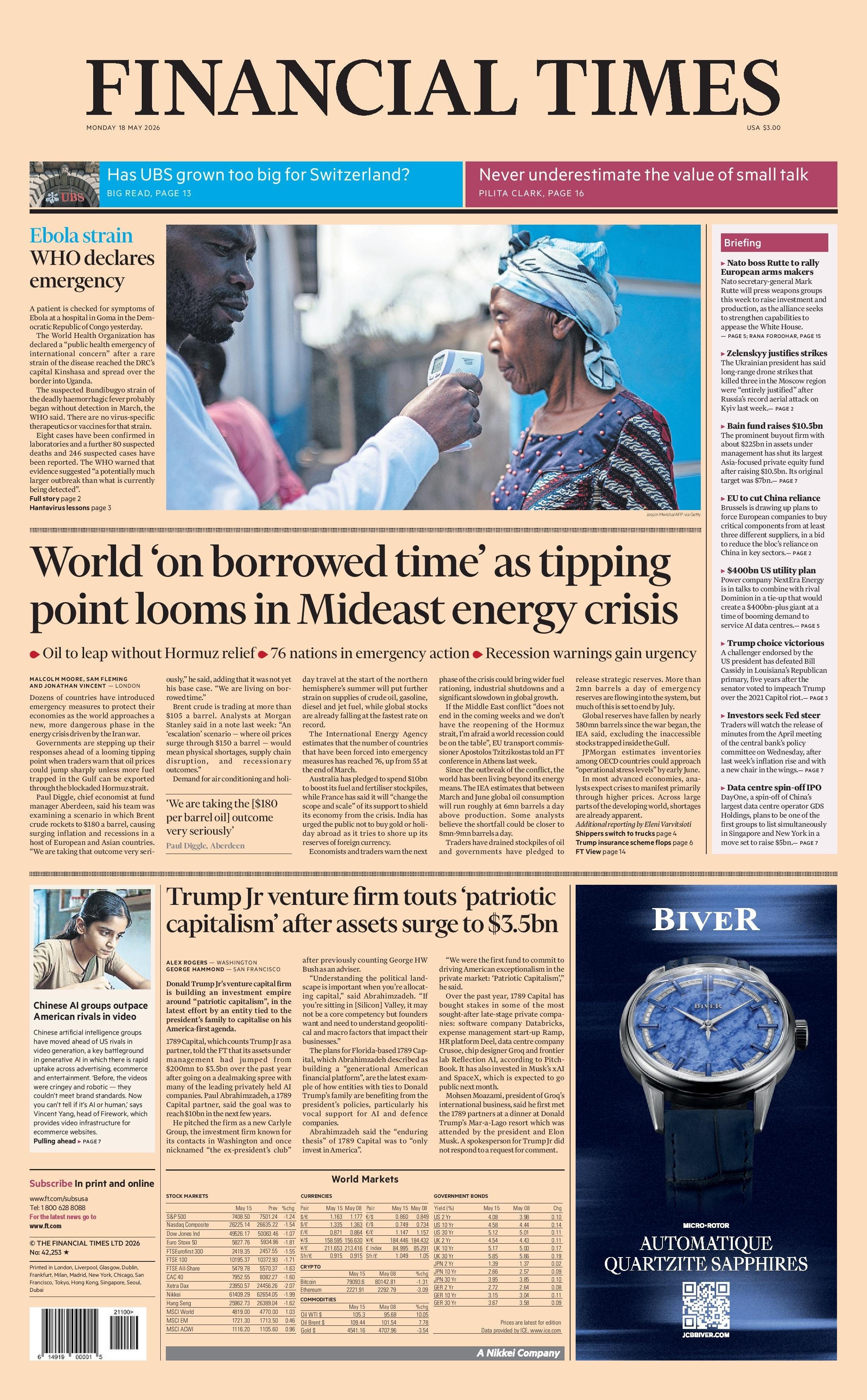
EUROPE’S JET FUEL CRUNCH: CRISIS AVERTED — FOR NOW (Financial Times)
European airlines and refiners are increasingly confident the continent will avoid outright jet fuel shortages this summer, despite the disruption caused by the loss of Middle Eastern supplies since the Iran war began. Ryanair chief Michael O’Leary said he had “almost zero concerns” about fuel availability across Europe for the season ahead, a markedly different tone from two months ago when shortages were a genuine fear.
The turnaround has been driven by a combination of factors: refiners reconfiguring plants to maximise kerosene output, increased imports from the US, west Africa and Norway, government releases from strategic reserves, and some central European carriers sourcing fuel from Russia. Spain’s Repsol, for instance, raised jet fuel production by 20-25% above year-ago levels by adjusting refinery yields - an unusually large shift for an industry with limited flexibility between fuel types.
Prices remain elevated. Jet fuel in northern Europe hit a record high above $1,900 per tonne in early April - more than double pre-crisis levels - before easing to around $1,330 last week, still roughly 60% above where it stood before the war. Istanbul’s airport, benefiting from increased transfer traffic after Gulf hub closures, attributed its supply stability to deliberate supplier diversification.
Analysts estimate that higher European refinery output could add around 100,000 barrels per day of jet fuel - about 20% of what the region previously imported from the Middle East - while strategic reserve releases and alternative imports are expected to cover the remaining deficit. Demand has also eased slightly, down roughly 2% in the second quarter as airlines trimmed unprofitable short-haul routes.
Despite the relative calm, industry veterans are urging caution. A senior trader at Poland’s Orlen warned the summer would be a “stress test” for the entire global energy security system, cautioning that any shift in current conditions could cause significant disruption.
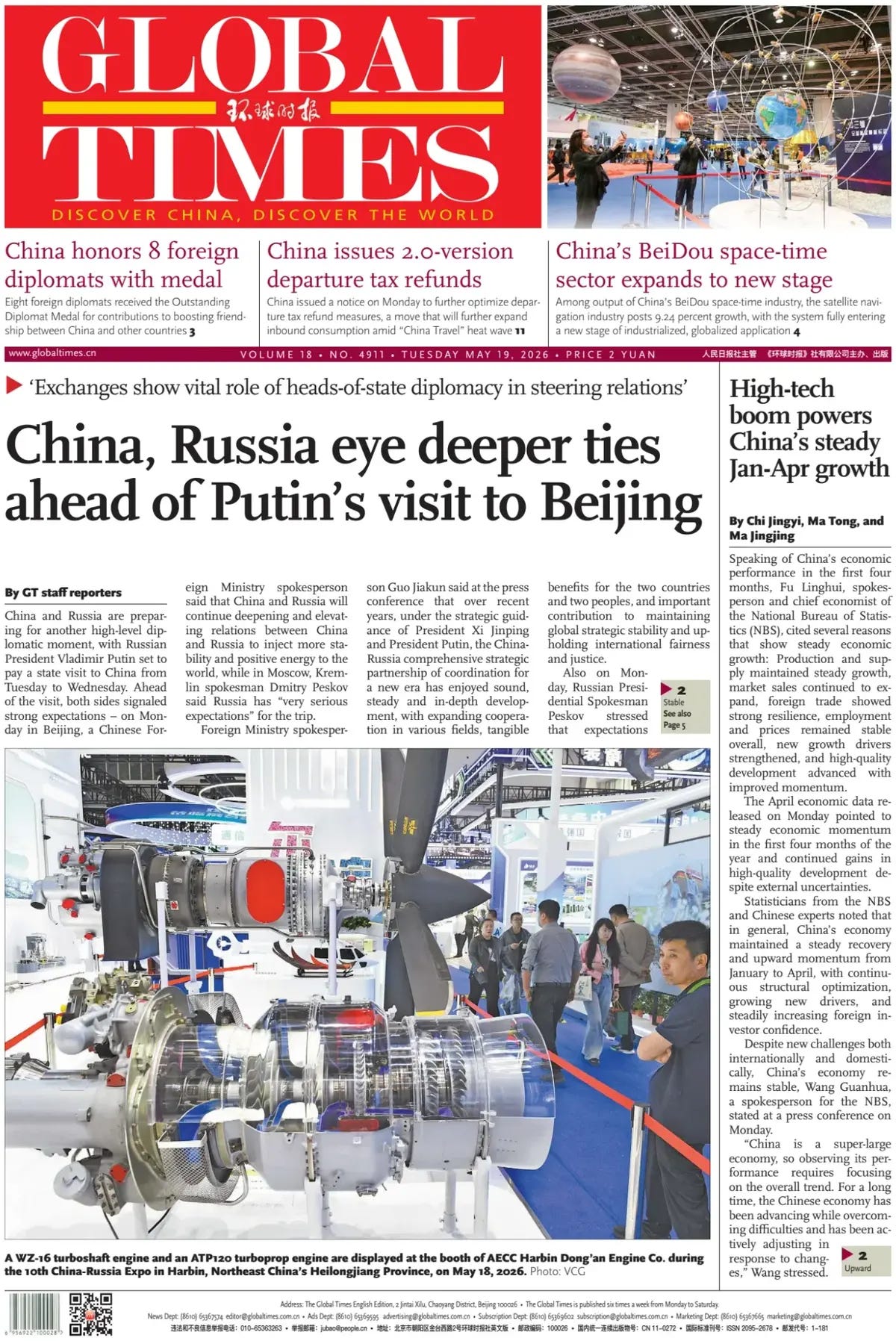
President Vladimir Putin will arrive in Beijing on Tuesday for a two-day state visit, accompanied by an entourage of cabinet ministers and the chief executives of Russia’s largest state-owned and private corporations. The delegation includes Rosneft CEO Igor Sechin, Gazprom CEO Alexei Miller and aluminum tycoon Oleg Deripaska, as well as the heads of state development corporation VEB, nuclear agency Rosatom and space corportation Roscosmos. Sberbank CEO Herman Gref, VTB Bank CEO Andrei Kostin and Russian Central Bank Governor Elvira Nabiullina are also traveling, alongside five deputy prime ministers and eight cabinet ministers. “We’re not competing with anyone in the composition of our delegations,” Kremlin spokesman Dmitry Peskov said Monday. “We’re developing our independent and very multifaceted relations with China.” The May 19–20 summit comes less than a week after Chinese leader Xi Jinping hosted U.S. President Donald Trump in Beijing. While Trump also brought a delegation of prominent American executives, including Elon Musk and Tim Cook, the Kremlin downplayed any comparisons, framing its own trip as a reflection of a “privileged, special strategic partnership.”Putin intends to make a renewed push to convince Xi to finalize the stalled Power of Siberia 2 pipeline project. The proposed route through Mongolia would transport 50 billion cubic meters of Russian natural gas annually from the Yamal Peninsula to northern China - Moscow Times
Deep foreign aid cuts allowed the deadly Ebola virus to spread undetected in the Democratic Republic of Congo and Uganda, while ongoing conflict has complicated efforts to build resilient health care services in the region, experts warned Monday. Spanish Prime Minister Pedro Sánchez framed the crisis as a matter of security and justice at the World Health Organization’s annual meeting in Geneva, where the pressing question for health leaders is how to continue funding global health amid cuts from the U.S. and others. “We have for the last 12 years been living with Ebola, and unfortunately, we are going through this crisis again,” Sanchez said at the World Health Assembly. “Investing in global health is investing in security for our people ... This is not just a question of security, it’s a question of justice.” There are “at least 395 suspected cases” across the two countries, and “more than 100 people” have died, Jean Kaseya, director general of the Africa Centers for Disease Control and Prevention, said. But the real figures are likely much higher: A high rate of positive samples and increasing clusters point to a potentially much larger outbreak than currently detected, the WHO warned. Health officials are also faced with a lack of vaccines or effective treatments. “This is my biggest worry because we need to see how to stop the transmission,” Kaseya told the BBC, adding that Africa CDC was working with authorities in both countries to contain the spread. Jennifer Serwanga, a Uganda-based Ebola expert at the London School of Hygiene and Tropical Medicine, said the Bundibugyo strain driving the outbreak was “very serious,” with a fatality rate of between 30 and 50 percent. “It doesn’t have any vaccines, doesn’t have any treatments,” Serwanga, who is also principal research scientist at the Uganda Virus Research Institute, said. She warned that the outbreak appeared not to have been detected early, resulting in “already very many deaths.” - Politico
Our surveillance system didn’t work. Something went wrong there. That’s why we found ourselves in this catastrophic situation - Jean-Jacques Muyembe, director-general of Congo’s National Institute of Biomedical Research
Aqua, the dance-pop group known for 1997’s “Barbie Girl,” has disbanded, they announced Monday on Instagram. “After many incredible years, we have decided to close the chapter of AQUA as a live band,” René Difand, Lene Nystrøm, and keyboardist Søren Rasted wrote. The group officially formed in 1995, and produced three albums, the first of which—Aquarium—contained “Barbie Girl.” That single charted at number one in several European countries, as well as Australia and New Zealand. In their Instagram post, the band added: “When you’ve been together for this long, you also learn when it’s time to protect what you’ve created together. For us, this feels like the right moment to say goodbye, while the memories are still strong, and while the love for the music, the story, and each other remains intact.” In a note to fans, the band signed off: “From the bottom of our hearts: thank you to everyone who has been part of this journey over the past 30 years. Thank you for the love, the energy, the support, and for all the moments we’ve shared together. Nothing but love and gratitude from here on.” - The Daily Beast
The journals….