As conflicts multiply across the globe, their consequences rarely stay confined to the battlefield. Right now, I’m in Thailand - relatively close to the Thai-Cambodian border, where tensions are once again heating up despite outside mediation and claims, including from Donald Trump, that the dispute has been “solved.” It hasn’t. Like so many of today’s conflicts, this one stretches back decades, rooted in unresolved historical grievances and borders drawn by colonial powers that ignored realities on the ground.
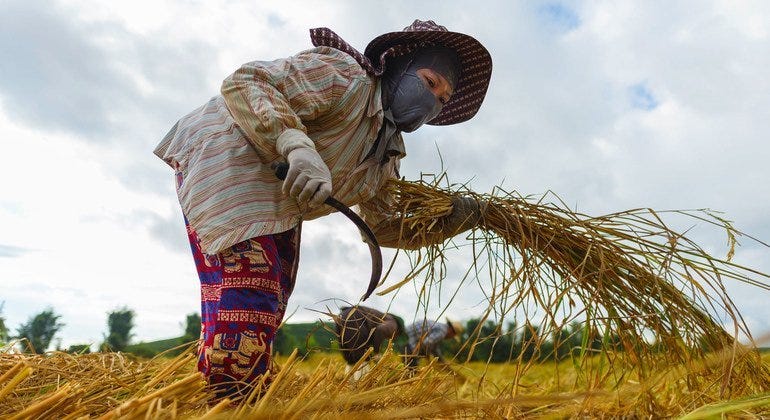
What makes this flashpoint especially consequential is something often overlooked: people. Thailand is home to a vast - and largely uncounted - population of Cambodian migrant workers who underpin key sectors of the economy, most notably construction. Were they suddenly forced to leave, or unable to cross borders as tensions rise, the shock would be immediate. Projects would grind to a halt, labour shortages would spike, and the wider Thai economy - already struggling to adapt to the post-industrial era, as Nikkei Asia has reported - would take a serious hit.
The human cost is already visible. A new survey by Plan International found that nearly 72% of Cambodian workers who returned from Thailand during the first round of clashes in July remain without work, with many struggling with mental-health issues. Plan estimates that more than 900,000 Cambodian workers — most employed in construction and agriculture — left Thailand amid escalating armed conflict along the border.
But there is another, even darker pattern we see again and again when wars erupt: migrant workers are often trapped. When the Gaza war broke out, many countries simply did not have the diplomatic, logistical or financial capacity to repatriate their citizens working in Israel. Sri Lanka, Bangladesh and other labour-exporting countries scrambled to bring workers home, often with limited success. Many were left stranded - without income, protection or clear evacuation pathways.
According to the latest ILO estimates, Asia and the Pacific recorded 27.2 million migrant workers in 2022 – 1 in 6 globally. One would think that by now there would be international instruments or standing agreements ready to be activated in moments of unrest or conflict. In reality, there are few - and they are weak.
This is not a new lesson. In Digital Pandemic, I documented how even Singapore - a country famed for meticulous governance - failed to anticipate the risks faced by its crucial migrant workforce during COVID. Authorities overlooked cramped, poorly maintained dormitories housing tens of thousands of workers. The result was a rapid and shocking spread of the virus, exposing how easily migrant labour can be rendered invisible - until crisis strikes.
I have seen similar dynamics play out elsewhere. In Israel, the sudden ban on Palestinian and Arab workers following the Gaza war brought construction and other sectors to an abrupt halt. In Ukraine, after Russia’s full-scale invasion in February 2022, foreign professionals - including Indian medical workers - were forced to leave overnight, even after years of integration and service.
Wherever you go - Southeast Asia, the Middle East, Eastern Europe - migrant workers make enormous sacrifices to keep economies running and to support their families back home. Yet when conflicts erupt, they are among the first to be trapped, discarded or forgotten. And when they disappear, the economic damage is often immediate and profound. This is one of the most under-reported fault lines of our fractured world - and one we ignore at our peril.
Thailand announced a curfew in its southeastern Trat province on Sunday (Dec 14) as fighting with Cambodia spread to coastal areas of a disputed border region, two days after US President and would-be peacemaker Donald Trump said the sides had agreed to stop. The Southeast Asian neighbours have resorted to arms several times this year since a Cambodian soldier was killed in a May skirmish, reigniting a conflict that has displaced hundreds of thousands of people on both sides of the border. “Overall, there have been clashes continuously” since Cambodia again reiterated its openness to a ceasefire on Saturday, Thai Defence Ministry spokesman Rear Admiral Surasant Kongsiri told a press conference in Bangkok after announcing the curfew. Thailand is open to a diplomatic solution but “Cambodia has to cease hostility first before we can negotiate”, he said. Thai forces on Saturday said they had destroyed a bridge that Cambodia used to deliver heavy weapons and other equipment to the region and launched an operation targeting pre-positioned artillery in Cambodia’s coastal Koh Kong province. Cambodia accused Thailand of striking civilian infrastructure. Thailand and Cambodia have exchanged heavy-weapons fire at multiple points along their 817km border since Monday, in some of the most intense fighting since a five-day clash in July that ended with Trump and Malaysian mediation - CNA
In yesterday’s World Briefing Plus, I unpacked why Cambodian migrant workers are not a side story but a backbone of Thailand’s economy - from construction to agriculture and services. I also draw a stark parallel with Israel, where the abrupt banning of Arab workers from construction sites after the Gaza war triggered severe labor shortages, project delays, and economic shockwaves that are still being felt.
These are the kinds of on-the-ground comparisons and second-order impacts I reserve for paid World Briefing subscribers - connecting dots across regions to show how political decisions ripple through economies and societies far beyond the headlines. Upgrade to World Briefing Plus for full access to exclusive videos, analysis, and behind-the-scenes insights like this.
⬇️ Scroll down to watch this free video
Two gunmen opened fire at Sydney’s Bondi Beach on Sunday (Dec 14), killing 12 people and wounding multiple others in a “terrorist incident” during a gathering for the Jewish festival of Hanukkah. Emergency responders rushed another 29 people to various hospitals from the beach, one of the biggest tourist draws in Australia’s largest city, said New South Wales police. One of the alleged shooters was killed, and the second was in a critical condition, police said. Police declared the shooting a “terrorist incident” and revealed they had found suspected “improvised explosive devices” in a vehicle near the beach that was linked to the “deceased offender”. Australian Prime Minister Anthony Albanese condemned the “targeted attack” on Jewish Australians. “The evil that was unleashed at Bondi Beach today is beyond comprehension,” he said during an address on Sunday evening. “This is a targeted attack on Jewish Australians on the first day of Hanukkah … Police and security agencies are working to determine anyone associated with this outrage.” According to Australian police, there were over a thousand people at the event when the shooting took place. - CNA
Ukraine is willing to drop demands for NATO accession should the U.S. and Europe offer sufficient security guarantees in ongoing talks on a proposed peace deal, Ukrainian President Volodymyr Zelenskyy was reported to say on Sunday. “We are talking about bilateral security guarantees between Ukraine and the United States — namely, Article 5-like guarantees ... as well as security guarantees for us from our European partners and from other countries such as Canada, Japan and others,” Zelenskyy told journalists in a group chat, according to a report by the Financial Times. Ukraine and European leaders are working on a U.S.-drafted 20-point peace plan that includes territorial concessions to Russia. Zelenskyy has said that he hasn’t heard back from the White House on his proposed revisions to the plan. Zelenskyy’s comments come while German, British and French officials on Sunday are reportedly discussing the proposals to end the Ukraine war, ahead of a meeting on Monday that’s to include the leaders of those countries. U.S. envoy Steve Witkoff is expected to meet with Zelenskyy, who will be received by Merz in Berlin on Monday - Politico
As Russia’s full-scale invasion grinds on through its fourth year, the city of Lviv is confronting a grim new reality: It is running out of room to bury its fallen soldiers. This week, for the first time since 2022, Ukrainian soldiers killed in the conflict will be laid to rest in a new burial area within the grounds of the city’s historic Lychakiv Cemetery. The existing Field of Honor -- established shortly after the invasion began -- has reached capacity. The city council says another burial site will soon be announced, as Ukraine still does not know how many more soldiers remain unaccounted for, how many bodies await identification, or how many will eventually be returned by Russia. The first bodies of fallen soldiers were returned to Lviv within weeks of Russia’s assault. Aerial footage and images taken over the past year show how rapidly the burial grounds have expanded. The official number of Ukrainian soldiers killed remains classified, but in Lviv, the scale of the loss is visible row by row. - RFE/RL
Odesa Under Sustained Fire as Russia Intensifies Drone and Missile Campaign
Ukraine’s southern port city of Odesa has come under its most sustained and intensive Russian drone and missile bombardment in more than three years, with strikes over the past 48 hours marked by unprecedented frequency and duration. Local authorities report widespread power outages, severe disruptions to heating and water supplies, and intermittent or near-total internet blackouts, further crippling an economy already under strain. Officials said it could be until Tuesday night at the earliest that power is restored.
Residents are now queuing for water at emergency collection points, conditions increasingly resembling those in developing-world humanitarian crises. Overnight temperatures dipped below freezing, compounding risks for civilians, small businesses, and critical infrastructure. A source told World Briefing that the lack of reliable connectivity has worsened the situation.
The escalating assault should fuel fears of new displacement toward Ukraine’s borders, particularly neighboring Moldova, potentially triggering a sharp rise in humanitarian needs across the region. Food supply chains and the psychological wellbeing of residents are already under visible strain.
It remains unclear whether the strikes signal the opening phase of a broader Russian campaign to fulfill President Vladimir Putin’s long-stated goal of rendering Ukraine landlocked. While Russia’s Black Sea Fleet has been significantly degraded by Ukrainian attacks, Moscow has demonstrated it retains the capacity to unleash sustained waves of drones against Odesa.
The stakes extend far beyond Ukraine. Odesa is a critical global food export hub, supplying grain to regions already facing hunger and famine, particularly in parts of Africa. Any prolonged disruption risks reverberating across global food security - a reality the international community can ill afford to ignore.
Belarus’s authoritarian government has freed 123 prisoners after Washington indicated it was lifting sanctions on Belarusian fertilizer exports, the latest step in Minsk’s efforts to repair ties with the West after years of isolation. The US mediator, Belarusian media, human rights watchdogs, and Ukrainian officials reported that President Aleksandr Lukashenko had pardoned 123 prisoners, including some prominent opposition figures. Those freed include 2020 protest leader Maryya Kalesnikava and Nobel laureate Ales Byalyatski as well as citizens of several other countries. One American was released, an unnamed US official told AFP. US President Donald Trump’s envoy to the country, John Coale, announced the prisoner release, using the total number that likely included those freed since the end of November. “Another 156 political prisoners released thanks to President Trump’s leadership! An important step in US-Belarus relations. We discussed regional security and migration issues in Vilnius [with Lithuanian leaders] and in Minsk with President Lukashenko,” Coale wrote on X. Coale separately told Reuters that it was “probable” that a further release of prisoners could take place in the coming months, without being specific. Belarus has been subject to crippling Western sanctions imposed following the country’s cooperation with Russia in its full-scale invasion of Ukraine in February 2022. It has conducted a series of prisoner releases, although hundreds of people -- many classified as political prisoners -- remain in custody - RFE/RL
Girls and women fleeing Mali have come forward to describe sexual violence by Russian forces. In one horrific incident documented by the AP, a 14-year-old girl had been raped by Russian fighters who burst into the family tent. The Russians were members of Africa Corps, a new military unit under Russia’s defense ministry that replaced the Wagner mercenary group six months ago. Men, women and children have been sexually assaulted by all sides during Mali’s decade-long conflict, the U.N. and aid workers say, with reports of gang rape and sexual slavery. But the real toll is hidden by a veil of shame that makes it difficult for women from conservative, patriarchal societies to seek help. The AP learned of the alleged rape and four other alleged cases of sexual violence blamed on Africa Corps fighters, commonly described by Malians as the “white men,” while interviewing dozens of refugees at the border about other abuses such as beheadings and abductions. Allegations of rapes and other sexual assaults were already occurring before (Russia’s) Wagner Group transformed into Africa Corps. One refugee told the AP she witnessed a mass rape in her village in March 2024. “The Wagner group burned seven men alive in front of us with gasoline.” she said. Then they gathered the women and raped them, she said, including her 70-year-old mother. “After my mother was raped, she couldn’t bear to live,” she said. Her mother died a month later. In the worst-known case of sexual assault involving Russian fighters in Africa, the U.N. in a 2023 report said at least 58 women and girls had been raped or sexually assaulted in an attack on Moura village by Malian troops and others that witnesses described as “armed white men.” In response, Mali’s government expelled the U.N. peacekeeping mission. Since then, gathering accurate data on the ground about conflict-related sexual violence has become nearly impossible.
Payments giant PayPal is in talks with fintech players in Africa as part of plans to launch a new cross-border digital wallet platform on the continent in 2026, its head of Middle East and Africa told Semafor as the company seeks to capture a slice of the continent’s fast-growing market. PayPal World, a new global platform, will enable interoperability, allowing people with local digital wallets to make cross-border payments or shop overseas. Users will pay using a PayPal button to connect with their local digital wallet, rather than having to set up an account with the US payments company. PayPal announced the project in July — unveiling partnerships with digital wallet providers in India, China, and Brazil — and said it would go live this year. Otto Williams, speaking at Semafor’s Next 3 Billion event at Abu Dhabi Finance Week, said the platform would launch in Africa in 2026. African partnerships would provide access to digital wallet users in the world’s youngest continent, offering PayPal huge growth potential in the coming decades - Semafor
The journals……