Five hundred.
That’s the number that has suddenly become one of the most politically explosive figures in Italy.
In a single Fox News interview, NATO Secretary General Mark Rutte appeared to transform what Rome had long described as routine logistical cooperation into evidence of Italy’s “massive” contribution to the U.S.-Israeli campaign against Iran. Within hours, Italy’s opposition was demanding answers, cabinet ministers were scrambling to contain the fallout, and NATO itself was issuing clarifications.
Speaking ahead of a meeting with President Donald Trump at the White House on Tuesday, Rutte cited Italy as a prime example of European support during Operation Epic Fury, saying that some 500 U.S. military aircraft had operated through American bases in Italy during the 40-day campaign against Iran.
“This is massive,” Rutte said.
The problem was not the number itself. It was what many Italians believed the number implied.
For months, Prime Minister Giorgia Meloni’s government had insisted Italy had not participated in military operations against Iran. Ministers repeatedly told Parliament that Rome had authorized only logistical support, technical assistance, and overflight permissions under longstanding bilateral agreements with Washington—not combat missions.
Rutte’s remarks appeared to blur that distinction.
Italy’s Defence Minister Guido Crosetto reacted unusually sharply, saying the NATO chief - who “has nothing to do with Operation Epic Fury”- had created a “totally misleading message” by conflating logistical support with military participation.
NATO later moved to clarify the secretary general’s comments, stressing that Rutte had been referring to logistical operations and existing basing agreements rather than combat sorties. But by then, the political damage was already unfolding.
Opposition parties seized on the remarks. Angelo Bonelli of the Green and Left Alliance accused the government of concealing the scale of American military activity from Parliament. Democratic Party foreign affairs chief Giuseppe Provenzano argued that Italian bases had played a “massive role” in supporting what he called “Trump and Netanyahu’s illegal war.” Former Prime Minister Giuseppe Conte declared that the government’s “fairy tales” had collapsed.
The sharpest commentary, however, came from parts of the Italian media.
"Rutte set a trap for Meloni. He spoke on Trump's channel, without warning Rome. Incautious — or perhaps something far worse."
— Corriere della Sera, citing senior Italian government sources
The right-leaning Libero Quotidiano, drawing on reporting by Corriere della Sera, suggested that officials inside the Italian government had begun asking whether Rutte’s intervention had really been an innocent mistake. Speaking on Fox News - one of Donald Trump’s preferred television networks - and without any apparent advance coordination with Rome, the NATO chief had, in their view, left Meloni politically exposed at one of the most delicate moments of her premiership.
Whether that suspicion proves justified is almost beside the point. The episode illustrates how quickly alliance messaging can become domestic political ammunition.
Meloni herself pushed back forcefully during a summit with French President Emmanuel Macron in Antibes.
Had Italy truly participated in the war against Iran, she argued, there would be little reason for Trump to have repeatedly complained that Rome was not doing enough.
The exchange comes at an awkward moment for Rutte, who has invested considerable political capital in cultivating a productive relationship with Trump ahead of next month’s NATO leaders’ summit in Ankara. His recent description of the American president as “Daddy” was widely interpreted as a light-hearted attempt to flatter Trump while reinforcing NATO’s relevance to an increasingly skeptical White House.
But the Italy episode highlights the risks of that strategy.
Rutte’s audience during the Fox News interview was not Rome. It was Trump, his administration, and an American audience that has long questioned whether European allies are carrying their share of the burden. In making that case, he may have inadvertently created political complications for one of Europe’s closest U.S. partners.
The broader lesson extends well beyond Italy.
As NATO works to preserve American engagement under a transactional U.S. administration, every word spoken by alliance leaders carries political consequences - not only in Washington, but in allied capitals where governments must balance strategic cooperation abroad with political accountability at home.
Sometimes the most consequential weapon in a conflict isn’t a missile.
It’s a microphone.

A cargo ship travelling through the Strait of Hormuz on a new Oman UN-backed route was hit by a projectile on Thursday, sustaining bridge damage, but no casualties or environmental impact, the British military said. The yet to be identified ship was struck 7,5 nautical miles off the coast of Oman after Iran’s IRGC earlier in the day threatened vessels travelling through the strait without Tehran’s permission. A video recorded on the bridge of a ship was posted on social media purporting to air an IRGC Navy radio broadcast warning that only vessels with Iranian permission were allowed to pass. “Transit only with IRGC permission, on designated routes. No permission, AIS off, or off-route, and you carry the consequences,” the broadcast reportedly said. It is unclear who was behind the reported strike on the vessel. The type of ship struck also remains undisclosed at this time. The incident prompted the International Maritime Organisation (IMO) to pause the evacuation of ships stranded in the Hormuz. The head of the UN agency said the plan to move stranded ships out of the Persian Gulf through the strait will be on hold until the agency can confirm safety guarantees for the ships on the evacuation list and in the region - Euronews
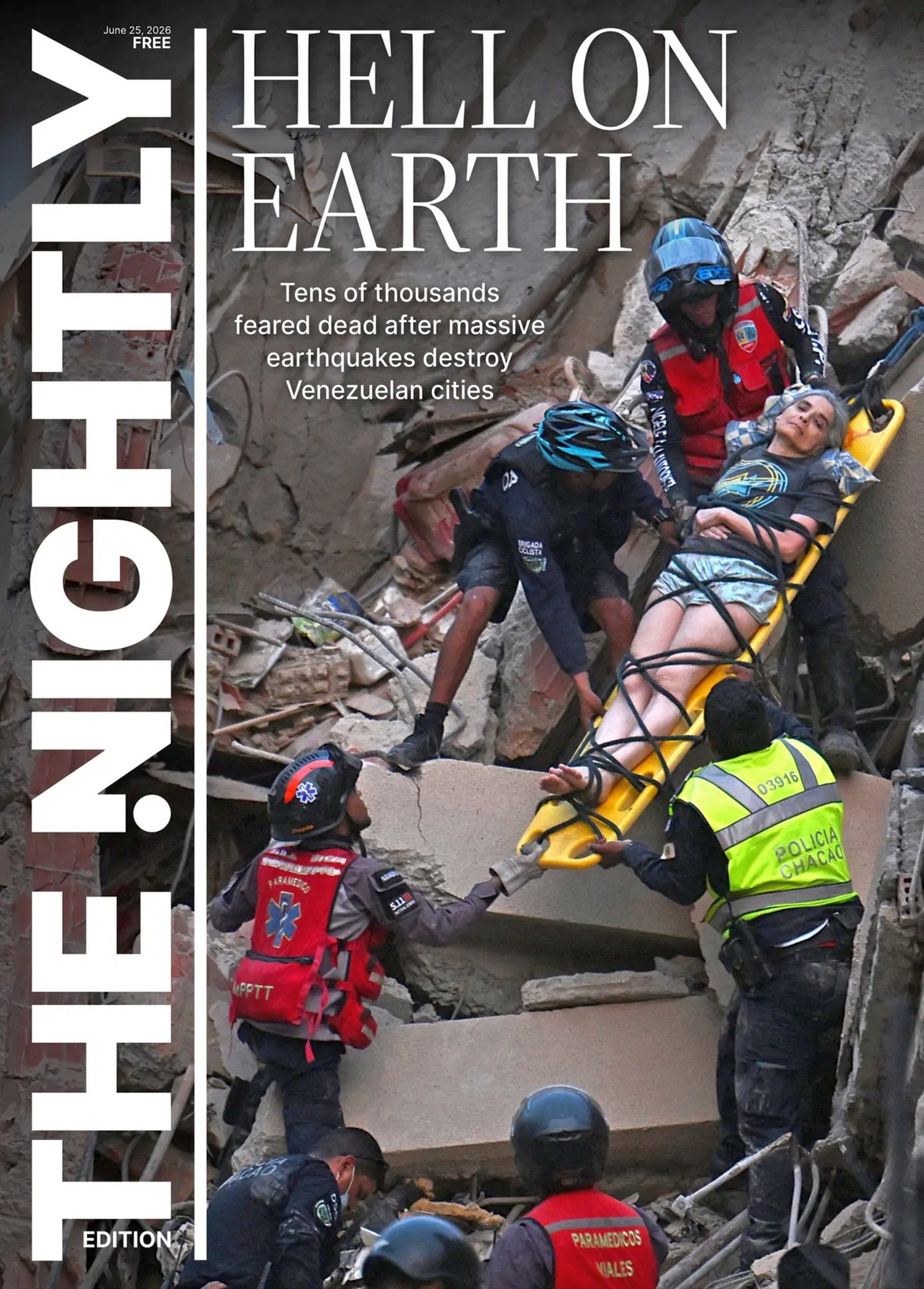
The two powerful earthquakes that struck Venezuela in rapid succession has killed at least 188 people and injured more than 1,500, the BBC reports. The quakes — magnitudes 7.2 and 7.5, hitting just one minute apart — have left rescuers searching through rubble in Caracas and the coastal state of La Guaira, where the UN says more than 100 buildings have collapsed. The 7.5 tremor was the strongest to hit Venezuela since 1900. The US Geological Survey has warned the final death toll could be significantly higher.
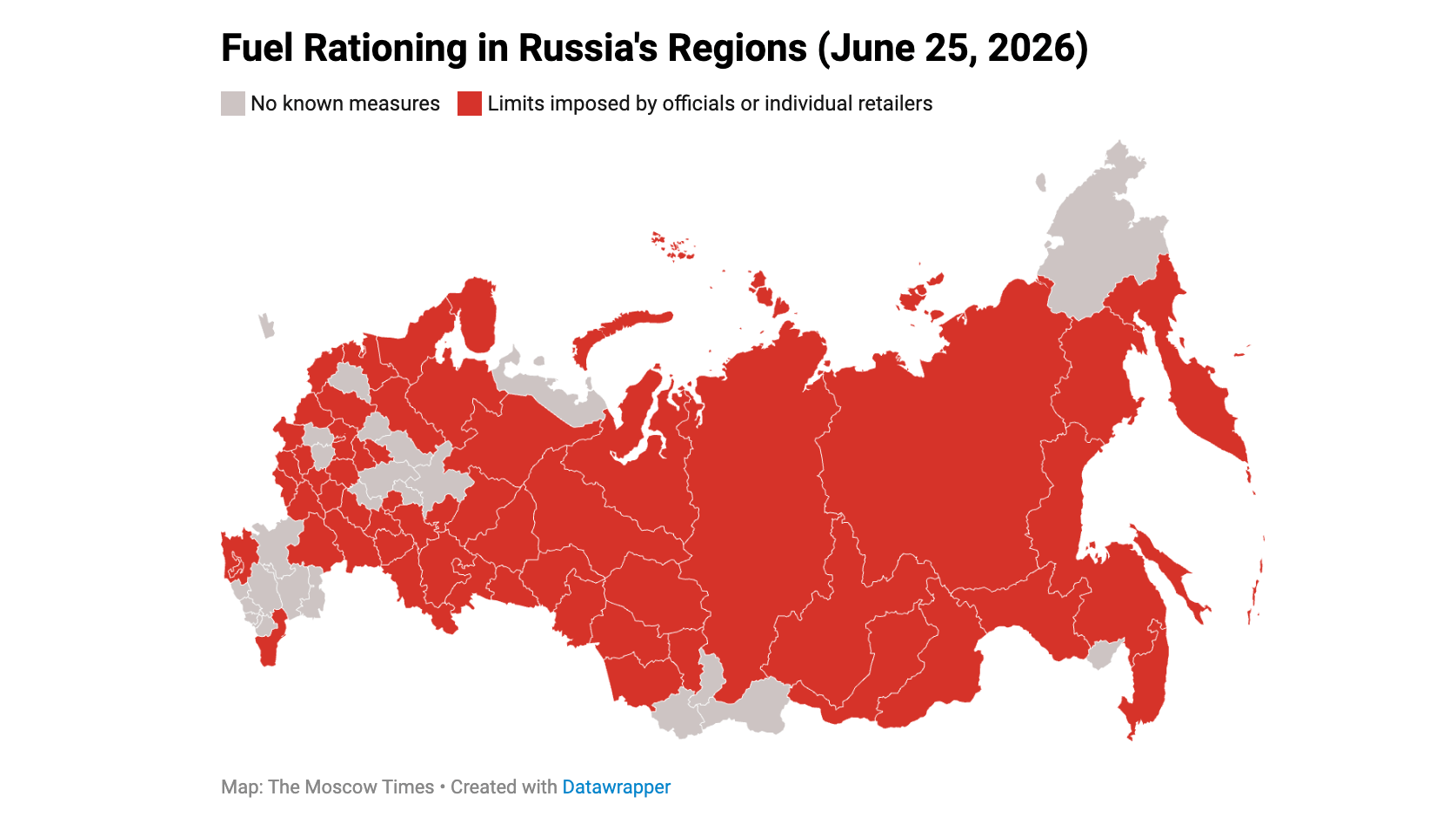
Ukrainian drone strikes on Russian oil infrastructure are triggering a widening fuel crisis across the country, with rationing now in place in at least 56 regions, according to an investigation by The Moscow Times. The picture emerging from Russia’s regions is one of accelerating economic pain. In Tyva, a landlocked southern Siberian republic bordering Mongolia with no railway connections, gasoline prices have surged 9.2% in a single week to reach 90.63 rubles per liter - the highest of any Russian region. Because all goods arrive by truck or plane, fuel price spikes cascade quickly into the cost of food and basic supplies. “The coming fall will probably be very hard,” one Tyva resident told The Moscow Times. “And I won’t even mention winter — I’m afraid that famine will soon come.” The crisis is not confined to Russia’s periphery. In the Kursk border region, a 20-liter-per-car gasoline cap is hampering both civilian evacuations during drone attacks and the use of emergency generators during blackouts. In Tatarstan - home to major refiner Tatneft - panic-buying erupted after a June 12 Ukrainian strike on the company’s flagship Taneco refinery. Even in Khanty-Mansi, one of the world’s largest oil-producing regions, authorities have moved to restrict fuel sales. “We’re up to our ears in oil,” one local resident said, “yet there’s no gasoline.” Deputy Prime Minister Alexander Novak is now weighing a full ban on diesel exports to stabilize the domestic market - a significant escalation of emergency measures. The strategic calculus behind Ukraine’s targeting campaign was laid out plainly by Sergey Vakulenko of the Carnegie Russia Eurasia Center: the amount of fuel available in Russia, he wrote, is now determined by “a race between Ukrainian drones and Russian repair teams.” Kyiv, for now, appears to be winning that race.
Buried in the analysis of Ukraine’s battlefield resilience is an underappreciated factor: industrial policy. While Russia continues to lean on sprawling, largely state-owned defense conglomerates - bloated, corruption-riddled, and slow to adapt - Ukraine has quietly cultivated an ecosystem of small and mid-sized defense contractors, nimble enough to innovate and hungry enough to deliver.
The contrast is stark, says long-time Kyiv resident and Ukrainian-Canadian Bohdan Chomiak. Russia’s military-industrial complex is a legacy Soviet structure that doubled as an oligarch breeding ground. Ukraine, partly out of necessity, has bet on artisanal developers - the defense equivalent of startups - and the results are showing up on the front lines in drone design, electronic warfare, and precision systems.
There’s a larger political economy lesson here. Ukraine’s pivot away from monopolistic state enterprises didn’t just improve battlefield output - it began dismantling the very architecture that allowed oligarchs to capture both the Ukrainian and Russian state in the first place. The war, in this reading, is partly the bill coming due for decades of corporate-state collusion.
The West would do well to take note, Chomiak says. An over-reliance on a handful of mega-contractors - the gigafactory model of defense - carries its own risks of institutional capture. Ukraine may be demonstrating that distributed, competitive, small-scale innovation isn’t just more agile. It may be more democratic.
The west needs to learn that reliance and pandering to bloated multinational corporations will eventually lead to state capture - Bohdan Chomiak
The journals….