The U.S. has finalized its withdrawal from the World Health Organization, one year after President Donald Trump announced America was ending its 78-year-old commitment, federal officials said Thursday. But it’s hardly a clean break. The U.S. owes more than $130 million to the global health agency, according to WHO. And Trump administration officials acknowledge that they haven’t finished working out some issues, such as lost access to data from other countries that could give America an early warning of a new pandemic. The withdrawal will hurt the global response to new outbreaks and will hobble the ability of U.S. scientists and pharmaceutical companies to develop vaccines and medicines against new threats, said Lawrence Gostin, a public health law expert at Georgetown University. “In my opinion, it’s the most ruinous presidential decision in my lifetime,” he said. The WHO is the United Nations’ specialized health agency and is mandated to coordinate the response to global health threats, such as outbreaks of mpox, Ebola and polio. It also provides technical assistance to poorer countries; helps distribute scarce vaccines, supplies and treatments; and sets guidelines for hundreds of health conditions, including mental health and cancer. Nearly every country in the world is a member. U.S. officials helped lead the WHO’s creation, and America has long been among the organization’s biggest donors, providing hundreds of millions of dollars and hundreds of staffers with specialized public health expertise. On average, the U.S. pays $111 million a year in member dues to the WHO and roughly $570 million more in annual voluntary contributions, according to the U.S. Department of Health and Human Services. - AP
🔥 World Briefing Hot Take
The U.S. has now formally completed its withdrawal from the World Health Organization - a rupture in a 78-year relationship that leaves Washington walking away with more than $130 million in unpaid dues and no apparent intention to settle the bill. This isn’t just a symbolic tantrum. It hollows out the world’s central air traffic control for outbreaks - the place that coordinates alerts, sets technical standards, shares surveillance data, and convenes the experts who decide things like flu vaccine strain selection. When the biggest scientific superpower steps out of the room, everyone’s blind spot grows — including America’s (speaking of blind spots, how about the ongoing measles outbreak in the U.S.? For the full year of 2025, a total of 2,242 confirmed measles cases were reported in 45 jurisdictions, according to the CDC. Three people, including two children, died as a result, marking the first pediatric death from measles in a decade. The outbreak represents a three-decade high).
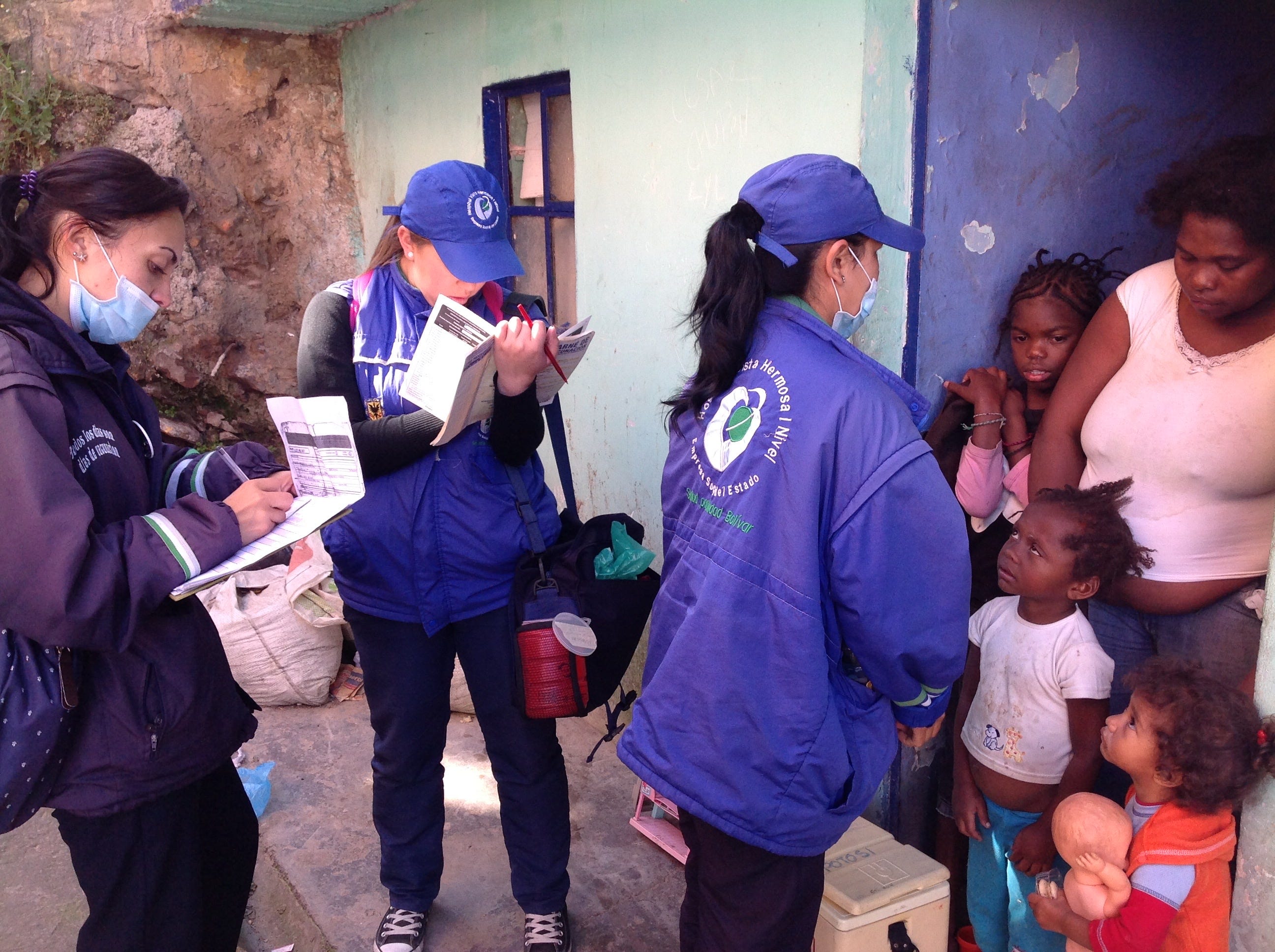
And I’m not guessing about how this system works - I’ve been inside it. Having worked for WHO and the Washington, DC–based Pan American Health Organization, I’m very familiar with its inner workings. In the Maldives, for instance, it served pretty much as a secretariat to the minister of health. I was on the inside when it abruptly cancelled plans to publish a book paying tribute to the Americas becoming the first WHO region in the world to eliminate endemic transmission of rubella and Congenital Rubella Syndrome (CRS) in 2015. But in Pakistan, Papua New Guinea and elsewhere, I’ve witnessed first-hand how health workers risked their lives to administer polio vaccines - the kind of frontline courage and coordination the WHO ecosystem was built to support.
What happens next?
PAHO in Washington: The Pan American Health Organization is complicated - it predates WHO and operates with its own legal identity, and past reporting suggested the U.S. could remain engaged through PAHO even while quitting WHO. That likely means its Washington footprint doesn’t automatically vanish - but the politics and funding could still get ugly fast.
CDC cooperation: In reality, scientists will still talk. But the loss is formal: fewer seats at technical tables, less structured sharing, and more friction when speed matters most. That’s what makes this scientifically reckless - you don’t want “workarounds” during the first 72 hours of a new outbreak.
American staff at WHO: Many U.S. nationals at WHO are international civil servants, not U.S. government employees. Some may stay, but expect pressure, attrition, and an exodus from senior roles over time - because the political oxygen that protected and empowered them just got sucked out.
Bottom line
Yes, WHO needs reform. Yes, it can be bloated and slow. But weakening the one institution built to coordinate the next unknown unknown doesn’t punish bureaucracy - it punishes preparedness.
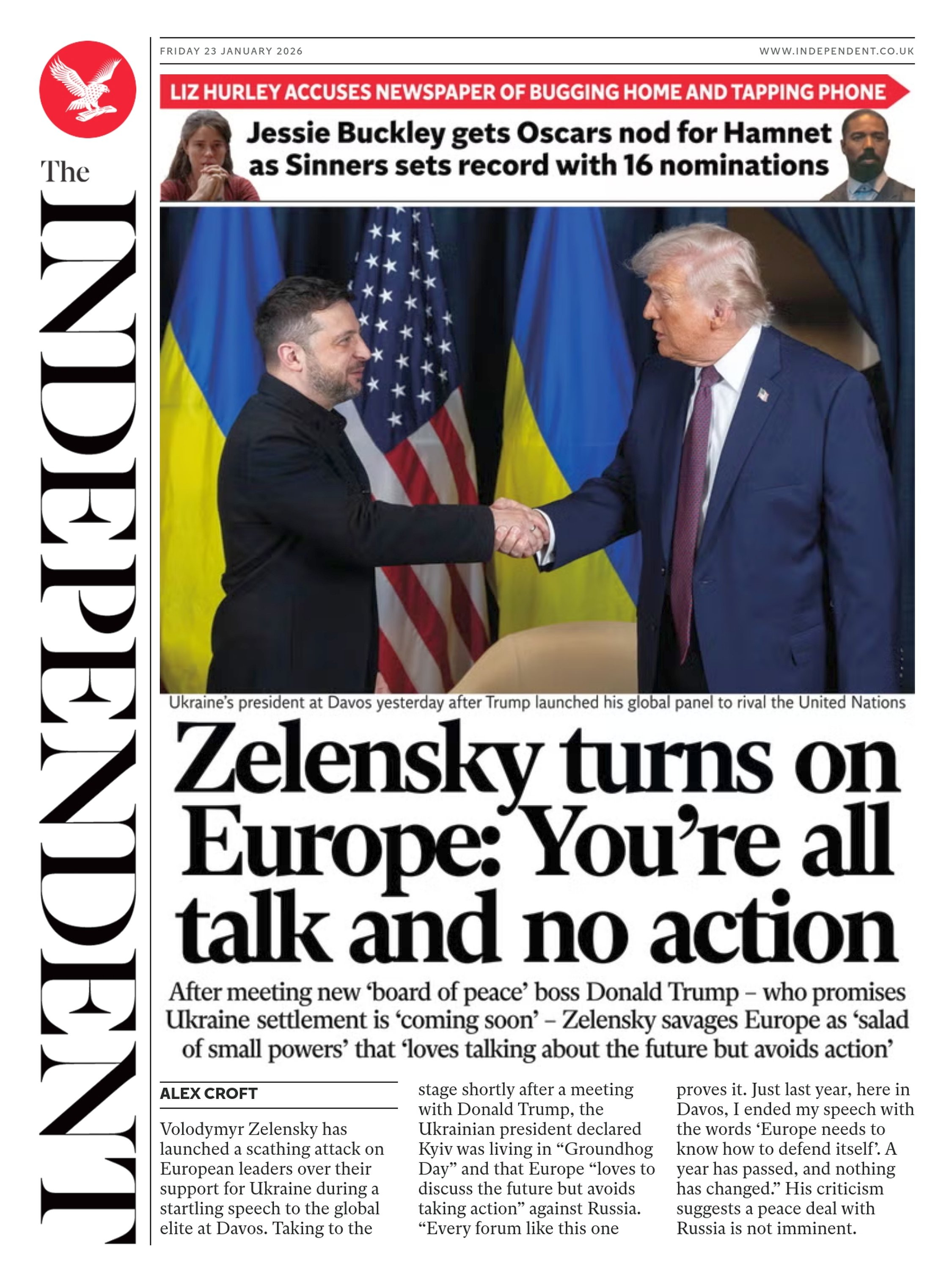
US, Ukrainian, and Russian negotiators were set to meet in Abu Dhabi on January 23 for further talks on Moscow’s war against Ukraine after Russia signaled no softening of hardline territorial demands following a late-night meeting between Russian President Vladimir Putin and a White House delegation in Moscow. A senior Putin aide said Russia was satisfied with the outcome of nearly four hours of talks in the Kremlin. The January 22-23 talks between Putin and special envoy Steve Witkoff, who has now met with Putin seven times in a year, came amid a new burst of negotiations that included Ukrainian President Volodymyr Zelenskyy flying to Switzerland to meet with Trump earlier on January 22. Officials said the meetings in Abu Dhabi, the first three-way US-Ukraine-Russia talks since Putin launched the full-scale invasion of Ukraine in February 2022, would focus on security issues and other matters related to the biggest war in Europe since 1945. Zelenskyy told reporters the Abu Dhabi talks, expected to start in the evening and continue on January 24, would include the highly contentious issue of territory in the Donbas -- eastern Ukraine’s Donetsk and Luhansk regions -- much of which is occupied by Russian forces. “The issue of the Donbas is key. It will be discussed, and the modalities of how the three parties see it, in Abu Dhabi today and tomorrow,” he said in a WhatsApp chat. Ahead of the Abu Dhabi talks, Putin’s spokesman Dmitry Peskov reiterated Russia’s long-standing demand that Ukrainian forces leave the portion of the Donbas that they still hold. “Russia’s well-known position is that Ukraine, the Ukrainian Armed
Forces, must leave the territory of the Donbas territory, they must be withdrawn from there,” Peskov told journalists. “This is a very important precondition. There are also other nuances that remain on the negotiation agenda.” In comments to Russian reporters after the Kremlin talks, Putin’s foreign policy aide Yury Ushakov signaled no breakthroughs. Putin told the Americans that Russia was “sincerely interested” in a diplomatic solution, Ushakov said, adding that “until this is achieved, Russia will continue to consistently pursue the objectives” of its war. “This is particularly true on the battlefield, where the Russian armed forces hold the strategic initiative,” he said - RFE/RL
A Moscow military court has for the first time acknowledged that 20 sailors were killed in a Ukrainian missile strike on the flagship of the Russian Navy’s Black Sea Fleet nearly four years ago. The sinking of the cruiser Moskva in April 2022 off the coast of southern Ukraine came as a major embarrassment for the Russian military, which initially said the warship sank in stormy seas as it was being towed to port for repairs following a fire caused by a munitions explosion.
On Thursday, Moscow’s Second Western District Military Court sentenced Ukrainian Navy brigade commander Andriy Shubin to life in prison in absentia after he was found guilty of terrorism related to the sinking of the Moskva and another Russian warship, the exiled news outlet Mediazona reported.
The court said two Ukrainian missiles struck the Moskva, sparking a fire on board the ship and causing smoke to fill its interior compartments. Ukraine previously said it used two Neptune anti-ship missiles to strike the vessel.
It was the first time Russia acknowledged a missile strike was to blame for the sinking - Moscow Times
Politicians from across Britain’s political spectrum united on Friday to condemn claims made by President Trump that NATO troops had stayed “a little off the front lines” during the war in Afghanistan. Mr. Trump made the comments in an interview in Davos, Switzerland, with Fox Business, in which Mr. Trump questioned whether other members of the North Atlantic Treaty Organization would come to the aid of the United States if needed. “We’ve never needed them,” Mr. Trump said. “We have never really asked anything of them. You know, they’ll say they sent some troops to Afghanistan or this or that. And they did. They stayed a little back, little off the front lines.” Under NATO’s collective security agreement, known as Article 5, aggression against one member country is considered an attack on all. It has been invoked only once in the history of the alliance — after the Sept. 11, 2001, attacks on the United States. In Britain, which lost 457 soldiers during two decades of subsequent fighting in Afghanistan, the reaction to Mr. Trump’s claims was swift and universally critical. “The U.K. and NATO allies answered the U.S. call,” John Healey, Britain’s defense secretary wrote on social media. “And more than 450 British personnel lost their lives in Afghanistan. Those British troops should be remembered for who they were: heroes who gave their lives in service of our nation.” - NYT
Most of Europe can’t join Donald Trump’s “Board of Peace” because it “goes way beyond” the UN Security Council mandate, Greece’s Prime Minister Kyriakos Mitsotakis has said. “The consensus is that what has been announced by Donald Trump goes way beyond UN Security Council mandate,” Mitsotakis said, a day after taking part in an emergency Council meeting focused on transatlantic relations. “I think we have to recognize that moving forward what has been established is something in which most European countries can’t join.” The remarks followed the formal launch in Davos of Trump’s “Board of Peace” initiative to solve conflicts around the world. The project stems from his 20-point Gaza ceasefire plan endorsed by the UN Security Council but has expanded far beyond its initial mandate. It has been widely criticised for creating a parallel structure to the UN, giving Trump disproportionate powers and for inviting Russia. Many European allies, including Norway, Sweden and France, have declined participation, while others, such as Italy, said they would not join for now. Mitsotakis said that the US should be involved in the reconstruction of Gaza but that the plan should be “only for Gaza” and “only for a limited amount of time.” Less than 20 countries joined the initiative at a signing ceremony in Davos on Thursday, far fewer than the around 35 nations previously expected, according to Trump administration officials. Hungary and Bulgaria were the only European countries to take part - Euronews
President Donald Trump revoked Canada’s invitation to participate in his “Board of Peace” initiative, in the latest blow to the increasingly frosty relations between the North American neighbors. Trump said in a social media post on Thursday that Canadian Prime Minister Mark Carney would no longer be welcome on the board, which his administration initially created to oversee the end of the war in Gaza but has since said would have a broader mission. The president did not specify why he was withdrawing the invitation to Carney, but his social media post came after the prime minister raised concerns about the board and pushed back sharply at Trump’s remark that “Canada lives because of the United States” in a speech at the World Economic Forum in Davos, Switzerland on Wednesday - Politico
The prevailing view in Davos this week was that Larry Fink, CEO of global asset management giant BlackRock, has saved the World Economic Forum after its leadership problems and its declining ability to draw in big-name speakers. Fink has said he planned to lead for two years or fewer while a permanent chair is found. Who that could be is unclear. Christine Lagarde, president of the European Central Bank, was widely seen as the front-runner when Schwab resigned, with the founder himself publicly anointing her his successor. But Fink’s break with the Schwab era has thrown that into question. Lagarde, who reportedly walked out of a dinner Wednesday during a speech critical of Europe by U.S. Commerce Secretary Howard Lutnick, has been a Davos fixture this week, but she has denied that she would step down from the ECB early to take over. Fink, meanwhile, seems to have bigger plans for the WEF. In his speech at the beginning of the gathering, he pitched a path forward beyond Davos, calling for the event to expand to “the places where the modern world is actually built.” “Davos, yes,” he said. “But also places like Detroit and Dublin — and cities like Jakarta and Buenos Aires.” “The mountain will come down to earth,” he added - Politico
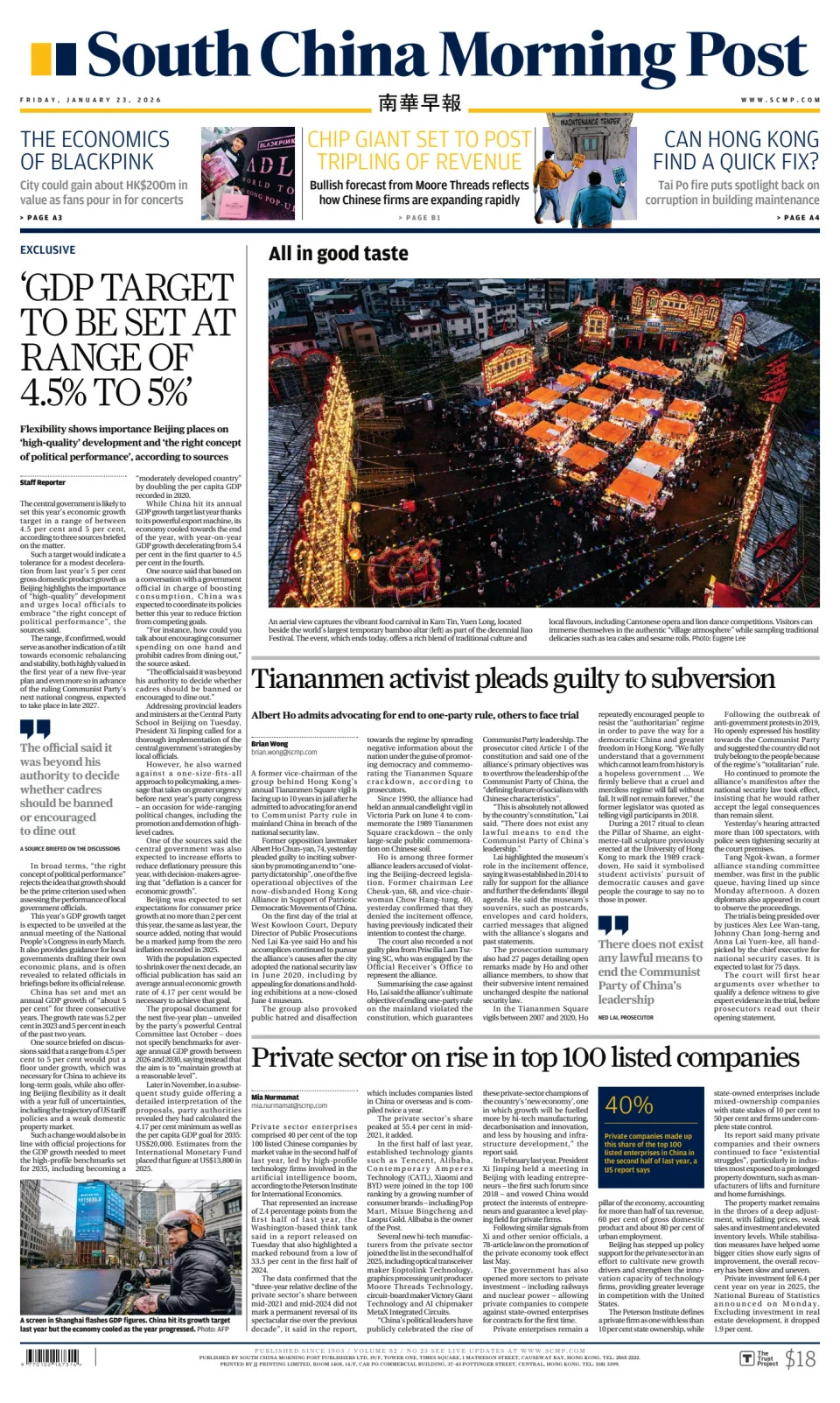
China scored big trade wins as the US pushed ahead with its protectionist moves. Beijing reached agreements with the EU and Canada to allow more Chinese-made electric vehicles into both markets, while Britain’s prime minister will travel to China soon to revive business cooperation. Germany’s chancellor is also expected to visit next month. US President Donald Trump’s speech at Davos this week reiterated he would keep tariffs in place, affirming Washington’s retreat from the helm of a free-trade liberal order, The New York Times argued: Beijing is keen to assume that mantle, and despite its repressive surveillance state and military expansionism, it is “at least rhetorically” invested in the rules-based, multilateral model that Trump has denounced - Semafor
Indonesia’s immigration authorities say they’ve busted a foreign-run fraud and extortion ring operating a “love scam” that targeted South Korean victims abroad. Acting Director General of Immigration Yuldi Yusman said the syndicate was uncovered during surveillance operations in Tangerang, near Jakarta, between Jan. 8–16, 2026, after residents reported suspicious activity at an upscale home in Gading Serpong. According to Antara, officers raided the property on Jan. 8, arresting 14 foreign nationals — 13 Chinese citizens and one Vietnamese, he said at a press conference in South Jakarta on Monday. Further raids led to more arrests across two locations, with authorities saying the network used Telegram to lure victims into video calls, secretly recording intimate content and then using the footage for blackmail to extract payments. Artificial intelligence tools such as “Hello GPT” were used to automate romantic conversations, allowing male perpetrators to convincingly impersonate women. Immigration officials seized what they described as a sizeable cyber operation — including hundreds of mobile phones, dozens of laptops and PCs, multiple monitors and networking equipment. Yusman said investigators have not found Indonesian victims so far, but the suspects are accused of violating stay permits and immigration rules and could face additional cybercrime charges. Authorities say they are still hunting other alleged members believed to be hiding inside Indonesia. In Asia Times, analysts said the recent bust should serve as a “wake-up call”—not only for Indonesian law enforcement, but also for Beijing. “China cannot credibly claim success in combating cybercrime domestically while its citizens relocate operations overseas, turning countries like Indonesia into unintended staging grounds,” wrote Muhammad Zulfikar Rakhmat and Yeta Purnama of the China-Indonesia Desk at the Jakarta-based Center of Economic and Law Studies.
The journals….