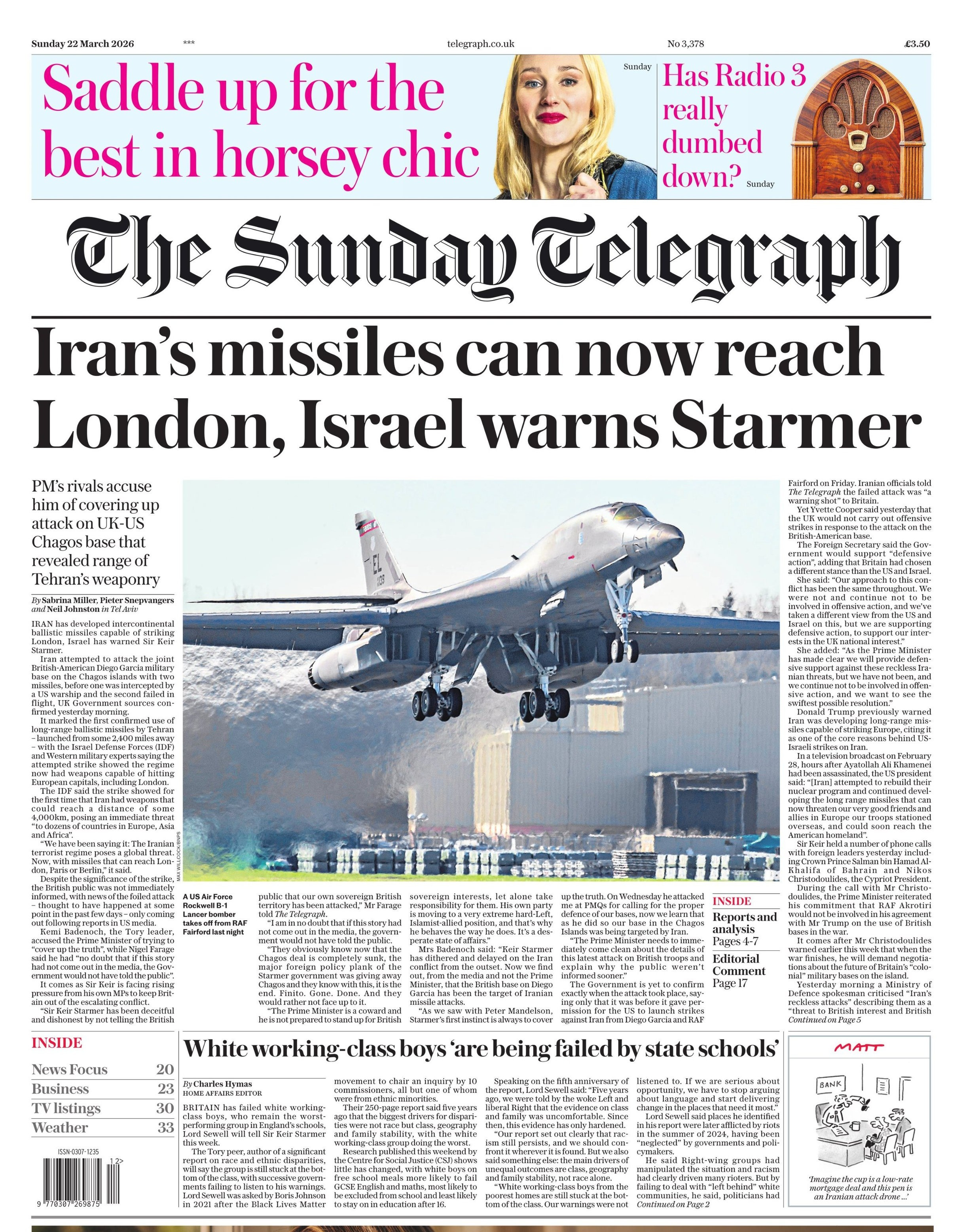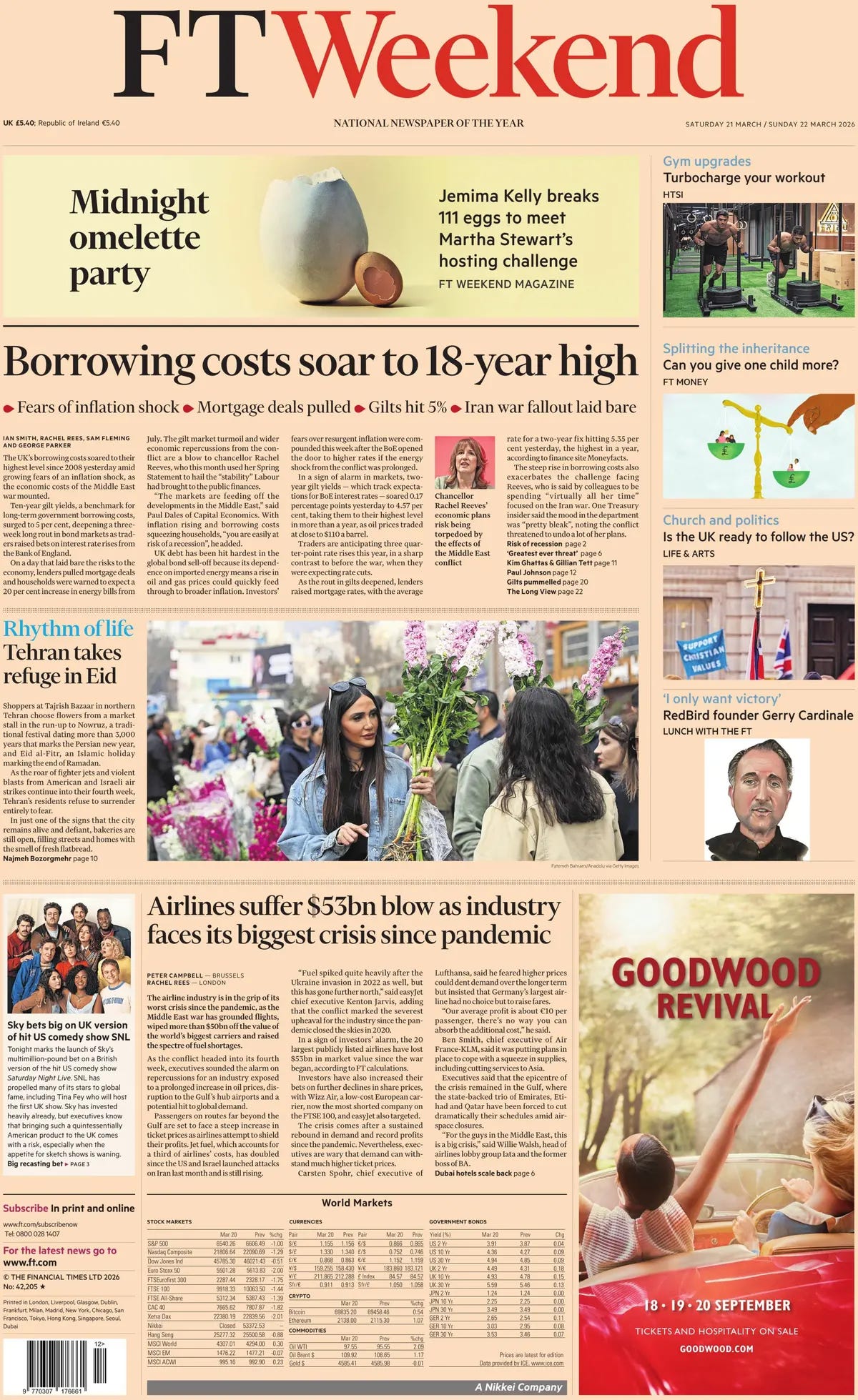
US President Donald Trump has given Tehran 48 hours to “fully open” the crucial Strait of Hormuz or the United States will “obliterate” Iran’s power plants, a major escalation of tensions in a war that already threatens to spin out of control. The deadline threat came at 7:44 p.m. Washington time on March 21 and was posted on his Truth Social platform: “If Iran doesn’t FULLY OPEN, WITHOUT THREAT, the Strait of Hormuz, within 48 HOURS from this exact point in time, the United States of America will hit and obliterate their various POWER PLANTS, STARTING WITH THE BIGGEST ONE FIRST! Thank you for your attention to this matter. President DONALD J. TRUMP.” He did not specify the power plants that would be targeted by the United States and it comes one day after Trump said he was considering “winding down” military operations. Even as he spoke, the Pentagon was sending thousands of additional ground forces to the region aboard US Navy ships to bolster military assets in the war with Iran, multiple media outlets have reported. The Pentagon hasn’t commented officially on the reported deployments. In an almost immediate response to Trump’s ultimatum, Iran’s military command was quoted by state media as saying that if Iran’s fuel and energy infrastructure is attacked, all energy infrastructure belonging to the United States in the region will be targeted. Iran also said desalination facilities will be struck. Although not physically blocked, Iran has made the waterway ungovernable through a combination of kinetic strikes, mines, electronic warfare, and market fear. Blockage of the strait has restricted global supplies, sending oil prices surging worldwide and raising the cost of living for hundreds of millions of people. Trump has demanded that countries that utilize the strait for transport of their energy resources take the lead in protecting shipping through the waterway, by military escort or other means. US European allies and Japan have expressed readiness for “appropriate” efforts to secure passage through the strait, but many have said such an action would only come after a cease-fire, angering Trump, who called them “cowards.” - RFE/RL
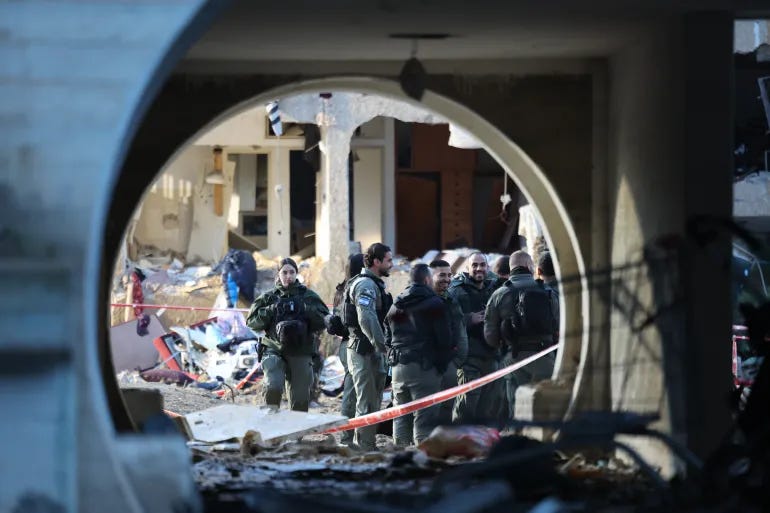
Iranian missiles struck two communities in southern Israel late Saturday, leaving buildings shattered and dozens injured in dual attacks not far from Israel’s main nuclear research center. The developments signaled the war was moving in a dangerous new direction at the start of its fourth week. The Iranian strikes in Israel came after Tehran’s main nuclear enrichment site at Natanz was hit earlier in the day. Israel’s military said it was not able to intercept missiles that hit the southern cities of Dimona and Arad, the largest near the center in Israel’s sparsely populated Negev desert. It was the first time Iranian missiles penetrated Israel’s air defense systems in the area around the nuclear site. “If the Israeli regime is unable to intercept missiles in the heavily protected Dimona area, it is, operationally, a sign of entering a new phase of the battle,” Iran’s Parliament Speaker Mohammad Bagher Ghalibaf said on X before word of the Arad strike spread. Israeli Prime Minister Benjamin Netanyahu said more emergency crews were being sent to the scene. “This is a very difficult evening,” he said.
Iran’s representative to the International Maritime Organization (IMO) says foreign vessels can still pass through the Strait of Hormuz with coordination from the Iranian government for security and safety arrangements. Ali Mousavi, who is also Iran’s envoy to the UK, told the Mehr news agency that international obligations must be accompanied by respect for “Iran’s territorial integrity and rights”. He added that Iran is ready to cooperate with the IMO and countries to improve maritime safety and protect seafarers. The Strait of Hormuz is only closed to Iran’s “enemies”, Mousavi said, adding that the US and Israel’s war was at the “root of the current situation” in the Gulf and the Strait of Hormuz - Al Jazeera
Gulf countries have warned they may be forced to take action if the war involving Iran continues, Türkiye’s Foreign Minister Hakan Fidan said, adding that officials he met during a regional Gulf tour said they see the war continuing for another two to three weeks, with risk levels steadily rising. “Israel will try to influence the US and will seek to prevent a ceasefire or the achievement of peace in the near term,” he said. “There has been a growing assessment that the US’ and Israel’s initial positions are drifting apart. This, in turn, could lead to a longer war.” - TRT
As Qatar reels from an Iranian attack that has hobbled its giant natural gas company, its boss, who doubles as the country’s energy minister, says he had warned officials and executives of just such a danger should Iran’s own sites be hit. “I was always warning, talking to executives from oil and gas that are partnered with us, talking to the US Secretary of Energy, to warn him of that consequence and that that could be detrimental to us,” QatarEnergy CEO Saad al-Kaabi told Reuters. QatarEnergy’s partners include major US energy companies such as ExxonMobil and ConocoPhillips. “They were aware of the threat, and they were always reminded by me, almost on a daily basis, that we need to make sure that there is restraint on oil and gas facilities,” he said. The US Department of Energy deferred to the White House on the matter.
“Immediately after the power plants and infrastructure in our country are targeted, the critical infrastructure, energy infrastructure, and oil facilities throughout the region will be considered legitimate targets and will be destroyed in an irreversible manner, and the price of oil will remain high for a long time.” - Iranian parliamentary speaker Mohammad Bagher Ghalibaf

From the Gulf and Ukraine to the Philippines and southern Africa, the geopolitical dots are multiplying by the day.
Upgrade to World Briefing Plus by becoming a paid subscriber and stay ahead of the headlines — or support my independent global reporting through Patreon or PayPal.
U.S. and Ukrainian negotiators met in the United States on Saturday in a bid to revive stalled talks on ending the four-year Ukraine war launched by Russia, officials said. U.S.-led efforts to end Europe’s deadliest conflict since World War II have stalled since the United States and Israel launched joint strikes on Iran in February, prompting turmoil to erupt across the Middle East. Russian and Ukrainian negotiators have not met since last February in Geneva. U.S. special envoy Steve Witkoff and U.S. President Donald Trump’s son-in-law Jared Kushner represented the U.S. side, while Ukrainian security council secretary Rustem Umerov and Zelensky’s top aide Kyrylo Budanov represented the Ukrainian side, Ukrainian media reported. A statement on Witkoff’s X account called the meetings “constructive,” with “discussions focused on narrowing and resolving remaining items to move closer to a comprehensive peace agreement.” Russia invaded Ukraine in February 2022 and has since occupied large swathes of the east and south of the country while raining missiles and drones on its neighbor in daily attacks. The war has forced millions to flee their homes and led to tens of thousands of military and civilian casualties - AFP
Slovak Prime Minister Robert Fico said that Slovakia could consider blocking a 90-billion-euro EU loan for Ukraine in the future, while defending Hungarian Prime Minister Viktor Orban’s opposition to the measure.
Tens of thousands of people protested in Prague on Saturday against the policies and plans of the new Czech government led by populist Prime Minister Andrej Babiš. The protesters from across the Czech Republic attended the peaceful demonstration at Letná park, the scene of huge gatherings in 1989 that greatly contributed to the fall of communism. They came to express their concerns that Babiš, a billionaire, and his coalition Cabinet, are a threat to democracy, steering the country away from supporting Ukraine and toward an autocratic path. People in the crowd, who organizers estimated at 200,000, were waving Czech national flags, while one of the banners on display read: “Let’s defend democracy.” “We’re here to clearly stand against dragging our country onto the path of Slovakia and Hungary,” said Mikuláš Minář, the head organizer from the Million Moments for Democracy group, referring to the pro-Russia and autocratic leanings of those two countries. The new government is preparing a bill that critics say is inspired by a Russian law on foreign agents and would require nongovernmental organizations and individuals involved in vaguely defined political activity and receive foreign aid to register or face big fines. - AP
Deliveries of delayed F-16V fighter jets for Taiwan will begin this year with production at “full capacity”, the island’s defence ministry said after senior defence officials visited the United States. Taiwan, which faces a rising military threat from China, has complained of repeated delays to weapons ordered from the US, the most important international backer and arms supplier for the island, which Beijing claims as its territory. The United States in 2019 approved an $8 billion sale of Lockheed Martin F-16 fighter jets to Taiwan, a deal that would take the island’s F-16 fleet to more than 200 jets, but the project has been hit by issues including software problems. Deliveries will begin this year, the ministry said, without elaborating. Lockheed Martin has assigned several hundred personnel to assemble the remaining aircraft, and “there are no bottlenecks in either parts supply or manpower; production is proceeding at full capacity on a two-shift schedule”, it said. Because the F-16V is a new model specially designed for Taiwan, continued test flights are still needed to fine-tune its systems, and tests must be carefully carried out, the ministry said - CNA
A lawsuit has been brought against Fraport AG, the owner of Frankfurt Airport in Germany, following accusations of environmental destruction. On Wednesday, Fortaleza city councillor Gabriel Biologia filed a class action lawsuit against the German firm, along with other regulatory public agencies, seeking compensation of 100 million Brazilian Reais (around €16.5 million). The lawsuit alleges “irregularities and illegalities” related to the deforestation of an area of land located around Fortaleza International Airport in Brazil, which is being cleared to build a logistics warehouse. Fortaleza International Airport is a subsidiary of Fragport AG. According to the lawsuit, the deforestation and the development project “violate” the plan that was originally approved in the concession process conducted by ANAC, Brazil’s civil aviation authority, and contain “serious flaws in the environmental licensing process”. It is claimed that more than 60 acres of Atlantic Forest – which is among the world’s top global biodiversity hot spots that houses one in 14 of the Earth’s total plant species – has been cut down to make room for the warehouse. Biologia argues this is not just a case of unauthorised construction, and could be the “biggest environmental crime” Foraleza has seen in a decade. The case is now awaiting review by the judiciary and is being heard at the 7th Federal Court of Ceará, Brazil - Euronews
Bachelor Nation is reeling after a last-minute shakeup that’s now escalating into legal drama. ABC abruptly scrapped its upcoming season of The Bachelorette on Thursday—just days before its scheduled Sunday premiere—after controversy erupted around leading lady Taylor Frankie Paul. Now, according to TMZ, at least five contestants are considering legal action against ABC and Warner Bros. Discovery. Sources told the outlet the men believe they were placed in an unsafe environment due to Paul’s well-documented history of domestic violence, which had already played out publicly during the first season of Secret Lives of Mormon Wives. The network pulled the plug after a video resurfaced showing a domestic dispute between Paul and her former partner, Dakota Mortensen, prompting a swift reversal after weeks of promotion. The fallout could have ripple effects across the franchise. Traditionally, the next Bachelor is selected from contestants on the most recent Bachelorette season—leaving producers without a clear pipeline for the next lead - The Daily Beast
The journals….