

🔥 World Briefing Hot Take
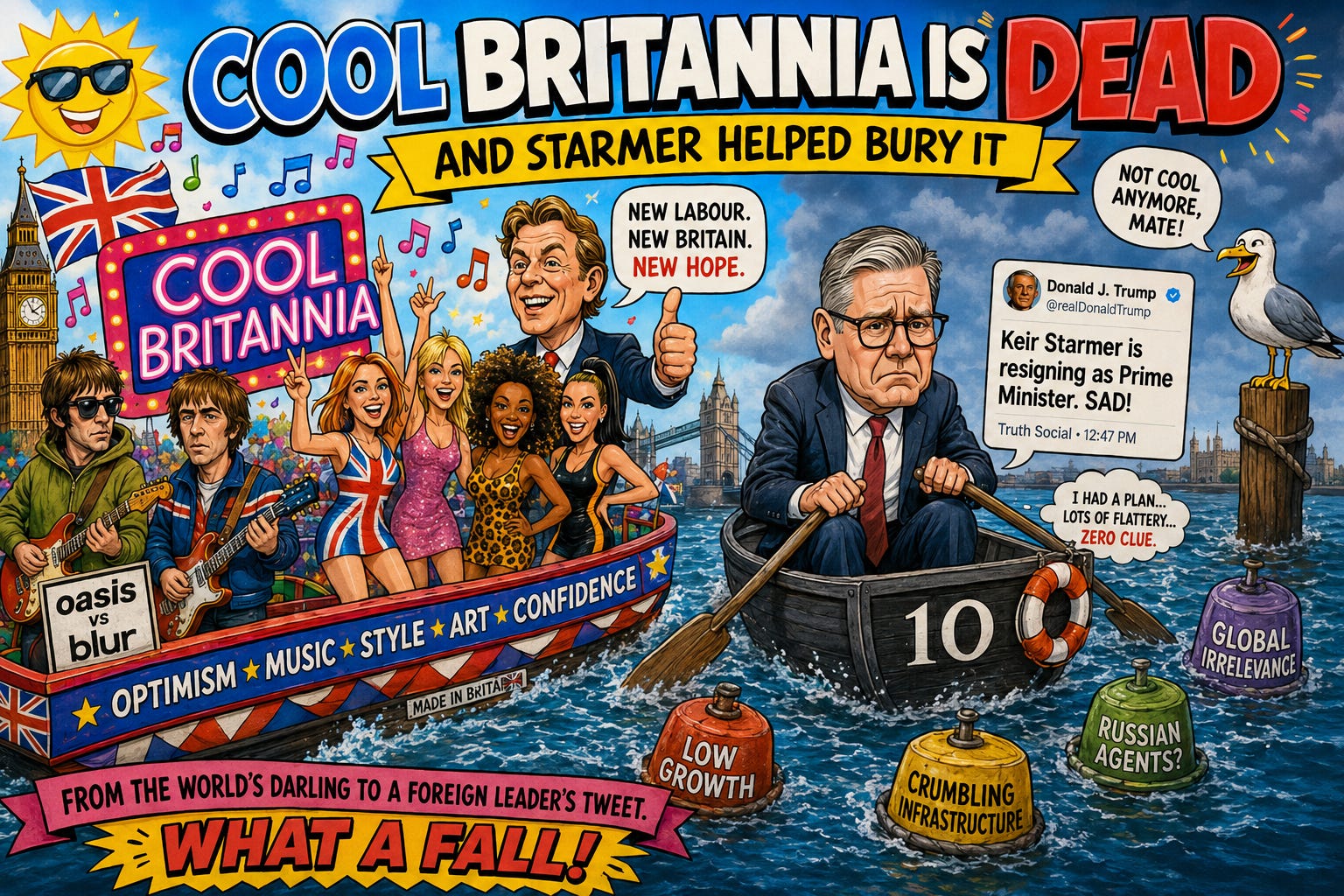
In 1996, American journalist Stryker McGuire declared London "the coolest city on the planet" in Newsweek, and the world agreed. Cool Britannia wasn't just a catchy phrase - it was a genuine cultural and political phenomenon. Oasis and Blur were battling it out on the charts. The Spice Girls were conquering the globe. The Young British Artists were rewriting the rules of contemporary art. Flag carrier British Airways was still a byword for elegance at 30,000 feet. And then came Tony Blair in 1997: young, sharp, telegenic - riding a wave of political optimism that felt, for a moment, like Britain had rediscovered its best self. What had started as a satirical joke became a full-blown national brand. The world leaned in.
That Britain feels like it belongs to another civilization.
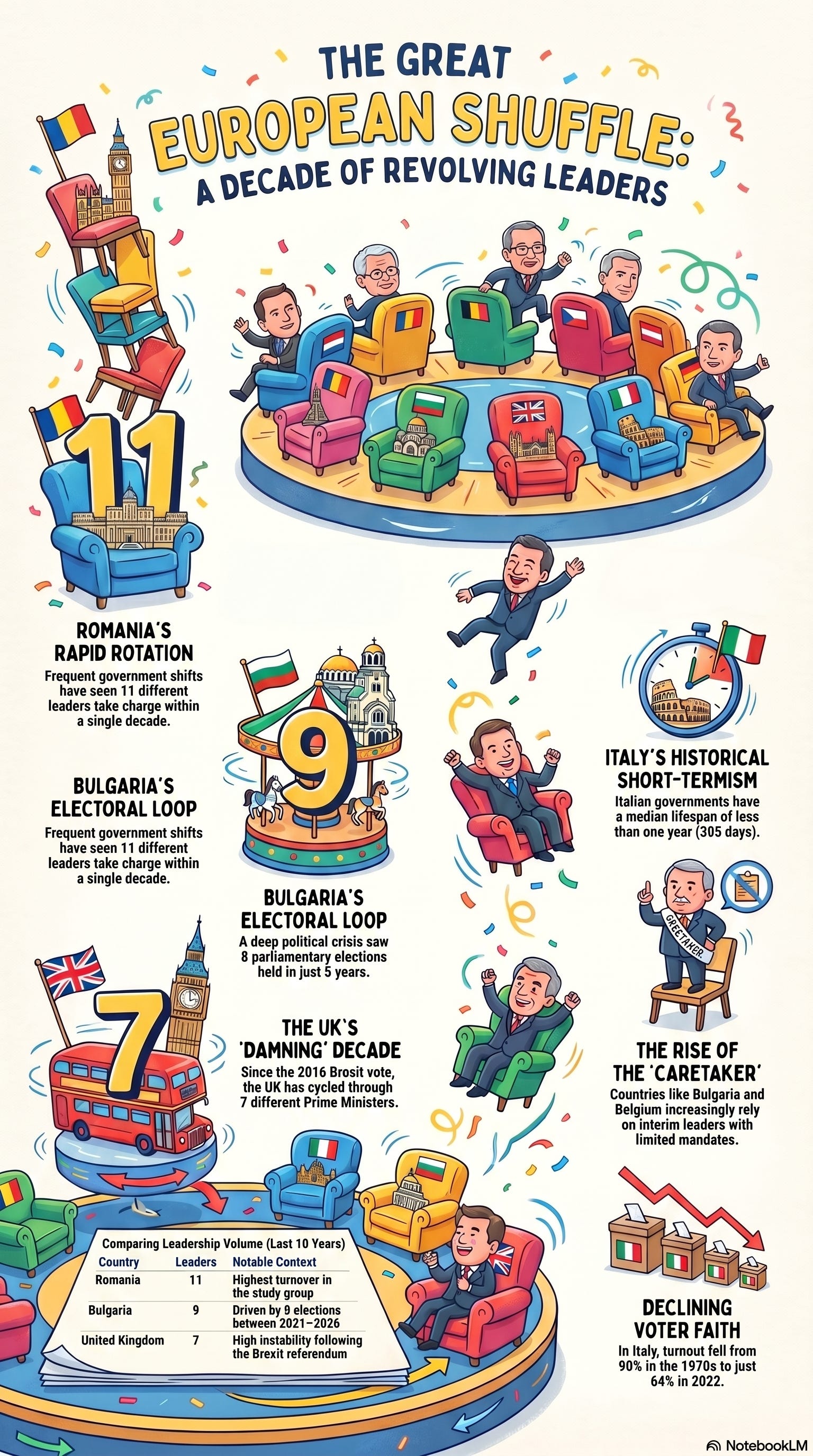
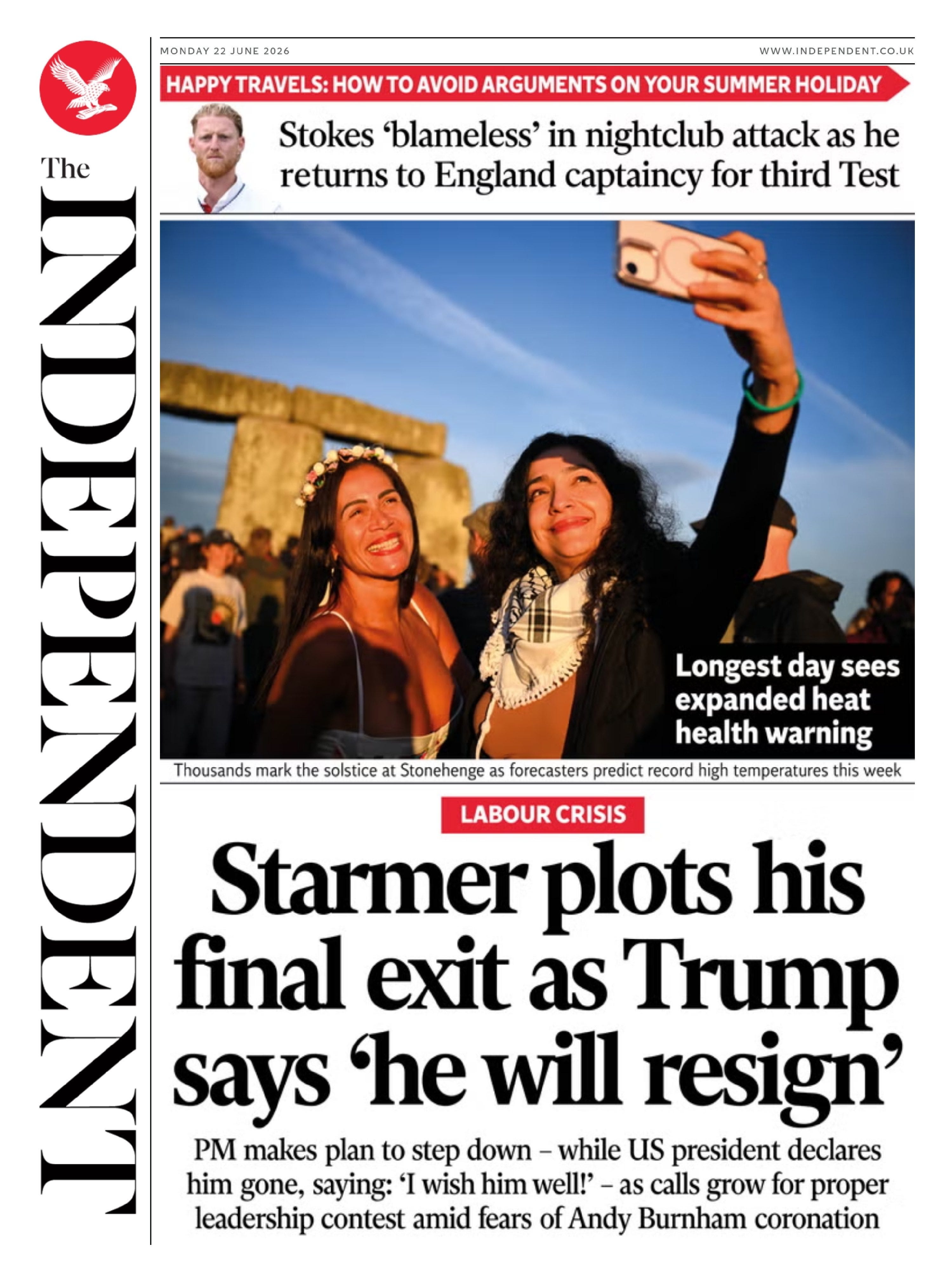
Today, Keir Starmer became the latest entry in one of the most embarrassing political statistics in the democratic world: the UK’s seventh prime minister in a decade and the fifth consecutive British prime minister not to serve out a full parliamentary term. The man who promised to end the chaos delivered more of the same - only quieter and with less self-awareness.
The betrayals weren’t loud. They were incremental, which almost made them worse. Starmer called himself Ukraine’s staunchest ally while loosening sanctions on Russian refined oil. He watched Russian ghost ships map British submarine cables. Russian agents have poisoned UK citizens on sovereign soil, and, more recently, Kremlin-paid arsonists torch British warehouses - and responded with rhetoric calibrated not to disturb. A promise is only as good as the person making it. If you can’t keep them, don’t make them.
Then came the Trump miscalculation. Starmer apparently believed he’d discovered the secret sauce - flatter the president lavishly enough and the special relationship would hold. Trump repaid the flattery by announcing Starmer’s resignation on Truth Social before Starmer had said a word himself. Piers Morgan called it “the final humiliation.” It was hard to argue. That’s not a special relationship. That’s a one-way mirror.
Persistent low growth, crumbling infrastructure, and a perceived loss of global influence have hardened into a wider narrative of national decline that Starmer neither reversed nor honestly confronted.
Cool Britannia was born from genuine cultural electricity - music, art, optimism, and a sense that Britain was setting the pace. What’s left is a country on its seventh prime minister in ten years, being told by a foreign leader when its own PM is leaving office.
Stryker McGuire’s coolest city on the planet deserves better than this.
News Briefs
Less than two years after a historic landslide, the UK Labour Party has eaten its own leader. Former BBC U.S. correspondent, Nick Bryant, calls it what it is: another casualty of a political curse that won’t lift.
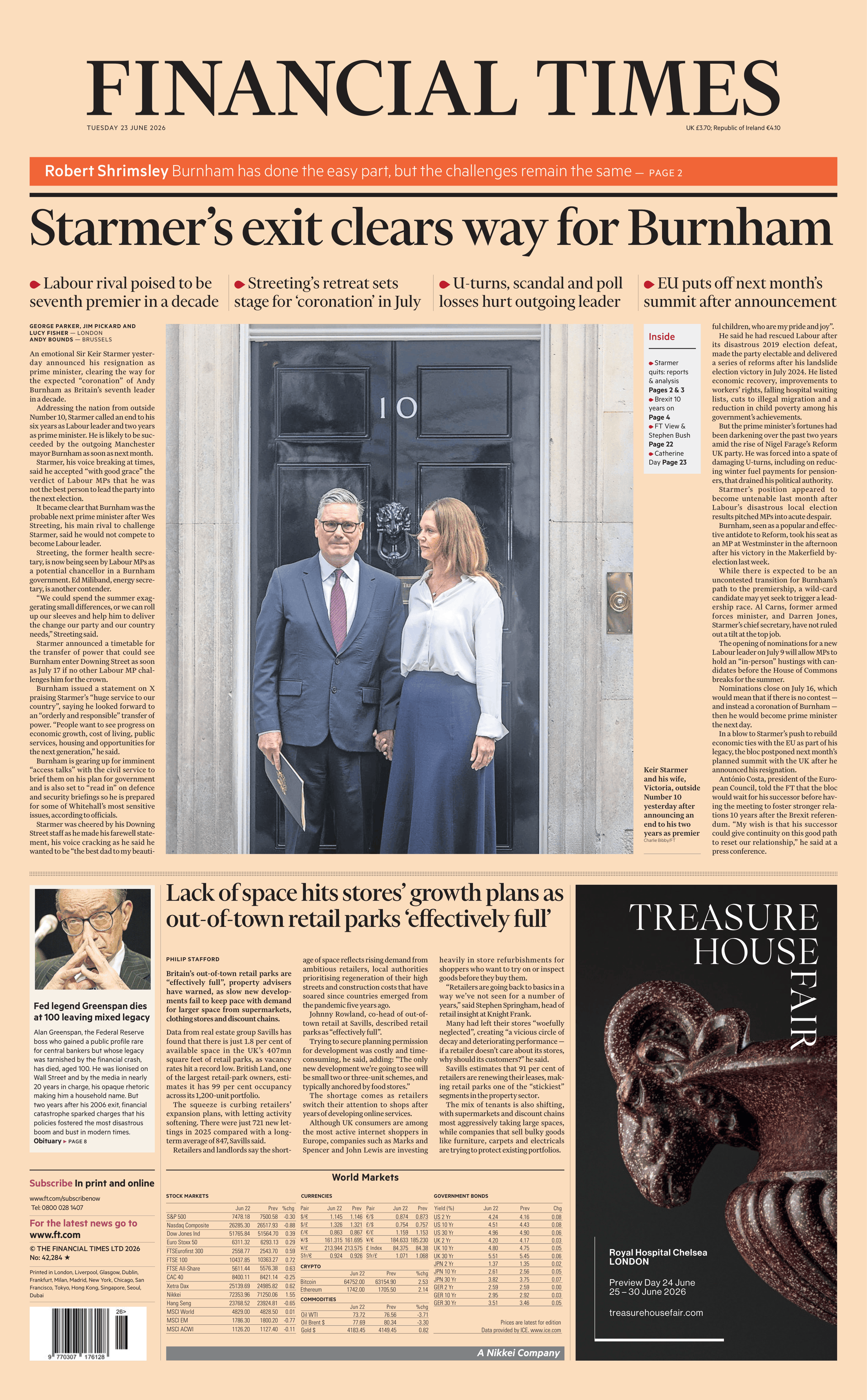
Keir Starmer announced Monday he will resign as Labour leader and prime minister, ending months of political turmoil. The timing is pointed: his resignation comes almost ten years to the day since the UK voted to leave the European Union — and his successor will be the country’s seventh prime minister in that period.
Analyst Nick Bryant, writing in his Substack History Never Ended, frames it with characteristic precision: British prime ministers, he argues, have become “the voodoo dolls of democratic politics. Angry about immigration? Poke a needle into Sir Keir Starmer’s torso. Disappointed with the outcome of Brexit? Wound him in the thigh.” The headline he gives it: Stexit.
How it fell apart
Despite a 174-seat majority, Starmer’s government was weakened by dwindling poll ratings, Labour infighting, and growing public frustration over its failure to deliver quickly on growth and the cost of living. By mid-May, over 95 Labour MPs had called on Starmer to resign, and one cabinet minister - Health Secretary Wes Streeting - four junior ministers, and four ministerial aides had already quit in protest.
Bryant’s verdict on why Starmer couldn’t survive is blunt: “Charisma-less politicians who lack main character energy are struggling to cut through.” He argues Starmerism had no overriding project - beyond making Labour more electable than it was under Jeremy Corbyn, a mission accomplished in 2024 but never translated into a governing story. “It’s the attention economy, stupid,” Bryant writes. “That is a rule of politics in the age of X, Insta, TikTok and Facebook.” Outside Downing Street on Monday, Starmer himself acknowledged the verdict of his parliamentary party: “I have heard the answer. I accept that answer with good grace.”
The Brexit curse, unbroken
Bryant’s deeper argument is structural. Brexit, he contends, “has cursed every prime minister since” Cameron resigned the morning after the 2016 referendum. Leaving the EU has reduced the size of the UK economy by somewhere between 2.5% and 8%, with business investment down 12% and a measurable drag on productivity. “A broken economy leads to a broken politics.” Compounding the irony: leaving the EU - driven by anxieties about immigration - produced what Bryant calls “the Brexit paradox”: more migration, not less, as severe skills shortages forced Boris Johnson to open the door to non-EU arrivals.
The supreme twist, in Bryant’s telling: “A main architect of Brexit, Nigel Farage, has been the main beneficiary of the failures of Brexit.” Reform UK is the direct heir to that dynamic - and the party that triggered Labour’s internal mutiny.
The Burnham gambit
A coordinated move saw Josh Simons resign his Makerfield seat to create a by-election for Burnham, who won with 54.8% of the vote on June 18 - beating Reform in a constituency where they had just swept the local council seats. Wes Streeting, once seen as Burnham’s most likely rival, endorsed him Monday morning. Nominations open July 9, close July 16, and a new leader will be in place before Parliament returns in September.
Bryant knows Burnham from university and offers a sober assessment of the prime-minister-in-waiting: more of a “flair player” than Starmer, with genuine emotional range and a thumping by-election mandate. But the question he poses is the right one: “How long will he occupy the honeymoon suite of UK politics? In post-Brexit Britain, does such a chamber even exist?”
Bottom line: Burnham inherits a party that has now destroyed two leaders in a decade, an economy still paying the Brexit toll, and a Reform UK that feeds on exactly the grievances that removal fails to fix. The voodoo doll gets a new face. The needles don’t go away.
A prime minister who in 2024 won such a gargantuan landslide, and looked like a leader who might one day have the word “era” affixed to his name, has not even made it two years into a five-year term before announcing his decision to quit - Nick Bryant
Switzerland talks yield a 60-day framework and weapons inspector access — yet Iran’s own vice president warns the country has “no trust in the enemy”
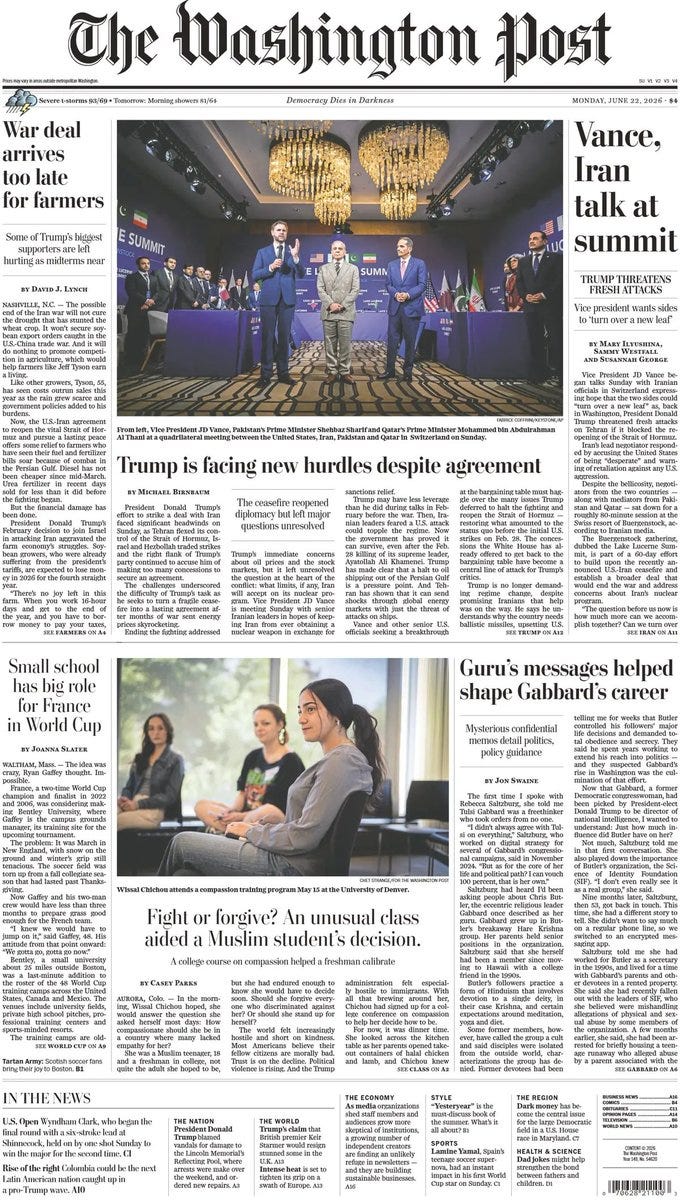
High-level US-Iran negotiations wrapped their first day in Switzerland with mediators Pakistan and Qatar declaring “encouraging progress” and both sides agreeing to a roadmap aimed at a final deal within 60 days. US Vice President JD Vance called the session “very productive” and said a mechanism has been established to keep the Strait of Hormuz open - a critical pressure point after Iran announced its closure Saturday, citing continued Israeli military operations in Lebanon.
But the gap between diplomatic optics and operational reality is hard to miss. Iran’s First Vice President Mohammad Reza Aref said bluntly that even with a deal, “there is no guarantee that hostile actions will stop” - and that Iran must keep building its deterrence capacity regardless. Vance echoed the skepticism from the American side: “You can’t trust anybody’s words - you have to trust what they actually do.”
The key deliverables so far: Iran has allowed weapons and nuclear inspectors into the country “for the first time in a long time,” according to Vance — a concession the US is treating as significant but not conclusive. Sanctions relief is being used as a carrot: Iran can already sell oil on the open market rather than at steep discounts to sanctions-wary buyers, with more relief benchmarked to continued progress.
Lebanon is the wild card. Israeli Defence Minister Israel Katz says Israeli forces will remain in southern Lebanon indefinitely. Iran is framing the establishment of a “deconfliction cell” to end military operations there as a win — President Pezeshkian called it proof that “the opposing side has been compelled to retreat.” Hezbollah has vowed to confront any ceasefire violations.
Iran’s senior negotiators have returned to Tehran for consultations; a technical team remains in Switzerland to continue work on the Islamabad Memorandum of Understanding.
Trump’s bottom line: “If Iran doesn’t live up to their agreement, I will do what I have to do.”
Watch: Whether inspectors gain meaningful access once inside — and whether the Lebanon ceasefire holds long enough to keep the 60-day clock ticking.
Russian stocks tumbled more over 4% on Monday to hit their lowest level in more than three years, extending a 15-week decline after the Central Bank’s modest interest rate cut last week, which signaled that high borrowing costs will likely persist longer than investors expected. During the afternoon trading session, the benchmark MOEX index dipped below 2,368 points for the first time since March 2023. The index continued its slide later in the day, shedding 4.42% to around 2,313 points. Among the worst performers was the digital real estate marketplace Tsian, which saw its shares plunge more than 14%. Aeroflot was another major loser, dropping over 6% as flight operations face constant disruptions at airports due to Ukrainian drone attacks. The MOEX has been on a downward trajectory since March and has lost more than 14% of its value since the start of the year. The current 15-week losing streak has now surpassed the decline recorded during the 2008 global financial crisis. The ruble also lost ground against a basket of currencies, tracking lower alongside Brent crude oil prices, which slid to $77.63 per barrel following developments in the Middle East - Moscow Times
Honduras is planning to purchase drones from Ukraine as part of its efforts to combat drug trafficking and strengthen border security, President Nasry Asfura said on Monday. The announcement comes as the country grapples with organised crime, gang violence and narcotics trafficking networks that continue to pose major security challenges. Asfura met Ukrainian President Volodymyr Zelenskyy in Kyiv last week. During their talks, Zelensky offered cooperation in military technology, particularly drone systems, as Ukraine seeks to expand partnerships beyond Europe while showing-off capabilities developed during its war with Russia. Speaking to AFP in Panama City during the General Assembly of the Organization of American States, Asfura said the technology could help authorities monitor remote areas and target criminal activity. “We are talking about drones to protect our borders, to efficiently guard our borders, to fight against organized crime with high-tech equipment,” he said. Asfura added that Ukraine “can help us a lot to further secure our borders and fight drug trafficking” and described the issue as “a matter of national security”. Honduras has long been used as a transit route for cocaine shipments moving north from South America, and is increasingly facing concerns over local coca cultivation and cocaine-processing operations. Security forces have uncovered plantations and laboratories in remote regions, raising fears that the country is evolving from a trafficking corridor into a more active part of the narcotics production chain - Euronews
A Quito-based real estate entrepreneur is going viral - and Canadians are not happy about it. Alejandro Vivar, a self-described content creator and relocation consultant, dropped a 47-second grenade near Yonge and Dundas, panning his camera across cigarette butts, discarded garbage, and the raw edge of Toronto’s downtown homelessness and drug crisis — then declared Canada’s largest city a “third-world country.” The kicker? Vivar — who spent a decade behind bars and survived a shooting at Christie Pits — is using the footage as a straight-up ad for his Ecuador relocation business, pitching a sunnier life free of crushing taxes and unaffordable rents. Cue the outrage. Cue the counter-videos. Cue 10,000 Torontonians simultaneously defending a city they also complain about every single day.
🔥 Hot Take: He’s wrong on the label - but not entirely wrong on the optics. Toronto’s downtown core has a genuine livability crisis, and no amount of patriotic pushback changes what the camera captured at Yonge & Dundas on any given Tuesday. The real story isn’t an Ecuadorian troll - it’s why Canada’s most iconic intersection looks the way it does.
The journals….
Hot take indeed! Bravo, Myx