"We Have Never Seen a Man Quite Like Ted Turner Before on This Planet...And I Don't Think We'll Ever Seen Another One Like Him Again” - Tom Johnson, Former CNN President
World Briefing Hot Take 🔥
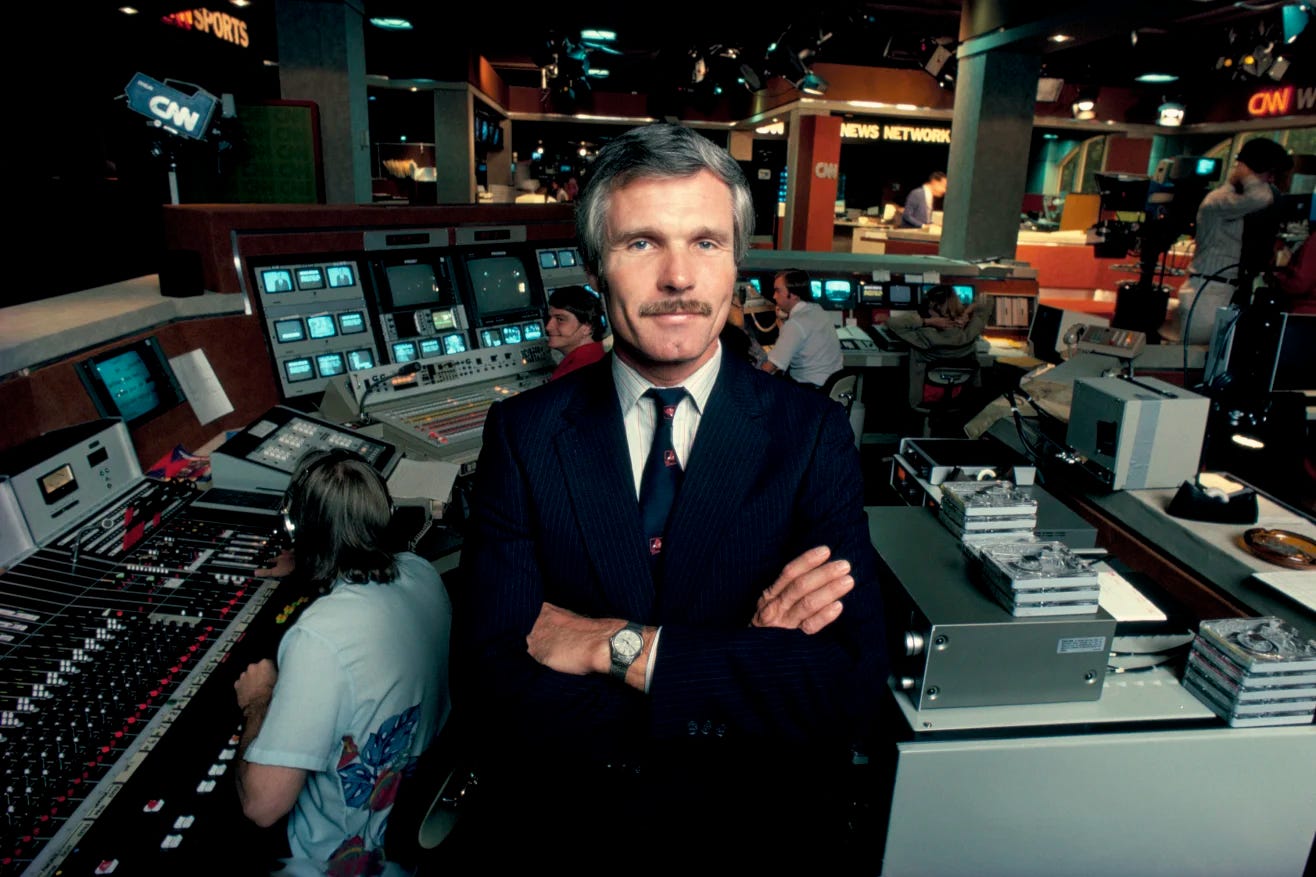
Ted Turner didn’t just build a television network. He changed the rhythm of global news forever.
I still remember my late brother Roman beckoning my to the television set in June 1980 to tell me there was now a 24-hour news channel. For a family of news junkies, CNN felt revolutionary. Suddenly, the world didn’t wait for the evening broadcast anymore.
And during moments like the Gulf War, CNN proved that journalism could be immediate, global and deeply human all at once.
Years later, I would become part of that world myself - as a contributor to CNN Opinion, and as a regular commentator across both CNN International and CNN Domestic, a role I continue to this day. I’ve appeared on the network hundreds of times commenting on wars, disasters, elections, pandemic outbreaks and geopolitical crises from around the globe.
During the downing of MH17 over eastern Ukraine, CNN became one of the central windows through which the world tried to understand the horror unfolding in real time. I was on daily as the spokesperson of first responders from the Organization Security and Cooperation in Europe. And in the first weeks of Russia’s full-scale invasion of Ukraine, CNN did what it does best: deploy scores of media workers, journalists and anchors to Lviv (where a pop-up bureau was established) and Kyiv.
Over the years, I also had the privilege of seeing the operation from the inside - working alongside some of the finest producers, correspondents and executives in the business. Through HUMNEWS, founded by former CNN Vice President Joy DiBenedetto, I worked closely with many former CNN professionals who wanted to refocus the news camera on the 117 countries that rarely receive sustained mainstream media attention.
During my years with UNICEF, I was even trained by CNN crews in satellite communications, field production and video transmission work in difficult environments - ahead of a deployment to Myanmar. (I never met Ted Turner, sadly, but I did meet his ex-wife, Jane Fonda - where else, but in the ‘green room’ at CNN’s New York headquarters).
Ted Turner built a newsroom culture that believed journalism mattered - and that the world deserved access to information in real time, wherever history was unfolding.
Today, that vision feels more fragile.
Budget cuts. Commercial pressures. Merger speculation. Political attacks on the press. A growing public distrust of journalism itself. At a time when authoritarianism is rising and journalists are being threatened, jailed and killed around the world, the loss of figures like Turner feels especially profound.
He understood something many leaders still do not: a strong, independent press is not a luxury. It is infrastructure for democracy.
One Ted Turner quote has always stayed with me: “I didn’t have any upper limits to how far we could go. “
He lived that philosophy. And whether people loved CNN or criticized it, the truth is simple: the world’s information landscape would look radically different without him.

News Briefs
Ted Turner, the media maverick and philanthropist who founded CNN, a pioneering 24-hour network that revolutionized television news, died peacefully Wednesday, surrounded by his family, according to a news release from Turner Enterprises. He was 87.
The Ohio-born Atlanta businessman, nicknamed “The Mouth of the South” for his outspoken nature, built a media empire that encompassed cable’s first superstation and popular channels for movies and cartoons, plus professional sports teams like the Atlanta Braves.
Turner was also an internationally known yachtsman; a philanthropist who founded the United Nations Foundation; an activist who sought the worldwide elimination of nuclear weapons; and a conservationist who became one of the foremost landowners in the United States. He played a crucial role in reintroducing bison to the American west. He even created the Captain Planet cartoon to educate kids about the environment.
But it was his audacious vision to deliver news from around the world in real time, at all hours, that really made him famous - once his idea finally took off.
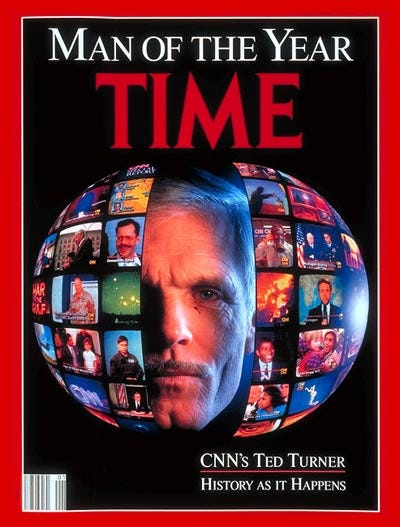
In 1991, Turner was named Time magazine’s Man of the Year for “influencing the dynamic of events and turning viewers in 150 countries into instant witnesses of history.”
Turner eventually sold his networks to Time Warner and later exited the business, but continued to express pride in CNN, calling it the “greatest achievement” of his life.
Just over a month before his 80th birthday in 2018, Turner revealed that he had Lewy body dementia, a progressive brain disorder. In early 2025, Turner was hospitalized with a mild case of pneumonia before recovering at a rehabilitation facility.
Read CNN’s full report on Ted Turner here
In 2003, Turner spoke with Mike Wallace about his life and career accomplishments. Watch the CBS 60 Minutes feature here
“Ted was an intensely involved and committed leader, intrepid, fearless and always willing to back a hunch and trust his own judgement. He was and always will be the presiding spirit of CNN. Ted is the giant on whose shoulders we stand, and we will all take a moment today to recognize him and his impact on our lives and the world.”
— Mark Thompson, Chairman and CEO, CNN Worldwide
“Ted Turner was an irreplaceable, courageous giant who changed not just the world with his visionary ideas of democratizing news and information, but he changed the lives of thousands of people who worked for him. I was honored to work on both sides of the house — first at Turner Broadcasting for three years in M&A while the company was still being built; and, at CNN in Guest Booking where women ran the show.
It was the most incredible time where anything was possible and that spirit perfectly embodied the spirit of Ted who never quit — not in news, entertainment, business or in life. He cared about making the world a better place and he put his fortunes into service to solve world peace, save the planet and create better health for billions.
People always talk about his media work but his philanthropic efforts were selfless and generous, often putting him at risk — such as starting the UN Foundation with $1 billion of his own stock. The world will be less without him, and was so much more with him.”
— Joy DiBenedetto | Former Vice President, Network Bookings, Interviews & Global Research, CNN
The president of the Canary Islands, Fernando Clavijo, has rejected the Spanish government’s decision to allow the Dutch MV Hondius vessel, which has a hantavirus outbreak on board, to dock in the islands. A number of passengers have been infected, three have died. “I cannot allow [the boat] to enter the Canaries,” Clavijo told Onda Cero radio in an interview. He added: “This decision is not based on any technical criteria and nor have we been given enough information.” Clavijo, who is currently in Brussels, said he wanted to meet urgently with prime minister Pedro Sánchez in Madrid in order to discuss the matter. The boat is expected to reach the Canary Islands in the next few days. In Switzerland, a man in hospital has been found to have the virus after travelling on the cruise ship. Hantavirus refers to a strain of viruses carried by rodents - it’s transmitted to humans through inhalation of airborne particles from dried droppings - BBC
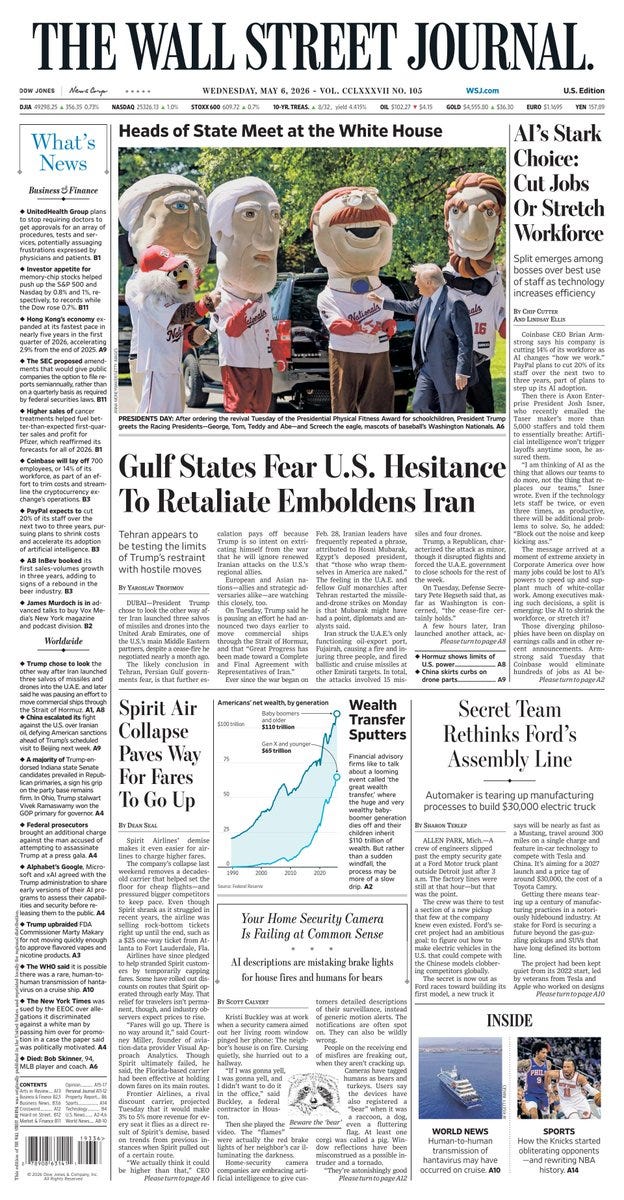
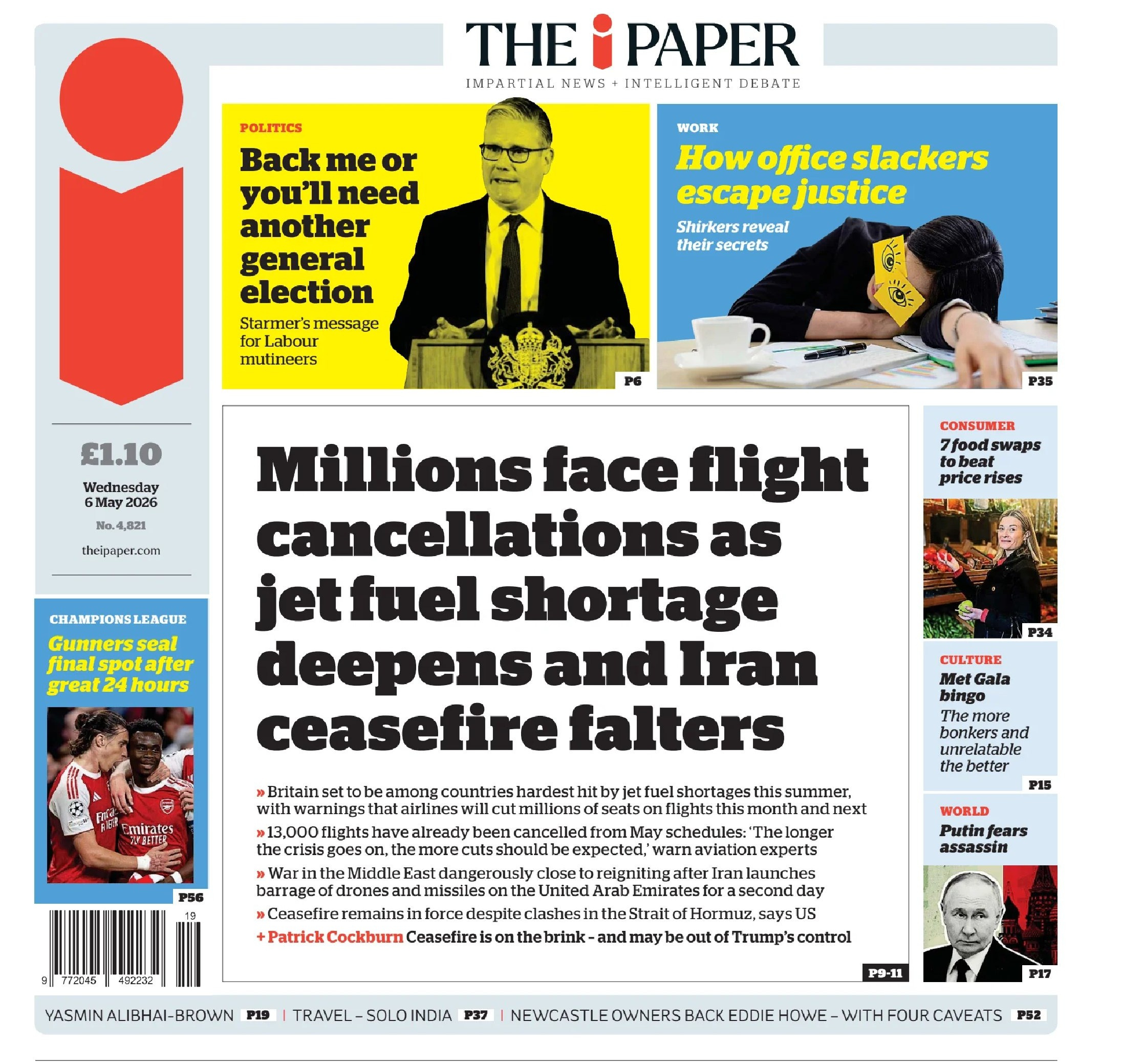
Iran’s foreign ministry spokesman, Esmail Baghaei, said Wednesday that his government was reviewing an American plan to end the war, hours after President Trump put pressure on Iran to agree to a deal to end the war and renewed threats, fueling uncertainty around the negotiations. Mr. Baghaei said that Iran had yet to respond to that proposal. “After finalizing its considerations, Iran will convey its views to the Pakistani side,” he said in an interview with the semiofficial news agency ISNA. Earlier in the day, another Iranian official had dismissed a reported proposal to end the war as a “list of American wishes.” The mixed messages came a day after Mr. Trump abruptly paused a U.S. military operation to escort commercial ships through the Strait of Hormuz, citing what he said was “great progress” in talks. In public, there has been little sign that the weeks of diplomacy aimed at reaching a deal to reopen the vital waterway and end the war were bearing fruit. In a Truth Social post on Wednesday, Mr. Trump said he would end the war and offer safe passage for vessels through the strait if Iran “agrees to give what has been agreed,” without elaborating. “If they don’t agree, the bombing starts,” he threatened, warning that further U.S. attacks would be “at a much higher level and intensity.” The suggestion appeared to contradict the assertion made by Secretary of State Marco Rubio on Tuesday that the war was “over.” - NYT
Israeli forces have bombed Beirut’s southern suburbs and claim to have assassinated Malek Balou, a commander of Hezbollah’s Radwan Force. “Israeli warplanes launched an attack, targeting Ghobeiri” in the southern suburbs, Lebanon’s state-run National News Agency reported, as a loud explosion and extensive damage were reported from the area. Israeli Prime Minister Benjamin Netanyahu confirmed the attack, saying he and Defence Minister Israel Katz had instructed the army to carry out the attack. “Radwan terrorists are responsible for shooting at Israeli settlements and harming [Israeli army] soldiers. No terrorist has immunity – Israel’s long hand will catch every enemy and murderer,” Netanyahu said in a post on Telegram. “We promised to bring security to the residents of the north – this is how we do it and this is how we will continue to do it!” he added. Hezbollah has not yet responded to the Israeli claim - Al Jazeera
Global energy prices and supplies still have room to get much worse, executives and analysts warned. A “great repricing is underway,” Semafor’s energy editor wrote, as experts raise their forecasts for oil and gas prices — “a sign that the gravity of the situation is finally landing.” Global oil reserves shrank at a record rate in April, and supplies of jet fuel and liquefied petroleum gas are poised to plunge in Asia, Africa, and Europe. Even as Washington attempts to safely escort ships through the Strait of Hormuz, many companies are adopting a “wait-and-see” approach as fears of attacks persist, a marine insurance executive told Semafor; shipping insurance rates won’t come down until there’s more evidence the escorts can materially improve safety - Semafor
Hospitals Are Being Bombed. The World Has Stopped Caring
Ten years after the UN unanimously condemned attacks on medical facilities in conflict zones, virtually nothing has changed. Hospitals are still being targeted daily in Gaza, Sudan, Ukraine, Myanmar and beyond - and the states responsible for enforcing international humanitarian law are either unable or unwilling to act.
That is the damning assessment of Claude Maon, Legal Director for Médecins Sans Frontières, who argues that the problem is no longer the law itself, but the near-total failure to enforce it. Parties to conflict routinely exploit legal loopholes to justify attacks on hospitals, investigations go nowhere, and accountability mechanisms exist largely on paper.
Maon’s prescription is blunt: senior command authorization before any military action near a hospital, zero tolerance enforced down the chain of command, and genuine independence in investigations. “Fewer words and more action,” she writes - warning that without urgent political will, the protections enshrined in the Geneva Conventions are becoming meaningless.
The U.S. State Department completed its reduction-in-force on Tuesday, letting go of 200 to 250 Foreign Service Officers—mostly on domestic posts—and 30 civil service staff, capping over 1,300 layoffs since last summer under Secretary Marco Rubio’s reorganization to cut 15% of staff and prioritize America First diplomacy. The union criticized the timing amid U.S. strikes on Iran and new hiring, while affected officers like Arabic/Persian speaker Gliha called it a slap in the face after years of service. Supporters view it as needed housecleaning to remove redundancies, even as the department plans further cuts and recruits for vacancies.
The residents of Punta Marina, a seaside Italian town, are losing sleep — and their patience — over an unlikely menace: peacocks. A colony that settled in the area a decade ago has since multiplied into a roving, screeching mob of dozens, turning the town’s streets into what one might generously call a “living nature exhibit.” Less generously, residents describe fouled cars, damaged gardens, and the birds’ mating calls piercing the night air. “They disturb at all hours,” complained one bleary-eyed local. “There are people who can’t even sleep.” Not everyone is ruffled. A philosophical minority notes that the birds are beautiful and draw curious tourists — an argument that carries less weight at 3 a.m. when a peacock is announcing its romantic availability outside your window.
The journals…..