

🔓 This video is open to all subscribers. But if you value on-the-ground reporting that connects global crises to real-world impact - consider upgrading to a paid subscription to support independent journalism and unlock exclusive World Briefing Plus content each week.
The air I and others are breathing across Southeast Asia right now? It’s telling a story - and it’s not a reassuring one.
From Peninsula Malaysia to Singapore, and deep into Indonesia, a familiar but dangerous haze is back - fuelled by smouldering agricultural fires and drier conditions that are turning the sky into a health hazard. Visibility is down, respiratory risks are up, and once again, a decades-old regional problem is proving stubbornly resistant to real solutions.
But that’s only part of the story.
On the ground, I’ve been speaking to drivers working for platforms like Grab - and the picture is just as grim. Sky-high commissions, rising fuel costs, and the knock-on effects of the war in Iran are squeezing livelihoods to the brink. For many, the math simply no longer works. And imagine the exposure for food delivery riders on motorcycles - spending hours each day in what is effectively open-air pollution.
👉 In today’s video, I connect these dots — from polluted skies to economic pressure - and what it tells us about a region under strain.
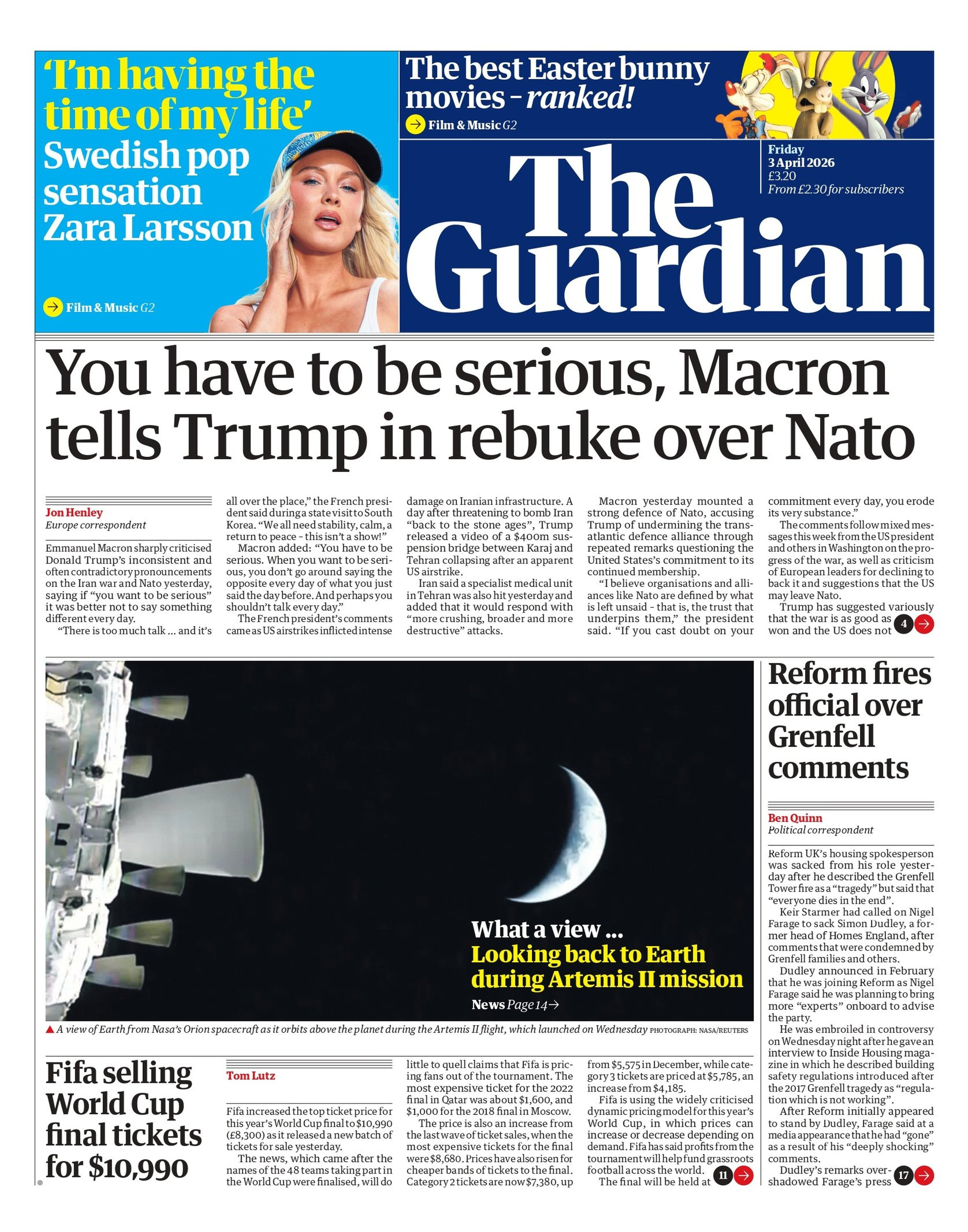
More than a month has passed since the U.S. and Israel launched a surprise attack on Iran - and with the Strait of Hormuz effectively closed, Southeast Asian countries have begun rolling out emergency measures to cope with the energy crisis. The impact is now being felt in people’s daily lives. In Indonesia, the government announced measures to reduce oil consumption, including a remote work policy. In Vietnam, the government has urged citizens to limit the use of private vehicles. In Myanmar, too, energy shortages are deepening economic uncertainty. Many Asian airlines have announced plans for hefty fuel surcharges. As uncertainty deepens over the outlook for the crisis, transportation is becoming increasingly constrained, raising the risk that the world could once again be pushed into conditions reminiscent of the COVID-19 pandemic. The last time oil prices hit record highs was in 2008. At the time, the surge was driven by structural factors, notably booming demand from fast-growing Asian economies. In response, a wave of green tech startups emerged, helping to fuel the rise of electric vehicle makers such as Tesla, and there was a growing sense that innovation could overcome the energy crisis.That fundamental shift toward green technology has since stalled amid the Trump administration’s rollback of environmental regulations. In the current gridlock, the only defensive measure available to energy-hungry emerging economies in Asia is to urge their citizens to conserve. The COVID-19 pandemic was a disaster that we could not prevent. This energy crisis, by contrast, is a man-made one -- the result of leaders choosing to wage war. The only real solution is the return of peace to the Middle East. But after the U.S. president’s speech yesterday (he said that the "core strategic objectives are near completion," and made opaque remarks suggesting that the Strait of Hormuz, a key bottleneck in the global energy crisis, would "open up naturally." He stopped short of any clear reference to a ceasefire) Asian stock markets, struggling to digest Trump's remarks, lost direction, while crude oil prices rose., the timing of that outcome has become even more uncertain - Nikkei Asia
As the Iran war drives up global oil prices, the energy shock is beginning to bite at home in the Philippines, threatening to test public trust in President Ferdinand Marcos Jr. at a politically sensitive moment as his approval ratings continue to decline. With fuel and food costs expected to rise, the crisis risks deepening economic anxiety and giving fresh ammunition to his political rivals, including Vice-President Sara Duterte, amid tensions that have already exposed fractures within the ruling coalition. Government officials have acknowledged that price pressures across the board are looming, with basic goods such as bread, canned goods and soap expected to be more expensive by April 16. The authorities are negotiating with firms to keep prices stable even beyond mid-April, as they scramble to cushion the impact on consumers. Commuters are bracing themselves for fare hikes, while drivers say daily earnings are shrinking. Lower-income households, which spend a larger share of their income on food and transport, are bearing the biggest brunt. The economic squeeze would no doubt prompt Filipinos to re-evaluate the government, as well as the effectiveness of its crisis response. The Philippines was the first country in the world to declare a state of national energy emergency in response to the crisis, a move the government framed as decisive action. But for some observers, the need to formally declare an emergency raises questions about whether contingency measures were in place to respond earlier. Political analyst Michael Yusingco, senior research fellow at the Ateneo Policy Centre in Manila, said the declaration was “not something to be proud of”, noting that other countries may not have needed to do so because they were already responding to the situation. Meanwhile, the government has stepped up diplomatic efforts to secure fuel supplies and protect shipping routes critical to the Philippines’ energy lifeline.
Iran on April 2 agreed to allow safe passage for Philippine-flagged vessels, oil shipments and Filipino seafarers through the Strait of Hormuz, a key choke point for global oil flows - Straits Times
The UN Security Council has postponed a vote scheduled for Friday on authorizing the use of “defensive” force to protect shipping in the Strait of Hormuz from Iranian attacks, according to the official program. The 15-member body was set to vote Friday morning on a draft resolution brought by Bahrain, but by Thursday night the schedule shifted. The reason given was that the United Nations observes Good Friday as a public holiday, according to diplomatic sources -- despite this fact being known when the vote was first announced. No new date has been given for voting on the draft - Al Arabiya
Alarm bells have started ringing about the Russian-built Bushehr NPP in Iran. Russia has long been actively involved in Iran’s nuclear program. The largest project within this cooperation is the Bushehr NPP. Construction of the first unit at the site began as early as 1975 by the West German company Kraftwerk Union, but was halted in 1979 following the Islamic Revolution. Then, in 1995, Russia signed contracts to complete the unit using a VVER-1000 reactor and to supply nuclear fuel for the first ten years of its operation. Russia is also committed to taking back spent nuclear fuel for reprocessing. The unit was connected to the grid in 2011 and entered commercial operation in 2013. A year later, a contract was signed for the construction of the second phase of the plant, consisting of two additional VVER-1000 units with a total cost of around $10 billion. Notably, the project has been fully financed by Iran without the use of Russian loans. At present, state nuclear corporation Rosatom is involved in the construction of the second unit at Bushehr, although the bulk of the work is being carried out by local contractors. Construction of the third unit has not yet officially begun. In the worst-case scenario, a direct hit by a missile or bomb on a reactor unit could damage the operating reactor and lead to the release of radioactive materials, with potential consequences extending to neighboring countries. Being a civilian facility under IAEA safeguards has not fully shielded Bushehr from attacks, whether intentional or incidental - Moscow Times
The number of fire hot spots across Indonesia and Malaysia is at the highest in seven years, raising the risk of severe haze conditions across the region in the coming months. There were 825 shouldering hot spots in March across key oil-palm growing regions of the two countries, according to the ASEAN Specialized Meteorological Center. Forest and land fires, and the choking haze they cause, are a near-annual problem across South-east Asia, disrupting tourism, causing respiratory illnesses, and costing local economies billions of dollars. The most severe crisis in recent memory was in 2015, when widespread fires triggered a regional haze emergency, causing US$16 billion (S$20.64 billion) in damage, leading to school closures, flight disruptions and sparking diplomatic tensions between neighbouring countries. Dryness in 2026 could lead to a similar scenario, forecasters warn. The fires can occur naturally or result from land clearance for various crops. In Indonesia and Malaysia, the world’s biggest producers of palm oil, large swathes of wild vegetation are set ablaze to make room for new plantations. While both countries ban the use of fire to clear and manage acreage, enforcement has been challenging. The issue is often most acute during the dry season, typically from April to September, when peatlands become highly flammable and fires can smolder underground for weeks, making them difficult to detect and extinguish - Straits Times
Russia has lost around 1,301,260 troops in Ukraine since the beginning of its full-scale invasion on Feb. 24, 2022, says the General Staff of the Armed Forces of Ukraine. The number includes 1,230 casualties that Russian forces suffered over the past day. According to the report, Russia has also lost 11,833 tanks, 24,340 armored combat vehicles, 86,950 vehicles and fuel tanks, 39,293 artillery systems, 1,713 multiple launch rocket systems, 1,338 air defense systems, 435 aircraft, 350 helicopters, 214,629 drones, 33 ships and boats, and two submarines. Ukraine’s General Staff does not reveal its own losses during the full-scale invasion, citing operational secrecy. While Ukrainian officials rarely disclose figures, President Volodymyr Zelensky told France TV on Feb. 4 that at least 55,000 Ukrainian soldiers have been killed in action since the beginning of the full-scale war, in addition to many more classified as missing in action (MIA). The intensity of Russian drones and fighting has made it difficult for Ukraine to retrieve the bodies of fallen soldiers, which are needed for DNA confirmation. Independent Western think-tank reports agree that the Russian casualties significantly surpass Ukraine’s losses, with the Center for Strategic and International Studies (CSIS) estimating the ratio to be “roughly 2.5:1 or 2:1.” A January 2026 CSIS report said Ukraine has likely suffered between 500,000 and 600,000 casualties from February 2022 to December 2025, of which between 100,000 and 140,000 are thought to be killed in action - Kyiv Independent
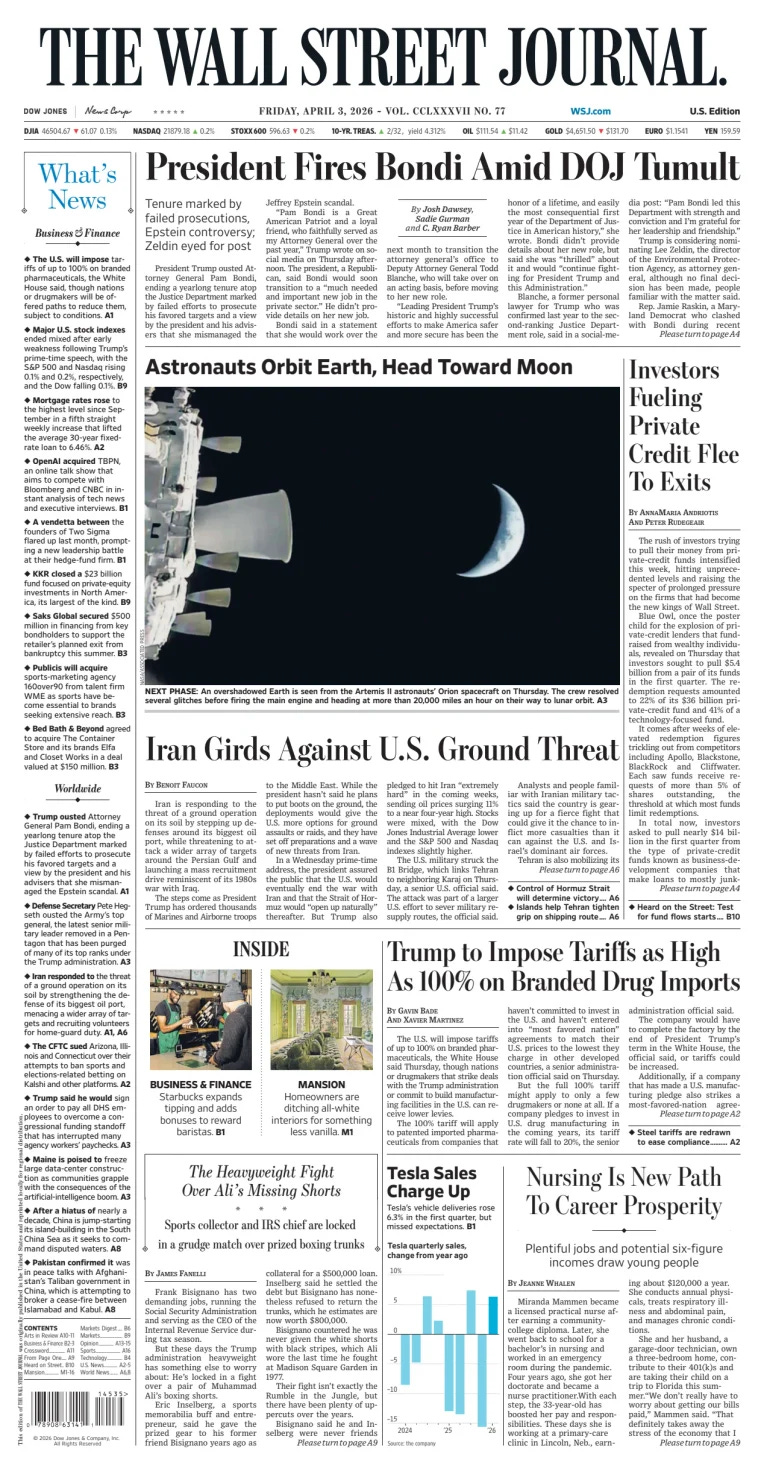
President Donald Trump said Thursday that Pam Bondi is out as his attorney general, ending the contentious tenure of a loyalist who upended the Justice Department’s culture of independence from the White House, oversaw large-scale firings of career employees and moved aggressively to investigate the Republican president’s perceived enemies. The departure followed months of scrutiny over the Justice Department’s handling of files related to the Jeffrey Epstein sex trafficking investigation and failed efforts to meet Trump’s unwavering demands for criminal cases against his adversaries. As Trump’s own frustrations mounted, he began privately discussing firing Bondi, people familiar with the matter say. Trump named Deputy Attorney General Todd Blanche, one of his former personal lawyers, as the acting attorney general. Three people familiar with the matter told The Associated Press on Thursday that he has privately discussed Lee Zeldin, the head of the Environmental Protection Agency, as a permanent pick. Bondi came into office 14 months ago, pledging that she would not play politics with the Justice Department. But she quickly set out to do Trump’s bidding, heaping lavish praise at congressional hearings and White House events, firing prosecutors deemed insufficiently loyal to the president and opening investigations into his political foes. The intense turmoil contributed to the resignations of hundreds of employees, with the norm-breaking actions stirring concern that the department was being wielded as a tool to advance Trump’s personal and political interests - AP
The US’ AI infrastructure buildout is decelerating as the market struggles to keep up with demand. The last quarter of 2025 saw a slowdown in newly added data center capacity, while nearly half of the projects planned for this year are expected to be delayed or canceled, Bloomberg reported. The expansion has been hamstrung by a shortage of electric equipment: Builders have had to rely on largely Chinese imports since American factories aren’t making enough of the components. The US government has had only limited success in trying to reduce its dependence on Chinese devices. Total US imports rose $14 billion in February; about half of that increase can be attributed to AI-related equipment, experts said - Semafor
In the time between Tiger Woods flipping his car and being arrested for DUI, the golf legend dialed up President Donald Trump from the scene of the crash. TMZ Sports has obtained body cam footage that shows Tiger hanging around as cops assessed the scene. He was not cuffed at the time and was permitted to sit in a police cruiser before cops had him perform a field sobriety test. At one point, Tiger walked away from the cruiser and into the distance ... forcing police to call him back to the scene. While Tiger is walking back, he appears to be on the phone and can be heard saying, “Thank you so much. All right. You got it. Bye.” The officer then asked Tiger to remain close by … to which he replied: “Yeah, I was just talking with the President.” As we previously reported, Trump remarked on Woods' crash from a tarmac next to Air Force 1 before news broke that Tiger had been arrested. After returning to where the officer and Tiger’s manager were standing, Woods announced that Trump was “very apologetic for what he did last night.” That is likely in reference to Trump appearing on FOX News’ “The Five” the day before and saying Tiger would NOT play in the 2026 Masters Tournament -- days after Woods left the door open on a potential return. Woods is dating Vanessa Trump, the ex-wife of Trump’s son, Donald Trump Jr. Trump and Woods have a long history -- the two have played golf together for years and have publicly praised each other - TMZ
The journals…..

Thank you for sharing your insights.