🔥 World Briefing Hot Take
What is unfolding in the Gulf may be more than a war between Iran, Israel and the United States. Behind the missile launches and drone swarms, a quieter alignment appears to be taking shape. Chinese satellite navigation may be sharpening Iran’s targeting while Russia is reportedly sharing drone battlefield lessons learned in Ukraine. If confirmed, the Gulf war could mark the first real-world convergence of a new anti-Western technological partnership - one where Beijing provides the infrastructure, Moscow the tactics, and Tehran the battlefield. Analysts say Iran’s improved missile accuracy may even be linked to China’s BeiDou satellite navigation system, which could make Iranian weapons harder to jam than those relying on U.S. GPS signals.
China, meanwhile, has been presented with a golden opportunity to field-test its guidance and surveillance capabilities in a large-scale operational theatre directly involving U.S. forces. And despite facing ridicule for abandoning allies such as Venezuela, Syria and - more recently - Iran, don’t be fooled: Russia stands to benefit as well. The conflict offers Moscow another chance to battle-test its kit and tactics refined in Ukraine, while higher oil prices and the prospect of sanctions relief on Russian energy exports could deliver an unexpected geopolitical dividend.
Should any of this really surprise us? As World Briefing recently reported, Chinese-made drones and components have been quietly reaching Russia through third countries such as Thailand, helping sustain Moscow’s war effort in Ukraine. Trade records show that drone exports from Thailand to Russia surged after large shipments arrived from China, effectively creating a sanctions-busting supply chain. At the same time, Russia and Iran have long operated as strategic partners in a wartime feedback loop. Tehran has supplied Moscow with the Shahed drones used to pummel Ukrainian cities, while Russian engineers and battlefield experience have helped refine the tactics behind their use. Now, as Iran fires missiles and drones across the Gulf, the convergence of Chinese technology, Russian combat lessons and Iranian weaponry hints at something larger taking shape - not a formal alliance perhaps, but a battlefield ecosystem where each power is quietly strengthening the other.
News Briefs
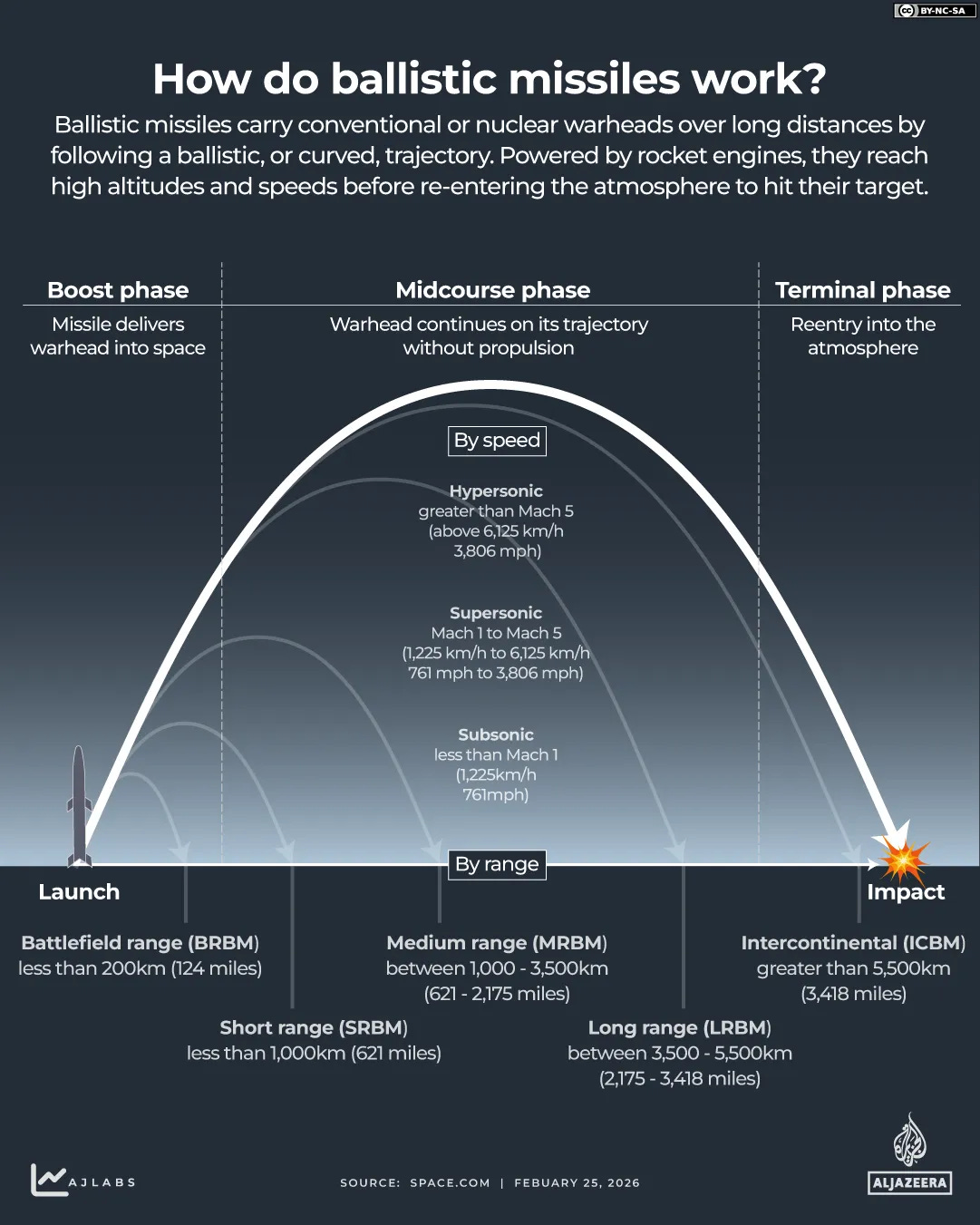
Iran may be using a Chinese satellite navigation system to target Israel and United States military assets in the Middle East, intelligence experts say. Former French foreign intelligence director Alain Juillet told France’s independent Tocsin podcast this week that it is likely that Iran has been provided access to China’s BeiDou satellite navigation system because its targeting has become much more accurate since the 12-day war with Israel in June. “One of the surprises in this war is that Iranian missiles are more accurate compared to the war that took place eight months ago, raising many questions about the guidance systems of these missiles,” Juillet, who served as the director of intelligence for the General Directorate for External Security from 2002 to 2003, told Tocsin. In response to the US-Israeli attacks that began on February 28 and the killing of top Iranian figures, including Supreme Leader Ali Khamenei, Iran has launched hundreds of ballistic missiles and drones towards Israel and US facilities in Gulf nations. Although Israel and Gulf nations have intercepted many of these incoming missiles, several have breached the countries’ defences, causing significant damage and casualties. While the US can jam or deny access to the US government-owned Global Positioning System (GPS), which Iran’s military previously relied on, it cannot do much to interfere with China’s BeiDou system if that is what Iran is using. Iran has not confirmed or commented on this. If it has it, Iran’s access to BeiDou technology is a game-changer, analysts say. “The evolution of satellite navigation has transformed the landscape of modern warfare,” Brussels-based military and political analyst Elijah Magnier said. “Precision strike capability, once the preserve of a handful of advanced military powers, is increasingly shaped by the availability of global navigation infrastructure. As long-range weapons become more accurate and more resilient to interference, systems such as BeiDou will continue to play a significant role in the technological foundations of contemporary conflict.” The ongoing war could also provide China – “which is certainly gathering military intelligence through its surveillance satellites,” Theo Nencini, a specialist in China-Iran relations and a research fellow at the ChinaMed Project, a research platform, told Al Jazeera – with an opportunity to “field-test” its guidance capabilities in a large-scale operational theatre such as the present Middle Eastern conflict, which directly involves the U.S. In the meantime, there are concerns on the US side that its store of expensive interceptor missiles could be depleted by taking down cheap Iranian Shahed drones before Iran even has to use many of its ballistic missiles. For this reason, US President Donald Trump’s administration has asked Ukraine, where Russia is using Iranian-made Shahed drones, to share the interceptor technology it has developed and mass-produced - Al Jazeera
Russia is giving Iran “specific advice” on drone tactics, CNN reported Wednesday, in a sign of more sophisticated support than previously reported, even as officials in the Trump administration have sought to downplay the alleged information sharing. “What was more general support is now getting more concerning, including [drone] targeting strategies that Russia employed in Ukraine,” a Western intelligence official told CNN on condition of anonymity.
The official declined to specify the extent of Russia’s tactical assistance to Iran. Since launching its full-scale invasion of Ukraine, Russia has made extensive use of one-way attack drones originally developed in Iran, launching the inexpensive aircraft in large waves against targets across Ukrainian territory. The CNN report comes after sources told The Washington Post last week that Russia was sharing sensitive intelligence with Iran, including the locations of U.S. warships and aircraft in the Middle East. The Kremlin has avoided answering questions about those reports.
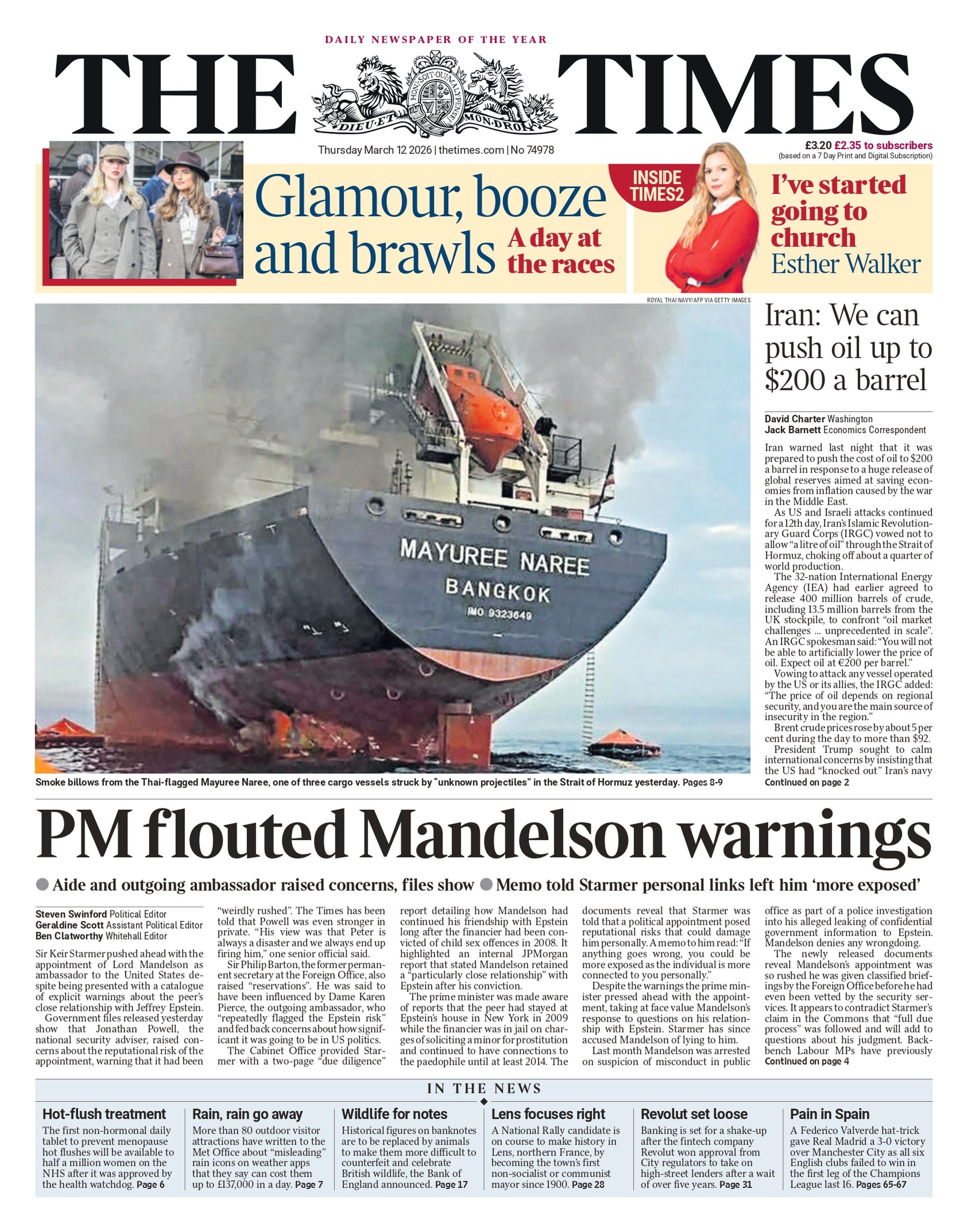
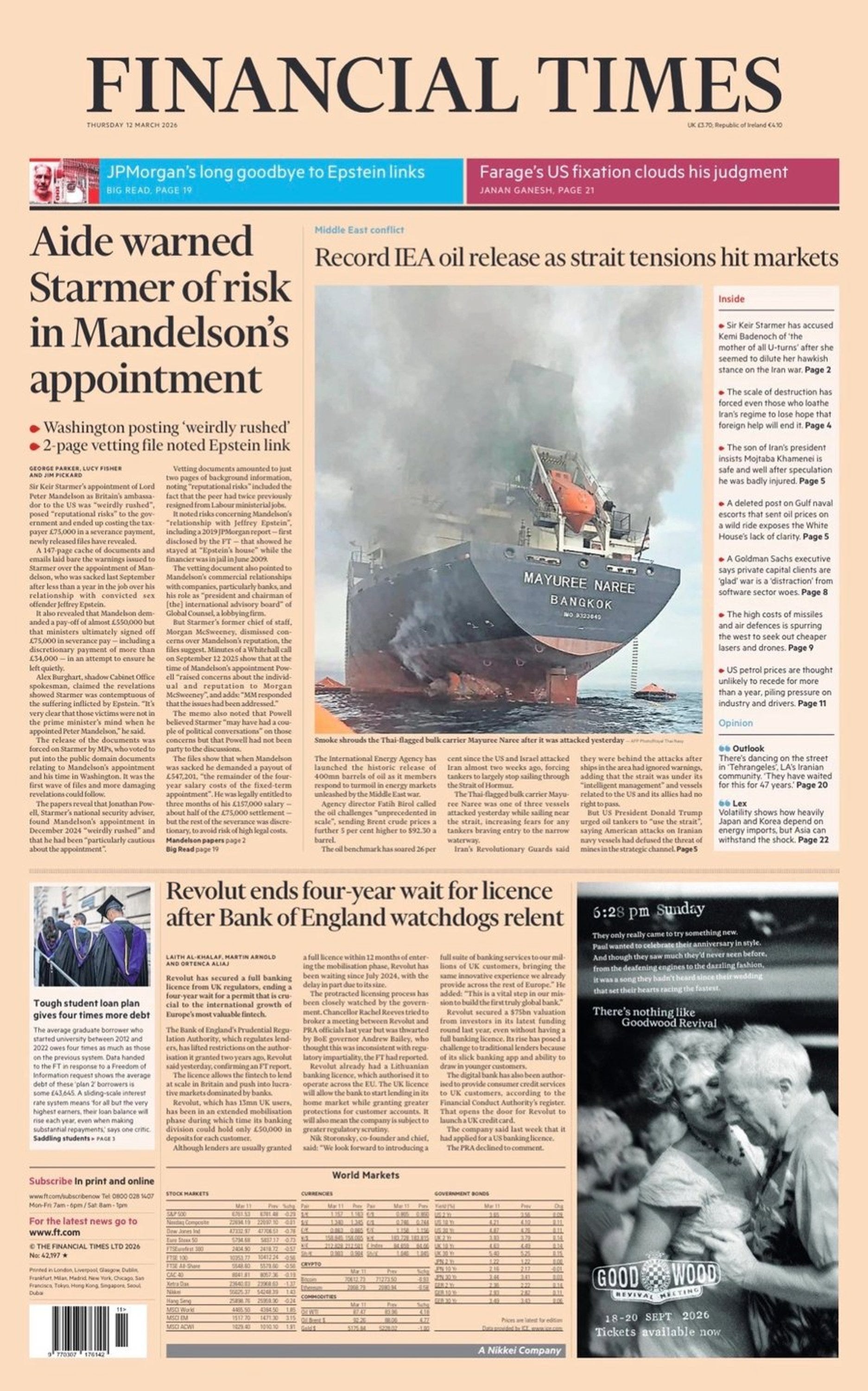
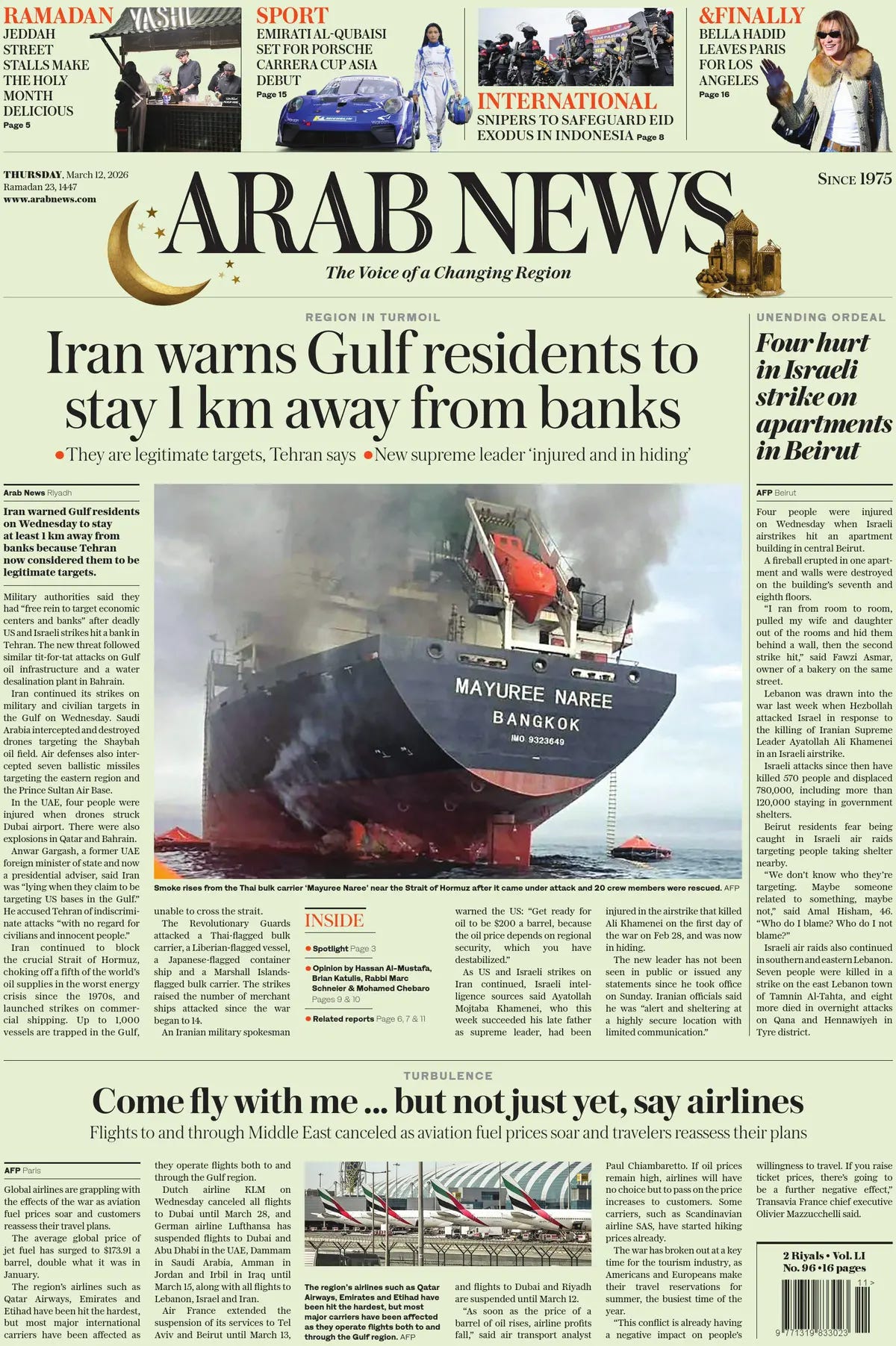
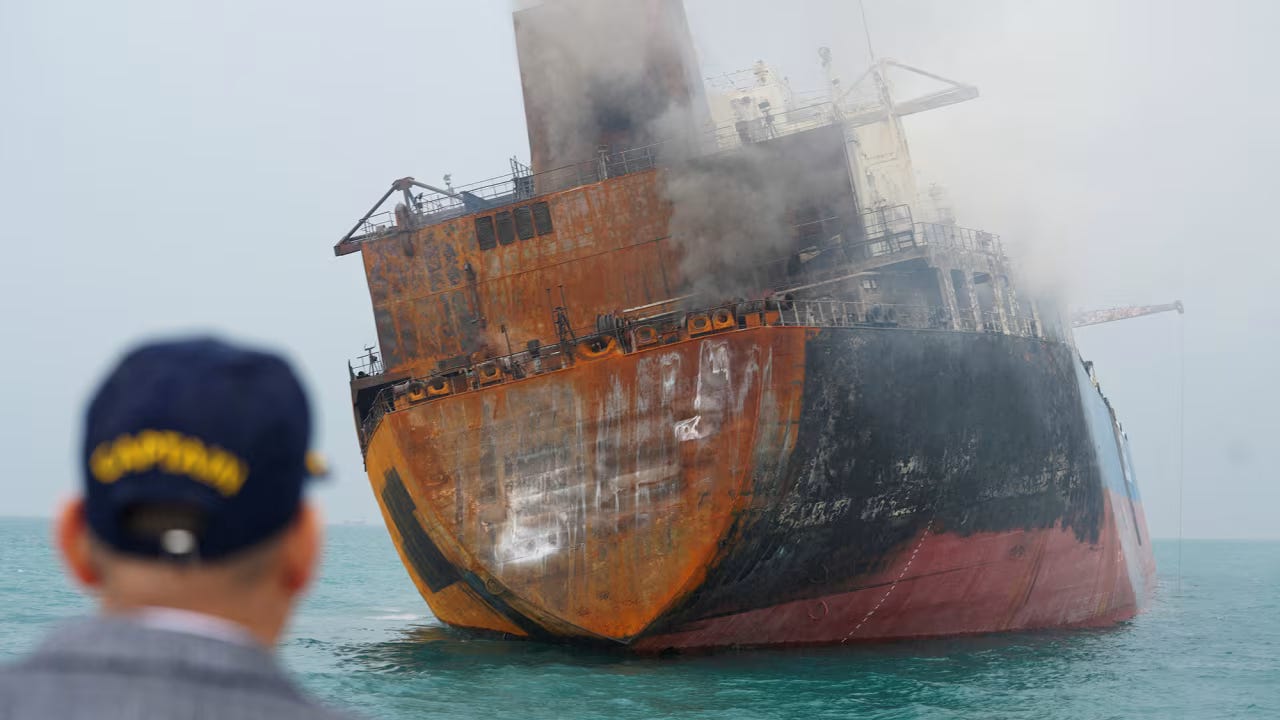
US President Donald Trump claimed the United States has “won” the war against Iran but says its forces will continue to attack until the job is finished, while Tehran has hit at least six vessels in the region and vowed further strikes. “You never like to say too early you won. We won,” Trump said during a campaign-style rally in Kentucky on March 11. “In the first hour it was over,” he said.
Comments from Trump and the White House over recent days have varied, from speculating that the war could last four to six weeks or longer to the possibility that it could be over “soon.” Trump has said the US-Israeli attack on Iran, begun on February 28, had “virtually destroyed” the Middle East nation, wiping out much of its leadership, armed forces, and nuclear program - RFE/RL
Iranian officials said the new supreme leader was “lightly injured” but safe, after his absence fueled speculation that he was wounded in US and Israeli strikes.
Mojtaba Khamenei has not been seen since he was selected last week to succeed his father, the late Ayatollah Ali Khamenei. To smooth Mojtaba’s succession, loyalists are trying to “deify” Khamenei, the Financial Times reported, by comparing his killing to that of the seventh-century Imam Hussein, whose martyrdom is a foundation story of Shia Islam; one relative called the former ayatollah “the master of martyrs.” While many Iranians, hoping for reform in the Islamic republic, celebrated Khamenei’s death, the destruction wrought by the ongoing conflict is now kindling a “sense of nationalism,” a Tehran-based sociologist said - Semafor
From the Gulf to Ukraine, the geopolitical dots are multiplying by the day.
Upgrade to World Briefing Plus and stay ahead of the headlines — or support independent global reporting through Patreon or PayPal.
South-east Asian nations are girding for a Middle East oil shock by telling citizens to work from home, implementing four-day weeks and promising increased spending on energy subsidies. The sometimes drastic measures highlight deep concerns about the impact of the US and Israel’s war against Iran on economic growth and fiscal sustainability in a region of more than 700mn people that depends heavily on the Middle East for oil and gas. Philippine government officials should “limit official travel to essential functions only, as part of efforts to conserve energy amid the crisis in the Middle East”, the presidential office announced on Tuesday, just days after ordering many offices to implement a four-day week. Thailand’s government has directed staff at most government agencies to work from home, while Vietnam has called on companies to encourage remote working and on the public to prioritise car pooling or cycling. Indonesia has pledged to raise spending on fuel subsidies. The concerns about supplies of oil and gas come at a time when some of the region’s largest economies are already slowing. The oil price has jumped since the start of the Iran conflict, hitting around $119 per barrel on Monday before falling back to around $90. Sustained higher oil prices could widen budget deficits considerably for governments that subsidise fuel. They will also add to inflationary pressures, potentially forcing central banks to hold off on interest rate cuts that could boost growth, economists say - Financial Times
Russia said the death toll in a Ukrainian air strike that Kyiv claimed did substantial damage to a missile-components plant in the Russian border-region city of Bryansk increased to seven on March 11, and lashed out at Britain over the attack. In a social media post a day earlier, Ukraine’s General Staff said the military had “successfully struck the Kremny El microelectronics plant” with Storm Shadow missiles, which are supplied by the United Kingdom. The General Staff asserted that the strike caused “significant damage to production facilities” at the plant, which it said makes electronics used in weapons including Iskander missiles. It published a video clip that it said showed the plant being struck. Ukraine has used Storm Shadows as part of its campaign targeting Russian military and energy-infrastructure sites, an effort to decrease Moscow’s revenues and undermine its ability to sustain its full-scale war against Ukraine, now in its fifth year. Civilian casualties in the attacks are relatively rare, and Russia's claim could not be independently verified. Russian authorities made no mention of the Kremny El plant in their accounts of the attack - RFE/RL
The war triggered by the U.S.-Israeli attack on Iran is driving sharp swings in global oil markets, potentially handing Russia an unexpected revenue boost despite Western sanctions over its war in Ukraine. Prices for Russian crude surged above $70 a barrel this week as the Middle East conflict effectively shut down traffic through the Strait of Hormuz, a critical maritime chokepoint through which roughly 20% of global oil supply passes daily. Sustained higher prices could bring billions of dollars in additional revenue to the Kremlin’s coffers, easing pressure on the federal budget and helping fund military spending for the four-year war in Ukraine. But analysts caution that this boost to revenue may prove short-lived and is unlikely to fully reverse Russia’s economic woes - Moscow Times
Russian law enforcement authorities on Tuesday announced criminal charges against Dutch and Ukrainian nationals over the return of Crimean gold artifacts to Ukraine. After a decade-long legal battle, a collection of Scythian artifacts that had been on loan to Amsterdam’s Allard Pierson Museum since 2013 was returned to Ukraine in 2023 following a ruling by the Supreme Court of the Netherlands. The Investigative Committee, Russia’s top investigative body, argued that the 565 museum items had become Russian property after Moscow’s 2014 annexation of Crimea and should therefore have been transferred to Russia once the exhibition ended. “Officials from the Netherlands, Ukraine and the Allard Pierson Museum thus stole these museum items,” the Investigative Committee said in a statement, without specifying who was facing charges. Investigators said they launched a criminal probe into the alleged theft of items of “special historical, artistic and cultural value” and the failure to return cultural property to Russia - Moscow Times
President Donald Trump’s top Democratic antagonist has revealed that he has an unusual sleeping arrangement with the first lady—even when they’re mid-air. Gavin Newsom, 58, spilled the details of his exclusive Air Force One tour in his book Young Man in a Hurry: A Memoir of Discovery. The California governor said the tour took place in November 2018 when Trump, now 79, visited the blue state in the aftermath of the devastating wildfires in the northern Californian town of Paradise. After Trump met with local officials, he welcomed Newsom to the presidential jet to head to Southern California, where the Woolsey fire ravaged the Los Angeles and Ventura counties. Newsom recalled that Trump became “a giddy child” as he showed him around the multimillion-dollar plane, writing that “every bell and whistle seemed to give him great personal satisfaction.” Newsom said he was beginning to turn and head back into the main cabin when Trump called him over to check out the bedroom. “This was the chamber where he and Melania, on trips to distant places, retired. A room with two beds, I could see, separated by more than a few feet,” the Democratic firebrand wrote. Newsom said Trump did not wait for him to “mentally fill in the blank…Melania wanted one bed,” he quoted Trump as saying. “But two beds, you know, two beds next to each other. He seemed to be winking,” Newsom observed. Trump’s odd sleeping setup with the 55-year-old first lady has long generated speculation about their marriage. In 2018, The Washington Post reported that the first couple had separate bedrooms in the White House and are often apart even during their free time. After the couple returned to Washington, D.C., last year, longtime Trump biographer Michael Wolff said “they clearly do not in any way inhabit a marriage as we define marriage.” - The Daily Beast
The journals…