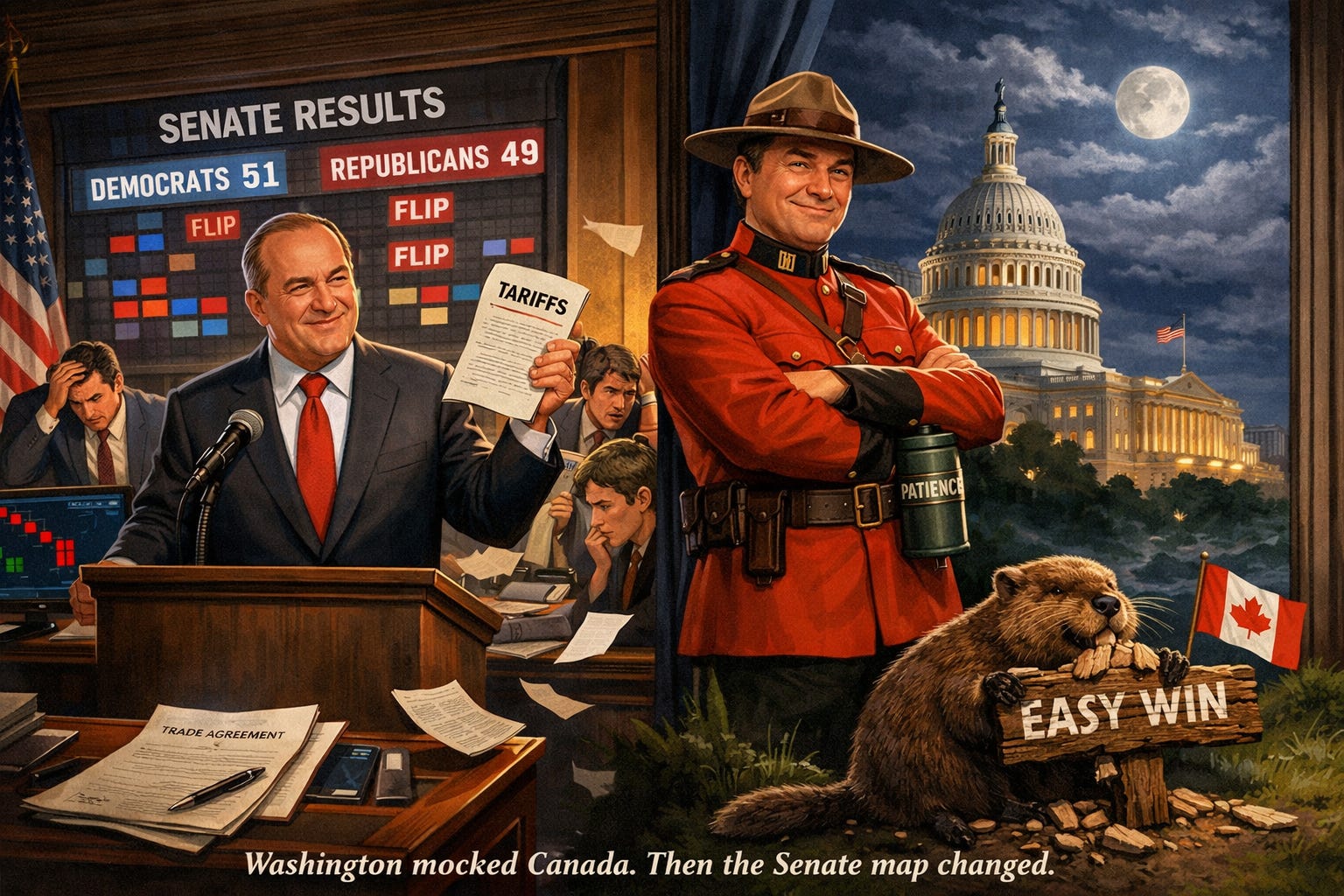
US Commerce Secretary Howard Lutnick slammed Canada as trade negotiators prepare to review the US-Mexico-Canada Agreement this year. Asked at Semafor World Economy in Washington, DC, about Canada’s former trade chief suggesting time is on Canada’s side in the talks, Lutnick responded: “That is like the worst strategy I’ve ever heard. They suck. They — look, we are a $30 trillion economy, right?” Canadian Prime Minister Mark “Carney has a problem with us; he gets on a plane and he goes to China,” Lutnick continued. “Does he think China’s… going to buy his stuff? China is an entirely export-driven economy. So what did he do? He came back and said, ‘Oh, we’ll take their electric cars.’ I mean, is this nuts?” A Commerce Department spokesperson said in a statement to Semafor that Lutnick was “misquoted” when he made the “suck” comment, adding: “Secretary Lutnick, describing our unfair trade imbalance with Canada, explained how Canada sucks off of our $30T economy.” US Trade Representative Jamieson Greer said recently he plans to reveal the US’ position on the USMCA on June 1, one month before officials must agree to extend the landmark trade deal. Nearly 40 senators from both parties urged Greer this week to “fully enforce the existing terms” to ensure “the joint review process reinforces, rather than undermines, the stability and opportunity that USMCA delivers to America’s farmers, ranchers, and rural communities.” As of now, President Donald Trump thinks USMCA is “a bad deal,” Lutnick said. “It needs to be reconsidered and reimagined correctly.” - Semafor
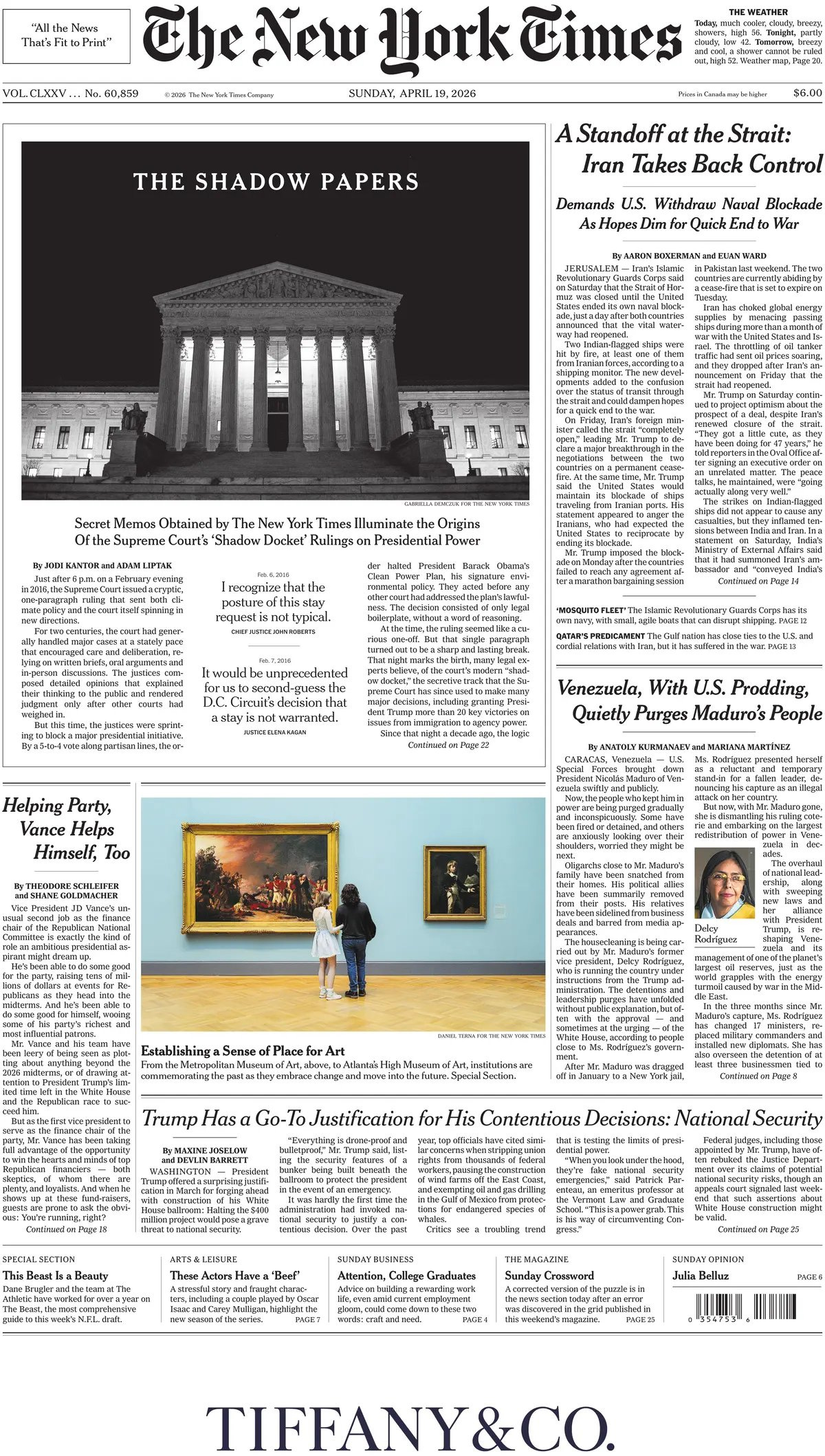
Prime Minister Mark Carney says Canada’s ties to the U.S. have become “weaknesses” that must be corrected, as workers in Canada’s auto, steel and lumber industries remain under threat due to U.S. President Donald Trump’s tariffs. “The U.S. has fundamentally changed its approach to trade, raising its tariffs to levels last seen during the Great Depression,” Carney said in a video posted to YouTube on Sunday morning. “Many of our former strengths, based on our close ties to America, have become weaknesses — weaknesses that we must correct.” “Security can’t be achieved by ignoring the obvious or downplaying the very real threats that we Canadians face,” Carney said. “I will never sugarcoat our challenges. Instead, I’ll talk to you directly and regularly about the plan.” The video comes after U.S. Commerce Secretary Howard Lutnick took a swipe at Canada’s trade strategy. As part of the agreement, the Canadian government will allow 49,000 Chinese electric vehicles into its market at a tariff rate of 6.1 per cent — down from 100 per cent. In exchange, China agreed to lower tariffs on Canadian canola to 15 per cent and remove levies on Canadian canola meal, lobsters, crab and peas until at least the end of 2026. - CBC News
War abroad and pain at the pump are triggering fresh nerves inside the Republican Party, as strategists in key battleground states warn their United States Senate majority may be more vulnerable than once assumed. What had looked like a favorable midterm map is now clouded by the Iran conflict, rising costs and stronger-than-expected Democratic challengers. Politico reported that Democrats still face steep odds to flip the chamber, needing to defend all current seats while winning four Republican-held ones. But GOP operatives told POLITICO that prolonged conflict and economic anxiety are reshaping the race. “Momentum has shifted to Democrats,” said Michigan-based GOP strategist Jason Roe. “Republicans have the best candidates that they’ve had in a long time but are facing serious headwinds,” said New Hampshire strategist Mike Dennehy. A Georgia Republican operative added: “I wouldn’t say I feel warm and fuzzy about things right now.” Another warned a prolonged war is “the exact opposite of what Senate Republicans need right now.” Particular concern is centered on battlegrounds including North Carolina, Ohio and Georgia, where Democrats have recruited heavyweight candidates such as Roy Cooper and Sherrod Brown, while Democratic Senator Jon Ossoff remains well-funded. Republicans are increasingly focused on flipping Michigan as insurance. Many Republicans still believe lower fuel prices and a summer end to fighting could stabilize the picture. “If combat operations are over in the summer, there’s plenty of time for the dislocation of gasoline prices... I think that will return to normal,” said a Georgia-based GOP operative. But for now, concern is growing that foreign conflict and domestic frustration could put the Senate back in play.
President Donald Trump is starting to feel the pressure of the midterms creeping up on him—and it’s spiraling him into a rage, according to his longtime biographer. Author Michael Wolff said the president’s aides have been encouraging him to course-correct ahead of the crucial November polls and get back to the issues that matter most to voters. Instead, Trump has chosen to double down and rant about myriad issues that are more personal to him, from the Federal Reserve to his White House ballroom. “Well, no, he’s not panicked. He gets angry. I mean, Trump doesn’t really panic,” Wolff told his Inside Trump’s Head co-host Joanna Coles when asked whether the president’s bizarre Truth Social posts are a sign of panic. “It’s not panic in that sense that, ‘Oh, I’ve got a problem here and I’ve got to do something. I’ve got to solve the problem.’ Rather, it’s a different kind of response. It’s blaming someone. It’s rage. It’s anger. So it’s anger rather than panic. And he’s starting to feel that, I think,” he continued. Trump, 79, has been hard at work touting his administration’s policies, participating in a DoorDash delivery stunt, and giving an economic pep talk to voters in Las Vegas last week as his war with Iran raged on. But polling numbers are showing flashing red lights for the president and the Republican Party at large - The Daily Beast
Chaos in the Middle East. A fresh verbal broadside from Washington aimed at Canada. And a deeply puzzling U.S. move to extend sanctions waivers tied to Russian oil exports - a decision Kyiv has every right to view with anger and disbelief. In today’s World Briefing, I connect three seemingly separate headlines that reveal a bigger story: an overstretched White House, allies being publicly slighted, and mixed signals on Russia just as Ukraine continues to endure relentless attacks. From energy markets and election politics to alliance management and wartime trust, this is another reminder that global leadership is not just about what you say - it’s about consistency.
Watch the video above for the context behind the chaos.
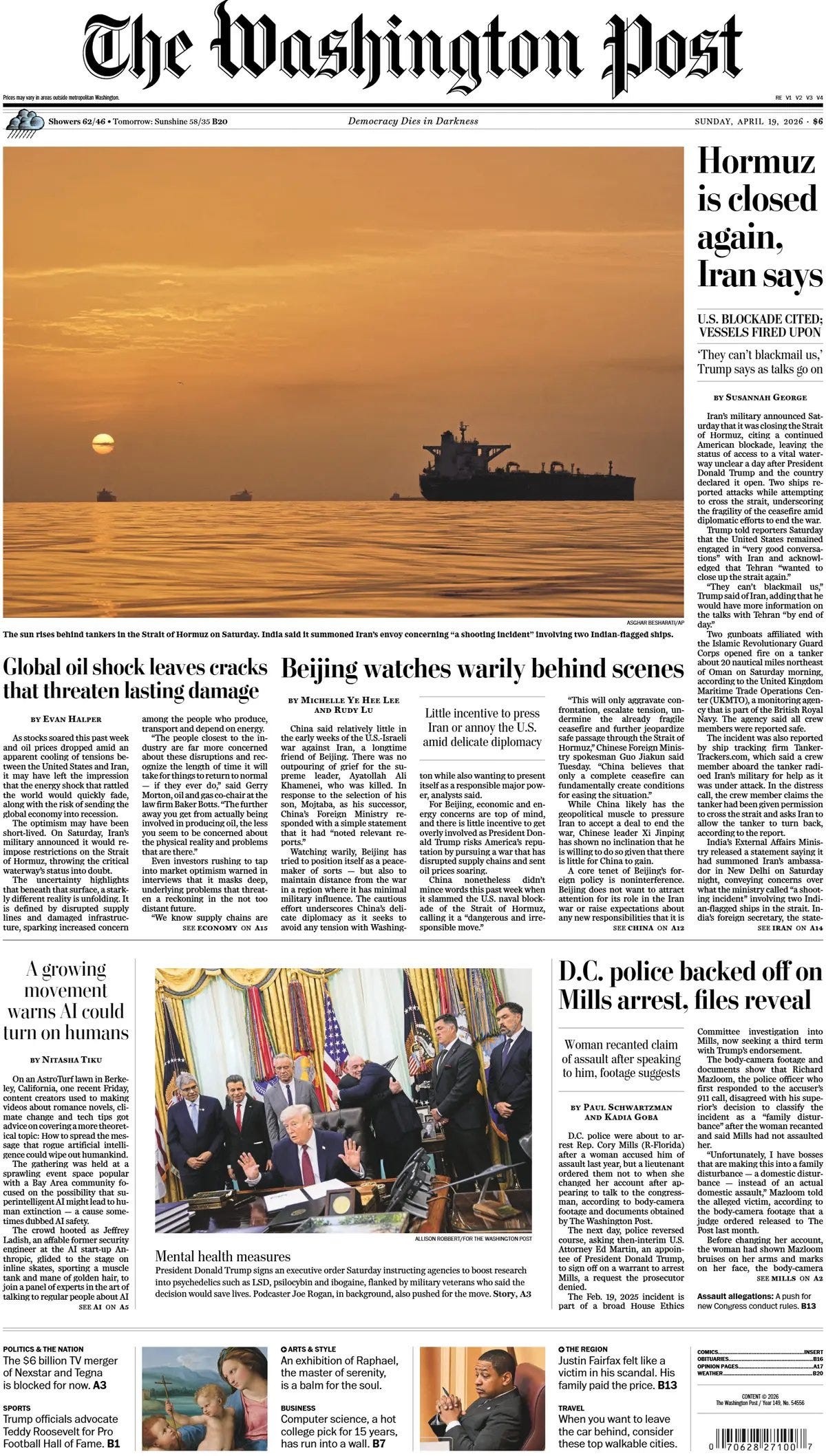
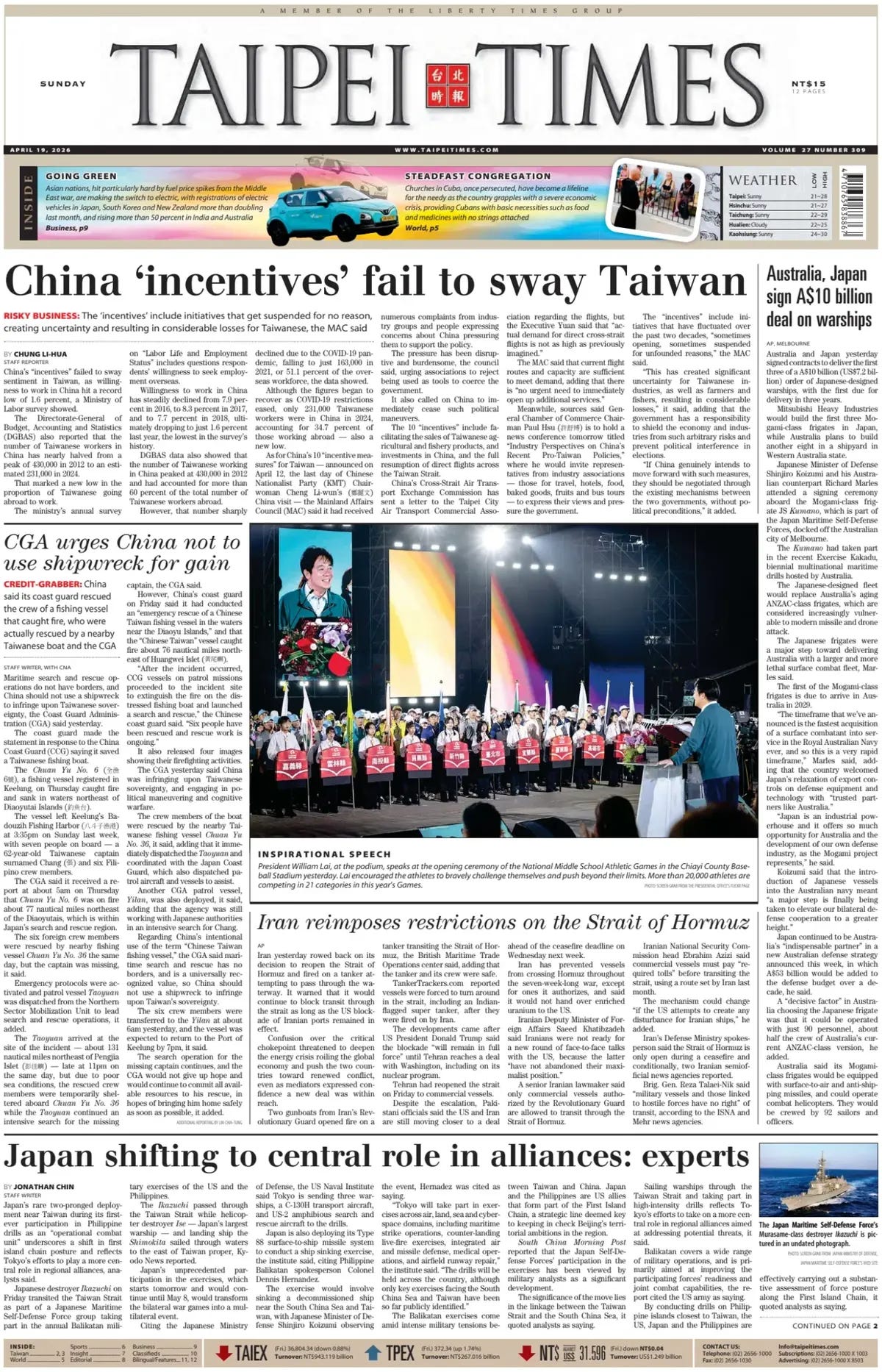
US President Trump said that US negotiators will be in Pakistan on Monday to hold a second round of talks with Iran. He again threatened to destroy the entire country of Iran if its government refuses to make a deal with the US. Iran’s President Masoud Pezeshkian said that Iran isn’t seeking war and is acting only in self-defence against the attack by the US and Israel, stressing his country’s commitment to peace and regional stability - Al Jazeera
Ukraine’s President Volodymyr Zelensky has condemned a US decision to extend the period during which Russia is allowed to sell oil despite Western sanctions. The move means countries can purchase Russian oil and petroleum products already loaded on vessels at sea until 16 May. The US argues that the waiver is meant to ease the energy supply crunch sparked by the US-Israel war with Iran. But in his remarks on Sunday, Zelensky said “every dollar paid for Russian oil is money for the war” in Ukraine. Widespread sanctions have been in place against Russia since President Vladimir Putin launched his full-scale invasion of its neighbour in February 2022. The US move to ease Russian sanctions on 13 March was widely condemned by Zelensky as well as his European allies. Extending the waiver on Friday, the US said it wanted “to ensure oil is available to those who need it” as negotiations to end the war “accelerate”. The Ukrainian leader said Russia had more than 110 tankers from its “shadow fleet” - vessels with obscured ownership designed to help it bypass sanctions - with “over 12 million tons” of oil. Their sale, he added, would bring $10bn (£7.4bn) to Moscow’s coffers as “a resource that is directly converted into new strikes against Ukraine” - BBC
If oil prices rise further, the Kremlin may propose to increase supply in exchange for Washington’s decision to partially lift the sanctions. Russia’s higher oil production would decrease petrol prices in the US before the midterm elections in November - Igar Tyshkevych, a political analyst based in Kyiv told Al Jazeera
Bulgaria’s former president and air force chief, Rumen Radev, is on course to win a general election on Sunday with promises to combat the all-pervasive “mafia state” that he accuses of undermining the EU’s poorest country. Roiled by incessant political crises and weakened by fragile coalitions, the Balkan nation of 6.7 million is becoming close to ungovernable. It has had seven prime ministers since 2021 — none of them serving a full term — and this weekend’s vote will be the eighth election in five years. It is far from clear, however, whether former MiG-29 fighter pilot Radev, a skeptic on support for Ukraine and on Bulgaria’s accession to the euro this year, will be able to break this deadlock. According to POLITICO’s Poll of Polls, his newly founded Progressive Bulgaria movement is set to win only 31 percent of the vote, meaning he will face the same struggles as his ill-fated predecessors in forging a stable governing coalition. His political agenda is also cryptic, and Brussels has grounds to be wary. Radev has long taken Kremlin-aligned positions on Ukraine and has hinted he wanted to import Russian oil. And despite his pledge to crack down on the country’s ubiquitous top-level graft, his critics point out that Progressive Bulgaria is attracting support from parties with their own checkered histories of nationalism and corruption - Politico
A Bellingcat investigation found that almost 800 Hungarian government email addresses and associated passwords are circulating online, revealing basic vulnerabilities in the security protocols of ministries involved in classified and sensitive work. Analysis of breach data showed that 12 out of the government’s 13 ministries were affected, in some cases exposing the confidential information of military personnel and civil servants posted abroad. Among those affected were a senior military officer responsible for information security, a counter terrorism coordinator in the foreign affairs department, and an employee whose role was to identify hybrid threats against the country. Hungary’s newly elected prime minister, Peter Magyar, has said he expects to overhaul the way the government conducts its business after ousting Viktor Orban last week.
The European Commission has agreed to work with Péter Magyar’s incoming Tisza Party government to help release billions in frozen EU funds earmarked for Hungary. A senior Brussels delegation, led by Björn Seibert, chief of staff to Commission President Ursula von der Leyen, held two days of informal talks in Budapest — an unprecedented move before the new government has formally taken office, Euronews reported. “There is full agreement on one point: real work must begin to ensure that the EU funds due to the Hungarian people finally arrive in Hungary,” Magyar said after the talks. The Commission has frozen €17 billion of €27 billion allocated to Hungary over corruption and rule-of-law concerns. Budapest is also seeking another €17 billion from the EU’s SAFE defence borrowing instrument. If both tranches are secured, the combined €34 billion could provide a major boost to Hungary’s economy. - Euronews
Indian companies have shipped more than 320 million synthetic opioid pills to West Africa – where they have not been approved by regulators – over the past three years, a Bellingcat investigation has found. Export records from trade data providers show that more than 1,400 consignments of tapentadol worth almost USD $130 million were sent from India to West Africa between January 2023 and December 2025. Tapentadol, a painkiller two to three times more potent than tramadol, has not been approved for use in most West African countries, where some nations are grappling with an escalating opioid abuse epidemic.
A planned pregame skydiving entrance at Virginia Tech turned into a tense scene Saturday when a parachuter got stuck on the scoreboard. The skydiver was supposed to glide into the stadium carrying a massive American flag ahead of the Hokies’ spring game under new head coach James Franklin ... but instead ended up tangled high above the field. Video shows the chute snagged across the top of the scoreboard wedged between the giant "C" and "H" ... with the skydiver left dangling for roughly 20 minutes as fans looked on. At one point, the parachuter dropped the large American flag and a second chute into the stands below while waiting to be rescued. First responders eventually stepped in and safely brought the skydiver down -- with Virginia Tech later confirming the individual was secure and stable, and ultimately not injured - TMZ
The journals…..