


Happy birthday, Canada. Bonne Fête Canada. You’re 159, and for the first time in most living memory, the toast comes with an asterisk.
The old certainties are gone. The border to the south, once a formality, is now a pressure point - Trump tariff batons, rhetoric, a superpower that no longer treats the relationship as sacred. We used to define ourselves partly by not being American. That’s gotten harder now that being distinctly Canadian costs more, houses less, and heals slower.
Health care, buckling from three directions. The system we hold up as proof of moral superiority over the Americans is straining under an aging population, a wave of new arrivals, and an exodus of the health professionals meant to treat both. You cannot triage your way out of a structural math problem.
The housing math doesn't work. A country that built its self-image on being a refuge for the world's displaced now can't comfortably house its own citizens, let alone the newcomers it invited in. Immigration ceilings went up not because the dream died, but because the infrastructure never kept pace with the invitation. Ukrainian asylum-seekers and Indian nationals who came here to make a better life tell us they're leaving for more affordable havens.
The young are watching from the sidelines. Youth unemployment numbers that read like satire. Home ownership that reads like fiction. Homelessness and addiction that used to be someone else’s story, now visible on the block - infiltrating into tourism revenue-rich districts of cities like Victoria, B.C.
And now, Alberta. On October 19, Albertans are set to vote on whether to remain in Canada, or hold a binding referendum on separation. It’s the loudest a Canadian province has ever litigated its future, and it lands while Ottawa is simultaneously courting Indigenous nations, chasing pipeline capacity, and trying to cut American energy dependence. Three priorities, one table, not enough room.
Speaking in Ottawa this morning, Mark Carney offered the rebuttal his government needs to be true: “the founding idea of Canada is simple — unity does not require uniformity.” It’s the right instinct. The open question is whether an instinct is enough when a province is drafting the legal groundwork to test it.
And there’s a governing pattern worth naming. Much as UK voters got a prime minister with a prosecutor’s instincts - precise, procedural, and slow to register the hardship in front of him - Canada may have gotten a first minister who still reads the country through a central banker’s lens: confident on the macro picture, oddly disconnected on the ground. Exhibit A: the $1.45-billion plan, announced jointly with B.C., to have Ottawa and Victoria buy up vacant condos for rent-to-own housing, aimed at giving young families and first-time buyers a foothold in a market that’s shut them out. The intent isn’t the problem. Carney himself has conceded the government “hasn’t done a good job” explaining it - but the deeper issue isn’t messaging, according to critics at the market-oriented Fraser Institute, who argue the plan launched without settled answers on who qualifies, what “affordable” means in practice, or why government would get a better price than the market already offered developers stuck with unsold units. “This will not end well,” said one of our astute political observers in western Canada.
The uncomfortable part: none of this cancels the other truth. Canadians are still respected abroad. The passport still opens doors. The reputation for decency and competence is real and earned. But reputation is a lagging indicator - it tells you what Canada was, not what it’s becoming.
An ominous footnote, if you're looking for one: by mid-afternoon, severe thunderstorms had dumped roughly 100mm of rain on downtown Ottawa, knocked out power to tens of thousands of homes, and forced Canadian Heritage to scrap the evening show on Parliament Hill - fireworks included. The Snowbirds, flying what was meant to be their final Canada Day flypast before their fleet is retired, couldn't get off the ground either. And Carney's own plan to carry his unity message west - to Edmonton, host of the country's largest Canada Day celebration outside Ottawa, in the middle of a province debating whether it wants to stay - got grounded too, his plane unable to leave the capital. Even the sky, it seems, had a point to make this year: the message never made it to the province that needed to hear it.
So the question isn’t whether we still deserve the applause. It’s whether the country we’re applauding can hold together long enough to keep earning it. Canada 160 isn’t guaranteed to look like Canada 159 - geographically, economically, or in spirit.
Happy Canada Day. Mean it - and worry a little too. Both can be true.
South Africa Passes Its ‘June 30’ Test — But This Was Only Round One
A R600-million security operation kept an anti-migrant “deadline” from spiralling into 2021-style unrest. The structural rot that fuelled it remains untouched.
Reporting by World Briefing Correspondent Enzokuhle Jojo
South Africa held the line on June 30 - barely, and at a price. The date, set by grassroots anti-migrant movements as an “unofficial deadline” for the departure of undocumented migrants, ended without the mass unrest many feared. But the day exposed a state forced to spend hundreds of millions on security band-aids because it never fixed the borders, labour inspections, and service delivery failures that made the protest possible in the first place.
What happened: Pretoria deployed a nationwide R600-million security operation - SANDF troops alongside specialised police units - authorized by President Cyril Ramaphosa’s Inter-Ministerial Committee on Migration, with the stated goal of keeping June 30 a “normal working day.” Police Minister Firoz Cachalia called the mobilization a response to a calculated “political project,” not a spontaneous flare-up.
On the ground, two very different days unfolded. In Durban - the movement’s epicentre - some 5,000 marchers, joined by Amabutho regiments in traditional regalia on the orders of King Misuzulu kaZwelithini, marched peacefully. Johannesburg was rougher: a 17-year-old boy was among two people shot in Hillbrow, marchers carried sjamboks through the MTN taxi rank, and Germiston saw “door-to-door” evictions as demonstrators stormed private homes demanding documentation. Police fired rubber bullets to head off looting in Yeoville and Hillbrow. In the Johannesburg suburb of Mayfair, Muktar Abdi Sheik of the Somali Association of South Africa, reported that businesses stayed shut despite government directives, and that even documented residents feared for their safety.
The human toll was quieter but real. At least 75 buses carried Malawian nationals toward the border from KwaZulu-Natal. Zimbabwe repatriated 3,624 of its citizens by June 26, slowed by South African criminal-database checks. In Cape Town, thousands of migrants camped in bitterly cold winter conditions outside the Eping repatriation centre.
Why it matters: March and March leader Jacinta Ngobese-Zuma - who vowed to march every Thursday for six months, describing the movement as being in a “boxing ring” - has won what Wits migration scholar Loren Landau calls a genuine “bargaining position” with the state, backed by ActionSA, the IFP, the MK Party, and, pointedly, some ANC figures including Gauteng Premier Panyaza Lesufi. With local elections looming in November, the political incentive to court anti-migrant sentiment is only growing.
The hot take: The anticlimax was the point - and the warning. The state proved it could be proactive rather than reactive, a genuine maturing of post-apartheid crisis management. But as economist Lumkile Mondi notes, with unemployment at 32.7% and youth unemployment near 61%, the movement succeeded because it offered a simple story for state failure. Those R600 million should have gone into border management and workplace inspections years ago. The constitutional guardrails held in round one. They will be tested again next Thursday - and every Thursday after that.
Russia is starting to import gasoline from India, Reuters reported, in a sign of the severity of Moscow’s fuel shortages. The shipments mark a shift in the countries’ energy dynamic: Earlier this year, India turned to Russia to mitigate a disruption to oil supplies spurred by the Iran war. Russian President Vladimir Putin this week acknowledged that Ukrainian drone strikes on refineries had triggered shortages, but downplayed the severity of a crisis that is “unprecedented” for one of the world’s largest energy producers, The Associated Press wrote. Lines are growing at gas stations across the country, and “average people are… grumbling and suffering,” RFE/RL wrote: “For Ukraine, that’s the goal.” - Semafor
Ukraine approved a state mechanism to export its weaponry on Wednesday, seeking to raise funds in a fifth year of fighting Russia, while saying its own defence needs will remain a priority. This year, Kyiv offered its military experience fighting Russia to European and Middle Eastern countries, who are interested in Ukrainian drone and anti-drone technology. “The government has approved the first transparent mechanism for exporting Ukrainian weapons,” Ukraine’s defence minister Mykhailo Fedorov said, adding countries would “be able to purchase Ukrainian weapons and technologies and work directly with Ukrainian manufacturers.” Last month, President Volodymyr Zelenskyy said Kyiv was working on defence agreements with around 20 countries. Since the start of the war, Ukraine has relied on its Western allies to supply it with various weapons. But it has also developed its own technologies, especially in the fields of drones and counter-drone systems. Approximately 800 arms producers are currently operating in Ukraine and many of them have ramped up their production to a significant surplus. According to the most recent reports, Ukraine is now producing over 4 million drones annually and could double that number with sufficient funding - Euronews
Volodymyr Zelenskyy cut short his visit to Dublin on Wednesday, warning that the Kremlin would soon launch a new large-scale attack on Ukraine. Zelenskyy was attending the first day of the Irish Presidency of the Council of the European Union and, during a press conference with Taoiseach Micheál Martin, told reporters he would leave Ireland immediately. “We know that Putin has been preparing this massive strike against Ukraine for some time,” Zelenskyy said. “Tonight, that is the threat we are facing,” he continued, warning his citizens to heed air raid alerts - Politico
President Donald Trump and his allies are worried about a low turnout for his Fourth of July spectacle this weekend, as a scorching heat wave, delayed fireworks, and tighter-than-ever security deter people from showing up. As sparse crowds continue to mar the Great American State Fair, the 80-year-old president and his Freedom 250 task force are pulling out all the stops for what he hopes will be the biggest birthday celebration in America’s history. But behind the scenes, administration officials are increasingly concerned that another disappointing turnout could overshadow the president’s made-for-TV patriotic extravaganza. Trump himself also acknowledged the weather could be an issue as he addressed supporters in North Dakota on Wednesday. “On July 4th, it’s going to be approximately 107 degrees out,” he said, “and I’m going to make a really long speech just to show that I can do anything. It’s gonna be 107!” The “Salute to America” celebration will kick off at the National Mall at 7 p.m. on Saturday, with military flyovers, musical performances, and a speech by the president. Trump even plans to crank out music from his own personal playlist. But the National Weather Service is forecasting 100-plus temperatures for much of the day, with the heat index climbing even higher. The traditionally family-friendly fireworks, which usually kick off at 9 p.m., now won’t start until about 10:30 p.m. or 11 p.m. to account for Trump’s speech. The pyrotechnic show will last about 40 minutes and be the largest in U.S. history. The traditionally family-friendly fireworks, which usually kick off at 9 p.m., now won’t start until about 10:30 p.m. or 11 p.m. to account for Trump’s speech. The pyrotechnic show will last about 40 minutes and be the largest in U.S. history - Daily Beast
The journals….
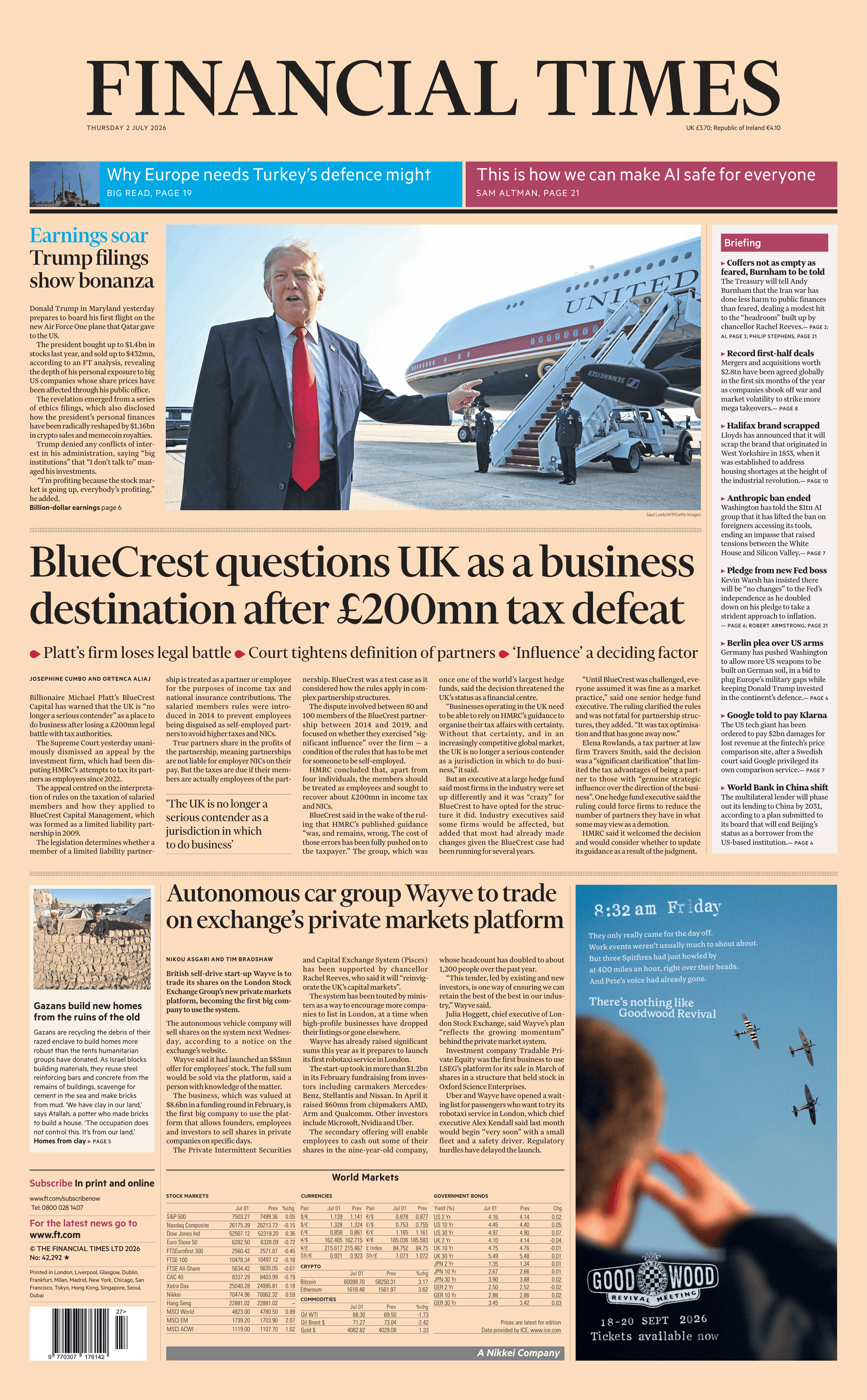

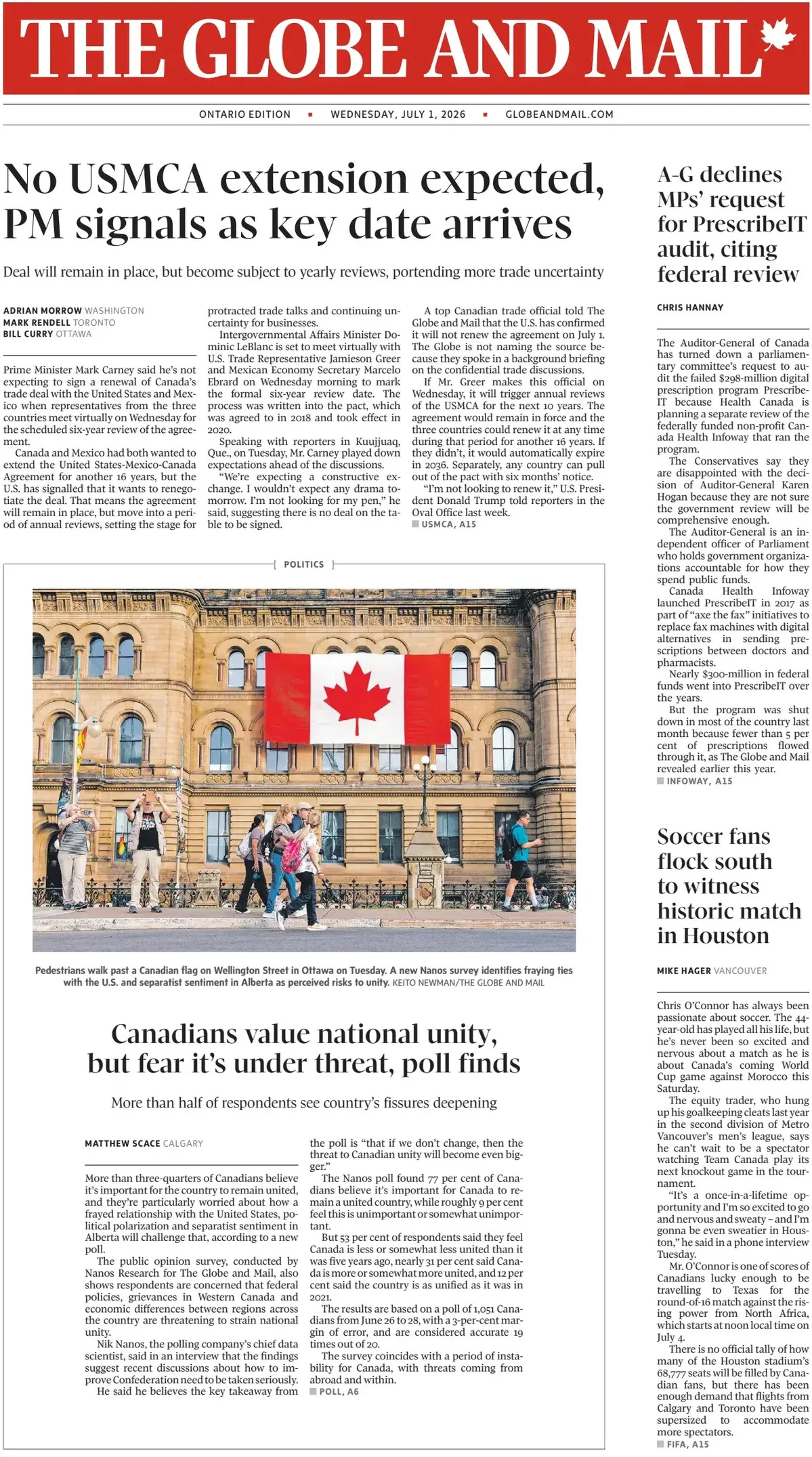

The Snowbirds did get off the ground. From my house in the east end of Ottawa, I saw them fly over twice. The 4.00 pm show was cancelled because of the storm. And it was quite a storm!
We’re not afraid, Buddy.
We’re alert.
🙄