🔥World Briefing Hot Take
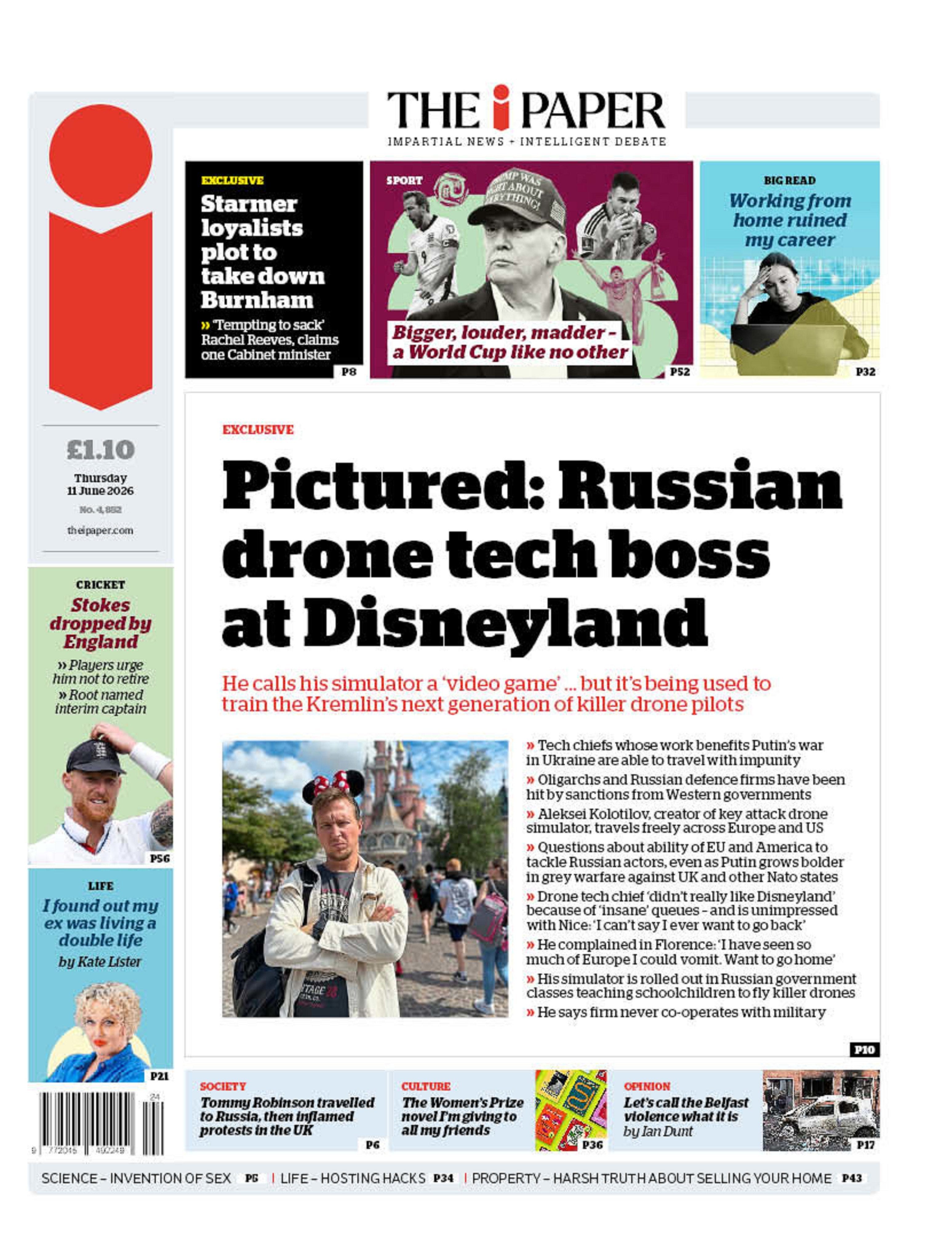
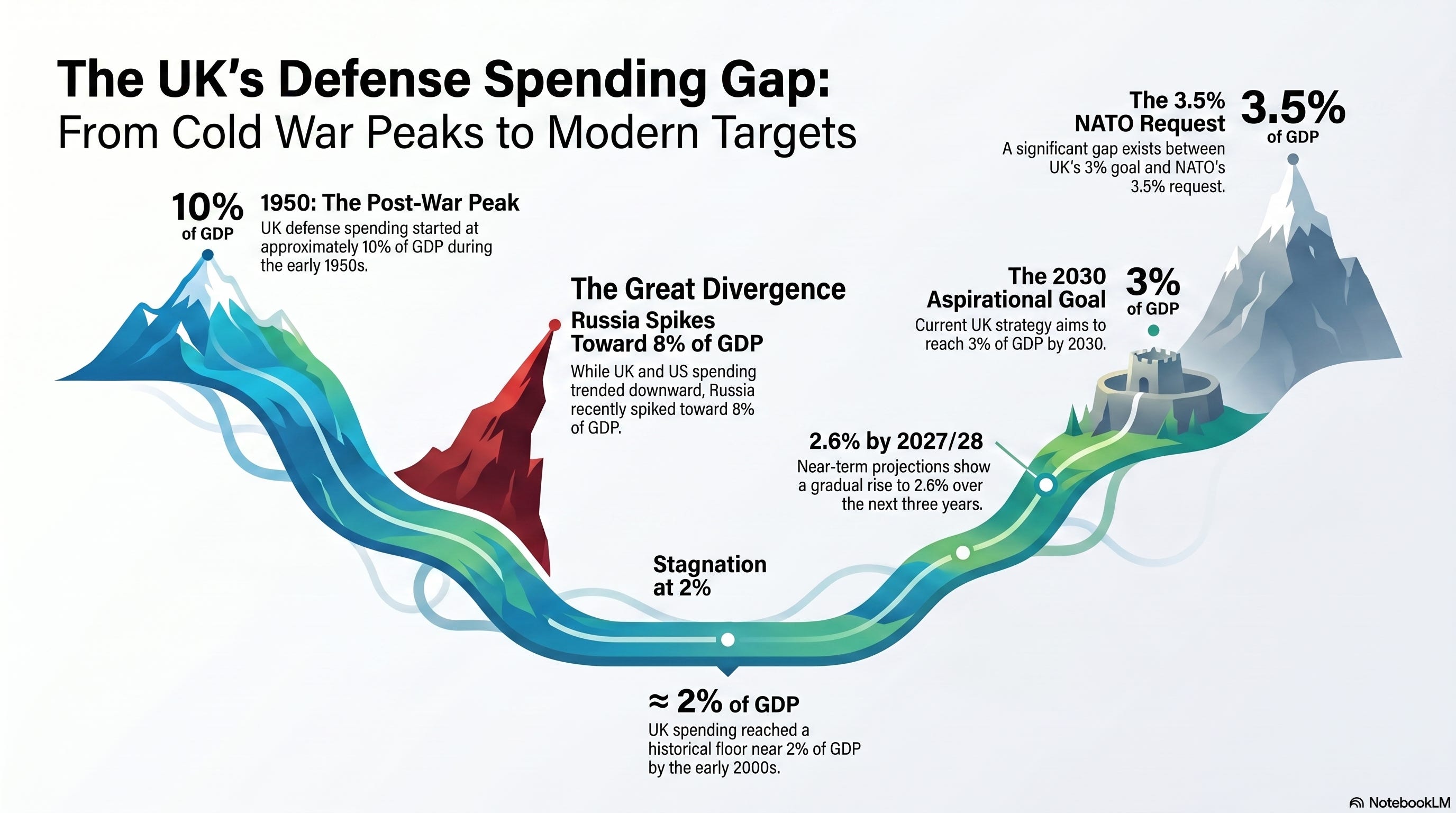
Shocking? It should be. Russia's hybrid war has already reached the UK - Novichok on British streets, a Ukraine aid warehouse torched, Russian vessels mapping submarine cables in UK waters, military-grade lasers reportedly aimed at RAF pilots' eyes. And while all that was happening, a Russian tech developer whose kamikaze drone simulator is used to train Putin’s forces - including schoolchildren under a 2024 federal militarisation law - was strolling through Disneyland Paris in Minnie Mouse ears and posing in front of Trump Tower in New York, apparently free to travel across Europe and the US without restriction. Grey warfare doesn’t get more brazen than that. And yet Britain, which has spent four years positioning itself as Ukraine's closest European ally, can't find the money to back that up. Under the government's own numbers, defence spending would crawl from 2.6% to just 2.68% of GDP by 2030 - in a year when Starmer himself warned of a possible Russian attack on NATO soil by the end of the decade. Ammunition stocks are already dangerously low after years of Ukrainian donations. Army and Navy drone and hybrid warfare programmes are now in funding limbo. And Britain heads to Ankara for the NATO summit without a credible national defence plan - a potential breach of Article 3 of the NATO founding treaty, which requires member states to be capable of defending themselves. Meanwhile, Rachel Reeves - reportedly backed by cabinet allies - blocked departmental cuts that could have freed up defence funds, as "welfare before warfare" voices in Labour cheered. Seven ministers gone in a month. The general who co-authored the strategic defence review called this a failure of political will. As Robert Fox writes in the iPaper: we may not want war, but it has an unpleasant habit of choosing us.
News Briefs
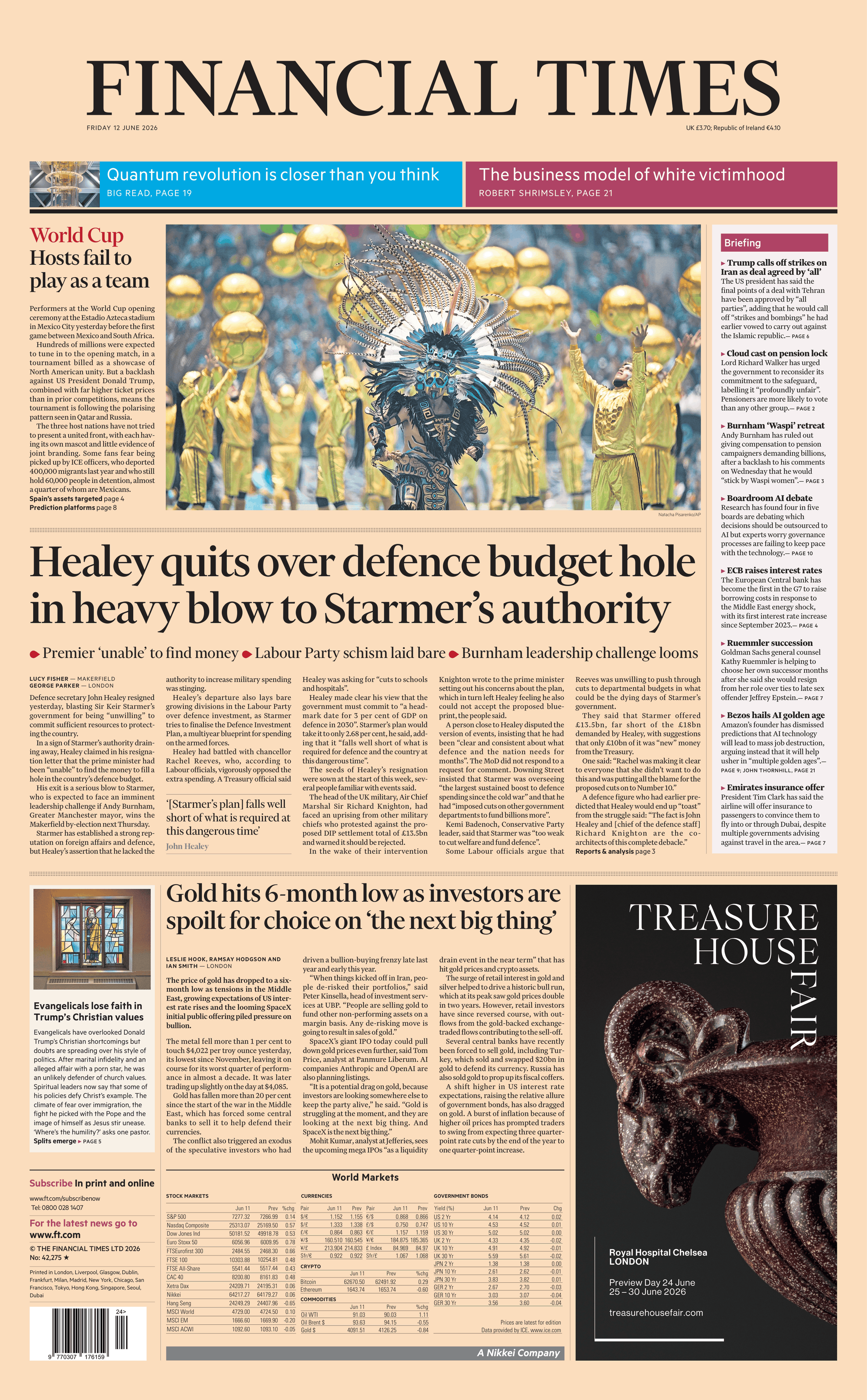
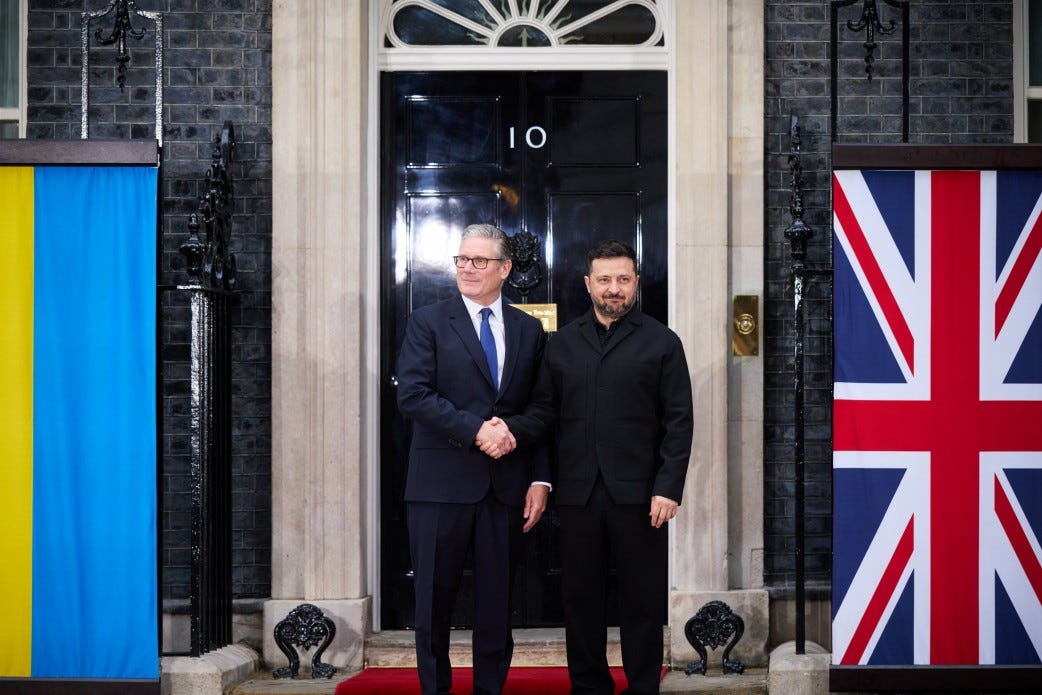
Keir Starmer’s premiership has been pushed to the brink of collapse after the shock resignation of John Healey as defence secretary undermined his security credentials and risked shredding his remaining political authority. In a blistering resignation letter, Healey accused Starmer and his chancellor, Rachel Reeves, of putting the country’s security at risk, saying the long-awaited defence investment plan (Dip) fell well short of what was required. “You have been unable and the Treasury has been unwilling to commit the resources that the nation needs to defend the country at this time of rising threats,” he wrote. “I would not be able to accept a Dip settlement that does not give our forces the resources they need. I am now left with no other option than to submit my resignation as your defence secretary.” Dan Jarvis, the security minister, was named as Healey’s successor on Thursday evening. The armed forces minister, Al Carns, and Healey’s two parliamentary aides also resigned on Thursday. In his resignation letter, Carns said: “We need a new way of governing and we need it now.” The upheaval has left Starmer struggling to shore up his reputation as a safe pair of hands at a time of growing international threats. It comes days before Starmer is due to meet G7 allies in France and weeks before a Nato summit in Ankara that will be attended by Donald Trump, leaving the prime minister facing the embarrassing prospect of explaining why his own defence secretary felt he was not doing enough to keep his country safe. Many Labour MPs, including cabinet ministers, already feel that Starmer is on borrowed time with the potential return of Andy Burnham after the Makerfield by-election next week. “This just makes the end more certain,” one minister told the Guardian. Healey’s decision appeared to have taken No 10 by surprise despite a protracted row over defence spending, during which he had called on ministers to consider “creative funding” mechanisms like those adopted by other European countries, based on more borrowing. Starmer insisted the Dip would be funded properly and told Healey it had already required significant reallocations from other Whitehall budgets. “Strong public finances are part of what keeps us safe – irresponsible borrowing only puts that at risk,” he said in his response to Healey. In his letter, Healey revealed that the government was planning to raise defence spending by just 0.08 of a percentage point of GDP between next year and 2030 – from 2.6% to 2.68% – and argued that it must hit 3% in 2030 to meet the challenge.
In a revealing investigation, the iPaper reports that to onlookers at Disneyland Paris, he was just another grumpy father in Minnie Mouse ears. In reality, Aleksei Kolotilov is a St. Petersburg-based tech developer whose hyper-realistic kamikaze drone simulator is being used to train Russian military cadets - and schoolchildren. While major oligarchs and defence firms have been sanctioned and grounded, Kolotilov has travelled freely through Italy, France, Belgium and the US since 2022, documenting family holidays on social media to his 60,000 YouTube followers - even posing in front of Trump Tower in New York. His simulator has since been rolled out in Russian government sessions teaching children to fly killer drones, part of a 2024 federal law militarising national education. The UK Ministry of Defence warned last year that drone training is now running in over 500 Russian schools and 30 colleges. Intelligence analysts estimate up to 70 per cent of battlefield casualties in Ukraine are linked to drones. Shadow Defence Secretary James Cartlidge called it unacceptable that individuals whose work directly supports Russia's invasion remain free to travel across Europe and the US.
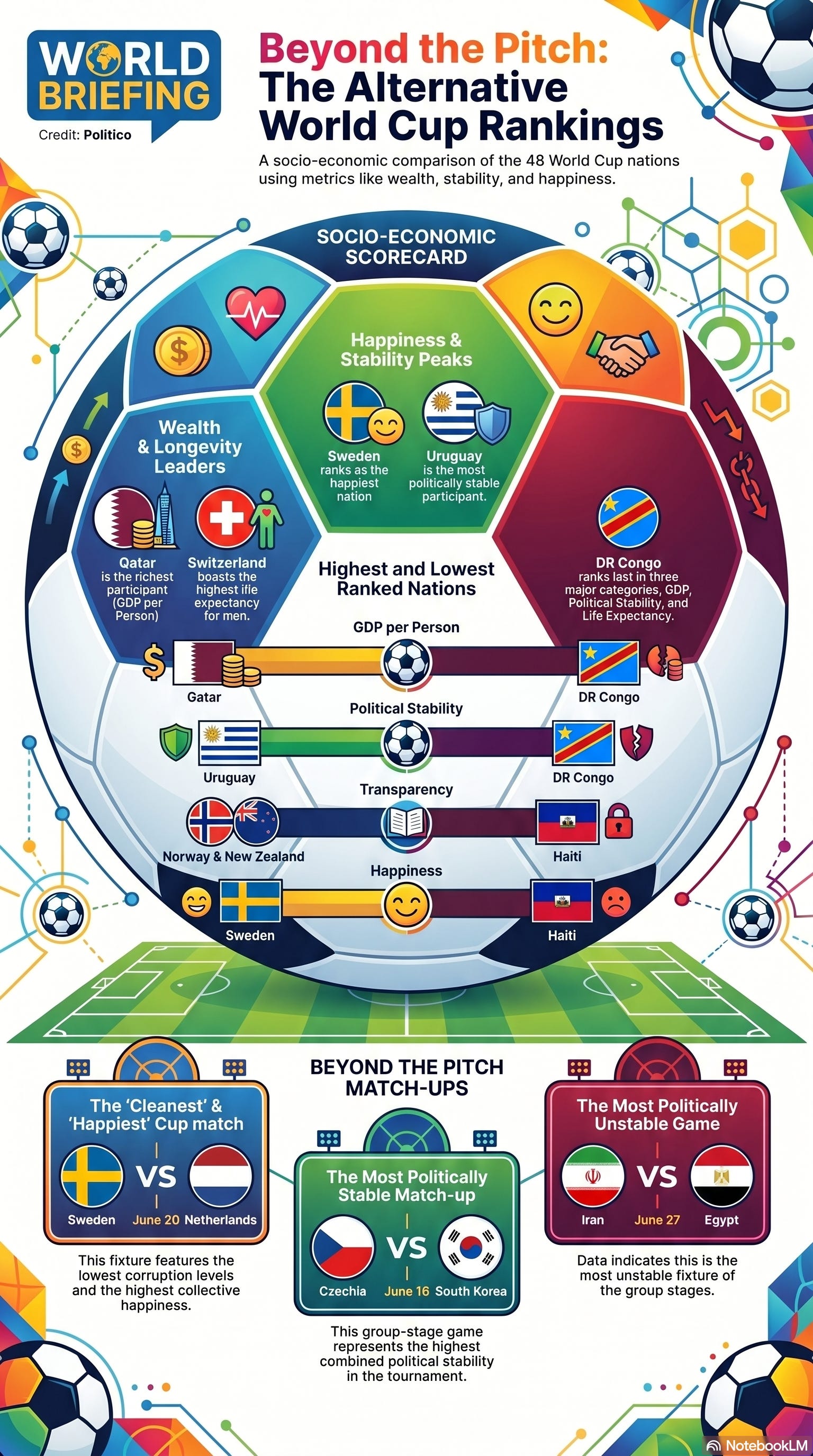
The 2026 FIFA World Cup kicked off on Thursday evening with co-hosts Mexico taking on South Africa in the Estadio Azteca in Mexico City, launching a sprawling tournament of 48 teams that will last nearly six weeks. The tournament is projected to generate a record-breaking $13 billion (€11 billion) in total revenue. The hosts took an early lead in the ninth minute with Julián Quiñones, after he was set up by Érik Lira who pounced on a mistake by the South African defence. The stadium erupted in celebration, with Mexico subsequently maintaining pressure on their opponents for the rest of the first half before extending their lead in the second through a header by veteran striker Raúl Jiménez. The official opening ceremony lit up the Estadio Azteca stadium before the kickoff with Colombian superstar Shakira and Nigerian singer Burna Boy delighting the crowd with a performance of “Dai Dai,” the official song of the tournament. The start of the action on the pitch will likely come as a welcome relief to football’s world governing body FIFA, which has faced stinging criticism over the eye-watering costs of tickets. In addition, Donald Trump’s immigration crackdown has seen a top referee, Iranian team officials and fans refused entry to the United States. South Africa coach Hugo Broos warned his players to block out a wall of sound during the opening match in the Estadio Azteca, a historic venue that hosted the 1970 and 1986 World Cup finals. “They will have 85,000 Mexicans shouting and singing. But we have to focus on our game. And if we can do that...then we can have a good game,” the Belgian said. Mexico have not won any of their seven appearances in an opening game. “We have to break the statistic,” coach Javier Aguirre said. “It will be another source of motivation.” - Euronews
The head of the EU’s diplomatic service has given a staunch defense of her institution as it fights off suggestions that it be shut down. In an email seen by POLITICO, Kaja Kallas, the bloc’s foreign policy chief, wrote to the 5,000-strong staff of the European External Action Service, insisting that it “added value” to the bloc. She was responding to a French government discussion paper that floated radical options for the EEAS that included bringing it completely under the control of the European Commission. “I would … stress how much added value we have provided to Europe as a team, especially at a moment of full-scale war raging in Europe,” Kallas said in her email. The French document, which POLITICO has confirmed the contents of, follows long-running criticism from national capitals and EU officials who complain that EU diplomacy is too slow-moving, institutionally dysfunctional and victim of an escalating turf war between the EEAS and the Commission under President Ursula von der Leyen. The paper was an internal document not approved by the French foreign minister or his aides and does not reflect an official French position, said an EU diplomat. It was first reported by the Financial Times and Reuters. It points to three options for reforming the EEAS, including bringing it entirely under the authority of the Commission, shifting its key functions to the Council of the EU ― which works on behalf of the 27 member governments — and bolstering the role of the Kallas’ job. In a speech earlier this year, French Foreign Minister Jean-Noël Barrot said that the EU needed a stronger diplomatic service. The problems at the EEAS were the subject of “daily discussions” among ambassadors and should be taken as a “warning” to Kallas about how she runs the institution, an EU diplomat with knowledge of discussions said after being granted anonymity to discuss confidential matters - Politico
Help Us Keep Connecting The Dots
For more than three decades, I’ve reported from conflict zones, humanitarian crises, and geopolitical flashpoints - and World Briefing is how I continue that mission independently. No editors second-guessing the story. No algorithms deciding what matters. Just rigorous, on-the-ground analysis delivered straight to your inbox.
If you find this reporting valuable, please consider upgrading to a paid subscription - or support World Briefing at your own level via PayPal or via Zelle (mbociu@gmail.com).
At a time when foreign coverage is shrinking and misinformation is filling the void, your support helps keep independent global journalism alive and in the field.
Thank you for reading, sharing, and being part of this community.
Russia’s oil production has declined for a sixth consecutive month, with escalating Ukrainian drone attacks on the country’s energy infrastructure contributing to the downturn by disrupting storage and transportation facilities needed to sustain output. Russian crude and condensate production fell to 9.009 million barrels per day (bpd) in May, down from a recent peak of 9.38 million bpd in November, according to data published by OPEC. Output has fallen by roughly 370,000 bpd since then. The decline leaves Russia producing about 690,000 bpd below its OPEC+ quota, according to Bloomberg calculations based on OPEC data. Ukraine sharply intensified attacks on Russian oil infrastructure in May, with at least 31 strikes recorded against refineries, export terminals and pipelines, Bloomberg reported. That was the highest monthly total since the start of the war. Most of the attacks last month targeted fuel production facilities, causing Russian refinery throughput to fall to its lowest level since 2009. Processing volumes declined further in June, dropping to their lowest level in two decades during the first days of the month, according to consultancy Energy Aspects. The collapse in refining has helped free up additional volumes of crude oil for export, particularly after Russia restored operations at Baltic and Black Sea ports that had been damaged during heavy Ukrainian attacks earlier this year. Seaborne crude exports averaged 3.64 million bpd in the four weeks to May 31, up from 3.17 million bpd in the four weeks to April 17, when Ukrainian strikes on ports and export infrastructure were particularly intense. Higher export volumes are expected to support revenues for oil companies and trading intermediaries involved in Russian crude sales. However, analysts note that the federal budget relies primarily on the mineral extraction tax levied on oil production rather than on export revenues themselves. As a result, a sustained decline in output could weigh on government revenues even if exports remain resilient. Oil and gas income remains one of the Kremlin’s most important sources of funding, accounting for roughly a quarter to a third of federal budget revenues in recent years - Moscow Times
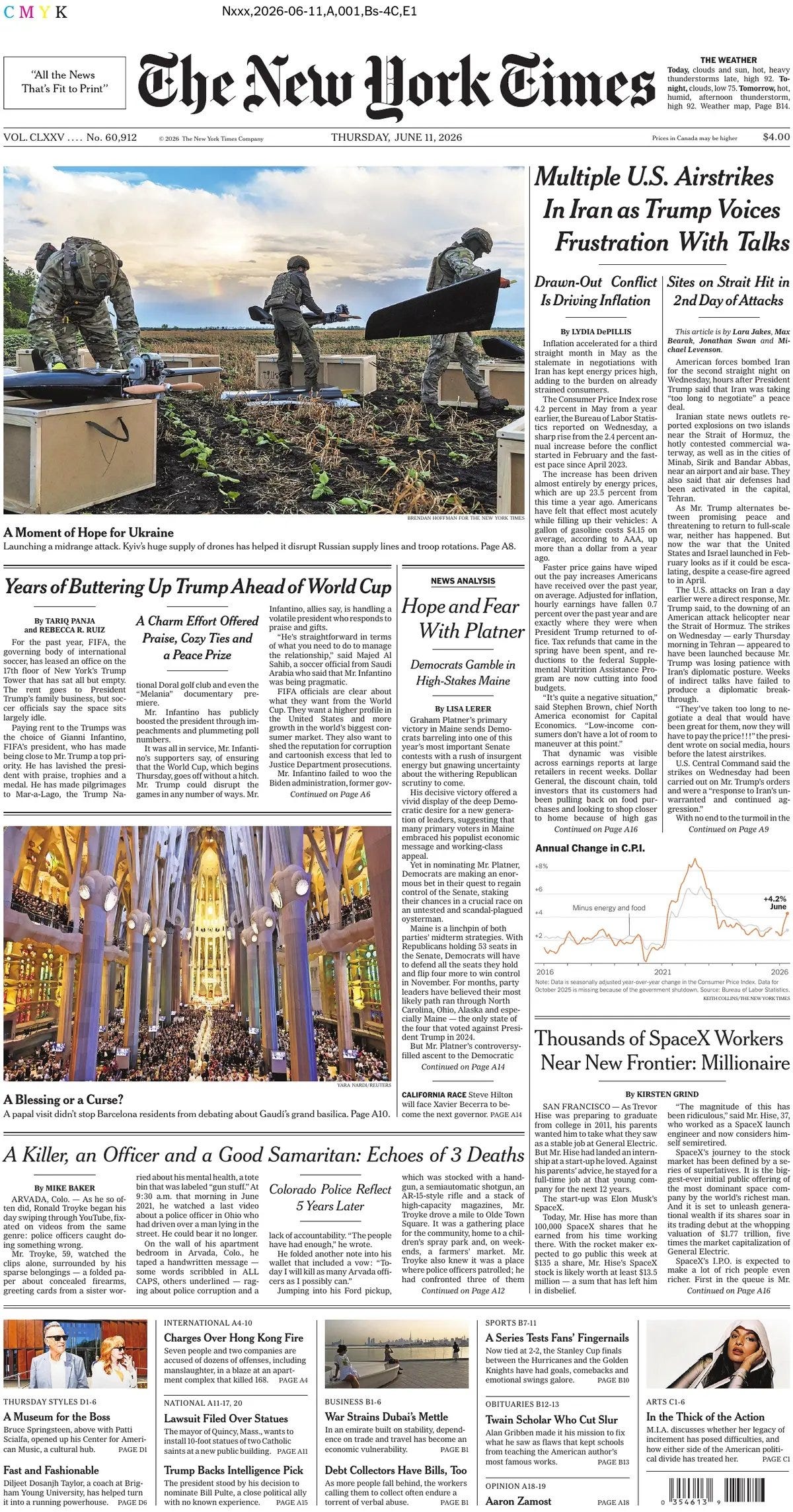
It has now been 1,569 days since Russian forces invaded Ukraine, meaning the war has now outlasted World War I, long considered the epitome of a grinding conflict. Polls suggest that about half of Ukrainians believe that the two sides will still be fighting in 2027. The war has gone on for so long that the technology and strategy used to fight it has changed. At the beginning, tanks, trenches and large-scale troop assaults were common. Now, drones have forced soldiers to hide in foxholes and attack individually or in pairs - NYT
Russia will restrict imports of most food, seeds, flowers, wood and fertilizer from Armenia starting on Friday, less than a week after Prime Minister Nikol Pashinyan’s Civil Contract party secured a parliamentary majority in elections seen as a test of Yerevan’s pivot toward the West. The federal agricultural safety agency Rosselkhoznadzor said the sweeping ban was issued in response to the “systematic detection” of pests in products imported from Armenia since May. It claimed that, in June alone, three separate cases of khapra beetle infestations were discovered in dried food shipments. “The ban will remain in effect until a specific framework is developed to ensure the safety and traceability of shipped goods,” the agency said in a statement on Thursday, adding to an already long list of Armenian goods recently banned for import to Russia, including produce, flowers, mineral water and alcoholic products. Freshly banned goods include fresh and dried fruits, fresh and chilled vegetables, grains, cereals, grain-derived products, coffee and cocoa beans. The embargo also covers live plants, fresh cut flowers, planting seeds and plants used for pharmaceuticals and perfumery.
In addition, the restrictions cover soil, peat, organic fertilizers, timber, lumber, wooden packaging, as well as insects, live pathogenic bacteria and viruses intended for research purposes - MT
Queen Elizabeth II and Jackie Kennedy did not get along when they first met. During the former first lady’s initial visit to Buckingham Palace in 1961, she was disappointed by several things, the most notable being that Queen Elizabeth’s hair was not voluminous enough. “Too flat,” Kennedy remarked in private about the royal’s hairstyle, according to royal biographer Sally Bedell Smith. Kennedy was also “slightly disappointed that the palace wasn’t grander,” Caroline Hallemann, author of the new book The Kennedys and the Windsors, told People. However, Kennedy’s unfortunate first impression did not last. The two powerful women met the following year for lunch at Buckingham Palace, where they talked “at length about horses,” Hallemann said, explaining that it was then they found common ground. “That is where they were able to really connect. That was a true passion for both of these women.” Queen Elizabeth, a famous figure since birth, also advised Kennedy on how to handle public scrutiny. “When the first lady described her struggles in the spotlight on their recent state visit to Canada, and the pressures of being in the spotlight 24 hours a day, the queen looked rather conspiratorial and said, ‘One gets crafty after a while and learns how to save oneself,’” Hallemann said - The Daily Beast
The journals….