

Two summits, two worldviews - same week. In this recap of my on-air and written analysis: the G20 finance ministers' meeting on US soil, where the empty chairs say as much as the agenda (sanctions, scams, export controls, and Washington's ultimatum to allies on cutting ties with Iran). And the SCO summit in Kyrgyzstan, where China, India, Russia and Iran are trading bilaterals, development pledges and quiet workarounds to those same sanctions. One summit hands out a term sheet. The other hands out a catalogue. Filed from Kuala Lumpur as Merdeka Day draws to a close
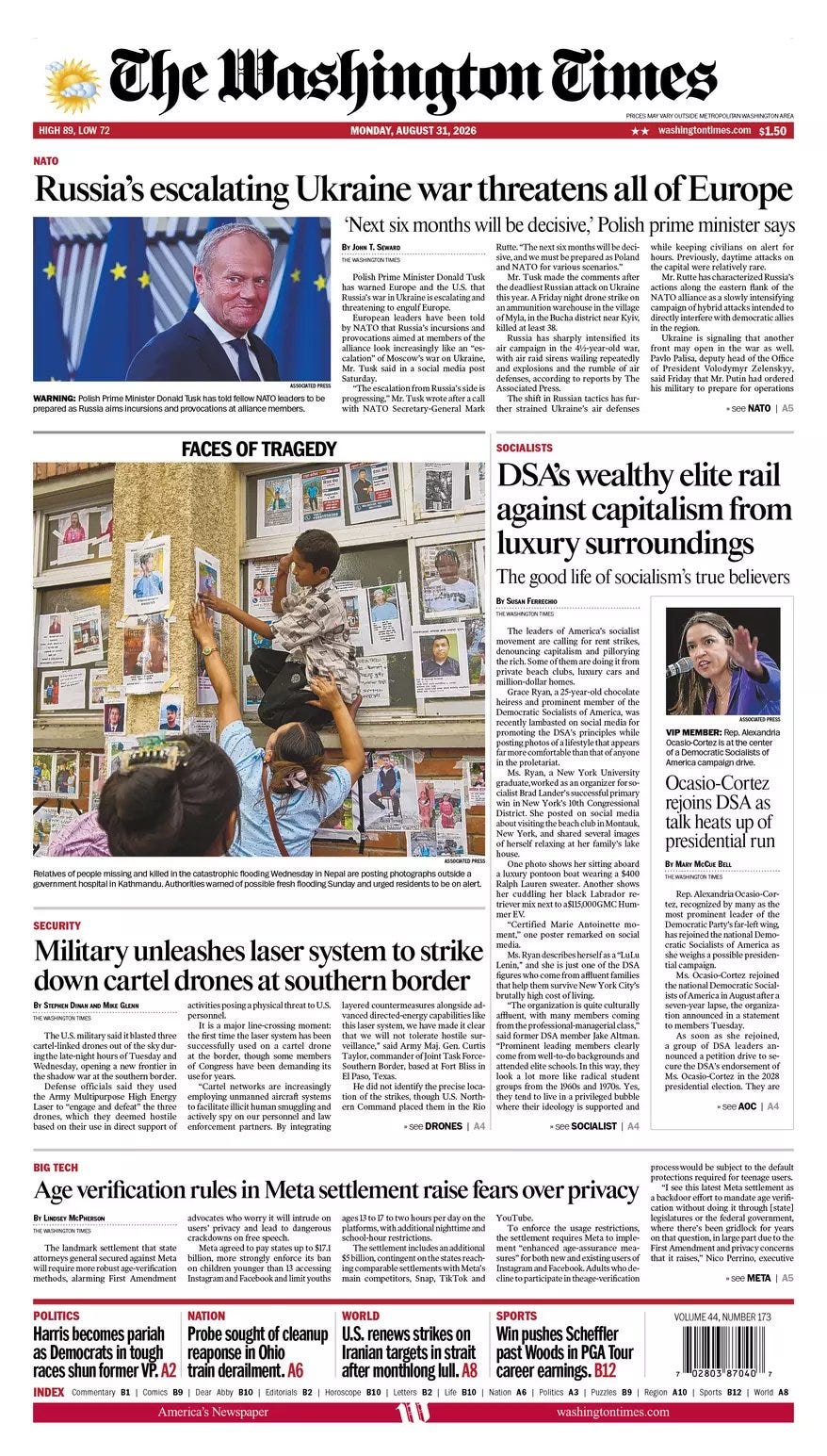
Facing increasing confrontations with the West, Russian President Vladimir Putin looks eastward to restore his country’s standing in the region at a major summit in Bishkek, the Kyrgyz capital. It comes at a time of increased difficulties for the Kremlin leader, with Russia’s economy in tatters due to Western sanctions and Ukrainian drone strikes, ally Iran battered in war, and the leaders of former client states such as Syria and Venezuela ousted amid a muted Moscow response. Putin is set to hold bilateral meetings with Iranian President Masud Pezeshkian and Chinese leader Xi Jinping, among at least seven others, starting August 31 on the sidelines of the two-day Shanghai Cooperation Organization (SCO), which is celebrating its 25th anniversary. Putin is also expected to hold bilateral sessions with Indian Prime Minister Narendra Modi and President Recep Tayyip Erdogan of non-SCO nation Turkey. Kremlin officials said Putin has at least nine bilateral meetings scheduled as Moscow looks to place Russia as a counterweight to Western influence in the region. Putin and Xi have often used SCO gatherings to put up a united front against Western influence in the region. Xi arrived late on August 30 and held his first meeting with Kyrgyz President Sadyr Japarov, who will serve as host of the summit. Along with Russia, Iran, India, and China, the SCO grouping consists of Belarus, Kazakhstan, Kyrgyzstan, Pakistan, Uzbekistan, and Tajikistan. Not all members are allies, of course, with nuclear powers Pakistan and India often on the brink of war with each other. The organization began as the “Shanghai Five” in 1996 but began expanding to other regional nations starting in 2001. Along with Turkey, other nonmember nations and others participating and observing will include Armenia, Azerbaijan, UN chief Antonio Guterres, and heads of several Moscow-oriented international organizations. Putin is scheduled to meet Armenian Prime Minister Nikol Pashinian, whose country has long been an ally of Russia but which has angered Moscow by seeking to move closer to the West.
Chinese President Xi Jinping and Russian leader Vladimir Putin are expected to discuss the Power of Siberia 2 project in a meeting in Bishkek on Monday, according to the Kremlin. “The issue will be discussed bilaterally,” Russian presidential aid Yury Ushakov reportedly said. “It will be discussed not only at the level of the [September 1-4] Eastern Economic Forum [in Vladivostok], but also in the meeting with the Chinese leader, which will take place on August 31.” Ushakov was responding to a question on whether the two sides were going to finalise the agreement over the long-stalled pipeline, a flagship project designed to boost Russian gas deliveries to China and further consolidate ties between the two neighbours. Iran has vowed to stand firm after the US announced fresh sanctions against 60 entities and individuals around the world, and concerns are growing that the latest sanctions could ignite a new flashpoint in US-China ties just weeks ahead of Xi’s visit to Washington. About half of China’s total seaborne crude oil imports in 2025 transited the Hormuz Strait, according to Chinese commodity market intelligence provider JLC. However, China’s vast pipeline network allows it to source oil and gas overland from Russia and Central Asia, mitigating the risk of maritime disruptions. First proposed in 2006, the planned 2,600km (1,616-mile) Power of Siberia 2 pipeline is expected to deliver 50 billion cubic metres (1.77 trillion cubic feet) of natural gas annually to China via Mongolia from the Arctic gas fields of Yamal in Russia - SCMP
Iran said on Monday that it has launched strikes targeting US military positions in Jordan in response to Washington’s first attack on its territory in a month, marking a fresh flare-up in the six-month war. Tehran’s elite IRGC said it struck two US military air bases with ballistic missiles in Washington-allied Jordan, causing “heavy damage”. Shortly after Iran’s announcement, the Jordanian army said it had intercepted eight missiles, without stating their origin. The strikes came after the US revealed on Sunday that it had attacked Iranian rocket launchers on Larak, a small island in the Strait of Hormuz. Washington said its attacks were aimed at preventing Iran from launching more sea mines into the strait, days after it announced it had completed clearing explosives from the strategic waterway. The exchange of fire came just days after the war hit the six-month mark amid little to no visible progress in negotiations between the two sides to end it. Separately, the United Arab Emirates said that it intercepted an Iranian drone over its waters Monday. “This dangerous escalation constitutes a blatant violation of the UAE’s sovereignty, security, and stability, and a direct threat to the safety of its citizens and residents,” the Foreign Ministry said. - Euronews/AP
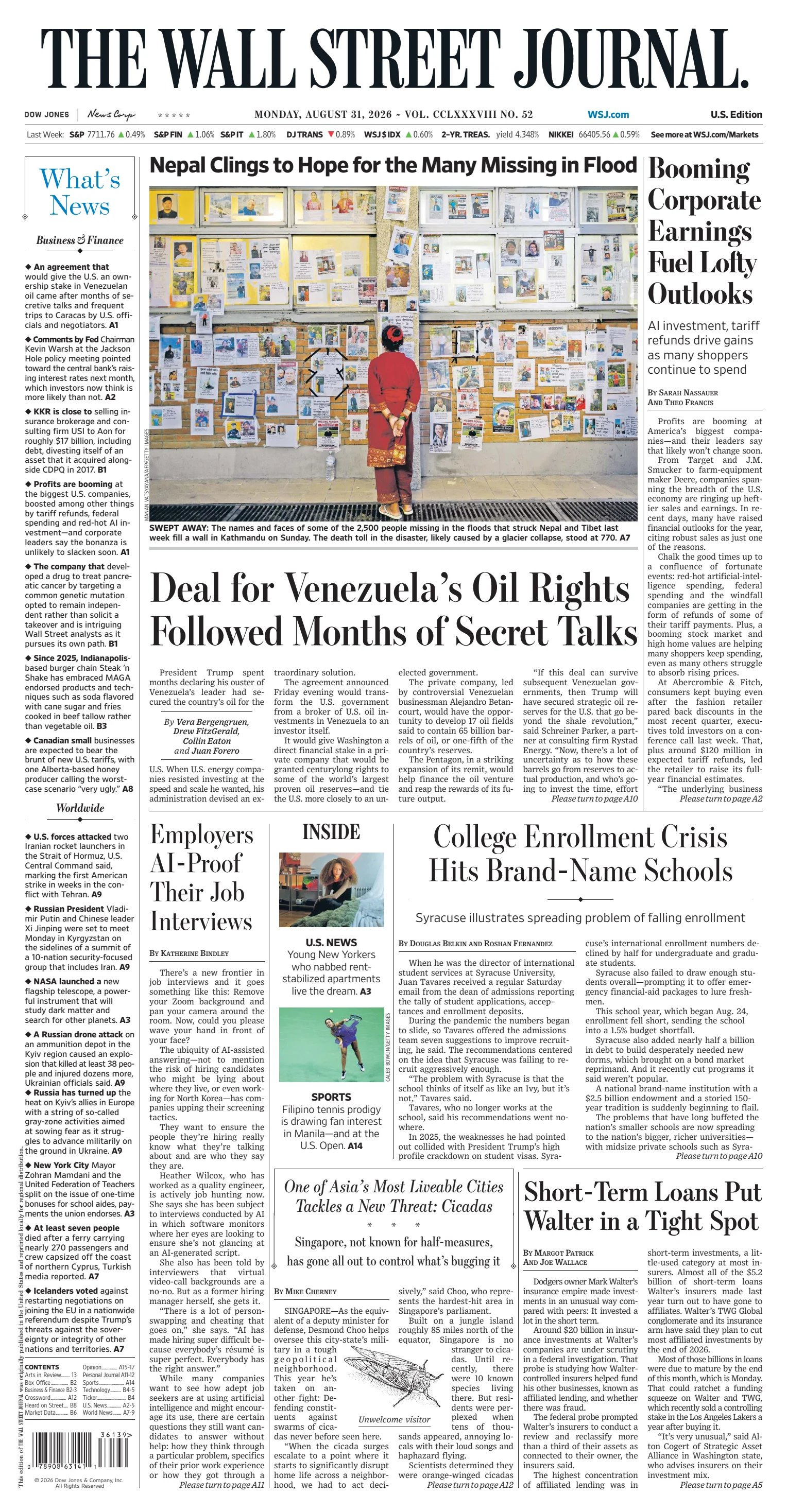
The number of people missing in Nepal after the massive flash flood on Wednesday has risen to 4,247 - with at least 903 people known to have died. The missing figure is a sharp rise from 2,502, which was announced on Sunday. Of those missing, 3,655 are Nepali citizens, with 592 foreigners unaccounted for. In Tibet, the official death toll is 16, with 546 reported missing, according to Chinese state media. Among the missing are 933 hydropower workers, many of whom were working in tunnels - BBC
Russia threatened “massive strikes” against Ukraine’s energy infrastructure on Sunday after weeks of Ukrainian attacks on Russian oil facilities, as both sides target the economic systems sustaining the war. A Ukrainian drone strike sparked a fire at one of Russia’s largest oil refineries on Friday, capping a record-setting month of strikes that have disrupted fuel production and worsened gasoline shortages. Russia has responded with intensified attacks on Ukraine, including a strike near Kyiv on Friday that killed 38 people in the year’s deadliest attack. The campaign against infrastructure threatens economic activity in both countries and unfolds as Moscow faces accusations of using “gray zone” tactics against NATO countries, including drone incursions and other hostile actions designed to undermine the bloc. Earlier this month, Ukrainian Energy Minister Denys Shmyhal told POLITICO that “Putin wants to finish off (Ukraine’s) energy system” and that Kyiv would work on strengthening its energy and infrastructure resilience to avoid a repeat of last winter’s freezing blackouts. Meanwhile, Ukrainian officials have also said that their intelligence suggests Russia is planning a new ground attack on Kyiv. Pavlo Palisa, deputy head of Ukraine’s presidential office, told reporters that Russian military chiefs have been tasked by the Kremlin’s political leaders with planning and preparing for attacks on both the Ukrainian capital and the city of Chernihiv - Euronews/POLITICO
Russia has hit printing presses and publishing houses across Ukraine in a series of recent attacks, destroying 12 million books and damaging other icons of Ukrainian history and culture. Local media report that Russia has destroyed one third of all the books printed in Ukraine this year. More than 35 publishing facilities have been hit over recent weeks. Museums, art galleries, film studios, libraries, and opera houses have also been damaged. At Kyiv-Pechersk Lavra, the capital's large medieval monastery and cultural heritage site, the golden domes of the Dormition Cathedral were hit - BBC
A Georgia farm owner is gutted after she says cops came onto her property and fatally shot her baby donkey, HeeHaw. Hannah Israel claims on Facebook that Polk County cops had entered her pasture without permission to allegedly look for a missing person last week ... saying that’s when they shot and killed little HeeHaw. She wrote ... “They claimed he ran up to them braying and they thought they were in danger and shot and killed him after trying to taze him. HeeHaw was raised in the house and did petting zoos he never knew a stranger. And was shot and killed in his OWN pasture for doing what donkeys do. Alerting to a stranger.” Hannah believes there’s “no way” the shooting was legal and is planning to take action. She’s launched a GoFundMe for her legal fees. The police launched an investigation. The crowdfunding campaign has raised more than $70K of its $90K goal so far. Hannah says any extra money will go back to her animals’ feed and care. This isn’t the first time in recent months cops have come under fire for fatally shooting animals. In June, Los Angeles police got a ton of heat for shooting and killing Jameson the dog after his owner had been celebrating the Knicks championship win. The family is suing the city for excessive force and negligence after bodycam footage showed an officer had shot the poor pup four times - TMZ
The journals…
Your article made me think of physicist Neils Bhor. Along with many other things, he hypothesized, and later proved through experimentation, the gunfighter's dilemma. Contrary to popular opinion he found that the gunfighter who drew second was often faster than his opponent drawing first. This is due to a reactionary movement being faster than a deliberate one. I wonder if this observation is a concern of the villagers of the new East and West lining up behind their chosen gunfighter, It seems like High Noon is closer than we would like, and who's going to draw first. It's scarry times.