World Briefing Hot Take:
This is how modern power really works - not just through missiles or markets, but through the quiet fusion of both. A man accused of helping compromise more than 12,000 organizations worldwide doesn’t just disappear into the shadows - he allegedly re-emerges inside a company dominating China’s EV chip supply, just as those same vehicles prepare to enter Western markets like Canada.
It’s a reminder that today’s wars don’t stay on the battlefield - they travel through code, supply chains, and consumer products. And in an era where Washington and Beijing can turn adversaries into bargaining chips overnight, the question isn’t just whether justice will be served… but what it might be traded for.
Chinese Hacker Extradited to U.S. — And Why Canada Should Be Watching
A Chinese national accused of stealing COVID-19 research from American universities and participating in one of the largest state-sponsored hacking campaigns in history appeared in a Houston federal court this weekend, following his extradition from Italy.
Xu Zewei (徐泽伟), 34, faces a nine-count federal indictment covering wire fraud, unauthorized computer access, and aggravated identity theft, according to reporting by The Bureau - a Canadian site which describes itself as entirely independent voice in investigative journalism. Prosecutors allege he worked as a contractor for China’s Ministry of State Security, targeting American universities, a Washington law firm, and ultimately compromising over 12,700 organizations worldwide as part of the HAFNIUM (which later became Silk Typhoon) hacking campaign - formally attributed to Beijing by the U.S., EU, UK, and NATO in 2021.
The Canada Connection
What makes this case particularly relevant to Canadian readers is what Xu allegedly did after the hacking stopped. His spouse told Italian police he had moved on to a senior IT role at Shanghai GTA Semiconductor - a company controlling roughly 80 percent of China’s domestic market for automotive chips used in electric vehicles. Its flagship client is BYD.
That is the same BYD now poised to enter the Canadian market in a significant way, following the landmark trade agreement Prime Minister Mark Carney negotiated during his January trip to Beijing - a deal that would give Chinese EVs substantial access to Canadian consumers.
A state-directed hacker, embedded in a strategically critical company, whose most important client is heading to Canadian showrooms.
A Geopolitical Chess Piece?
There is a further complication worth watching. Xu’s arrest - the result of rare international law enforcement coordination - may not translate into a lengthy American prosecution. With U.S.-China relations subject to the unpredictable currents of the Trump administration’s dealmaking, Xu could easily become a bargaining chip. A quiet amnesty, a prisoner exchange framed as a trade concession - these are not far-fetched outcomes. His co-conspirator, Zhang Yu (张宇), remains at large and beyond American reach entirely.
The case is a reminder that the line between China’s intelligence apparatus, its technology sector, and its commercial expansion into Western markets is about as thin as a strand of noodles - and Mr. Carney would do well to mind what he’s being served.
The case marks a rare instance of a Chinese hacker being brought before US courts amid a marked increase in Chinese hacking operations targeting the United States - Jack Burnham, Foundation for Defense of Democracies
China’s top leadership on Tuesday pledged to strengthen the nation’s energy security and respond to external shocks by continuing to pursue a policy of rapid technological development. The Politburo, a top decision-making body of the ruling Communist Party, was cited as saying by state news agency Xinhua that the economy got off to a better-than-expected start this year. The Xinhua readout did not mention the US-Israeli war on Iran, but said: “We must systematically respond to external shocks and challenges, improve energy resource security guarantee levels and counter various uncertainties with the certainty of high-quality development.” The phrase “high-quality development” refers to the pursuit of scientific and technological progress with the goal of moving China higher on the value-added ladder. China’s economy grew 5 per cent in the first quarter, at the top of its full year target range of 4.5-5% - showing higher resilience than most other economies to the energy and commodity shocks caused by the Iran war - CNA
Iran offered to end its chokehold on the Strait of Hormuz if the US lifts its blockade on the Islamic Republic, in a proposal that would postpone discussions on Tehran’s nuclear program, according to media reports. The offer emerged Monday as Iran’s Foreign Minister Abbas Araghchi visited Russia, a key backer of Tehran, following the cancellation of a potential weekend ceasefire talks between US and Iran in Pakistan. US President Donald Trump called off the trip by his envoys and suggested the talks could take place by phone instead. According to media reports, the Trump administration seems unlikely to accept the offer passed to Washington by Pakistan, which would leave unresolved the disagreements that led the US and Israel to strike Tehran on 28 February and kill its topmost leaders in the initial salvo of the war. “We can’t let them get away with it,” US Secretary of State Marco Rubio said speaking to US media outlets on Monday. “We have to ensure that any deal that is made, any agreement that is made, is one that definitively prevents them from sprinting towards a nuclear weapon at any point.” Rubio added. Despite an ongoing ceasefire, the US and Iran are locked in a standoff over the Strait of Hormuz, through which a fifth of the world’s oil and gas trade passes in peacetime. A US blockade which came into force mid-April has led to a dual blockade, something that Trump says is designed to prevent Tehran from selling its oil, depriving it of crucial revenue while also potentially creating a situation where Iran has to shut off production because it has nowhere to store oil. The closure has also put pressure on Trump, as oil and gasoline prices have skyrocketed ahead of crucial midterm elections, pressuring his Gulf allies, which use the waterway to export their oil and gas. On Monday, the spot price of Brent crude, the international benchmark, closed above $108 per barrel, about 50% higher than it was when the war began - Euronews
The United Arab Emirates said on Tuesday it quit OPEC and OPEC+, dealing a heavy blow to the oil exporting groups and their de facto leader, Saudi Arabia, at a time when the Iran war has caused a historic energy shock and unsettled the global economy. The stunning loss of the UAE, a longstanding OPEC member, could create disarray and weaken the group, which has usually sought to show a united front despite internal disagreements over a range of issues from geopolitics to production quotas. OPEC Gulf producers have already been struggling to ship exports through the Strait of Hormuz, a narrow chokepoint between Iran and Oman through which a fifth of the world’s crude oil and liquefied natural gas normally passes, because of Iranian threats and attacks against vessels. But the UAE exit from OPEC represents a big win for U.S. President Donald Trump, who has accused the organisation of “ripping off the rest of the world” by inflating oil prices. Trump has also linked U.S. military support for the Gulf with oil prices, saying that while the U.S. defends OPEC members they “exploit this by imposing high oil prices”. The move came after the UAE, a regional business hub and one of Washington’s most important allies, criticised fellow Arab states for not doing enough to protect it from numerous Iranian attacks during the war - Reuters
In an interview with CNN, UAE Energy Minister Suhail Al Mazrouei cast the move in terms of positioning the country as a leading producer at a time of growing concern about rising oil prices and tighter supply. He said the decision came after “looking at what is happening to the Strait of Hormuz and the level of withdrawal of the strategic reserves.” Al Mazrouei said the move would help oil importing nations while not having a major impact on oil prices, because of the constraints on producers sparked by the closure of the strait. “Taking the decision now will help… the producers, to not feel the pressure on prices.”
Another Russian Executive Dead: Yandex Director Drowns on the Volga
Sergei Loyter, a senior executive at Yandex - Russia’s largest technology company — has died in what authorities are describing as a drowning accident on the Volga River near Volgograd. He was 42.
Loyter, who served as Yandex’s commercial director from 2022 to 2024 and most recently headed Yango, the company’s international division, was one of three men reported missing while fishing late last week. His body was subsequently recovered along with that of his personal driver, Igor Prokhorov. A third man, local developer Sergei Nazarov, remains missing.
The circumstances have drawn immediate scrutiny. Prokhorov’s body was found with injuries to his head. No explanation for those injuries has been offered by police.
A Company Caught Between Two Worlds
Yandex’s corporate history offers important context. Once structured under a Dutch parent company, Yandex N.V., the business underwent a significant restructuring in 2024 - with the Dutch entity selling its Russian assets to a consortium of local investors. The company is now firmly re-anchored in Moscow, operating as an independent Russian entity.
Yet the impulse to hedge was clearly real. In the years preceding that restructuring, Yandex moved significant operations to Yerevan, Armenia, where its international ambitions - ride-hailing, food delivery, and other consumer services now active across multiple countries - found room to breathe outside Russia’s increasingly constrained environment. Loyter’s role at Yango, the international-facing division, placed him squarely at that fault line between Yandex’s global aspirations and its Russian reality.
The Pattern That Won’t Go Away
Loyter is now at least the twentieth senior Russian business figure to die under suspicious circumstances since the invasion of Ukraine began in 2022. The pattern is striking in its breadth: a potash company director found headless, the Uralkali board chairman dead, a Lukoil vice president with apparent signs of suicide, a Transneft vice president who fell from a balcony. Energy, technology, finance - no sector has been untouched. Medical professionals who publicly criticized the Kremlin’s handling of the Covid-19 crisis also mysteriously fell to their death out of building windows
Russian authorities have not indicated they are treating any of these deaths as connected. Outside Russia, fewer and fewer observers find that reassuring.

Authorities in the southern Russian port town of Tuapse on Tuesday ordered an evacuation of residents in areas near a Rosneft oil refinery after Ukraine attacked and set fire to the facility for a third time this month. “Another serious incident has occurred in Tuapse. A large-scale fire broke out at an oil refinery due to an enemy drone attack,” Krasnodar region Governor Veniamin Kondratyev wrote on Telegram. He said more than 160 emergency responders were deployed to battle the blaze. He said residents forced to leave their homes would be provided temporary shelter at a local school. In separate Ukrainian attacks on the southwestern Belgorod region, at least three people were killed, local authorities said. Russia’s Defense Ministry said it intercepted 186 Ukrainian drones between Monday night and Tuesday morning. The drones were downed in several Russian regions, including Krasnodar, as well as annexed Crimea and in the skies above the Black Sea - Moscow Times
A super-yacht linked to one of Russian President Vladimir Putin’s key allies has sailed through the Strait of Hormuz, despite the ongoing blockade of the critical shipping channel. The 142m-long (465 ft) multi-deck luxury boat, named Nord, is linked to sanctioned Russian billionaire Alexei Mordashov. It travelled from Dubai to Muscat, Oman, over the weekend - one of few private vessels to transit through the strait in recent months. Mordashov, who has close ties to Putin, is not listed as the formal owner of the Russian-flagged boat. However, Nord’s records indicate it was registered to a firm owned by his wife in 2022. Nord, estimated to be worth more than $500m (£370m), left Dubai on Friday night and arrived at Al Mouj - a marina in Oman’s capital - on Sunday morning, according to data on the Marine Traffic platform. It is not clear whether Nord gained permission from Iran to sail through the route - BBC
Starving on the Front Line: Ukraine’s Supply Crisis Exposes a Deeper Problem
While U.S. servicemen deploying to the Gulf have been complaining to their families about poor food and plumbing problems, soldiers from Ukraine’s 14th Separate Mechanized Brigade near Kupyansk have been going without food or water for up to nine days at a stretch - while holding one of the most contested positions on the eastern front.
Photographs of visibly emaciated soldiers, shared publicly by their wives and families, have shaken Ukrainian society and prompted General Oleksandr Syrskyi to relieve the brigade’s commander on April 24. The General Staff acknowledged that officers had concealed both battlefield losses and the true state of supply conditions from their superiors.
“He wrote to me saying, ‘I’m alive, but we’re starving,’” one soldier’s wife, Olha, told RFE/RL. Relatives reported the shortages had persisted for seven months, with soldiers fainting at their positions and unable to fight.
Military officials blamed the geography — the brigade’s positions straddle the contested Oskil River, making supply runs extremely difficult — and said some provisions were being delivered by drone. But defence analysts told RFE/RL the problem runs deeper than logistics. A culture of concealment, in which junior commanders routinely mislead superiors about conditions on the ground, has allowed critical problems to fester unaddressed.
The 14th’s ordeal is not an isolated case. Ukraine continues to struggle with patchy recruitment, inadequately trained replacements, and a decentralised system plagued by corruption allegations. More than four years into the full-scale invasion, the country’s most experienced units remain largely intact — but others are fraying badly, and the gap between official accounts and front-line reality appears to be widening.
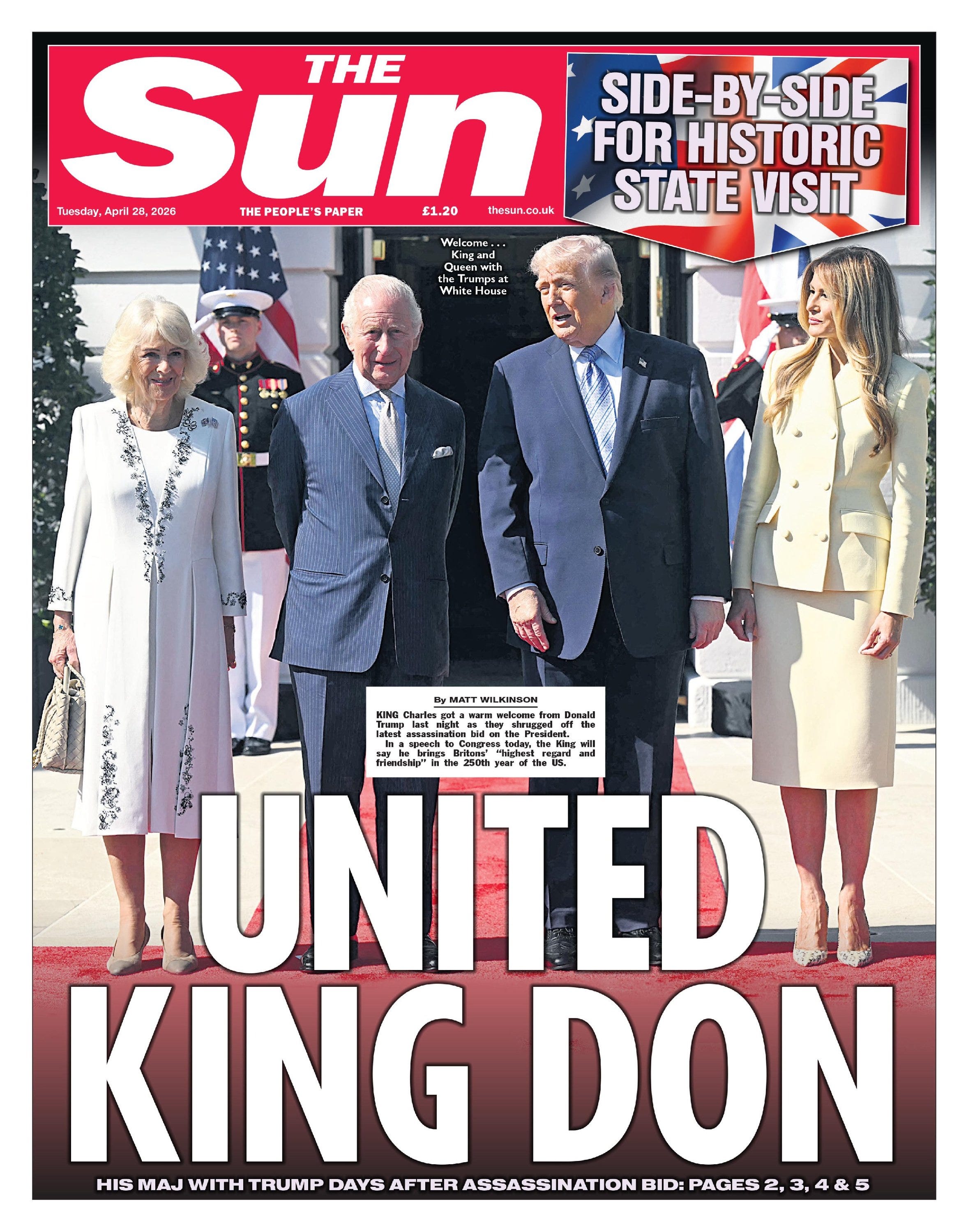
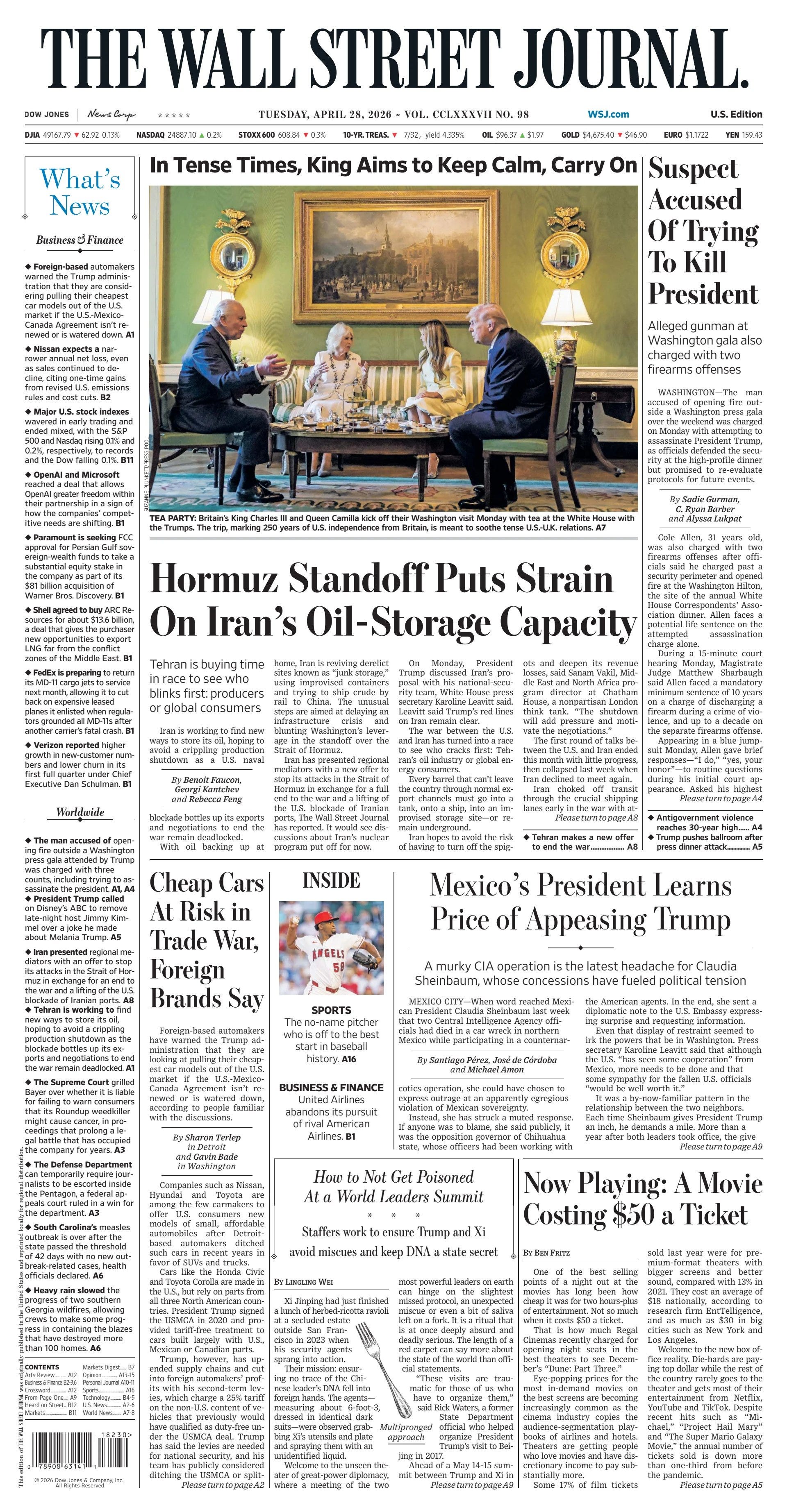
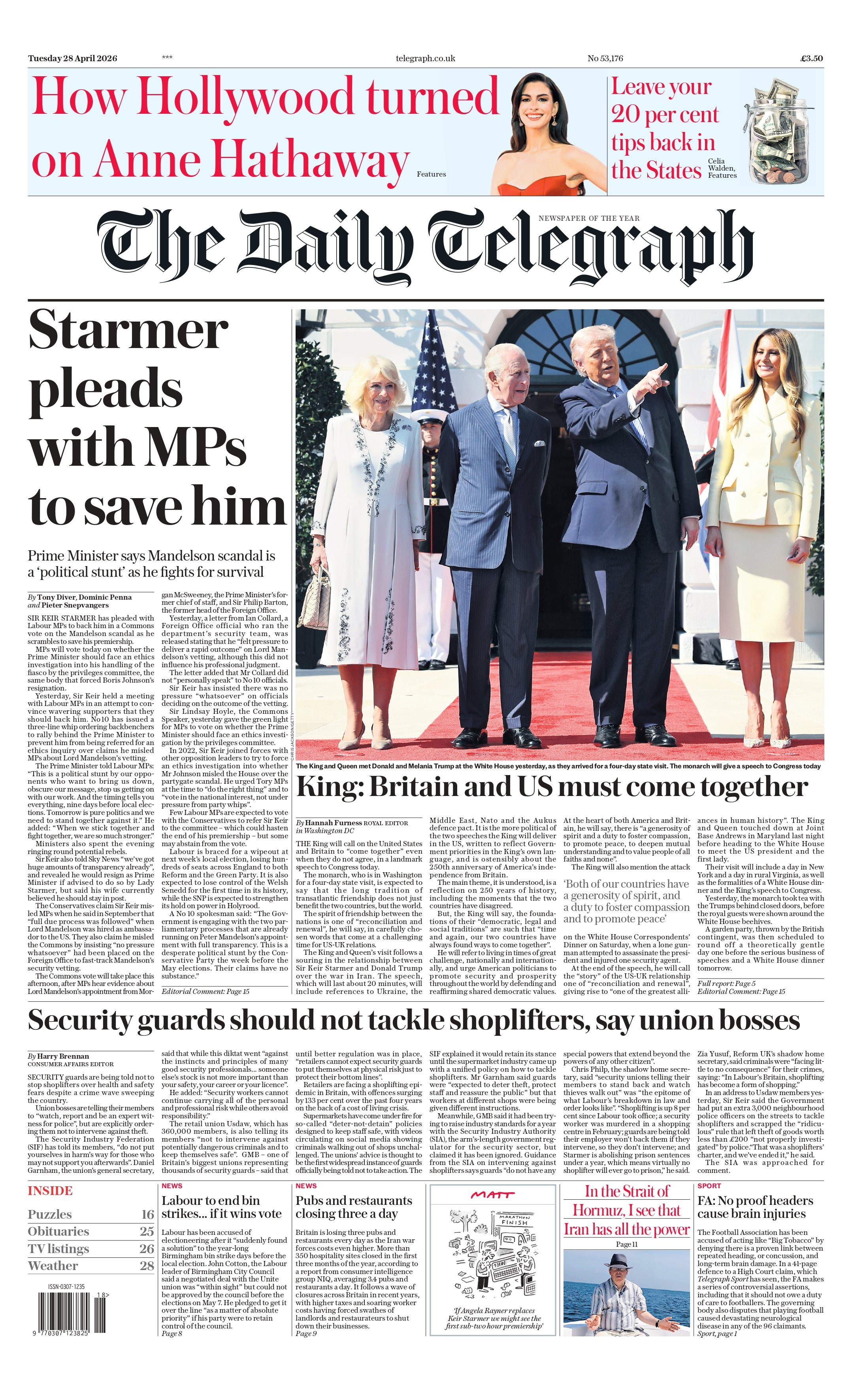
The District of Columbia mistakenly placed several Australian flags instead of British flags near the White House ahead of King Charles’s U.S. visit, although the error was quickly corrected, a D.C. Department of Transportation official said on Friday. Charles is also the head of state for Australia, but the role is largely ceremonial. Fifteen Australian flags were briefly included among more than 230 flags put on display to welcome the British king when he arrives in the U.S. capital on Monday. They were later replaced with the British flag, the official said. Charles’s state visit, to mark the 250th anniversary of the U.S. Declaration of Independence from British rule, is widely seen as the most high-profile trip of his reign so far. The trip will aim to shore up the two allies’ “special relationship,” which has sunk to its lowest point in 70 years amid strains surrounding the Iran war - CBC News
European air travel faces growing challenges from fuel price hikes, falling demand, and regulatory pressure, investment analysts warned. Apollo Investment Group’s chief economist said that Britain, France, and Germany - along with Australia - were the countries most vulnerable to rising jet fuel prices. Morgan Stanley told investors that it was “crunch time for EU airports” over the coming months, as the Iran war’s price hikes reduce demand for air travel. The airline industry has already been badly hit by the war: prices were up 24 percent year-on-year in March and airlines have called for reductions in passenger taxes to protect them from the worst impacts - Semafor
CBS News has ousted London bureau chief Claire Day after she clashed with editor-in-chief Bari Weiss over the network’s coverage of Iran and Gaza, The Post has learned. A CBS source told The Post that Shayndi Raice, a newly hired foreign editor from the Wall Street Journal, will lead all international coverage across CBS News and will be based out of London starting May 11. In a memo to staffers, CBS News president Tom Cibrowski said: “Our London Bureau will be moving to a new editorial leadership structure, with the introduction of a foreign editor role overseeing all international coverage.” He added that Day, who will leave the network on May 1, has been “dedicated to the craft of storytelling” and that “her work made a difference for CBS - New York Post
The journals….