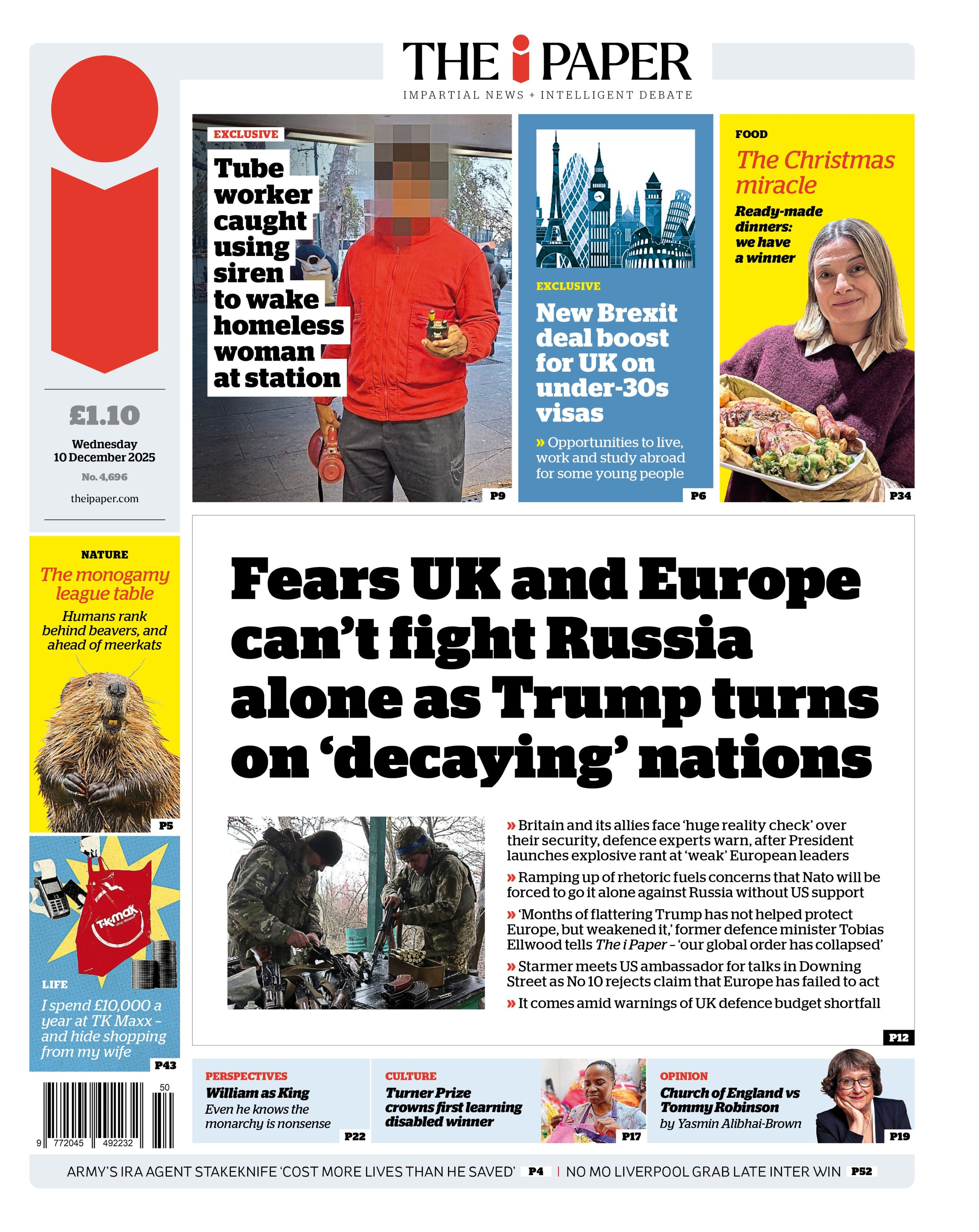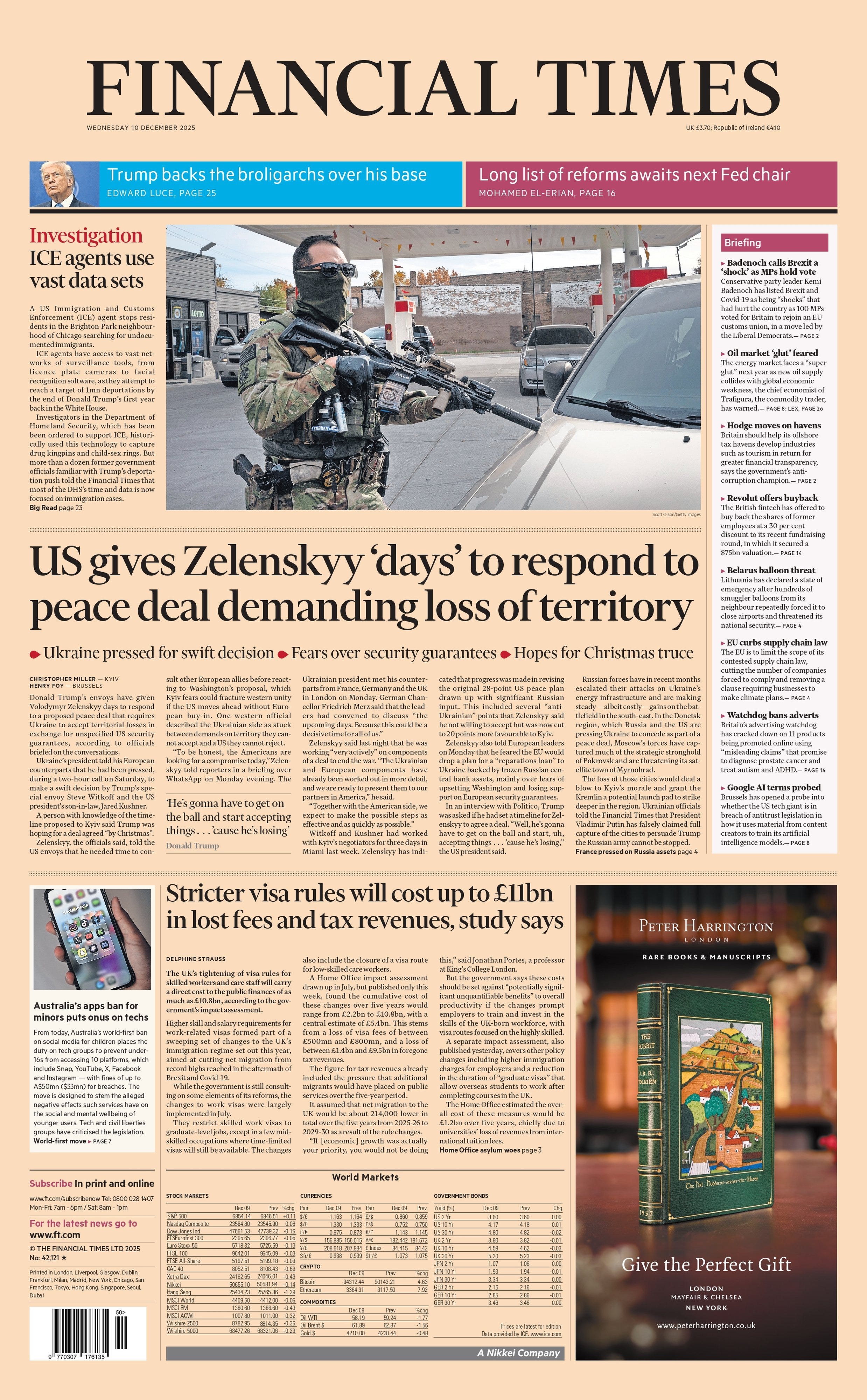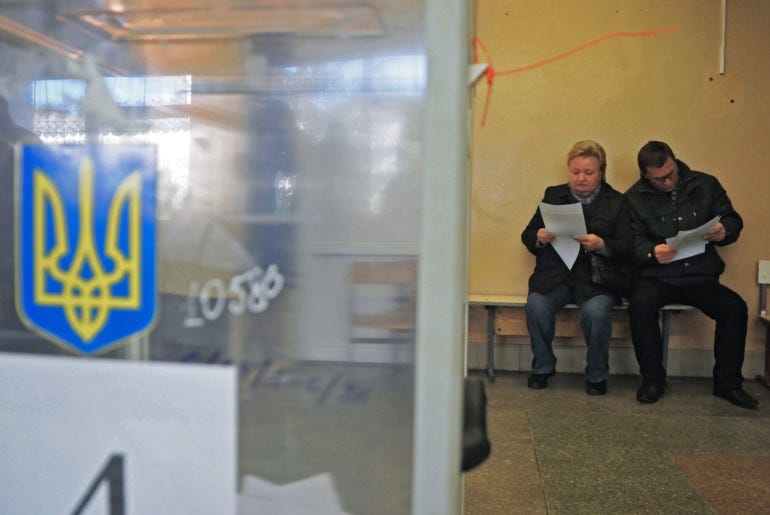
Ukrainian President Volodymyr Zelenskyy has said he is ready to hold elections in his war-torn country if the United States and other allies can provide the security necessary to ensure the vote can be held safely. The White House has been pushing for Ukraine to hold elections -- US President Donald Trump told Politico in an interview published on December 9 that “it’s time”-- even though Ukraine’s constitution doesn’t allow for elections during wartime. In a shift from previous statements, Zelenskyy told reporters on December 9 that he would push parliament to draft legislation allowing for elections during martial law. A vote could follow in 60 to 90 days once there are security guarantees in place to make sure voting would be safe for Ukrainians. “I’m asking now, and stating this openly, for the US, perhaps with our European partners, to help me ensure the security needed to hold elections,” Zelenskyy said. “I personally have the will and readiness for this,” he said. Zelenskyy’s comments come amid intense negotiations aimed at ending Russia’s all-out war on Ukraine, launched in February 2022. Ukrainian officials have been pushing back on a US-drafted peace plan that was seen as heavily favoring Russia. The possibility of holding elections has been regularly dismissed, with officials saying it would be impossible given daily Russian air strikes across the country, thousands of soldiers battling on the front lines, and millions of Ukrainians displaced. Opinion polls show most Ukrainians are against holding wartime elections, though with the last elections held in 2019 some want changes in the government to bring in fresh ideas. Widely popular, Zelenskyy’s support has slipped in recent weeks amid a major corruption scandal that led to the resignation of an influential adviser, Andriy Yermak - RFE/RL
France and Italy have been told by the EU’s statistics office that the financial guarantees needed to back a €210 billion financing package to Ukraine won’t increase their heavy debt burdens. Eurostat on Tuesday evening sent a letter, obtained by POLITICO, informing the bloc’s treasuries that the financial guarantees underpinning the loan, backed by frozen Russian state assets on Belgian soil, would be considered “contingent liabilities.” In other words, the guarantees would only impact countries’ debt piles if triggered. Paris and Rome wanted Eurostat to clarify how the guarantees would be treated under EU rules for public spending, as both countries carry a debt burden above 100 percent of their respective economic output. Eurostat’s letter is expected to allay fears that signing up to the loan would undermine investor confidence in highly indebted countries and potentially raise their borrowing costs. That’s key for the Italians and French, as EU leaders prepare to discuss the initiative at a summit next week. Failure to secure a deal could leave Ukraine without enough funds to keep Russian forces at bay next year. The Commission has suggested all EU countries share the risk by providing financial guarantees against the loan in case the Kremlin manages to claw back its sanctioned cash, which is held in the Brussels-based financial depository Euroclear. The letter is unlikely to change Belgium’s stance, as it wants much higher guarantees and greater legal safeguards against Russian retaliation at home and abroad.
Recording tonight from Odesa, I break down why talk of holding elections in wartime Ukraine is not just premature — it’s perilous. With millions displaced, basic security impossible to guarantee, and polling stations becoming tempting targets for Russian attacks, the practical and moral foundations of a free and fair vote simply do not exist. In this video, I explain why pushing ahead now would risk deepening divisions, undermining legitimacy, and handing Moscow exactly what it wants.
⬇️ Scroll down to watch the video.
Flyers have appeared in the Iranian capital, Tehran, offering lucrative contracts to men who join Russia’s war effort in Ukraine. The Russian Embassy in Tehran has said the advertisements -- which offer Iranian men aged 18 to 45 signing bonuses of up to $20,000 and monthly salaries of around $2,000 -- are fake. While the authenticity of the flyers has been contested by Moscow, Russia is known to have used shadowy networks to recruit thousands of foreigners to fight in Ukraine, including from the Middle East, Central Asia, and Cuba. RFE/RL’s Radio Farda called the WhatsApp number provided in the advertisements. The unidentified individual who replied said the flyers were part of an “official” Russian recruitment campaign and asserted -- without evidence -- that it was “coordinated” with the Iranian authorities. The flyers appearing in Tehran say the Russian Defense Ministry is recruiting for various roles, including soldiers, drone operators, and drivers. The advertisements offer high salaries and bonuses to recruits, including flights to Russia, free housing, medical care, and unspecified commissions. While the advertisements are targeted toward men, it does offer jobs to women with medical training. The Persian-language advertisements provide contact information, including an e-mail address, an Armenian WhatsApp number, and a Telegram channel. When Radio Farda contacted the WhatsApp number, its call was rejected. After sending a follow-up voice message requesting additional information, an unidentified individual -- who later described himself as a “simple admin” -- responded via a text message, claiming to be in Moscow. The unidentified individual said the flyers were part of an official Russian recruitment campaign in Iran. The individual also said the Iranian authorities were aware of the campaign.
The US has asked Thailand and Cambodia to “cease hostilities immediately” as border clashes extended for a third day, killing at least 10 people and displacing hundreds of thousands. The two nations must follow de-escalatory measures outlined in a peace accord brokered by US President Donald Trump in October, Secretary of State Marco Rubio said. Trump has also said that he would “make a phone call” to stop the fighting, which is the most serious escalation since clashes in July killed dozens of people. Both countries have blamed each other for re-igniting the fighting, which has seen air strikes and exchanges of artillery fire. The death toll over three days of hostilities stands at 10 - seven from Cambodia and three from Thailand. Thai officials said they evacuated more than 400,000 people, while Phnom Penh said 100,000 on the Cambodian side have been moved to shelters. Thailand’s defence ministry said Wednesday military actions were “limited in scope and employed as a last option”. Cambodia on the other hand accused Thailand of launching “aggressive military attacks” that targeted civilian institutions and “sacred cultural sites”, including historic temples along the disputed border. Also on Wednesday, Cambodia announced it was pulling out from the South East Asian Games that is being hosted in Thailand - BBC

All tourists will have to undergo a social media screening before being allowed entry into the US under new plans being considered by the country’s border force. The potential social media mandate being proposed by Customs and Border Protection (CBP) would apply to anyone visiting, whether they require a visa or not. According to a notice published in America’s federal register on Tuesday, foreign tourists would need to provide their social media from the last five years. There have been several reports of travellers already having been denied entry into the US over social media posts and messages found on their personal devices after President Donald Trump took office in January. This includes a French scientist who was turned away at the US border in March after messages “that reflect hatred toward Trump and can be described as terrorism” were found on his phone. Despite Mr Trump vowing to “restore freedom of speech” on online platforms and end “federal censorship” when he took office, he has found himself at the centre of various free speech rows since - Sky News
US President Donald Trump suggested he could extend his anti-drug military campaign in Venezuela to include targets in Colombia and Mexico, raising tensions across Latin America. The threats come as Washington looks to assert its dominance in the region in what the White House says is Trump’s version of the Monroe Doctrine. Critics, including members of the Republican Party, have questioned the legality of the strikes, with some saying they could amount to war crimes. Trump’s threats came shortly before senior administration officials, including the secretaries of state and defense, briefed members of Congress on their military campaign, a meeting that left many lawmakers dissatisfied with the government’s strategy - Semafor
Iceland has said it will not take part in the 2026 Eurovision Song Contest, after organiser the European Broadcasting Union (EBU) said Israel could participate in the event. The announcement comes a week after four other countries announced they were pulling out of next year’s Eurovision in protest against Israel’s participation. Spain, the Netherlands, Slovenia and Ireland all said they wouldn’t participate after the EBU, the body that runs Eurovision, met to discuss concerns about Israel’s participation, which is opposed by some countries due to its conduct of the Israel-Hamas war in Gaza. Dutch broadcaster AVROTROS said that the participation of Israel “is no longer compatible with the responsibility we bear as a public broadcaster.” “Culture connects, but not at any cost. What happened last year touches our boundaries. Universal values like humanity and a free press have been seriously violated and are non-negotiable for us...the independence and unifying nature of the Eurovision Song Contest can no longer be taken for granted,” said AVROTROS Director General Taco Zimmerman. - Euronews
A San Francisco woman gave birth in the back of a driverless taxi she had booked to take her to the hospital. The woman had ordered a Waymo driverless car to take her to UCSF Medical Center on Monday, but during the journey, she began to deliver the baby. Waymo said its Rider Support Team became aware of “unusual activity” inside the cab and called 911, but the woman reached the hospital first, having given birth by the time she did so. In a statement to WABC, the company said, “This is not the first baby to be born inside a Waymo vehicle. While it’s a rare occurrence... some of our newest riders just can’t wait to experience their first ride.” It noted that the car had been taken out of service for cleaning. In a separate statement to The San Francisco Chronicle, Waymo said it was “proud to be a trusted ride for moments big and small, serving riders from just seconds old to many years young.” It added, “We wish the new family all the best, and we look forward to safely getting them where they’re going through many of life’s events.” - The Daily Beast
The journals….