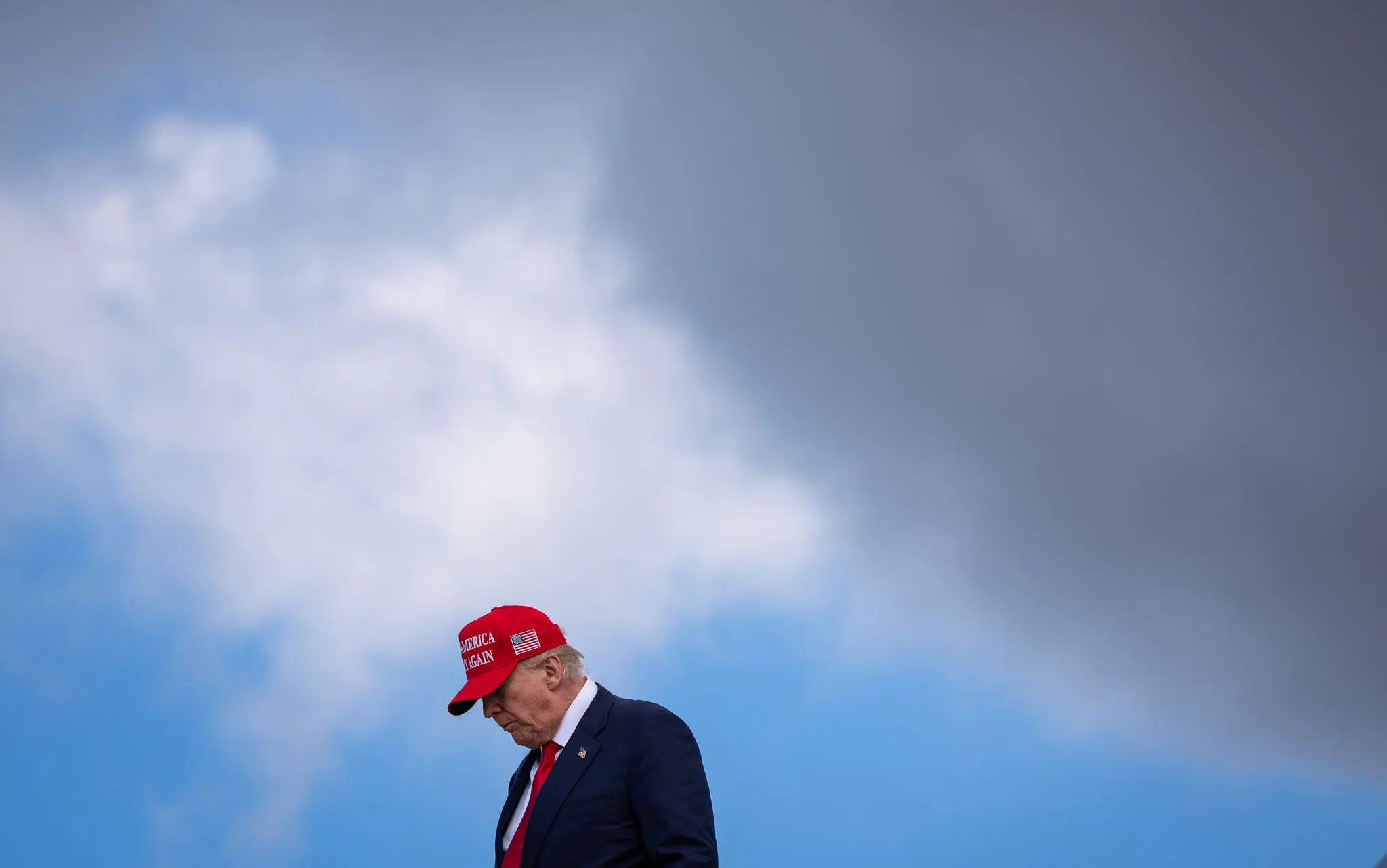
Donald Trump furiously lashed out at The New York Times for an article saying that he is showing signs of aging and has significantly reduced his workload in his second term. In a seething post on Truth Social on Wednesday, Trump attacked the physical appearance of a female journalist who co-wrote the report, Still, nearly a year into his second term, Americans see Mr. Trump less than they used to, according to an analysis of his schedule - with fewer public events on his schedule and he is traveling domestically much less than he did by this point during his first year in office, in 2017, although he is taking more foreign trips. He also keeps a shorter public schedule than he used to. Most of his public appearances fall between noon and 5 p.m., on average. And when he is in public, occasionally, his battery shows signs of wear. During an Oval Office event that began around noon on Nov. 6, Mr. Trump sat behind his desk for about 20 minutes as executives standing around him talked about weight-loss drugs. At one point, Mr. Trump’s eyelids drooped until his eyes were almost closed, and he appeared to doze on and off for several seconds. At another point, he opened his eyes and looked toward a line of journalists watching him. He stood up only after a guest who was standing near him fainted and collapsed. Here’s the full New York Times report.
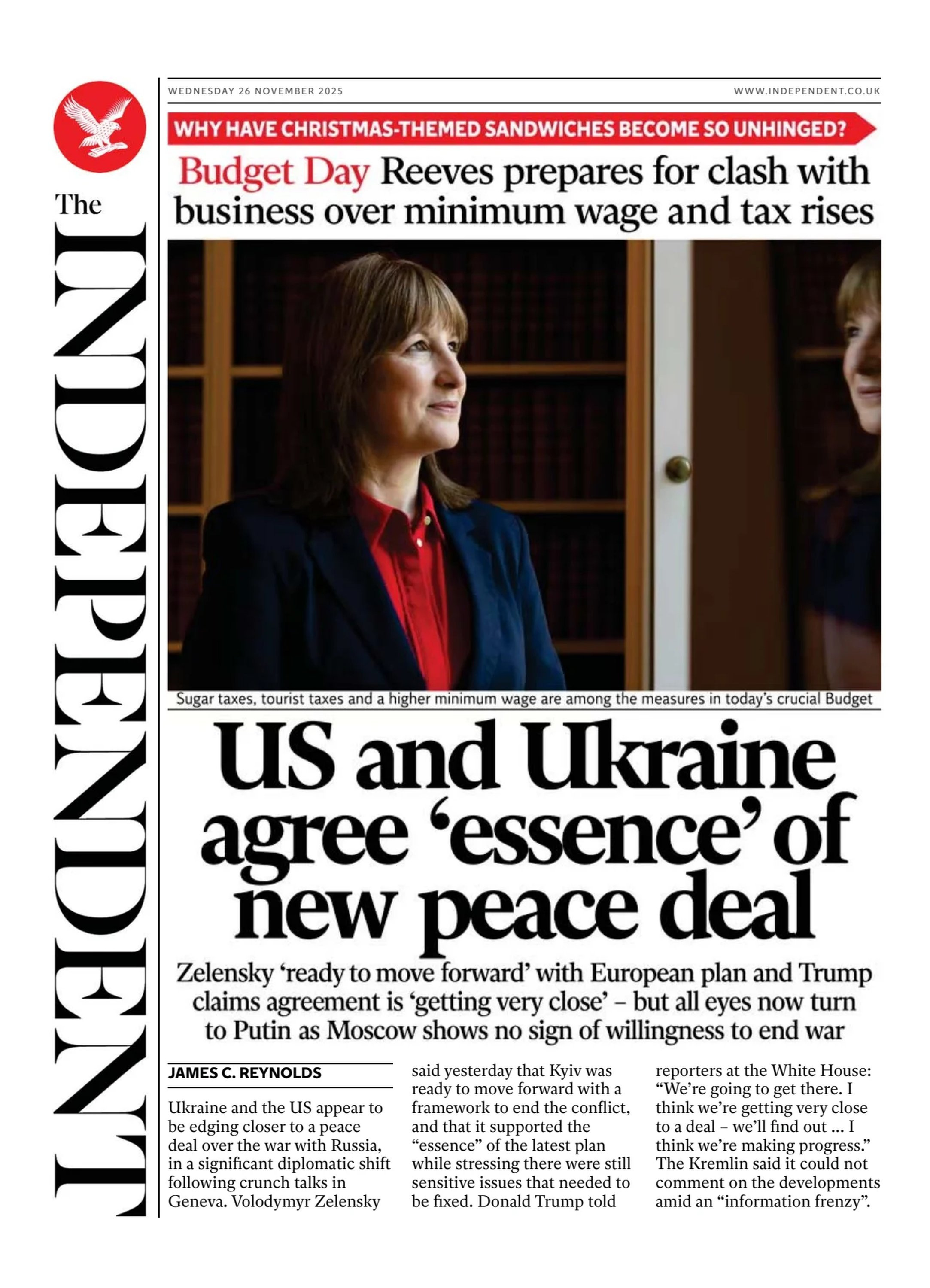
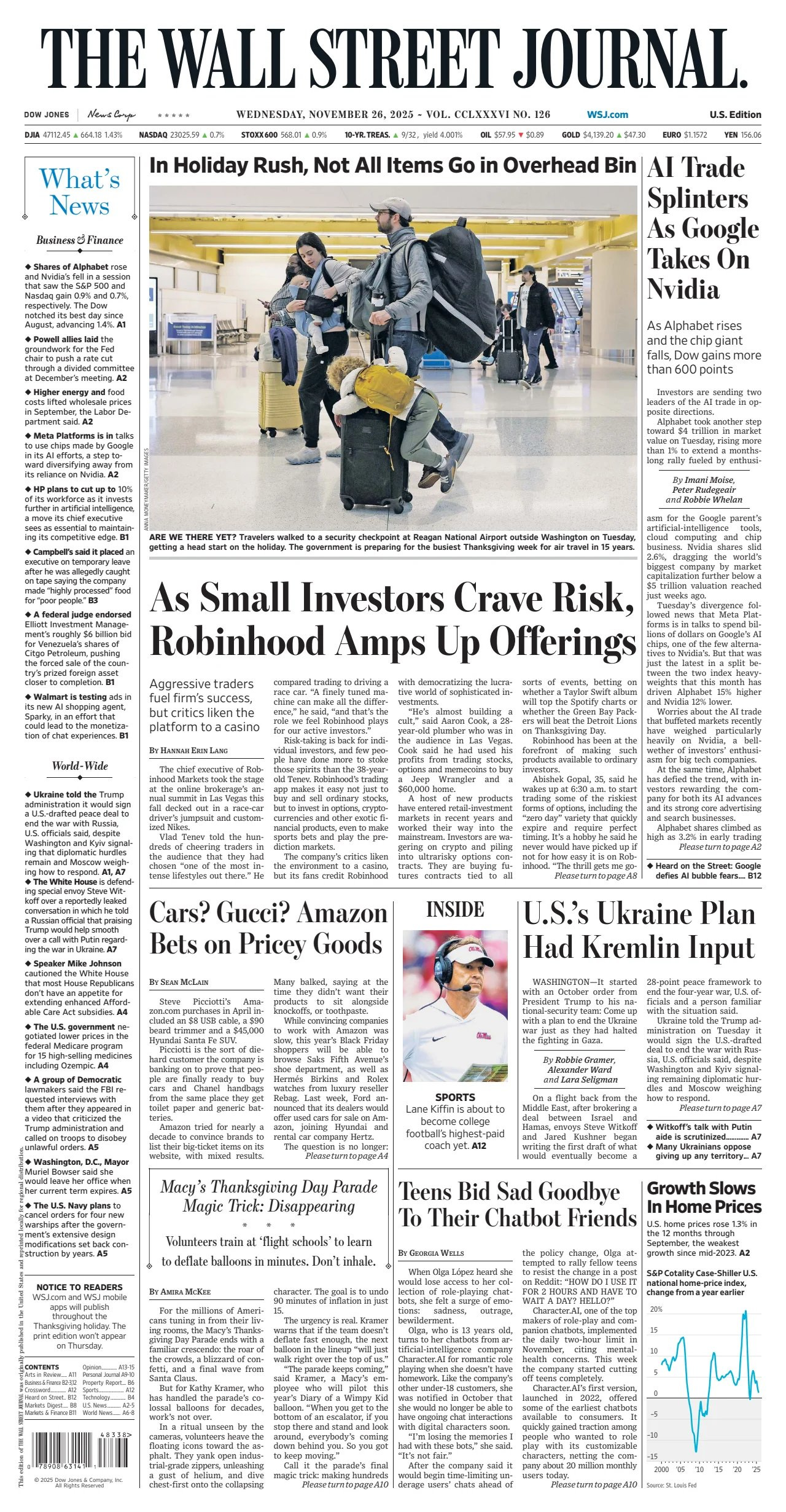
The White House’s lead envoy is heading to Russia for a sixth time as Ukraine fears a peace that heavily favors Moscow. A leaked phone call shows the US envoy advising a Kremlin official on how to sweet talk the White House. And Russia’s invasion -- now in its 46th month -- has pushed Ukraine’s beleaguered armed forces closer to the breaking point. There’s a lot that happened in the six days since a US-drafted peace proposal first leaked – not to mention the circumstances under which it was drafted. The 28-point plan jolted what until recently had been sputtering efforts to halt the Russian war, something that Trump had pledged to do within 24 hours of taking office in January.
A key figure missing from the pack of top national security officials crisscrossing the globe to achieve a Ukraine peace deal: Defense Secretary Pete Hegseth. But that sits fine with the White House, which is happy with his culture war attacks, made-for-TV images rallying the troops and online trolling of MAGA enemies. The Defense secretary has stayed silent on the surprising role of his subordinate, Army Secretary Dan Driscoll, who recently catapulted into the spotlight by leading surprise negotiations with Ukrainian President Volodymyr Zelenskyy in Kyiv and Russian advisers in Abu Dhabi. Hegseth, instead, has been stirring support from President Donald Trump’s base for authorizing an investigation into Sen. Mark Kelly, a former Navy captain, who told troops in a video that they can refuse illegal orders. The Pentagon leader — a former Fox News host who seems more at home railing against diversity programs than leading diplomatic consultations — has carved out an unorthodox political niche that has helped insulate him from criticism within the administration, at least for now - Politico
While Beijing has remained largely offstage during US President Donald Trump’s latest push to end the war in Ukraine, China still sees significant stakes in how any peace deal could reshape its strategic environment – from the global balance of power to post-war reconstruction opportunities, according to observers. A Trump-brokered peace plan to end the nearly four-year war, first reported last week, remains fluid, but the proposed settlement has reportedly been reduced to 19 points after the original 28-point draft was widely criticised by Ukraine and Europe as too favourable to Russia. China’s leverage lies less in the White House-led peace talks than in long-term reconstruction, the evolving US-China-Russia triangle and the military lessons it draws from the war, according to Li Lifan, an expert on Russia and Central Asia at the Shanghai Academy of Social Sciences. “China remains relatively calm on this issue, and I am confident Beijing can accept whatever arrangements are ultimately made,” he said. “The real question is whether the parties will take China’s interests into account, particularly in post-war reconstruction. That possibility remains.” Beijing’s interests were not covered in the newly revised peace plan, largely because reconstruction had not yet been addressed, he added. “Beijing is waiting for the right moment to participate,” he said, adding that China maintained crucial leverage in areas such as large-scale construction, influence over Russia and economic investment for Ukraine’s rebuilding.
There is little sign of peace in Ukraine, but trans-Atlantic diplomatic efforts to end the war are intensifying. Ukraine and its European allies are vying with Russia to sway US President Donald Trump in forging a deal. Can one be reached or will the war go on? Watch the analysis from: Chris Weafer - Chief Executive Officer at Macro-Advisory, a strategic consultancy focused on Russia and the Eurasia region; Anatol Lieven - Director of the Eurasia Programme at Quincy Institute for Responsible Statecraft; and - Yours Truly.
Thirty-six people have been killed and 279 others are missing after a ferocious blaze ravaged a housing estate in Hong Kong’s Tai Po neighbourhood, as scorching flames ripped through bamboo scaffolding on seven residential blocks. Another 29 people have been hospitalised, with seven in a critical condition, Chief Executive John Lee revealed in an early Thursday morning press conference at Prince of Wales Hospital in Sha Tin. The fire was first reported at 2.51pm on Wednesday and soon, huge plumes of dark smoke billowed high into the sky at the scene at Wang Fuk Court, with the flames quickly spreading to seven out of eight blocks in the estate. Police said that they had received multiple reports of people trapped in a building where the blaze started, with a man and a woman reportedly unconscious and suffering from burns. Footage from the scene shows bamboo scaffolding outside several flats of the building engulfed in flames, with burning sections of green scaffolding mesh falling to the ground - SCMP
South Africa reportedly expects Washington to exclude it from next year’s G20 summit when the US hosts the meeting. South African officials also told Bloomberg the White House could push for their country’s removal from the G20 altogether; Washington boycotted this month’s G20 gathering in Johannesburg — the first held in Africa — in a move that largely eclipsed the outcomes of the meeting. US President Donald Trump has turned sharply against Pretoria over what he alleges is the persecution of white South Africans. Experts have rejected this assessment. However, Trump has stayed the course, imposing tariffs that could cost South Africa hundreds of thousands of jobs at a time of soaring unemployment - Semafor
U.S. officials in West Virginia have suspended a school vaccination mandate Wednesday after a judge ruled that parents can cite religious beliefs to opt out of vaccines required for their children to attend classes. In issuing a permanent injunction in a lawsuit filed in June, Raleigh County Circuit Judge Michael Froble on Wednesday said children of families who object to the state’s compulsory vaccination law on religious grounds will be allowed to attend school and participate in extracurricular sports. Froble ruled that a state policy barring parents from seeking religious exemptions violates the Equal Protection for Religion Act signed into law in 2023 by then-Republican Gov. Jim Justice. West Virginia was among just a handful of states that granted only medical exemptions from school vaccinations when Republican Gov. Patrick Morrisey issued an executive order in January allowing religious exemptions.
The journals….