World Briefing | Commentary
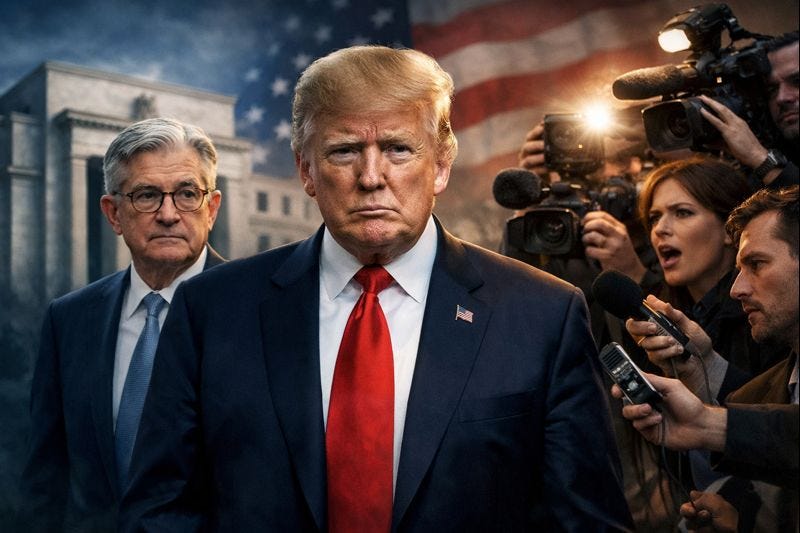
When Jerome Powell, chair of the Federal Reserve, disclosed that the Fed has been served with grand jury subpoenas from the Department of Justice, it marked a stunning escalation in Donald Trump’s campaign against independent institutions.
Powell - who as one pundit described as “the only guy in Washington left with any balls” - didn’t flinch. In a recorded statement, he framed the threat for what it is: retaliation for the Fed setting interest rates based on its best judgment of the public good - not presidential preference. In other words, an attempt to punish institutional independence.
This is not an isolated episode. The media has frequently been branded “fake news” by Mr. Trump. Congress increasingly resembles a staffing arm of the White House. Loyalists dominate the Supreme Court. One by one, traditional checks and balances are being weakened, pressured, or hollowed out.
At street level, the strain is visible. Disturbing videos from Minneapolis and other U.S. cities show tense confrontations between ICE, Border Patrol, and civilians — unfolding amid heightened fear following the recent fatal shooting of a woman in Minneapolis. Conversations with Americans at home and abroad reveal a shared mood: shock, disbelief, and unease.
There’s a reason many are now referencing the film Civil War. It’s an uncomfortable watch - and it was meant to be. While no one is predicting collapse, the parallels are becoming harder to dismiss: deep distrust, competing realities, the state pouncing on civilians, and officials denying what is plainly visible on video.
That unease only deepens when senior figures like U.S. Secretary of Homeland Security, Kristi Noem, go on CNN and tell Jake Tapper the opposite of what the footage clearly shows - without consequence.
This is not about panic. It’s about trajectory. And tonight, the direction is unmistakably troubling.
When Donald Trump repeatedly brands the U.S. media as “fake news,” it is not political theatre - it is a calculated assault on the Fifth Estate, one of the last remaining checks on power in democratic societies. My video below on why the press must stop absorbing the blows and start defending its role openly and unapologetically - and why readers who value independent, clear-eyed analysis need to actively support it.
👇 Watch the video below
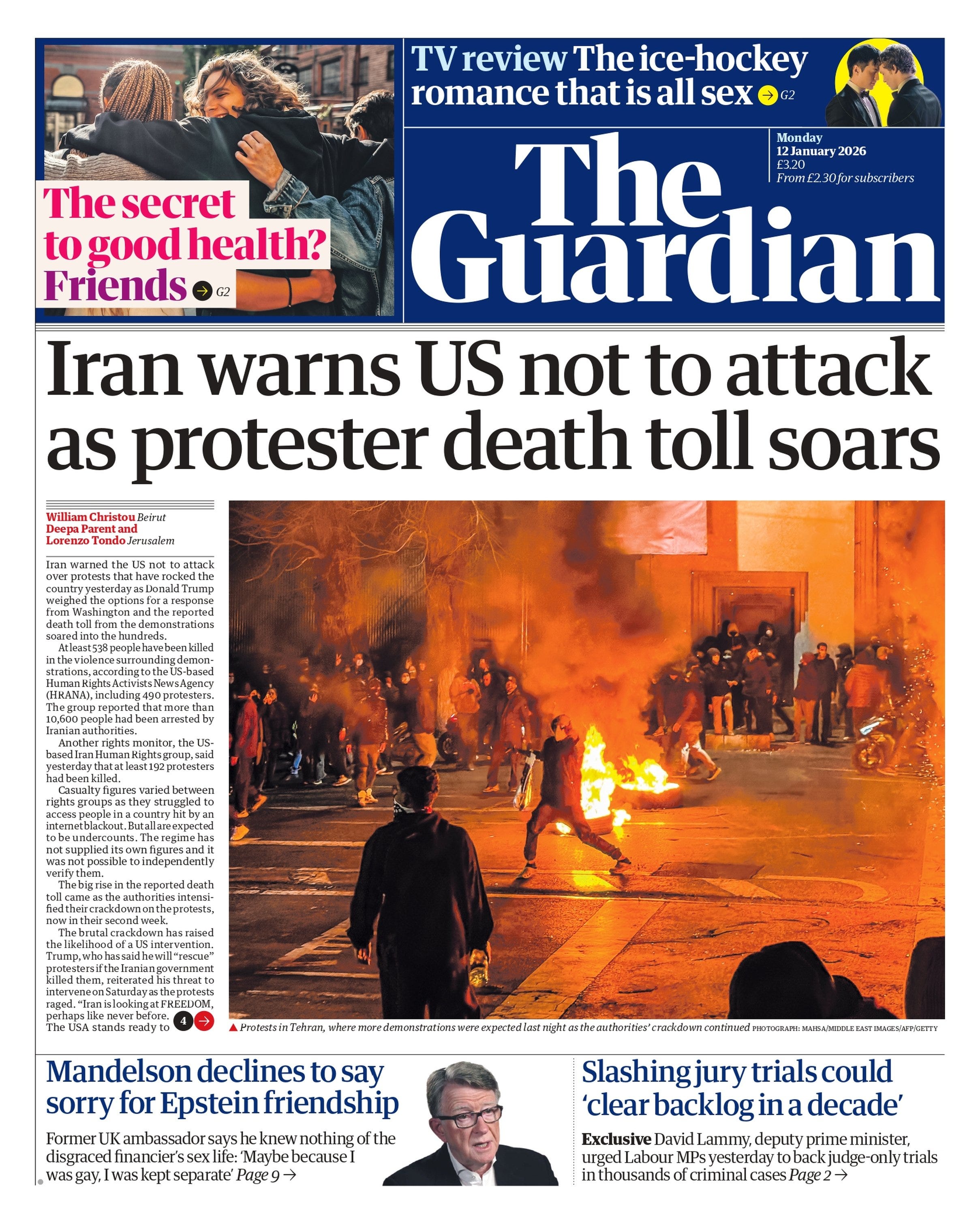
The U.S. Federal Reserve Chair Jerome Powell said the US central bank had been served grand jury subpoenas from the Justice Department threatening a criminal indictment, a dramatic escalation of the Trump administration’s attacks on the institution. In a forceful written and video statement released Sunday evening, Powell said the action was related to his June congressional testimony on ongoing renovations of the Fed’s headquarters. But he said the move “should be seen in the broader context of the administration’s threats and ongoing pressure….The threat of criminal charges is a consequence of the Federal Reserve setting interest rates based on our best assessment of what will serve the public, rather than following the preferences of the president,” Powell said. “This is about whether the Fed will be able to continue to set interest rates based on evidence and economic conditions — or whether instead monetary policy will be directed by political pressure or intimidation.” In an interview with NBC News on Sunday, President Donald Trump denied having any knowledge of the DOJ’s investigation into the central bank. Powell said the Fed was served the subpoenas on Friday. The unprecedented move by the Trump administration marks an escalation of the president’s longstanding feud with the central bank’s chair. The president has repeatedly called for aggressive rate cuts, arguing the Fed should be acting to boost housing affordability and ease the government’s borrowing costs - Bloomberg
The University of Tehran has issued a notice announcing the closure of all undergraduate student dormitories for at least 10 days. According to the Tasnim news agency, which is close to the Islamic Revolutionary Guards Corps, the closure will begin at 10 a.m. on January 22 and will continue until February 2. According to the Tasnim report, students have been asked to vacate their dormitories as soon as possible. Student dormitories have been one of the protesters’ main hubs over the past two weeks. This latest move has reportedly been carried out in coordination with Iran’s Science Ministry and the security agencies - RFE/RL
Footage is coming out of Iran showing funerals in Tehran for those killed during the recent protests. Families of the victims can be seen chanting slogans against Iran's supreme leader, and vowing to avenge their loved ones' deaths.
Iran’s Foreign Minister Abbas Araghchi says that his government is currently “studying” proposals sent by the US and that communications remain open between him and US Special Envoy Steve Witkoff. He says US President Donald Trump’s warning against Tehran of military action if protests turned bloody motivated “terrorists” to target protesters and security forces to invite foreign intervention. Trump has repeatedly threatened to intervene in Iran, warning he has “very strong options” as the US military studies the situation while his administration is in contact with Iranian opposition leaders - Al Jazeera
2025 was the deadliest year for civilians in Ukraine since 2022, with a total 2,514 civilians killed and 12,142 injured, according to the UN Human Rights Monitoring Mission to Ukraine. This represents a 31 per cent increase from 2024, and a 70 per cent increase from 2023. Civilian casualties from short range first-person-view drones increased by 120 per cent in 2025, causing the death of 577 civilians and injury of 3,288. A massive increase in the use of long-range weapons by the Russian Federation starting in June 2025 also caused a massive increase in civilian harm in urban areas across Ukraine, including in areas far from the frontline. Attacks by Russian armed forces on energy infrastructure in Ukraine also resumed in 2025, and are now power outages lasting for multiple days in some areas, threatening other interlinked infrastructure systems such as water and heating. As winter temperatures drop, civilian health is at heightened risk.

Britain and Germany are discussing how to bolster NATO’s military presence in the Arctic, in a bid to deter Russian aggression and fend off US President Donald Trump’s threat to take over Greenland. Washington’s rhetoric over a potential assault on the Danish territory has been given greater credence by its capture of Venezuela’s president, and European leaders are scrambling to respond. They want to show that they have the Arctic’s security under control, Bloomberg reported, and are seeking to undermine Trump’s arguments for annexing Greenland. The Arctic is of growing strategic importance, both as a source of minerals and, as the seas warm and ice melts, as a shipping route from the Atlantic to the Pacific - Semafor
Moldovan President Maia Sandu said she would vote to reunify with Romania if the issue ever goes to a referendum, saying it was becoming harder for her country to “survive” on its own. With a population of about 2.4 million people sandwiched between Romania and Ukraine, Moldova has become a target for Russian hybrid warfare, including disinformation and election manipulation. “If we have a referendum, I would vote for the unification with Romania,” Sandu, who leads the pro-European government in Chișinău, told British podcast The Rest is Politics. “Look at what’s happening around Moldova today. Look at what’s happening in the world,” she explained. “It is getting more and more difficult for a small country like Moldova to survive as a democracy, as a sovereign country, and of course to resist Russia.” Moldova was part of Romania from 1918 until 1940, when it was annexed by the USSR, before declaring independence in 1991 after the fall of the Iron Curtain. Polls show around two-thirds of Moldovans oppose reunification, while support is traditionally higher in Romania - Politico
Donald Trump will meet with Venezuelan opposition leader Maria Corina Machado on Thursday, according to White House spokesperson Karoline Leavitt. The Venezuelan opposition figure has played little role in debates about the country’s future since the US abducted Venezuelan President Nicolas Maduro earlier this month, with Trump expressing doubt that she has the support necessary to govern Venezuela. Machado said last week that she had not spoken to Trump since October. Instead, Maduro’s former vice president, Delcy Rodriguez, has assumed the role of interim president under the threat of further military attacks if her government does not submit to US demands on a range of issues. The Venezuelan government said on Monday that it had freed dozens of political prisoners, some of whom were jailed during protests against Maduro following the disputed 2024 election. Machado has sought to cultivate close ties with the Trump administration, dedicating her Nobel Prize to Trump and, more recently, stating that she would like to share the prize or give it to him outright. But, the Norwegian Nobel Institute said in a statement last week that the peace prize cannot be revoked, transferred, or shared, declaring that “the decision is final and stands for all time” - Al Jazeera
Uganda's opposition leader told AFP on Monday that he would call for protests if President Yoweri Museveni rigs this week's election and said he would welcome an intervention by the United States. More than 20 million people are registered to vote in the east African country on Thursday, with 81-year-old Museveni widely expected to continue his four-decade rule thanks to his near-total control of the state and security apparatus. His main opponent is singer-turned-politician Bobi Wine, 43 -- real name Robert Kyagulanyi -- who is taking a second run at the presidency after his 2021 campaign was met with violent repression and alleged rigging. “If General Museveni rigs the election, we shall call for protests,” Wine told AFP at his home in the capital Kampala. “We’ve told the people not to wait for our instruction,” he added. The United Nations and Amnesty International are among the watchdogs accusing Uganda’s government of repression ahead of the polls, including hundreds of arrests of Wine’s supporters - France 24
The journals….