ODESA - Americans vote today, but the audience is global. From Riyadh to Ottawa, Taipei to Bangkok, Seoul to Tokyo, governments will be watching the returns for an answer to one question: did Congress flip?
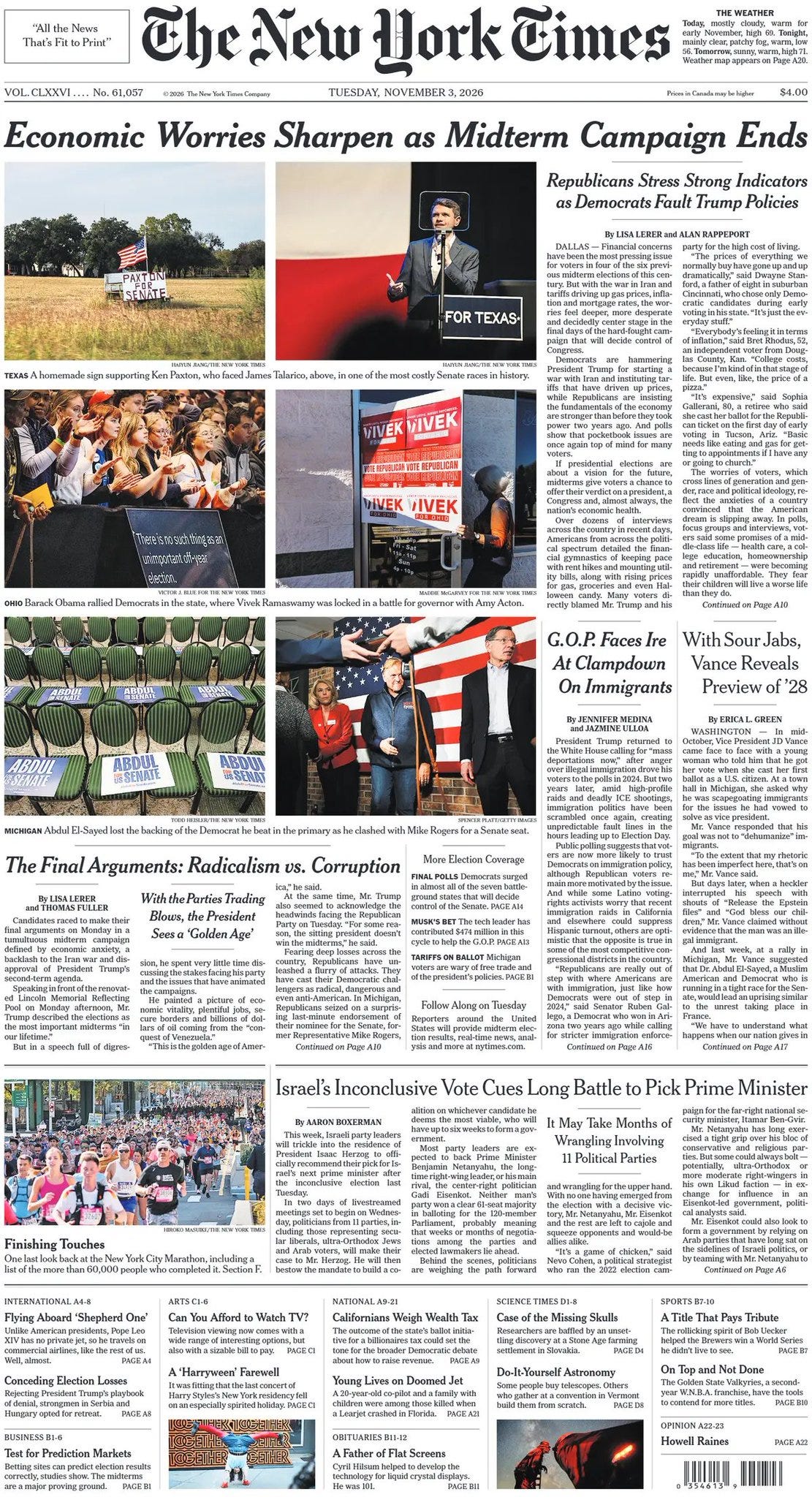
It’s also a rare midterm shaped by what America does abroad. Inflation tops voters’ worries, but foreign policy is feeding it. The war with Iran has pushed up fuel prices. Some 86% of Americans say it’s bad for their cost of living, and nearly seven in ten say it hasn’t been worth fighting. Trump’s tariffs will cost the average household about $920 this year. As Jonathan Capehart points out, the question is whether 2026 becomes a bookend to 2006, when Democrats took both chambers in a president’s second term amid anger over Iraq.
Republicans enter election day with 218 House seats, plus an independent who caucuses with them, against 214 Democrats. Two seats are vacant. In the Senate, Republicans hold a 53–47 majority. Democrats need a net gain of three seats to take the House and four to take the Senate. Forecasters favour a Democratic House takeover, but the Senate remains a tougher proposition. Numerous state and local offices are also up for grabs.
Let’s be clear about what a flip does and doesn’t do. Foreign policy is still run from the Oval Office. Trump has already said he’ll become “Mr. Veto,” and overriding a veto takes two-thirds of both chambers.
What changes is oversight. A Democratic House gets subpoena power. It could demand notes of the president’s conversations with the Kremlin and call officials to testify. It could dig into the dealings of Jared Kushner and Steve Witkoff with Saudi Arabia, Russia and the Central Asian republics. A Democratic Senate would control ambassadorial confirmations. War-powers votes on Iran would gain teeth, even with a veto waiting. On Ukraine, support on the Hill has always been bipartisan, and a new Congress would say so louder.
Then there’s the power of the purse. A new majority could cut off, condition or boost foreign assistance, security funding and weapons transfers, and restrict money for ongoing military deployments or specific conflicts. Spending bills still need both chambers and a presidential signature. But they are must-pass, and that gives Congress real leverage, veto or no veto.
That matters, because without checks and balances, Trump’s fascination with strongmen, Vladimir Putin above all, goes unchallenged. More than once, a pledge to Kyiv has evaporated after a phone call from the Kremlin. In October 2025, Putin rang Trump on the eve of Zelensky’s White House visit, and the Tomahawks Ukraine hoped for were suddenly off the table. That pattern should worry not just Ukraine, but every ally that depends on an American promise.
Impeachment? It’s clearly on the Commander-in-Chief’s mind. In January, he told House Republicans at their policy retreat in Washington: “You gotta win the midterms… they’ll find a reason to impeach me. I’ll get impeached.” The House can impeach with a simple majority. Removal is another matter: it takes 67 senators, which only happens if Republicans turn on him in numbers. Is this the beginning of the end? Too early to say.
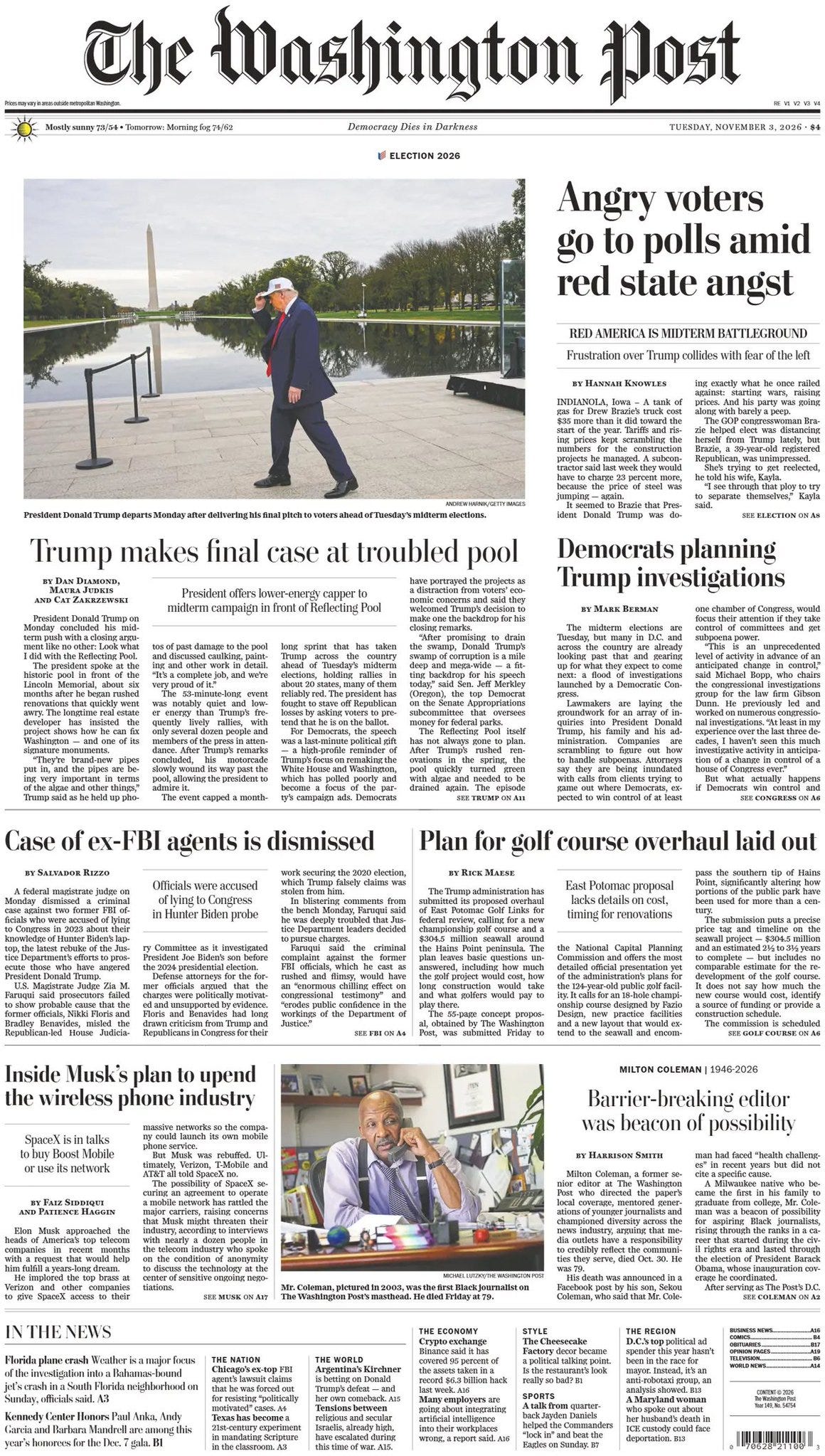
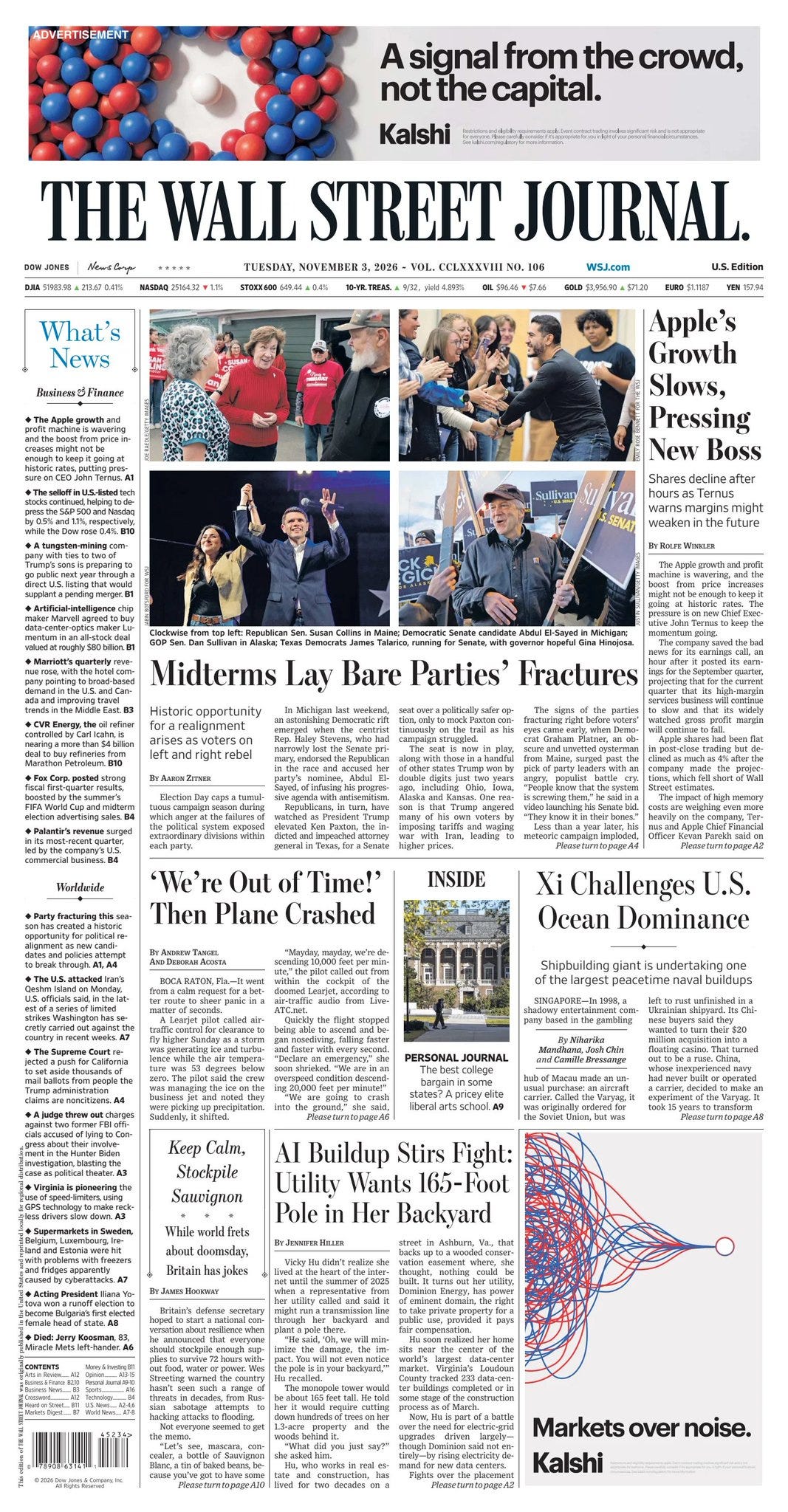
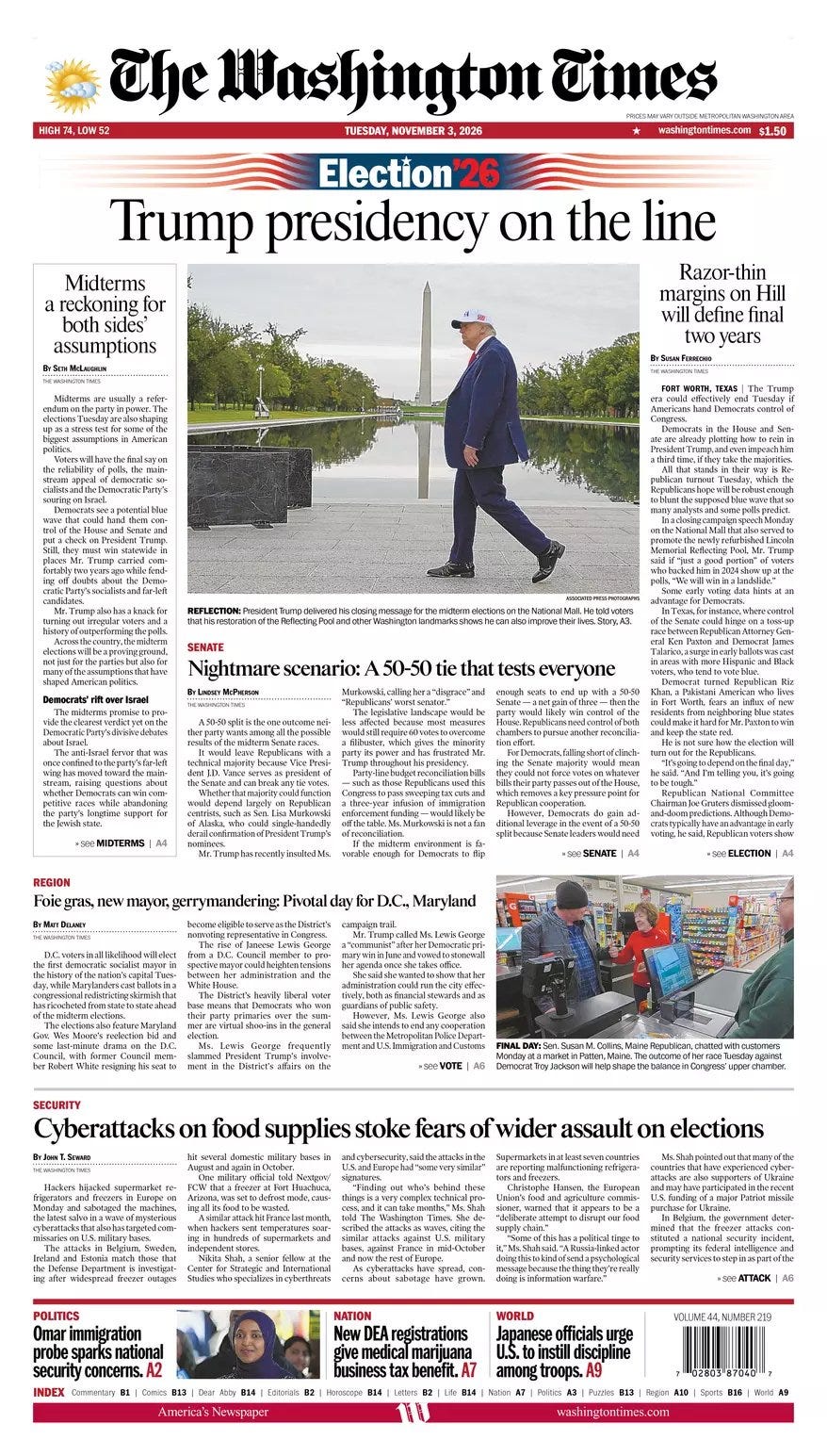
Trump’s closing argument didn’t help. On election eve, he stood at the Lincoln Memorial Reflecting Pool and spent much of his speech on pipes, algae and grass, even joking about renaming it the “Trump Reflecting Pool.” He didn’t get to the election until more than 20 minutes in. The Wall Street Journal reports it frustrated Republicans, including some of his own White House advisers. Off script, out of touch, and all about him. Whether his base turns on him remains to be seen.
Meanwhile, allies aren’t waiting.
Take Canada. As one Ottawa political scientist told Global News, Trump “has made Canada into an enemy,” and Democrats in Michigan and Maine are now campaigning against his tariffs as a tax on American shoppers. But Ottawa shouldn’t expect quick relief. The steel, aluminum and auto tariffs were imposed by executive order, and a Democratic Congress can do little to undo them. Trump could even blame Canada if Republicans lose. No wonder Ottawa is diversifying trade and diplomatic outreach rather than waiting.
Taipei will be watching just as closely. A $14 billion US arms package for Taiwan remains on hold, despite bipartisan pressure from Congress. Trump has called it a “very good negotiating chip” with Beijing. A Democratic-controlled Congress could press harder for the weapons to be delivered and scrutinise any concessions to China. But with Trump still in the White House, Taiwan has little choice but to hedge. No election result can guarantee that America will come to its defence.
Closer to home, Ukrainian President Volodymyr Zelensky flew to Istanbul over the weekend and brought President Recep Tayyip Erdoğan back to the centre of peace efforts. Zelensky then told CNN Türk he is ready to meet Putin in Turkey if Erdoğan can arrange it. Indeed, the Turkish leader has Putin, Trump and Kyiv on speed dial and a direct stake in Black Sea security. With Washington's direction uncertain, Kyiv is wisely keeping another diplomatic channel open.
It matters, because a distracted, divided superpower does the Western alliance no good. Overnight Sunday, supermarket fridges and freezers were hit in at least six EU countries and beyond. Nobody has claimed responsibility, and investigators have yet to identify the perpetrators. But as I told Sky News last night, the attacks bear the hallmarks of the kind of disruption we've come to associate with Moscow. Here in Odesa, one chain has already taken its refrigerators offline as a precaution. And today, after another night of Russian strikes, we were without power for most of the day. Putin prods and prods until he finds soft tissue. What’s needed is a steel wall. Right now, he isn’t seeing one.
Watch my Sky News interview below.
News Briefs
The European Commission will review how ready supermarkets are for cyberattacks, after refrigeration systems failed in dozens of stores across at least six EU countries on Monday: Belgium, Luxembourg, Sweden, Ireland, the Netherlands and Estonia. Some retailers saw fridge temperatures spike as high as 50°C. Agriculture Commissioner Christophe Hansen told POLITICO the issue will go to the Commission’s Security College, warning that Europe’s food supply chain must be ready for “new and evolving threats.” It follows similar attacks in France in October, when hackers appeared to trigger defrost cycles remotely to spoil food. – POLITICO
The US struck Iran’s Qeshm Island on Monday, the latest in a series of limited strikes Washington has carried out quietly for weeks, even as Trump talks up a diplomatic deal, the Wall Street Journal reports. Iranian state media reported five rapid explosions. US officials describe the strikes as defensive, aimed at stopping Iran from attacking shipping in the Strait of Hormuz, which has been largely blocked since the war began in late February. The attacks haven’t been announced, to avoid signalling a return to full-scale combat. – WSJ / France 24
Washington is already sketching out life after a Democratic takeover. Forecaster Nate Silver told Ezra Klein a sweeping Democratic win could make Trump a “super-lame duck” and kick off the race to succeed him early. A clear GOP defeat could also dent JD Vance’s 2028 hopes. Democrats are preparing investigations, and a White House official told Reuters the administration has spent months planning its defence, including where Trump could push the limits of his authority. – Semafor
Trump’s election-eve speech at the Lincoln Memorial Reflecting Pool, the finale of a 20-state, 32-day tour, opened with 17 minutes on pipes, drainage and algae before he reached the economy. He then moved on to the White House lawn. The Wall Street Journal reports that Republicans, and some of Trump’s own advisers, were exasperated he didn’t focus on the cost of living, with GOP operatives bracing for heavy losses. – The Daily Beast / WSJ
The US will host working-level talks between Ukraine and Russia in Abu Dhabi on November 10–11, envoy Steve Witkoff announced, covering post-war security, de-escalation and humanitarian issues. Witkoff and Jared Kushner are expected to lead for Washington, per Reuters. US negotiators will also meet European, EU and NATO officials in Brussels this week on security guarantees for Ukraine. The Kremlin has not confirmed the date. – The Moscow Times
Russia launched heavy overnight strikes across Ukraine, killing dozens and forcing a medical facility to evacuate, as ballistic missile alerts rang out nationwide. Moscow’s mayor said nearly 500 drones heading for the capital were shot down. The escalation follows the end on Sunday of a rare local ceasefire in Kherson. Within hours, Russia struck a village in Zaporizhzhia region, killing 29.
The journals…