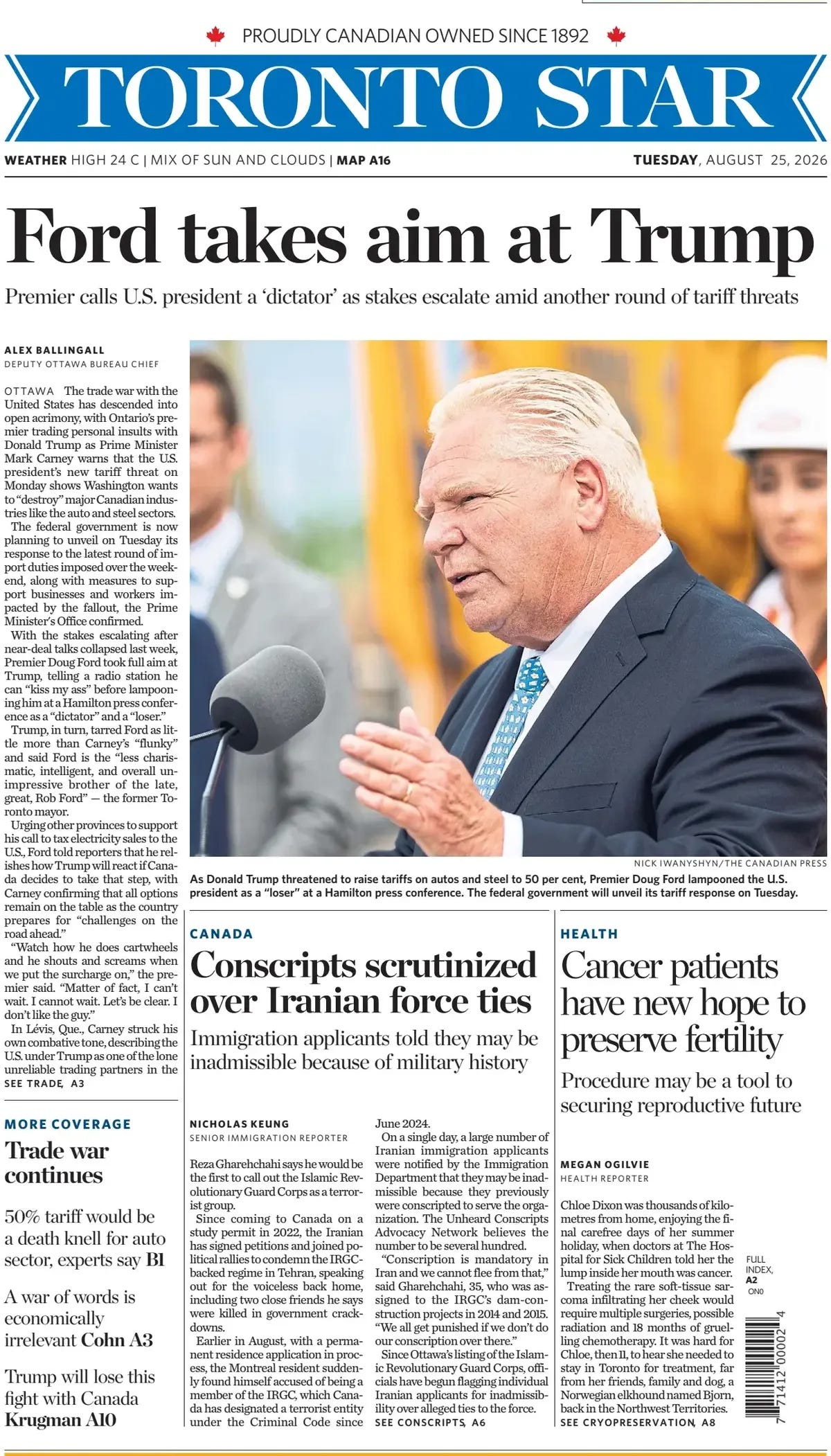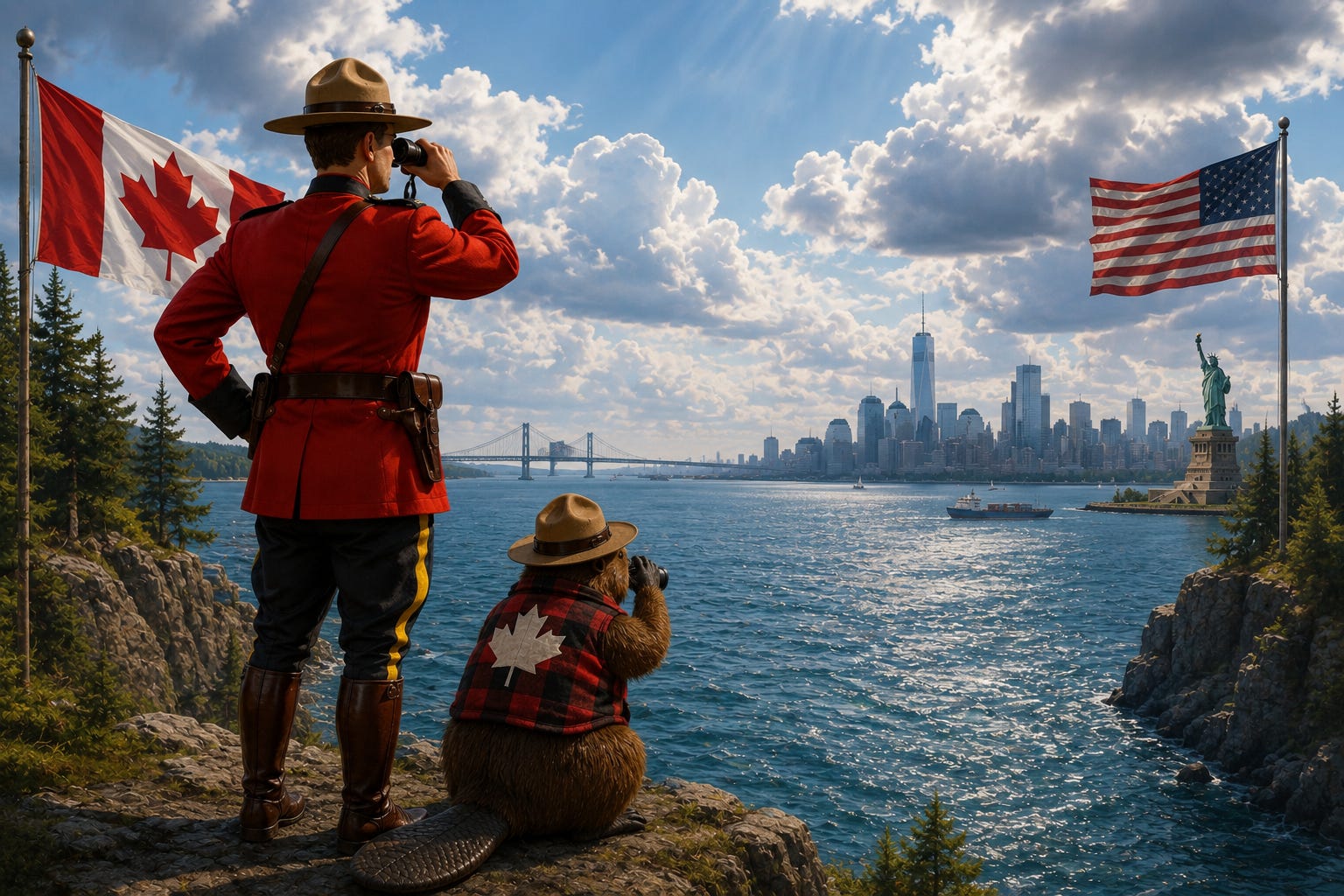
President Donald Trump said Tuesday that he is considering changing the name of Lake Ontario to “Lake America” as the trade war between the United States and Canada intensifies. Such a change would be reminiscent of the Republican president’s unilateral action last year by executive order to rename the Gulf of Mexico to the Gulf of America. The United States and Canada are locked in a trade dispute, with Canada expected to announce retaliatory measures Tuesday. That’s in response to the Trump administration enacting 50% tariffs on $20 billion of Canadian goods over the weekend after talks between the countries broke down. “The United States is giving serious consideration to changing the name of Lake Ontario to Lake America in that we don’t expect to doing much business with Ontario any longer,” Trump said Tuesday on social media. Ontario is Canada’s most populous province and is home to the country’s auto industry. The rhetoric between the two countries is escalating, with Trump telling Canadian leaders Monday to “fall in line” or face consequences “far WORSE” than existing tariffs. Prime Minister Mark Carney has accused Washington of trying to subordinate Canada. Trump also threatened new 50% tariffs on Canadian vehicles, auto parts and steel, while Carney said U.S. trade demands showed that Washington wanted to “destroy our major industries,” including autos, steel and aluminum - AP
The US cancelled planned military exercises with South Korea just weeks after scaling back separate drills with Seoul’s forces, amplifying worries in Asia over American support. The latest pullback was because of limited availability of US troops as a result of shortages caused by the Iran war; US President Donald Trump curtailed previous exercises in part over South Korea’s lack of support for the conflict. Though the two countries insist they remain close partners, US allies in the region have voiced alarm over the moves, which analysts say raise questions over American commitment to seeing off a rising China. Beijing, for its part, is reportedly completing construction of an artificial island in disputed waters of the South China Sea - Semafor
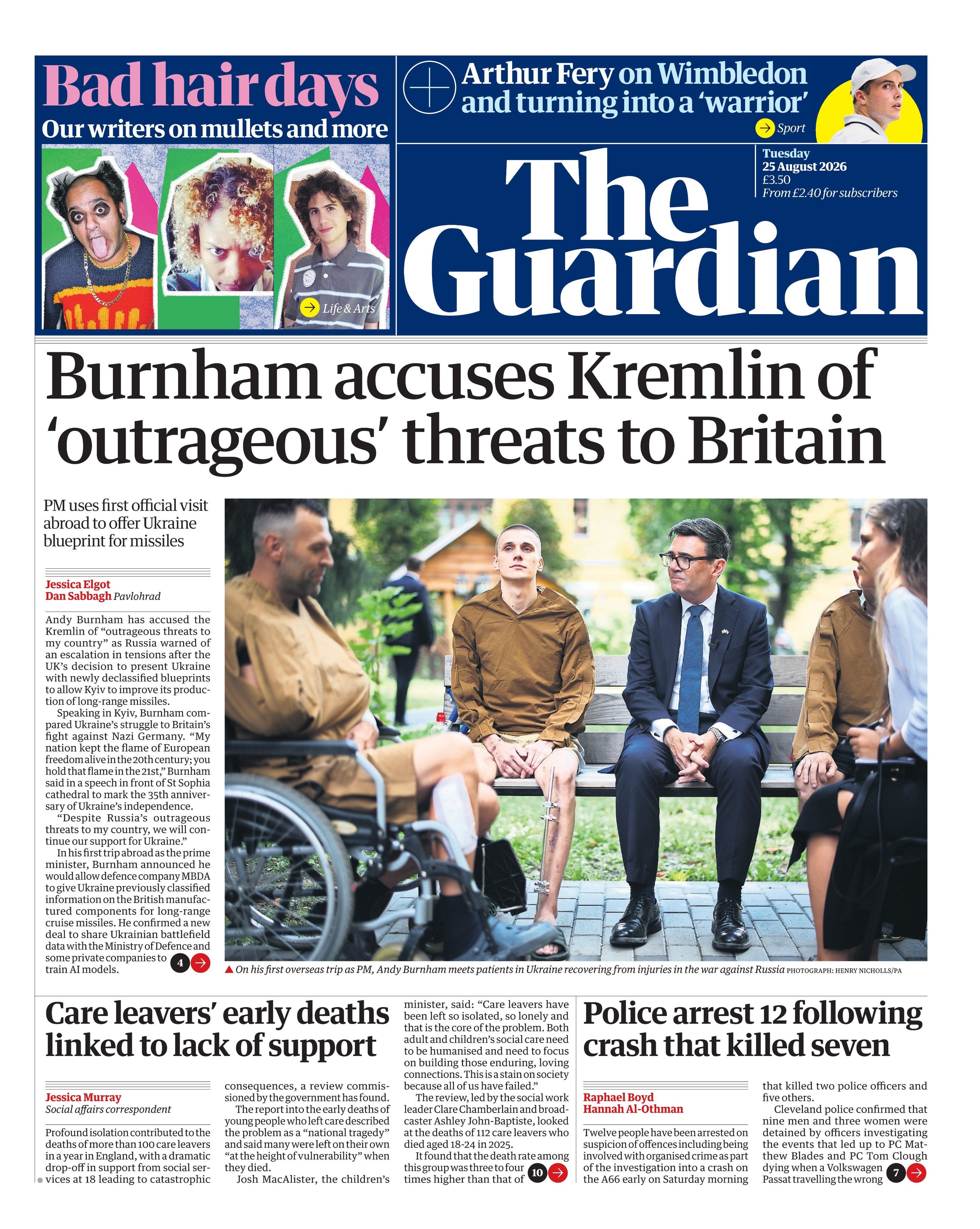
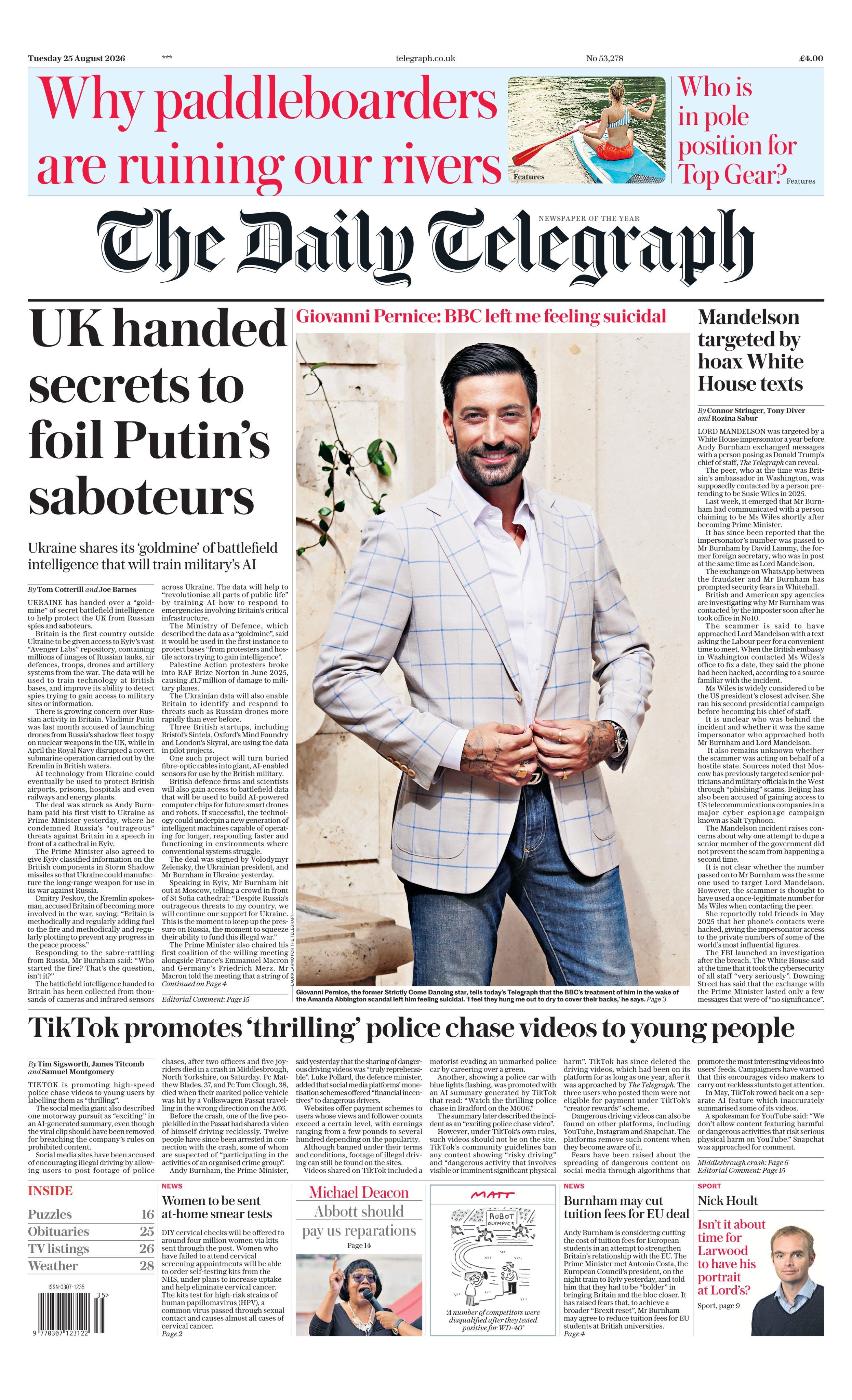
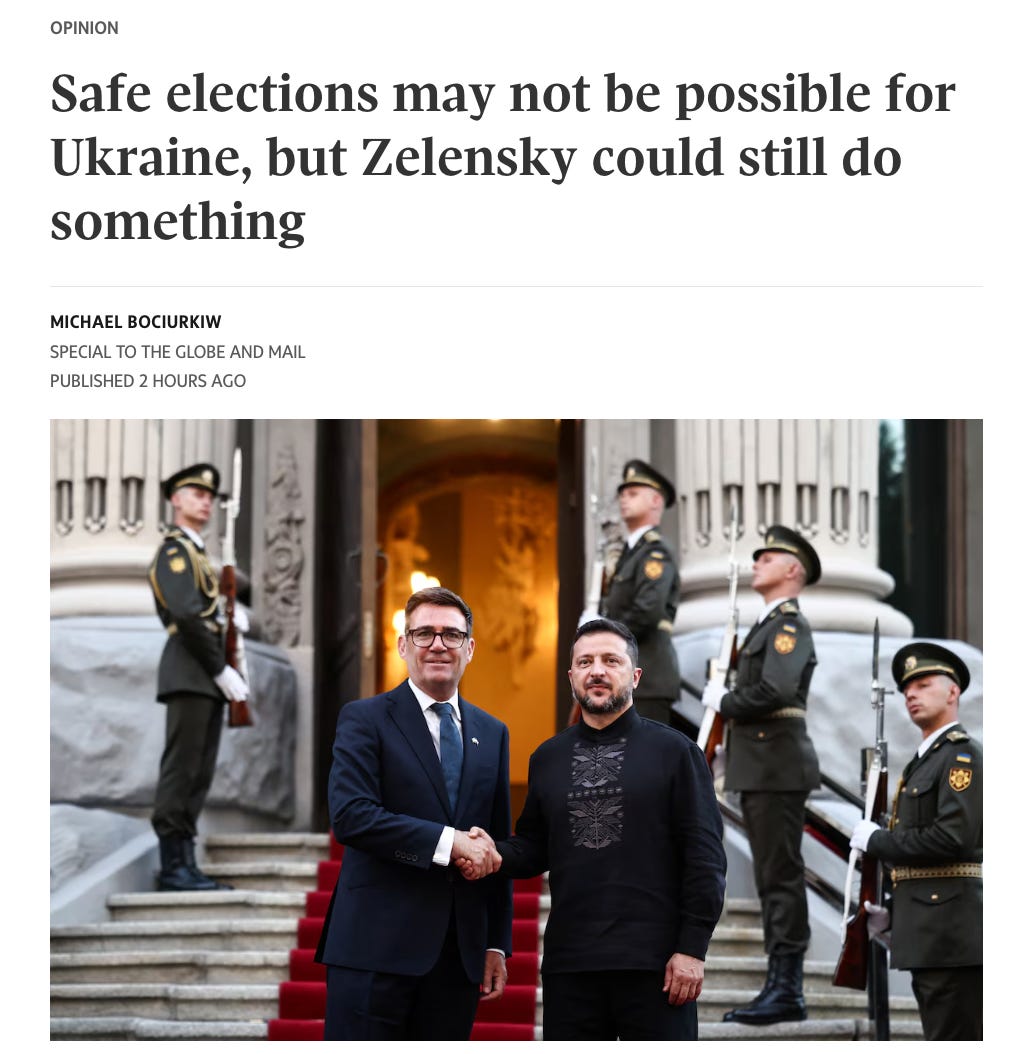
Andrei Fedorov, an adviser to the Kremlin, says there might be a “semi-military” response against UK drone factories by “unknown sources” over the sharing of blueprints for British-made cruise missile components. His comments on BBC Newsnight come as UK Prime Minister Andy Burnham says he plans to travel to the US next month with European leaders to lobby US President Trump on Ukraine’s defence needs. He said that while the details were not “fully confirmed”, it is “likely” he will go. The trip would be his first to the US since becoming prime minister in July. “Leaving today, I’m quite clear what I need to do in the next few weeks,” he said following his official visit to Ukraine on Monday, during which he promised to continue pressuring Russia. The UK has also agreed to hand over blueprints for British-made components for the Scalp missile, a French version of the UK’s Storm Shadow cruise missile. The blueprints will allow Ukraine to produce the long-range weapon domestically. Fedorov, who is Russia’s former deputy foreign minister, said Putin was facing “serious” pressure “to undertake certain measures against UK”. Asked on BBC Newsnight where the pressure was coming from, Fedorov responded, “public opinion polls, it’s coming from journalists, from mass media”. Asked what a “semi-military” response might look like, Fedorov said “it could take the form of something might happen with enterprises, with factories which are producing drones for Ukraine.” - BBC
Ukraine faces a €23 billion hole in its defense budget this year, leaving Kyiv scrambling for cash to fight Russia even as Western leaders gathered in the capital to mark the country’s independence day and pledge ongoing support. The money is needed not only for weapons and air defense, but also to pay soldiers, support the families of those killed and ensure Ukraine has the supplies it needs to start 2027. The funding gap originated after the defense ministry brought forward spending originally planned for the second half of the year, while the EU’s €90 billion loan was delayed by roadblocks from Hungary. “At the beginning of the year, decisions were made at the ministry to use in the first half of the year funds that were intended to be disbursed in the second half,” President Zelensky said during a meeting with reporters on Saturday. The shortfall comes on top of €30 billion in funding Europe has already pledged to Ukraine this year as part of the €90 billion loan. Purchases made included “fiber-optic drones, middle-strike drones, interceptors,” former Defense Minister Mykhailo Fedorov told POLITICO in June.
New in The Globe and Mail today.
The pressure on Kyiv to hold elections is building. It is coming from Washington, from parts of Europe, and increasingly from inside Ukraine itself. My argument: under current conditions, a safe and credible nationwide vote isn’t realistic. Millions displaced, territory occupied, soldiers at the front, and no one able to guarantee a polling station won’t be hit. But “not now” can’t mean “not ever, and no discussion.” Zelensky has moves available short of a national ballot - and the longer he leaves the question open, the more likely someone else answers it for him.
Locked In: Moscow Squeezes Exits as Mobilisation Fears Mount
Russians looking for a way out - whether across the border or off the passport rolls - are finding both routes narrowing at once.
Security forces have stepped up street-level recruitment, Euronews reports, with the anti-war project Idite lesom logging 14 appeals in mid-August from men who said they were detained and pressured into signing military contracts at police stations or enlistment offices. The group’s Ivan Chuvilyaev told Euronews the surge began around 10 August after only isolated cases in July, with reports stretching from Novorossiysk to Birobidzhan (but apparently not in the key cities of St. Petersburg or Moscow). Prison authorities are being used as a recruitment channel, and civilian recruiters are working debtors and the unemployed through job ads and personal contacts. More than 80,000 people have sought the project’s help since February 2022.
The pressure comes amid reports that the Kremlin is preparing a fresh mobilisation wave after September’s State Duma elections - claims Ukrainian officials including President Volodymyr Zelensky have repeatedly made, and which Moscow denies. Western intelligence sources told the Wall Street Journal that mobilisation-preparedness drills took place in Kaliningrad last month. Kremlin spokesman Dmitry Peskov dismissed the reports as ideological agitation.
Groups helping Russians leave say inquiries have jumped sharply since mid-July. A coordinator with the German initiative inTransit told Euronews the mood recalls 2022, with people fearing that if they don’t go now they won’t be able to go later - and that a contract could be signed in their name whether they resist or not. The Unified Register of Military Records, live since May 2025, has made departure far harder once a summons lands.
Cutting ties permanently has also become steeper. RFE/RL reports that a law in force since 22 July raised the state duty for renouncing Russian citizenship from 4,200 rubles (about $50) to 50,000 rubles (roughly $592), while the consular fee for applications filed abroad went from $130 to $1,200. Applicants interviewed by RFE/RL’s Current Time describe years-long waits, checklists that shift without notice, documents that expire before appointments can be secured, and consulates that decline to advise. Moscow has published no nationwide renunciation figures since 2023; Estonia, one of the few countries reporting its own, recorded 107 renunciations in 2024 and 126 by late August 2025, amid backlogs after Russia shuttered consulates in Tartu and Narva.
Rights activist Lev Ponomaryov told RFE/RL he believes the obstacles are deliberate — designed to keep a visible exodus from Russian citizenship from becoming a story in itself.
Sources: Euronews (Alexander Kazakevich); RFE/RL, reporting by Current Time correspondent Artyom Filatov.
Who Runs the UN Next - and Who Decides
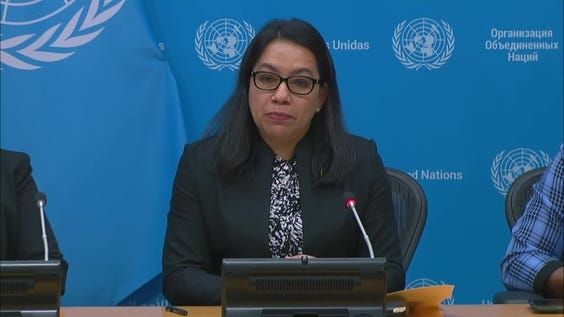
For the first time in its 80-year history, the United Nations may select a woman as secretary-general: five of the eight nominated candidates are women, and many member states argue the turn is long overdue. But as the Security Council grinds through its months-long, famously opaque selection process, gender is far from the only factor in play, the Washington Post reports.
The Trump administration, which holds a veto on the Council, is working to ensure the next leadership aligns with its plans for cutting the UN’s budget and workforce, according to the Post. Washington also wants fundamental change in how the body handles the three pillars of its charter: peace and security, development, and human rights - and adherence to international law. US Ambassador Mike Waltz told a Senate hearing this spring that the institution needs strong, effective leadership, with reform and a return to basics on peace and security at the top of American criteria.
High-level US officials at the New York mission conducted multiple candidate interviews over the summer, with two new names surfacing this month and more nominations possible before a final decision. Trump has not commented on a New York Post report that he wants FIFA president Gianni Infantino for the job, though one longtime observer quoted by the Post cautioned against ruling out an October surprise.
The clock is real: António Guterres’s five-year term ends on 31 December.
I’ll be in New York during UN week as this plays out - including taking part in a closed-door debate on whether the UN is still fit for purpose. More from the ground then.
A dangling packing strap on an Air Arabia plane led a London airport worker to a grim discovery: the body of a stowaway hidden in the aircraft’s landing gear compartment. The man, whose identity was not released, was found unresponsive following a flight from Tangier, Morocco, in June. Emergency services were called, and the man’s cause of death was determined to be cardiac arrest, followed by hypoxia and hypothermia. The coroner said the wheel compartment would have been extremely cold, with little available oxygen, and he had “reason to believe this death was unnatural.” Separately, a ground crew worker at Montreal Trudeau International Airport died hours after being struck by an aircraft backing up on a runway. The flight, operated by French bee, collided with the man at about 7:30 p.m. Monday, minutes before it was set to take off for Paris. The man was sent to hospital with serious injuries, according to Montreal police. Officials later said he was in life-threatening condition in hospital - The Daily Beast/Global News
The journals…