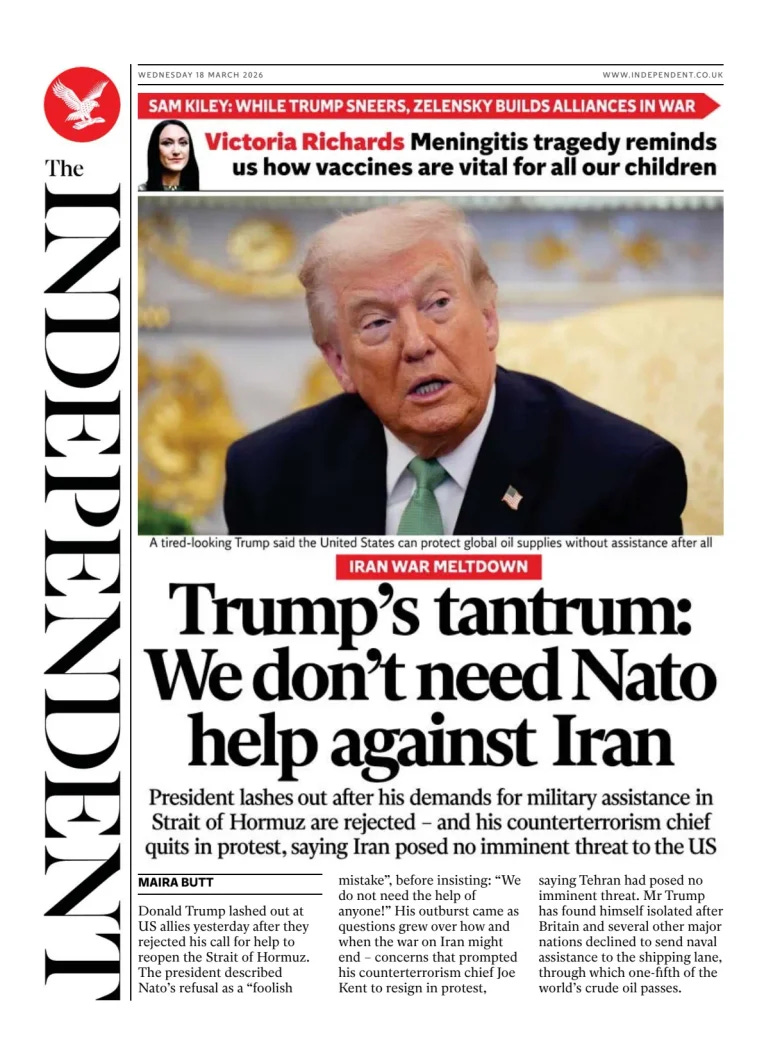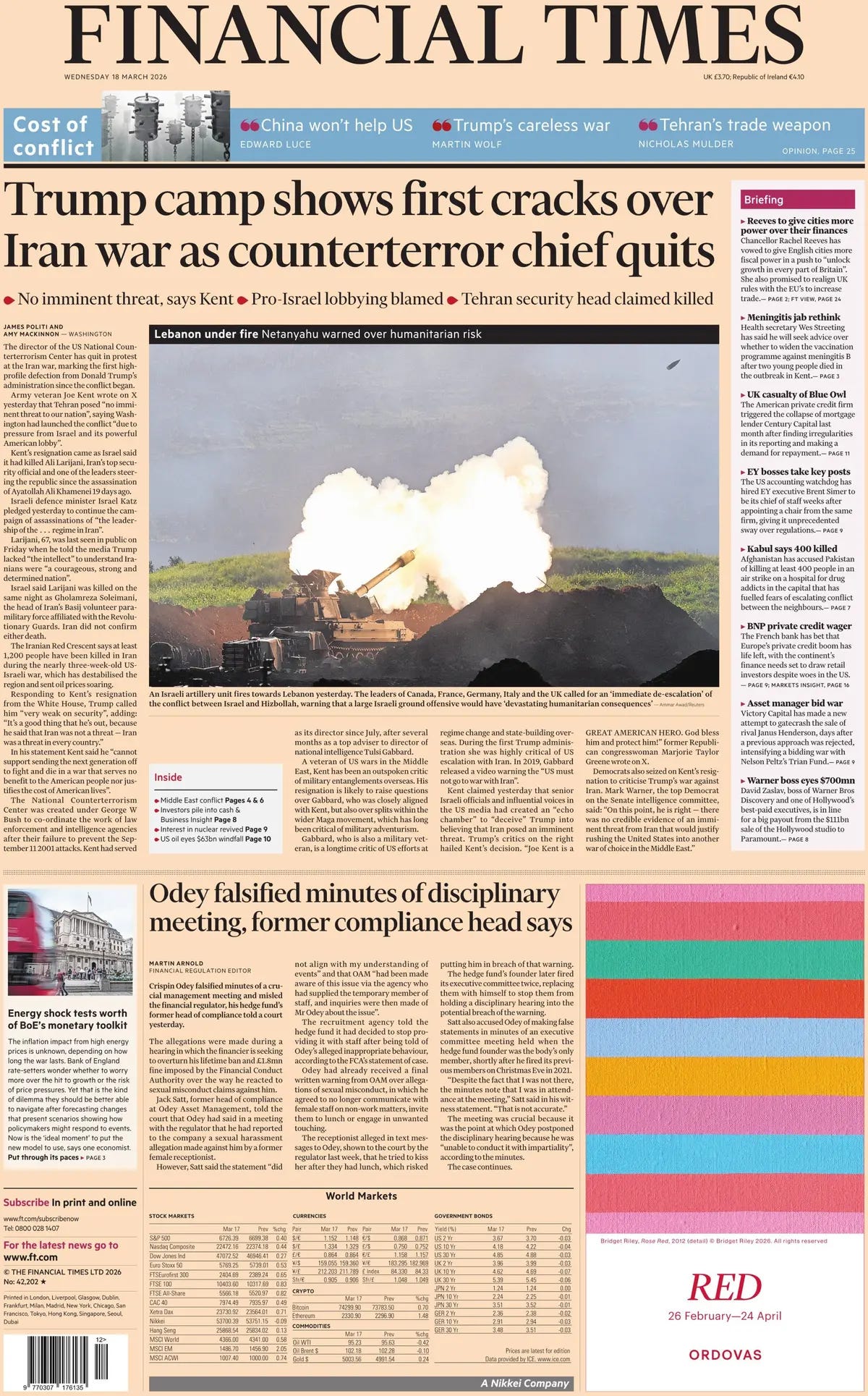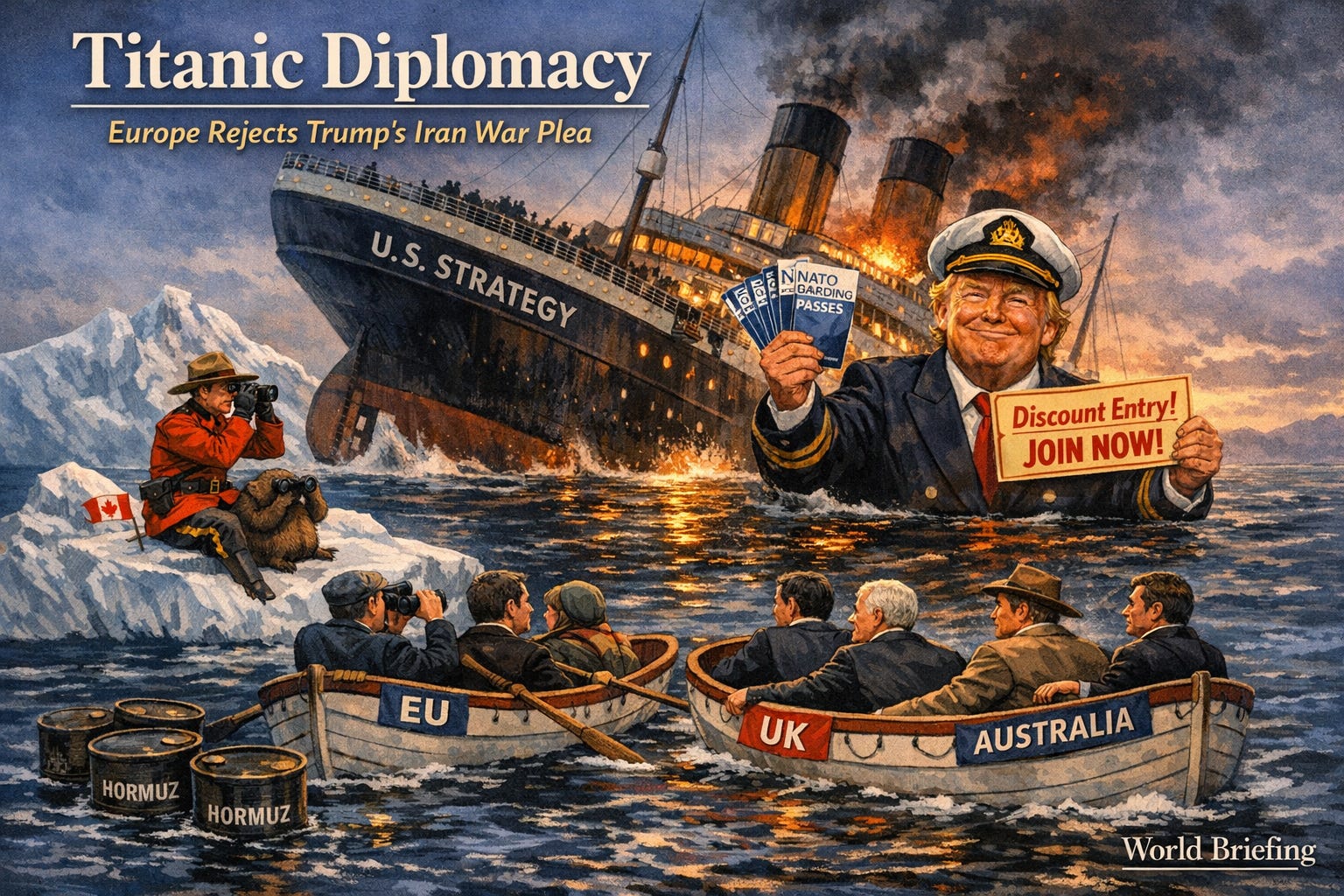
A senior French military figure has delivered a scathing rebuke of U.S. efforts to draw NATO into the escalating Iran conflict - comparing participation to “buying cheap tickets for the Titanic after it hit the iceberg.”
Retired three-star French General Michel Yakovleff, a former NATO commander and respected strategic voice in Europe, laid out what he described as multiple reasons why allies are refusing to join Washington’s expanding military campaign tied to the Strait of Hormuz crisis. At the core of his criticism: a fundamental misunderstanding of how NATO operates. Yakovleff told French broadcaster LCL that any alliance-led intervention must be unified under NATO command - not layered beneath a separate U.S.-led operation.
“You can’t have an American operation where they’re bombing whatever they can and then below that, the Europeans doing something else… it has to be one sole operation, under a NATO flag. I don’t think he understood that.”
He also pointed to what many European capitals see as a glaring absence of strategic clarity from Washington. Allies, he said, require clearly defined objectives — formally articulated and consistent — not shifting signals or informal messaging.
“It’s not tweets… it’s going to be necessary for Trump himself to know what he wants.”
Beyond operational concerns, Yakovleff underscored a deeper issue: trust. European hesitation is rooted in longstanding doubts about U.S. reliability under Trump, particularly fears that Washington could abruptly disengage after drawing others into the conflict.
“He would let us down whenever it suited him.”
The broader context reinforces his warning. With Iranian strikes disrupting shipping and insurance markets in the Strait of Hormuz — through which roughly 20% of global oil flows — energy markets are already reeling. Yet key U.S. partners, including Japan, Australia, the United Kingdom and the European Union, have so far declined to participate militarily.
Yakovleff’s final verdict was blunt — and rooted in American doctrine itself:
“You don’t reinforce failure… you move on, you find something else.”
His Titanic analogy now echoes across European policy circles - a stark signal that, for now, Washington may be sailing largely alone.
News Briefs
Iranian authorities have confirmed that the country’s powerful security chief, Ali Larijani, has been killed, the highest-profile official to die since Supreme Leader Ayatollah Ali Khamenei was killed on the first day of US and Israeli air strikes on February 28. Ali Larijani was killed along with his son Morteza, his deputy Alireza Bayat, and several bodyguards, the Secretariat of Iran’s Supreme National Security Council said in a statement late on March 17. Larijani was secretary of the Supreme National Security Council. The council’s statement came about 12 hours after Israeli Defense Minister Israel Katz said Larijani was killed in a wave of air strikes on Tehran that also took the lives of other senior Iranian figures. Separately, the Islamic Revolutionary Guards Corps (IRGC) confirmed the death of Gholamreza Soleimani, commander of Iran's paramilitary Basij force, giving few details. The Israel Defense Forces (IDF) had said Soleimani and Larijani were killed in the same series of strikes on March 16.
“Here’s what hasn’t changed. The Islamic Revolutionary Guard Corps and the Beit-e Rahbari, which is the administrative exoskeleton that the late Ayatollah Khamenei created. They’re still in the driver’s seat. So Larijani’s dead, but his power never came from popular appeal. He was handpicked by the elites. They will pick someone else and Iranian policy will by and large continue in the current war footing….” - Alan Eyre, Middle East Institute
Israel launched a series of strikes on Lebanon’s capital Beirut and orders evacuations in the country’s south on Wednesday, as it continues its offensive against Hezbollah. One blast flattened a building in the city centre - this isn’t the so-called Hezbollah heartland of southern Beirut, but an area surrounded by businesses and hotels. Meanwhile, the US military says it has used powerful “deep penetrator” bombs to hit Iranian missile sites along the Strait of Hormuz; the vital waterway for transporting oil has been effectively blocked by Iran since the war began - BBC
The war in Iran has proven one thing: an alliance with Moscow counts for little when a regime faces its greatest threat. It wasn’t supposed to be this way. Just a year ago, Iranian and Kremlin officials inked a “comprehensive strategic partnership agreement,” cementing the deepening ties between the two regimes. It wasn’t quite the mutual defense pact that Russia had previously signed with North Korea. But, a year later, however, that arrangement lies in tatters. Instead of racing to defend its Iranian allies, the Kremlin did little more publicly than wring its hands, bleat about violations of international law and hope for the best. In just a few short days, the war has exposed Russia’s geopolitical feebleness, confirming the Kremlin’s remarkable collapse in geopolitical relevance despite proclaiming itself a friend of the Global South. The entire war a strategic setback for the Kremlin, leaving Russia powerless to swoop in to its ally’s aid. To be fair, Russia has at least attempted small shows of support for partners in Iran. Moscow has begun sharing targeting information with its Iranian counterparts to pinpoint American military assets. But it’s also a far cry from what the Iranians expected. After all, Iran spent years as a key part of Russia’s arsenal in its broader war against Ukraine. With the tables now turned, Russia is unwilling to return the favor to the same degree. Absent any troop or arms shipments to Tehran, analyst Dara Massicot said, Russia is making it clear that “this is not their problem and not their war.” Even if Russia were willing to ship arms to Iran, it’s unlikely they would even be able to. Stretched increasingly thin across Ukraine, unable to replace troops lost or gain any significant territory, Russia’s quagmire in Ukraine has made a mockery of its claims to be a reliable ally for other partners elsewhere, as Iran is now learning. And it may well get worse for Russia. While the recent spike in oil prices can help shore up Russia’s bleeding budget, it will hardly resolve all Moscow’s problems or last forever - Moscow Times
“Scan over the past few years, and a graveyard of erstwhile Russian alliances emerges. In Syria, Russia waffled while Bashar al-Assad’s regime collapsed, with Moscow offering the despot a home for exile but little else. Russia could only watch while American forces snatched Nicolás Maduro, even after the Venezuelan president pleaded for Russian aid, but received only rhetorical support. Closer to home, Russia has witnessed its influence in places like the South Caucasus collapse, with Armenia and Azerbaijan turning to American partners to mediate their ongoing dispute
The only question is which ally Russia will watch topple next. The smart money remains on Cuba, where rolling blackouts and economic collapse are pushing the regime in Havana to the brink. Or perhaps it will be in Transnistria, the slice of Moldova that Russia has occupied for decades and which is now facing the most serious economic and social crisis in the last 25 years” - Moscow Times

From the Gulf and Ukraine to the Philippines and southern Africa, the geopolitical dots are multiplying by the day.
Upgrade to World Briefing Plus by becoming a paid subscriber and stay ahead of the headlines — or support my independent global reporting through Patreon or PayPal.
Top European Union officials said Tuesday they have offered to pay Ukraine to repair a damaged pipeline meant to carry crude oil to Hungary, in a bid to persuade the government in Budapest to lift its veto on a massive aid package to the war-wracked country. Ukraine and Hungary have been locked in an escalating feud since Russian oil deliveries to Hungary and Slovakia were halted in January due to damage to the Druzhba pipeline, which crosses Ukrainian territory. Ukrainian officials have blamed the damage on Russian drone attacks. Hungary’s nationalist prime minister, Viktor Orbán, has accused Ukrainian President Volodymyr Zelenskyy of deliberately holding up oil supplies — claims that Zelenskyy denies. In retaliation, Orbán has vetoed a major 90-billion-euro ($106 billion) EU loan to cover Ukraine’s military and economic needs for two years. Hungary is also blocking a new round of EU sanctions against Russia. EU officials said in a statement Tuesday that the bloc “has offered Ukraine technical support and funding” to fix the pipeline. “The Ukrainians have welcomed and accepted this offer. European experts are available immediately,” European Council President António Costa and European Commission President Ursula von der Leyen said. Zelenskyy is vehemently opposed to allowing Russian energy to transit through Ukraine. Energy revenue has fueled the four-year war waged by President Vladimir Putin on his country, and Russian forces have relentlessly targeted Ukraine’s energy infrastructure throughout the conflict. But he wrote Tuesday that Ukraine is “undertaking all possible efforts to repair the damage and restore operations.” - NPR
Volodymyr Zelensky has said Ukraine will face a deficit of missiles it is using to fight Russia due to the war in the Middle East. In an interview with the BBC, the Ukrainian president said Russia’s Vladimir Putin wanted a “long war” between the US, Israel and Iran because it would weaken Kyiv, with US resources being directed elsewhere. Zelensky said there would “definitely” be a deficit of Patriot missiles which would be “a challenge”, saying the question now was “when will all the stockpiles in the Middle East be exhausted. He added: “America produces 60-65 missiles per month. Imagine, 65 missiles per month is about 700-800 missiles per year, produced each year. And on the first day in the Middle East war, 803 missiles were used.”
Chinese authorities are reportedly restricting the country’s companies incorporated abroad from pursuing IPOs in Hong Kong, signaling potential upheaval to a longrunning strategy for firms to raise funds. The move falls short of an outright ban, Bloomberg wrote, instead discouraging overseas-headquartered companies with Chinese assets from listing in Hong Kong — pushing them to incorporate on the mainland before pursuing an IPO. The pressure could dent Hong Kong’s IPO market, which had only recently revived momentum. Beijing has asserted more control over the city since a national security law took effect in 2020, a shift that has also hit the once-vibrant media ecosystem. Yahoo Hong Kong on Tuesday became the latest outlet to announce it is ceasing publishing original content - Semafor
Hong Kong lawmakers have said Andrew and Tristan Tate cannot be extradited to the UK or Romania – where they face prosecution – without formal requests from those governments, as the infamous influencer brothers continued their visit to the city on Monday. The legislators also rejected claims that the city had become a haven for fugitives following the suspension of extradition treaties with several Western countries, including the United Kingdom, in 2020. The controversial influencers entered Hong Kong over the weekend, sparking heated discussion online. Andrew, 39, responded on social media on Monday, dismissing calls for his extradition. “If England doesn’t extradite me soon I’ll have to fly there myself and I think the taxpayer should pay for my flight if the government wanna talk to me so badly,” he wrote. Videos shared on social media showed the brothers surrounded by crowds in Lan Kwai Fong, where onlookers were seen taking photographs and selfies with them. A source close to the Tates told the South China Morning Post that the brothers had “always wanted to visit Hong Kong” and might have business interests in the city. - SCMP
India’s restaurants have emerged as the highest-profile victims of the country’s current liquefied petroleum gas (LPG) shortages stemming from the Iran war, although the hit to energy supplies has affected the ceramics industry and others, too. In Mumbai, restaurant workers and owners talked about memories of the COVID-19 lockdown. At least some relief is on the way. Over the weekend, India scored a win after the Iranian government allowed some of its ships to pass through the Strait of Hormuz. The South Asian nation receives roughly half of its crude oil and nearly 90% of its LPG imports through the strait. Beyond signaling the possibility of a diplomatic solution to the world, the safe passage was also a domestic necessity. Panic gripped India last week as LPG supplies to restaurants were stopped and rerouted to homes, with news reports of the hoarding and trading of LPG cylinders on the black market. The war poses a major risk to India’s economy, which had been enjoying a run of high growth and low inflation over the past few months -- a combination that Reserve Bank of India Gov. Sanjay Malhotra repeatedly referred to as a “Goldilocks phase.” Lower crude oil prices were an essential contributor to that ideal situation. That stability has now evaporated. “Brent crude oil settling at [$100 per barrel] may eventually necessitate the raising of retail fuel prices, which will directly feed into CPI (consumer price index) inflation,” economists at Barclays said in a note to clients last week. Economists say a quick normalization of traffic through the Strait of Hormuz would likely save India from a major rise in inflation and a hit to economic growth, pointing out that the country has the inflation headroom to tolerate a short-term shock. However, were the conflict to persist, rising inflation would affect the public, not just through higher fuel prices but those passed through to other products, ranging from consumer goods to fertilizers - Nikkei Asia
The journals….