World Briefing - Hot Take
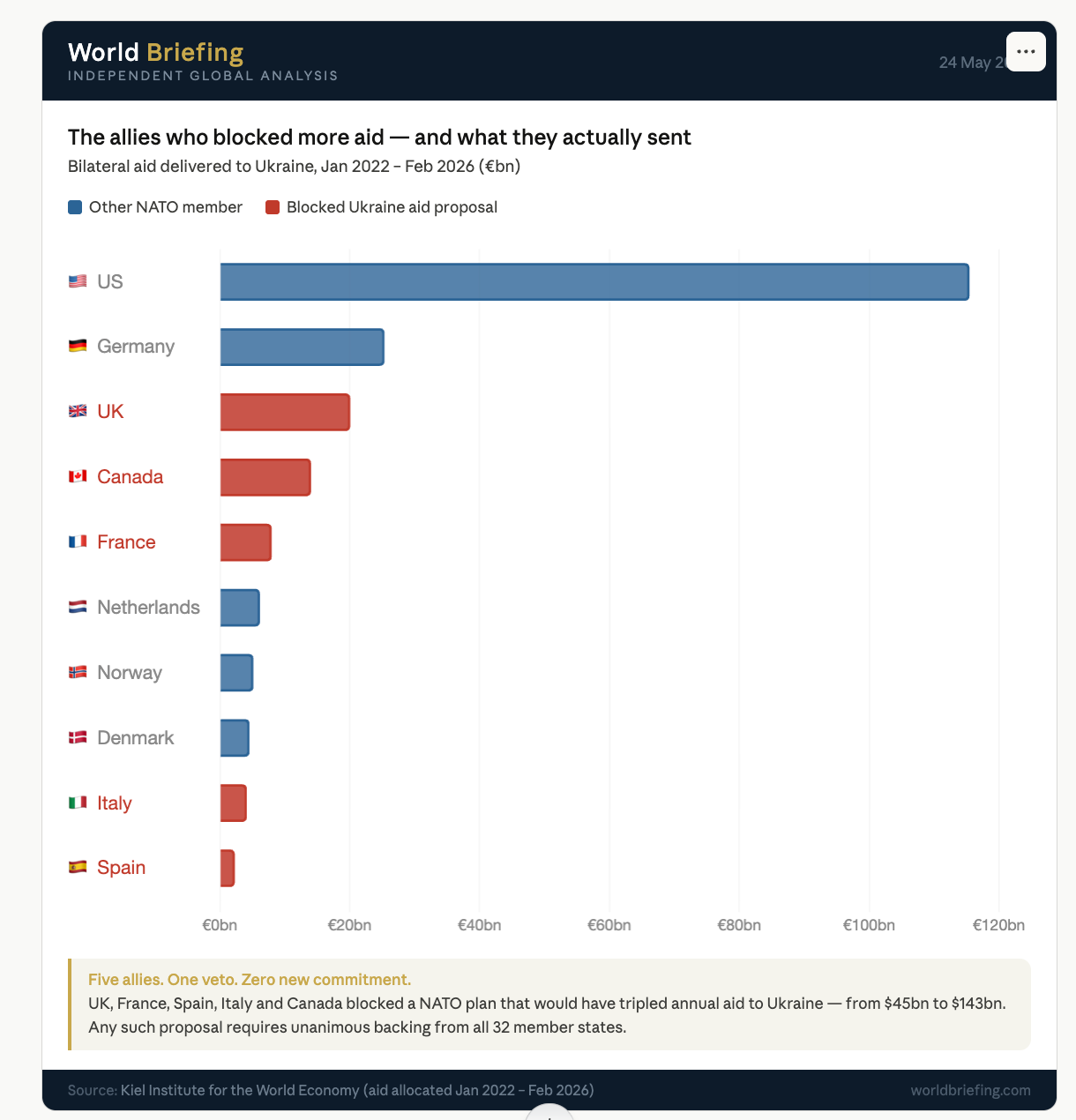
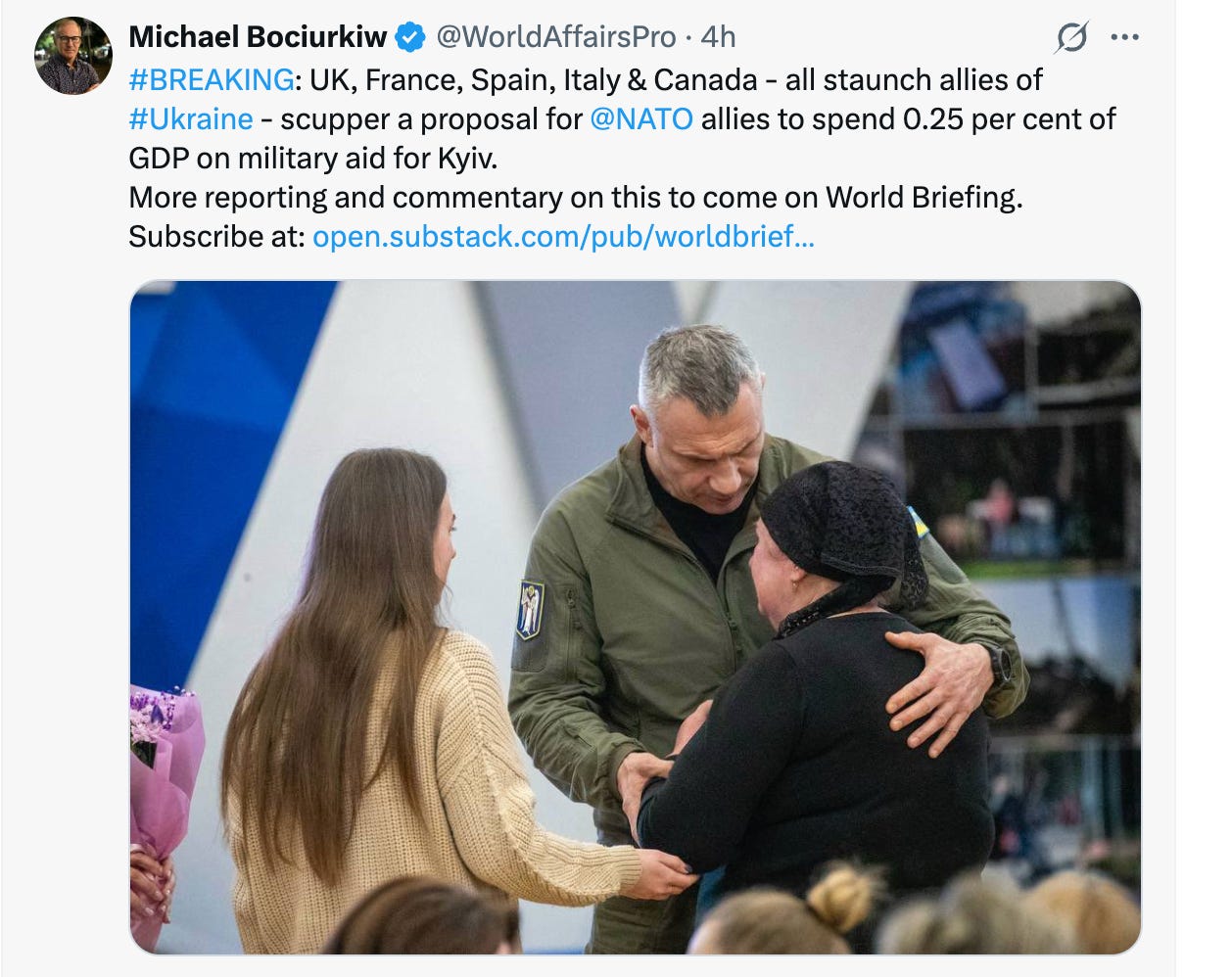
The ink is barely dry on another round of solidarity statements for Ukraine, and yet behind closed doors, some of Kyiv's loudest cheerleaders are doing something very different. While Russia rained down 90 missiles, around 700 drones, and - for only the third time in this war - a hypersonic Oreshnik ballistic missile on Ukrainian cities overnight, The Telegraph is reporting that Britain, France, Spain, Italy and Canada blocked a NATO proposal that would have tripled military aid to Kyiv. Mark Rutte's plan - a modest 0.25% of GDP commitment - is dead before the July NATO Ankara summit even opens. If approved, it would have pushed annual flows to Ukraine from $45 billion to $143 billion. Instead, allies balked. And in a particularly damaging detail for London, Britain also softened sanctions on Russian oil exports this week. As shown in the chart below, Canada and France are among the weakest performers on both defence spending and aid delivered - despite positioning themselves as frontline allies. Ukraine's friends, it seems, have plenty of words - and increasingly careful cheques.
News Briefs
Britain and France have scuppered a proposal for Nato allies to spend 0.25 per cent of GDP on military aid for Ukraine. Mark Rutte, the alliance’s secretary-general, this week conceded his plan wouldn’t be taken forward because it didn’t have sufficient support. “I don’t think this one will be proposed,” he told reporters, without naming the opponents. But now The Telegraph can reveal that the UK, France, Spain, Italy and Canada blocked the idea when it was floated in discussions for how to boost support for Kyiv. Mr Rutte was hoping to ratify the proposal at Nato’s upcoming annual summit in Ankara, Turkey. Ministers this week began discussions over what the alliance’s civilian chief believes should be a tangible show of support for the war-torn nation. An alliance insider said at least seven member states, who all spend over 0.25 per cent of GDP on military aid to Ukraine, had voiced support. But any proposals adopted by Nato require the unanimous backing of all of its national capitals. “They’re not very enthusiastic about the idea,” the insider said, labelling London, Paris, Madrid, Rome and Ottawa as opponents. The news will come as a double-blow to Britain’s credibility as one of Ukraine’s staunchest allies. This week, the Government came under intense criticism after it softened sanctions against Russian oil and gas exports. To the surprise of Kyiv and other allies, ministers signed off on a decision to offer time-limited carve-outs for purchases of jet fuel and diesel refined from Russian crude in third countries because of the situation in the Middle East. Unlike other allies, the size of Britain’s military contribution – the third largest behind the US and Germany – is not in question, despite coming under the 0.25 per cent of GDP mark - The Telegraph
If allies approved the idea, annual flows to Ukraine would effectively triple to $143 billion, based on the alliance's own estimate of combined NATO GDP. Last year, Ukraine received $45 billion in security aid from its allies — covering everything from buying weapons for its military to investments in Ukrainian defense companies and the NATO-led effort to buy U.S. weapons for Kyiv - Politico
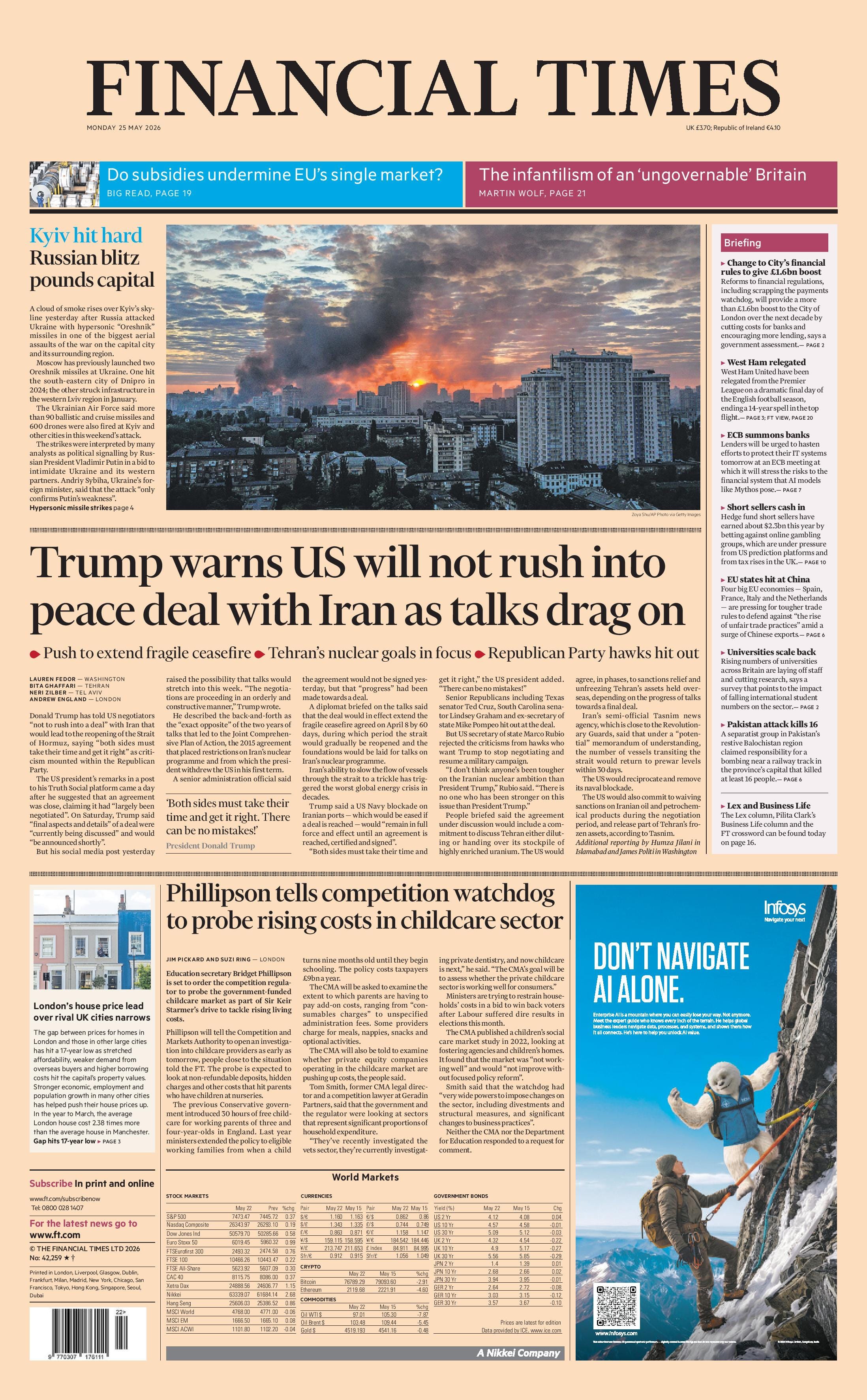
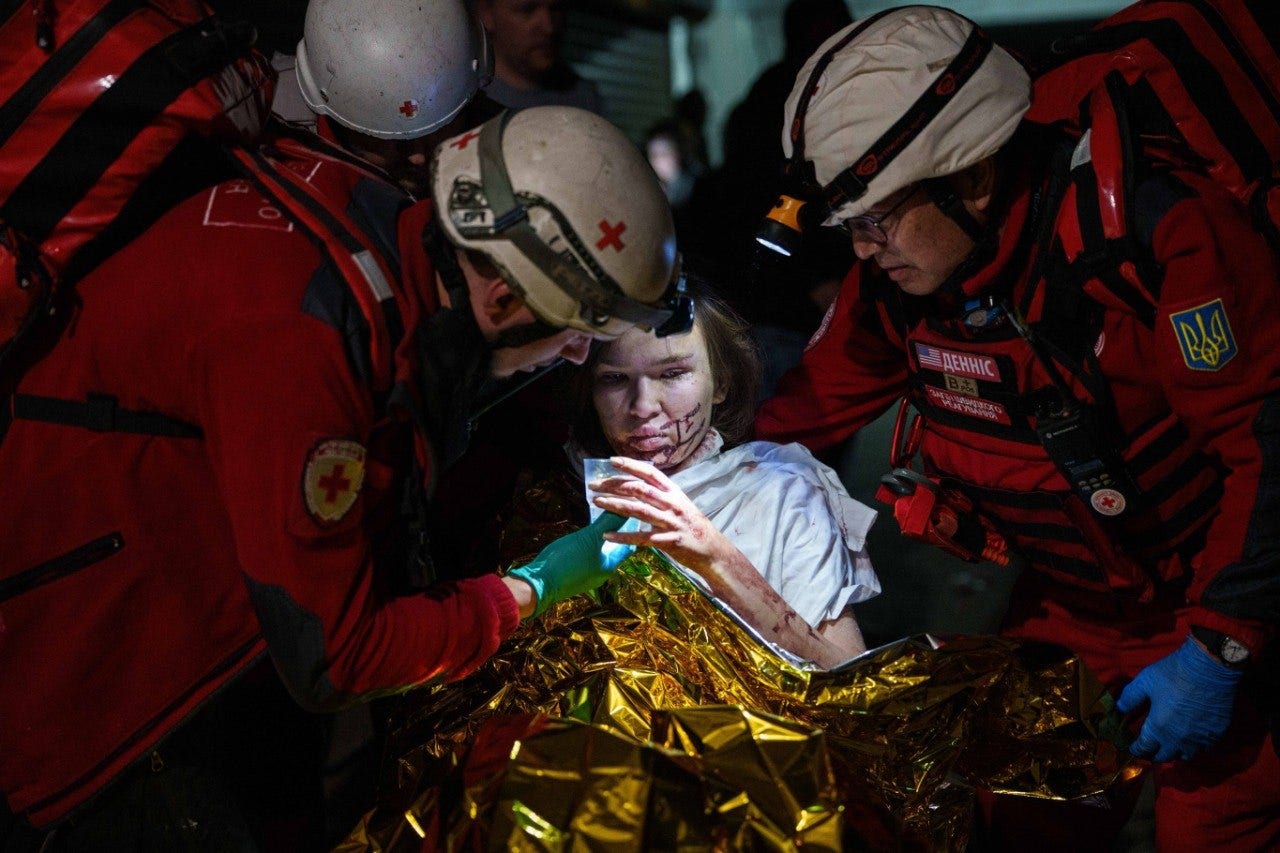
The Russian Defence Ministry has confirmed the launch of nuclear-capable Oreshnik missle, saying it came as part of a retaliatory attack following Ukrainian strikes against “civilian targets,” which Kyiv has denied. German Chancellor Friedrich Merz condemned the attack as a “reckless escalation” in a post on X and reaffirmed Germany’s support for Ukraine. The "Oreshnik" missile's first known use came in 2024 during an attack on the Ukrainian city of Dnipro. Since then, the weapon system has become one of the Kremlin’s most closely watched military projects. Moscow says it is an intermediate-range ballistic missile. It is reportedly capable of hitting targets between 3,000 and 5,500 kilometres away. Russian military officials have claimed this would put large parts of Europe within range. Belarus is also believed to possess the missile system. The deployment of the “Oreshnik” missile came as part of a large-scale Russian offensive overnight into Sunday. According to the Ukrainian Air Force, Moscow launched 90 missiles and cruise missiles as well as around 600 drones. At least four people were killed and 100 injured. Although many of the targets were intercepted, dozens of hits were still reported. Among the sites damaged was the centrally located studio of German public broadcaster ARD, which was heavily damaged and partially destroyed. According to the broadcaster, a massive blast wave likely caused the destruction, shattering windows and devastating parts of the studio - Euronews
Turkish riot police forced their way into the headquarters of the country’s main opposition party on Sunday, days after a court dismissed its leadership. Clouds of tear gas billowed outside the Republican People’s Party (CHP) building in Ankara, where party members had blocked the entrances with a makeshift barricade. Footage from the scene showed those inside shouting and throwing objects towards the entrance, and police being sprayed with hoses. Party leader Özgür Özel had vowed to defy an appeal court decision on Thursday which declared his election null and void, in a move further cementing President Recep Tayyip Erdoğan’s grip on power. The court decided that Özel should be replaced by Kemal Kilicdaroğlu, a 77-year-old party veteran who was defeated by Erdoğan in the 2023 presidential election. Turkish media reported that Kilicdaroğlu’s representatives had requested the police carry out “necessary procedures” to hand over the headquarters to the new leadership, claiming they had so far been barred entry. The city’s governor then instructed the police to “implement the court decision”, according to a statement from his office. Human Rights Watch warned on Saturday that Erdoğan’s government was undermining Turkish democracy with “abusive tactics” against the CHP - BBC
A prominent Turkish political scientist is warning that Turkey is sliding towards "hegemonic authoritarian rule" - placing it in the company of Venezuela, Belarus and Russia. Berk Esen, associate professor of political science at Sabancı University in Istanbul, was speaking in the wake of the crackdown on the Republican People's Party (CHP) - Turkey's main opposition and its oldest political party - and the forced removal of its popular leader. Esen told the Turkey Recap podcast on Substack that opposition parties can no longer remain intact or meaningfully contest elections. "The government has realized, even with an uneven playing field, it was becoming exceedingly difficult to win elections," he said. "It was just a matter of time before the opposition would win.”
A key U.S. government agency is dismantling efforts to regulate online betting markets and crypto as President Donald Trump and his family deepen their ties to the booming industries. The Trump family’s growing footprint in crypto and prediction markets has translated into billions in new wealth, fueled by digital coin offerings and deals with prediction market firms. Trump’s eldest son, Don Jr., is both an investor in Polymarket, through his investment firm 1789 Capital, and an adviser to Kalshi and Polymarket. The president’s publicly traded media company partnered with Crypto.com last October on what the firms called an exclusive prediction market venture. At the same time, the Commodity Futures Trading Commission, a small agency that regulates those industries, has undergone a dramatic retreat from enforcement, and staffers say a series of firings sent a clear warning not to make life difficult for the companies they are supposed to oversee, The New York Times reports. The CFTC is being led by a single commissioner, Michael S. Selig, a 36-year-old former corporate lawyer with ties to crypto firms and prediction markets, whom Trump appointed as chair in December. Trump, 79, has left all four other board seats vacant, effectively stripping away the CFTC’s internal checks and balances and consolidating broad authority in the hands of its new chair. The CFTC has abandoned at least five investigations into crypto firms and pushed out senior career officials who had handled crypto enforcement, the Times reports, citing government documents and former staff members - The Daily Beast
As governments in Southeast Asia come under mounting international pressure to crack down on criminal networks and scam syndicates in loosely governed special economic zones in the border areas of Cambodia, Myanmar and Laos, experts believe some syndicates are beginning to relocate - or expand - into other Southeast Asian countries such as Indonesia and Malaysia. “The possibility of Indonesia or Malaysia becoming hotbeds for human trafficking into scam centres is very real,” Matt Friedman, chief executive officer of anti-human trafficking organisation The Mekong Club, told CNA. The concern is increasingly shared by officials in Indonesia and Malaysia, where hundreds of foreigners and locals suspected of being involved in scam and online gambling operations have been arrested since early May. Authorities in both countries believe criminal syndicates have been exploiting lax immigration controls and visa-free travel arrangements among members of the Association of Southeast Asian Nations (ASEAN), and are proposing tighter visa and immigration rules. “Cases of foreigners involved in illegal activities, including those coming from countries granted visa-free entry facilities, give rise to (a need for) evaluation of policies,” Hendarsam Marantoko, director general of the Indonesian Immigration Office told AFP on May 13. Currently, travellers from all ASEAN countries can stay visa-free in Indonesia for up to 30 days. Chinese and Japanese nationals, meanwhile, must obtain visas on arrival that are valid for 30 days and can be extended once for another 30 days. Meanwhile, Malaysia’s police chief Mohd Khalid Ismail said at a press conference on May 15 that Malaysia’s visa policy “makes it easier for foreign criminals to operate in the country”. In Malaysia, travellers from all ASEAN countries can stay visa-free for up to 30 days with the exception of Myanmar (14 days). Thailand, which has also seen a rise in the number of crimes involving foreign nationals in recent years, on May 19 announced that it will reduce visa-free stays for travellers from more than 90 countries including Europe’s 29-nation Schengen area, the United States and several South American countries. Foreign Minister Sihasak Phuangketkeow had said that the plan to reduce visa-free stays was part of a crackdown on transnational crime - CNA
The journals…..