🔥 World Briefing Hot Take
What my book, Digital Pandemic, warned about is now playing out in real time: China isn’t just filling the vacuum left by America’s exit from the World Health Organization - it is hard-wiring its own model into the global health system. This was never simply about generosity or “stepping up.” It is about power, speed, and control over the future of biomedical innovation. While Western democracies bind health research with ethical review boards, legal guardrails, and political scrutiny, Beijing operates with far fewer constraints. In vaccine development, stem-cell research, and large-scale clinical data collection, China’s ability to move faster - and quietly cut corners - has long given it a structural advantage. As Digital Pandemic noted, in a normal year some 5.5 billion vaccine doses are produced globally, many in China, giving Beijing access to real-world efficacy data years before Western pharmaceutical firms can legally obtain it. That asymmetry is not accidental; it is strategic.
The WHO rupture accelerates this imbalance. China’s Health Silk Road treats public health not as charity but as industrial policy: build the factory, control the supply chain, embed standards early, and lock in long-term dependency. It’s an approach that appeals deeply to governments in Africa and the Global South - but it also bypasses the multilateral safeguards that once slowed any single power from dominating global health. As I argued in Digital Pandemic, the Chinese Communist Party is increasingly suspicious of collaboration that does not deliver clear “win-win” dividends for China. Innovations that could benefit global health are increasingly kept inside China’s economic orbit. What looks like stabilization is actually system redesign.
The real loss from America’s WHO exit is not money - it is moral and ideological competition. By stepping back, Washington has surrendered the argument over what constitutes a “global public good.” Beijing is now defining that concept on its own terms: state-centric, bilateral, and commercially embedded. During Covid-19, vaccines were the proof of concept. In the post-pandemic era, public health infrastructure is the next frontier. The risk isn’t a Chinese takeover of global health - it’s fragmentation, with ethics, transparency, and accountability becoming optional add-ons rather than baseline standards. Digital Pandemic wasn’t a forecast. It was an early warning.
The Chinese Communist Party leadership is increasingly suspicious of any collaboration with the West which does not include win-win dividends. The Party wants to create a more isolationist and aggressive China and keep all of its innovations - even those that could help improve global health - within its own economy - Digital Pandemic
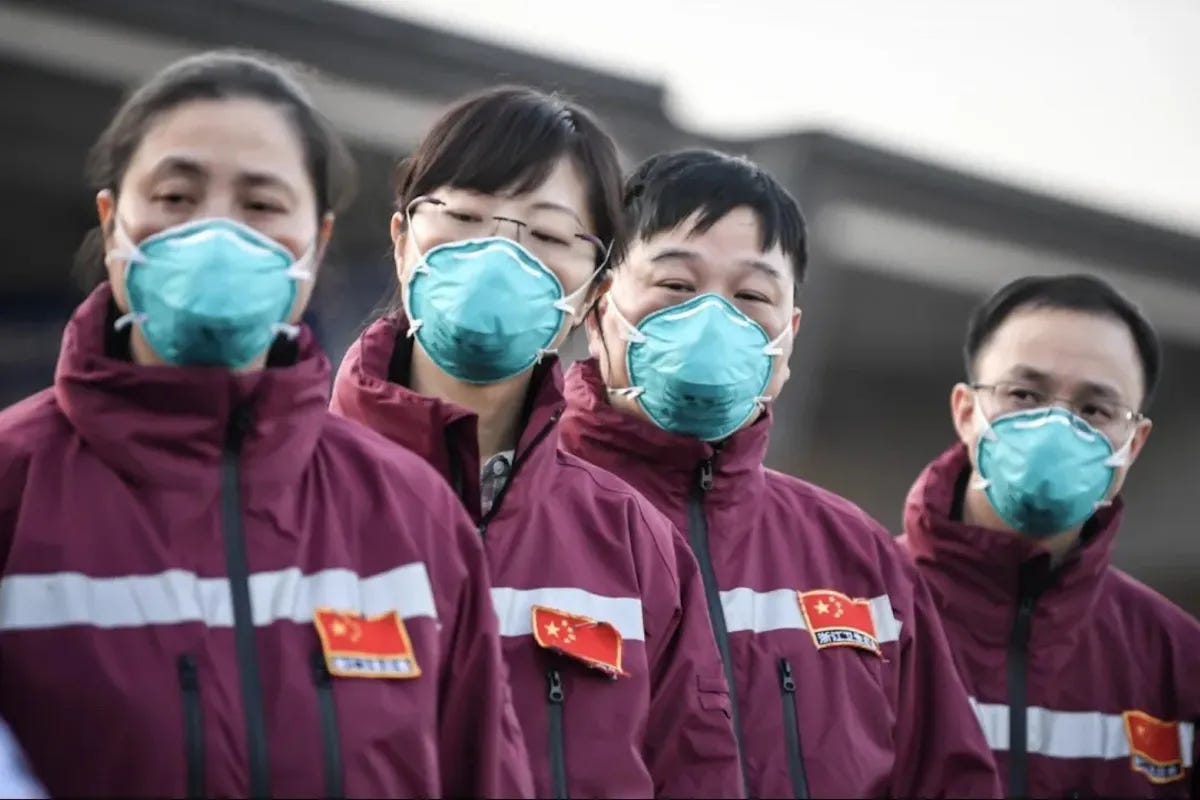
News Brief: The United States’ official departure from the World Health Organization in January 2026 opens the door for Beijing to not merely filling a seat but to rewrite the operating system of global health aid. For decades, the Western model of global health—typified by the US and EU—operated on a charity-based framework: wealthy nations donated funds to multilateral bodies or NGOs to deliver services, including vaccines, bed nets and antiretrovirals, to the Global South. It was a model of “delivery.” China’s approach, accelerated under its Health Silk Road strategy, is fundamentally different. It is a model of “development.” As highlighted by recent agreements to build insulin production facilities in Nigeria and antimalarial factories across West Africa, Beijing prioritizes hard infrastructure over soft aid. Instead of just shipping insulin, Chinese firms build the factory to make it. This shift appeals to developing nations weary of the paternalism often inherent in Western aid conditions. The Chinese model, framed as “South-South cooperation” and “brotherhood,” emphasizes sovereignty and self-reliance through commercial partnership rather than donor dependency. By treating health security as an industrial capacity issue rather than a humanitarian one, China offers a value proposition the West has largely neglected: the ability to manufacture one’s own cure. The narrative that China is the new “stabilizer” of global health is partially true but functionally complex. China’s consistent payment of assessed contributions—ranking second only to the now-absent US—and its $500 million pledge at the World Health Assembly in May 2025 demonstrate a commitment to keeping the lights on at the WHO. However, “stabilization” implies maintaining the status quo, which China is not doing. It is evolving the system to suit its state-centric view of governance. While the US exit triggers chaos—forcing the WHO to cut budgets and scale back operations—China’s “stabilization” comes with a distinct flavor of bilateralism. Reliance on the Health Silk Road means that while the WHO remains the central forum for norms, the actual machinery of health implementation is increasingly bypassing Geneva in favor of direct Beijing-to-capital deals. This creates a bifurcated system: a cash-strapped multilateral body, the WHO, setting standards, while a robust bilateral engine, China, builds the physical architecture. The risk here is not Chinese dominance but global fragmentation. The US withdrawal is often framed as a loss of money, but it is actually a forfeiture of ideological competition. The America First retreat leaves the field open for China to define “global public goods” on its own terms. During the Covid-19 pandemic, China positioned its vaccines as a global public good, supplying over 2.3 billion doses. Now, in the post-pandemic era, it is doing the same with public health infrastructure. By dispatching expert teams to the Africa CDC and placing medical teams in 77 countries, China is embedding its personnel and protocols into the nervous systems of foreign health ministries. This is outside the box thinking for a global health power. While Western nations debate aid budgets in parliaments, China leverages its state-owned enterprises and private-sector champions—like those building the Nigerian facilities—to execute health policy as foreign policy - Asia Times
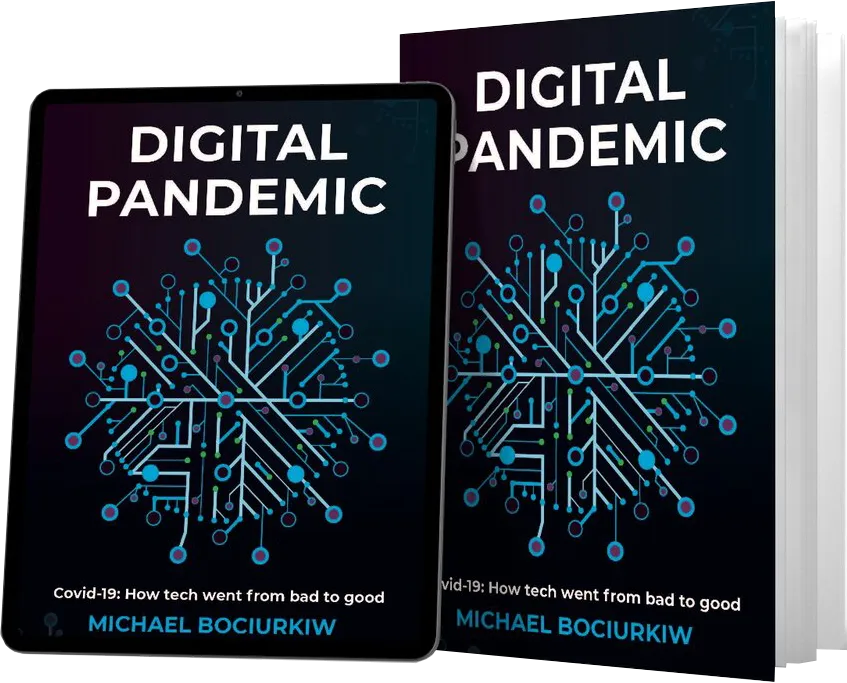
Why Digital Pandemic Matters Now
The United States has walked away from the World Health Organization - and the global health order is being quietly rewritten. The book chronicles how strongmen and authoritarian governments leveraged the pandemic in their favor. It reveals how China has been positioning itself for years to dominate vaccines, health data, and biomedical supply chains—often moving faster than the West by operating beyond the ethical and regulatory constraints that slow democracies.
Available in softcover print, digital, and audio, Digital Pandemic connects the dots between geopolitics, technology, public health, and power. If you want to understand what’s happening now - and what comes next - this is the essential read.
Purchase here. Also available at quality bookstores and at the Foreign Correspondents’ Club of Thailand
Thousands of sick and wounded Palestinians are eagerly waiting to leave for urgent medical care abroad as Israel opens the Rafah border with Egypt for “limited” transfers. The Rafah crossing – after being closed by Israel for nearly two years – will reportedly operate for six hours a day and allow the exit of only 150 people, with 50 individuals greenlighted to enter Gaza. Health authorities say 1,268 people have died in Gaza while waiting for medical transfer when Rafah was closed, and doctors warn that number will rise unless more Palestinians are allowed to exit immediately. An unidentified Egyptian official told The Associated Press 50 Palestinians will cross in each direction on the first day of its operation. About 4,000 cancer patients in Gaza are desperately awaiting medical evacuation for treatment - Al Jazeera
China’s leader called for the yuan to become a global reserve currency, part of Beijing’s efforts to play a larger role in international financial systems. Xi Jinping’s comments, published in the Chinese Communist Party’s ideology journal, marked the most concrete definition yet of his goal of building a “strong currency” that can counter the dollar’s dominance, at a time when central banks are rethinking their exposure to greenback-based assets. The yuan remains a small slice of international reserves, though, and analysts say capital account liberalization is critical to achieving Beijing’s goal. The US and other trading partners have also urged Beijing to let the yuan rise; the currency’s depreciation has made China’s exports cheaper and contributed to a record trade surplus - Semafor
We’re outside for a reason. The best reporting doesn’t come from distant studios - it happens in the messy, uncertain places where decisions collide with real lives. If you believe independent journalism and sharp commentary are worth backing, please upgrade to a paid subscription to support World Briefing. Your contribution helps fund reporting, travel, verification, and the work that turns chaos into clarity. You can also support World Briefing through Patreon or PayPal.
The “presidential” way Ursula von der Leyen runs the European Commission is hurting Europe, according to a former member of her team. “I have the impression that commissioners are now largely silenced,” Nicolas Schmit, who was the commissioner for jobs and social rights in the first von der Leyen Commission, told POLITICO in an interview. “The system, how the College is organized — very centralized, call it presidential or whatever system — is not good for the College, it’s not good for the Commission, and it is not good for Europe in general,” he said. Schmit represented Luxembourg in the Commission from 2019 to 2024 and was the Party of European Socialists’ lead candidate in the 2024 EU election. While it is unusual for sitting commissioners to openly criticize von der Leyen, several former members of the College have done so. Michel Barnier used his memoir to accuse his former boss of presiding over an “authoritarian drift” in the Commission. Another former commissioner, Thierry Breton, also said von der Leyen wielded too much power, arguing that Europe “was not built to have an empress or an emperor.” - ‘POLITICO’
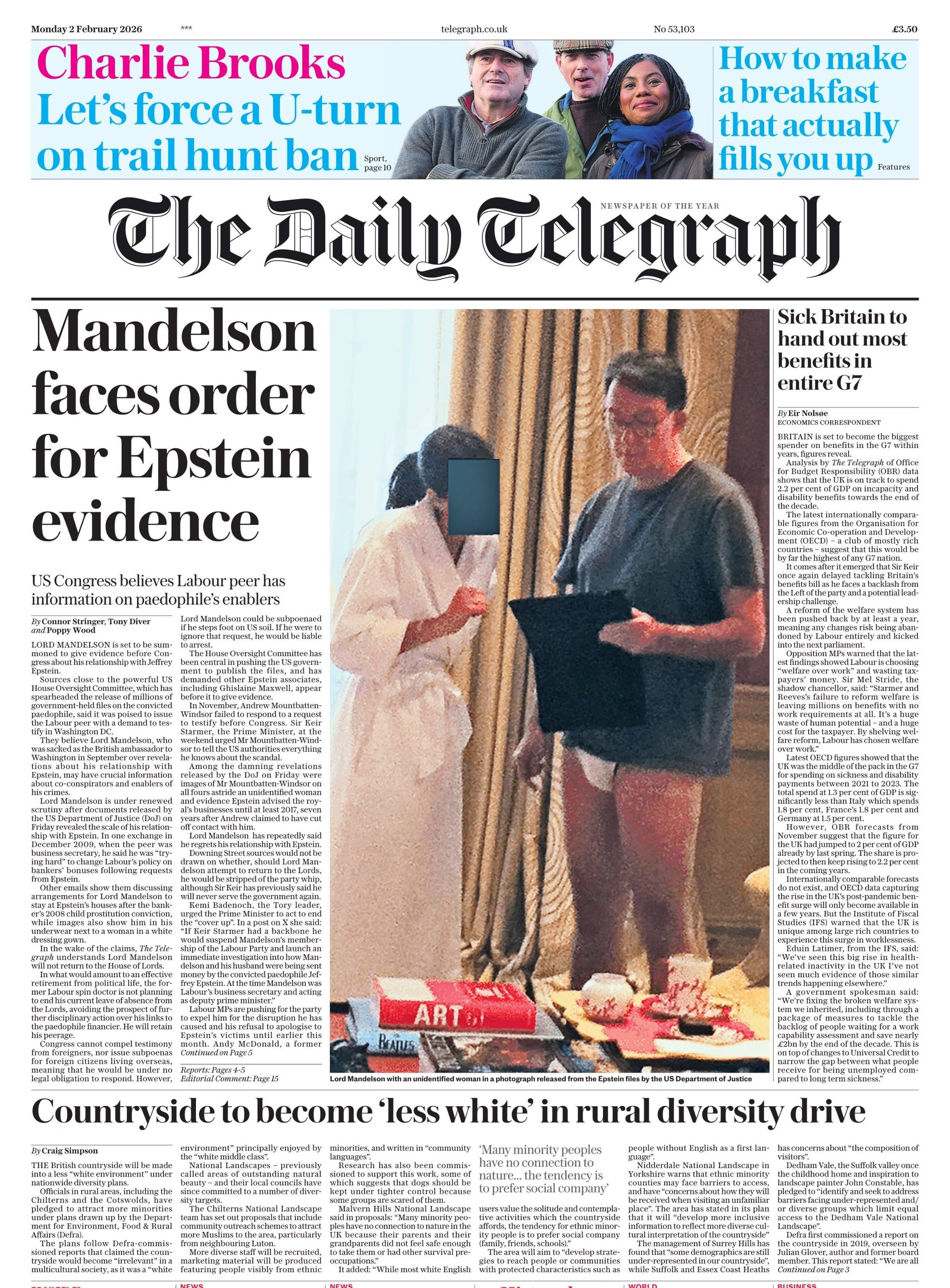
Emails from an account that appeared to belong to Jeffrey Epstein claimed Microsoft co-founder Bill Gates tried to hide a sexually transmitted disease from his wife Melinda after having sex with “Russian girls”. In one email that Epstein seems to have sent to his own account — one of 3mn pages of files released by the Department of Justice on Friday — the late sex offender also appears to take issue with Gates for ending their relationship. “TO add insult to injury you then subsequently with tears in your eyes, implore me to please delete the emails regarding your std, your request that I provide you with antibiotics that you can surreptitiously give to Melinda, and the description of your penis,” the message says. The release of the documents was announced by Todd Blanche, the deputy attorney-general, and comes more than a month after the December 19 deadline that was set in legislation mandating that the entire trove of documents related to Epstein be released. So far, the files have offered few new revelations of the links between Epstein and Donald Trump. But they have exposed Epstein’s connections with powerful figures, including former US president Bill Clinton, Lord Peter Mandelson, the former UK ambassador to the US, billionaire Tesla owner Elon Musk and Gates. Another email reads: “I have been asked and wrongly acquiesced into participating in things that have ranged from the morally inappropriate, to the ethically unsound . . . From helping Bill to get drugs, in order to deal with consequences of sex with russian girls, to facilitating his illicit trysts, with married women, to being asked to provide adderall fro [sic] bridge tournaments.” A spokesperson for Gates said the claims were “absolutely absurd and completely false”. -FT
The journals….