Let us be clear on one thing: Africa is on the ascendancy - a continent that increasingly feels like the future, not the past. That was our unmistakable takeaway from the G20 in South Africa, and it’s been reinforced on our countless trips across the continent: energy, ambition, momentum. But Africa’s demographic dividend can’t be unlocked by the same corrupt, autocratic dinosaurs clinging to power. The continent has the world’s youngest population - more than 400 million people aged 15–35, projected to surge past 830 million by 2050 - a generational wave that demands investment in education, jobs, and infrastructure, not repression, rigged ballots and Internet blackouts.
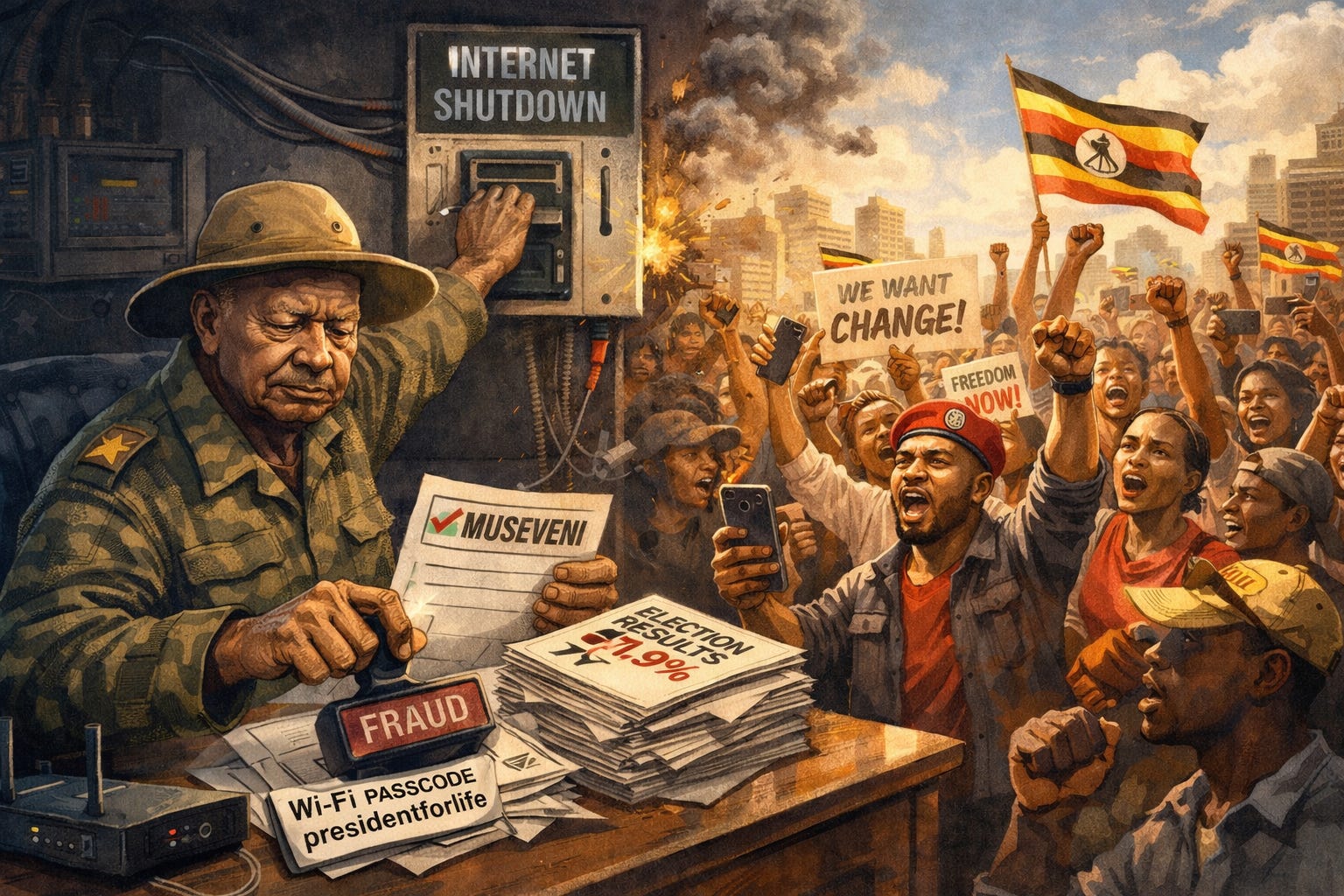
Uganda’s election is the cautionary tale. President Yoweri Museveni, 81, has extended his decades-long rule after a vote marred by violence and an internet shutdown - the same authoritarian tactic we’ve watched in places like Iran: cut the signal, cut the scrutiny, cut civil engagement. Museveni’s closest challenger, Bobi Wine, who is in hiding, has condemned what he described as "fake results" and "ballot stuffing".
UNICEF notes that “young people in Uganda today are accessing information through digital technologies like never before,” yet this week many were deliberately cut off from learning, communication, remote work, and civic engagement. That’s all you need to know about what this regime fears most - and why leaders like Museveni can’t deliver Africa’s future.
Ugandan President Yoweri Museveni won a seventh term in office on Saturday after an election marred by violence and an internet shutdown, with African observers saying arrests and abductions had “instilled fear”. Museveni, 81, won 71.65 percent of the vote in Thursday’s election, the Electoral Commission said, amid reports of at least 10 deaths and intimidation of the opposition and civil society. His victory allows him to extend his 40-year rule of the East African country. He defeated opposition leader Bobi Wine, 43, a former singer-turned-politician who won 24.72 percent and said he was in hiding on Saturday after a raid by security forces on his home. Wine has faced relentless pressure since entering politics, including multiple arrests before his first run for the presidency in 2021. He stated his “complete rejection of the fake results” and said he was on the run after the raid on his home on Friday night. “I want to confirm that I managed to escape from them,” Wine posted on X on Saturday. “Currently, I am not at home, although my wife and other family members remain under house arrest….I know that these criminals are looking for me everywhere and I am trying my best to keep safe,” he added. There was a heavy police presence around the capital, Kampala, AFP journalists saw, as security forces sought to prevent the sort of protests that have hit neighbouring Kenya and Tanzania in recent months. Electoral officials also face questions about the failure of biometric voter identification machines on Thursday, which caused delays in the start of voting in urban areas – including the capital, Kampala – that are opposition strongholds. After the machines failed, in a blow to pro-democracy activists who have long demanded their use to curb rigging, polling officials used manual registers of voters. The failure of the machines is likely to be the basis for any legal challenges to the official result. Wine, whose real name is Robert Kyagulanyi, has emerged as the main challenger to Museveni in recent years, styling himself the “ghetto president” after the Kampala slum areas where he grew up. He has accused the government of “massive ballot stuffing” and attacking several of his party officials under cover of the internet blackout, which was imposed ahead of the polls and remained in place on Saturday - AFP
Uganda has the second youngest population in the world, according to UNICEF. More than three quarters (78 per cent) of its citizens are below the age of 35, and this youthful population is projected to double in the next 25 years. The organizations says that, as a result, “stresses on the education, health, and protection systems designed to support healthy children and youth will only grow.” Among the main challenges is high rates of child marriage and teenage pregnancy despite legislative progress. In education - poor school facilities, high fees, inadequate teacher capacity, and long distances to schools.
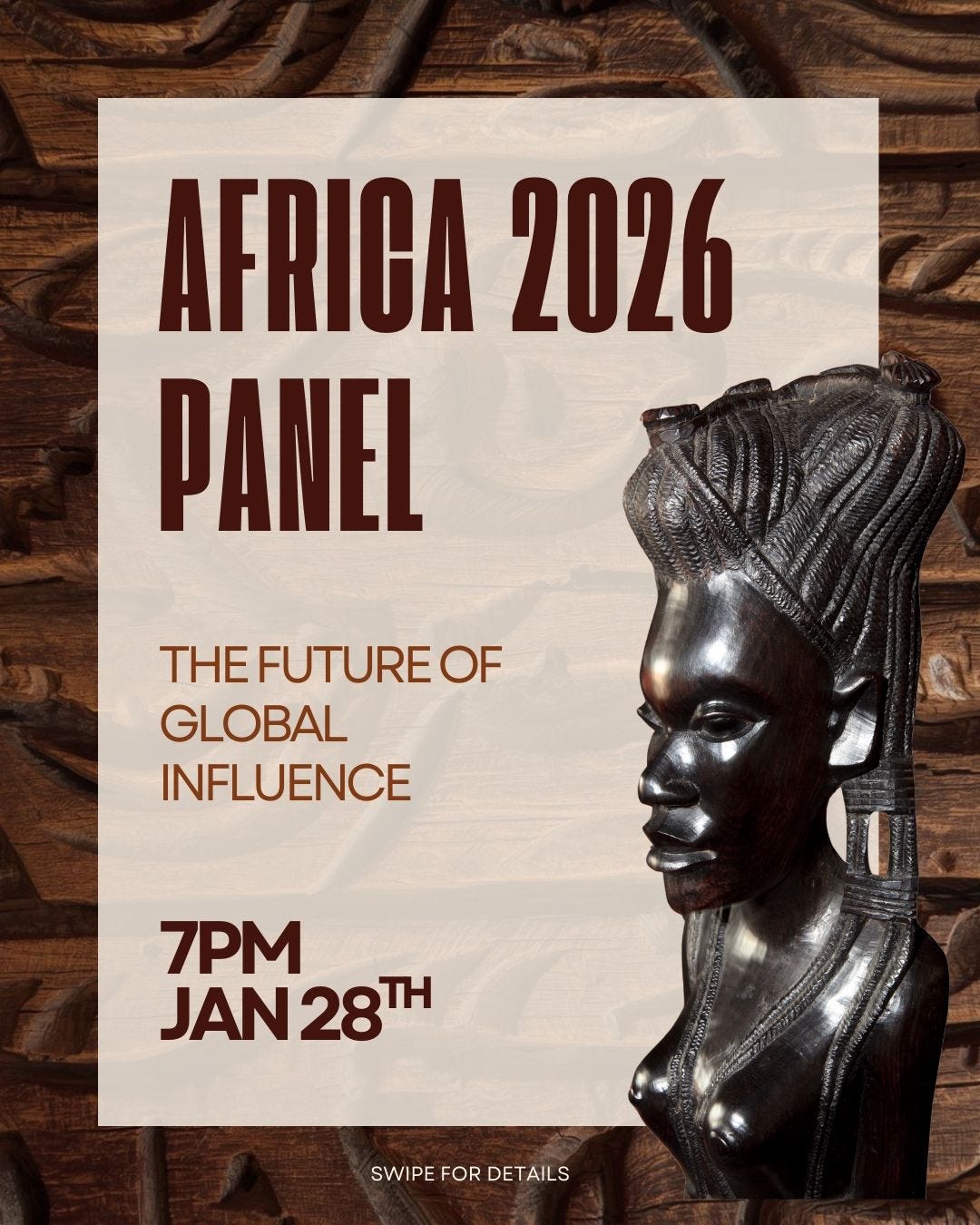
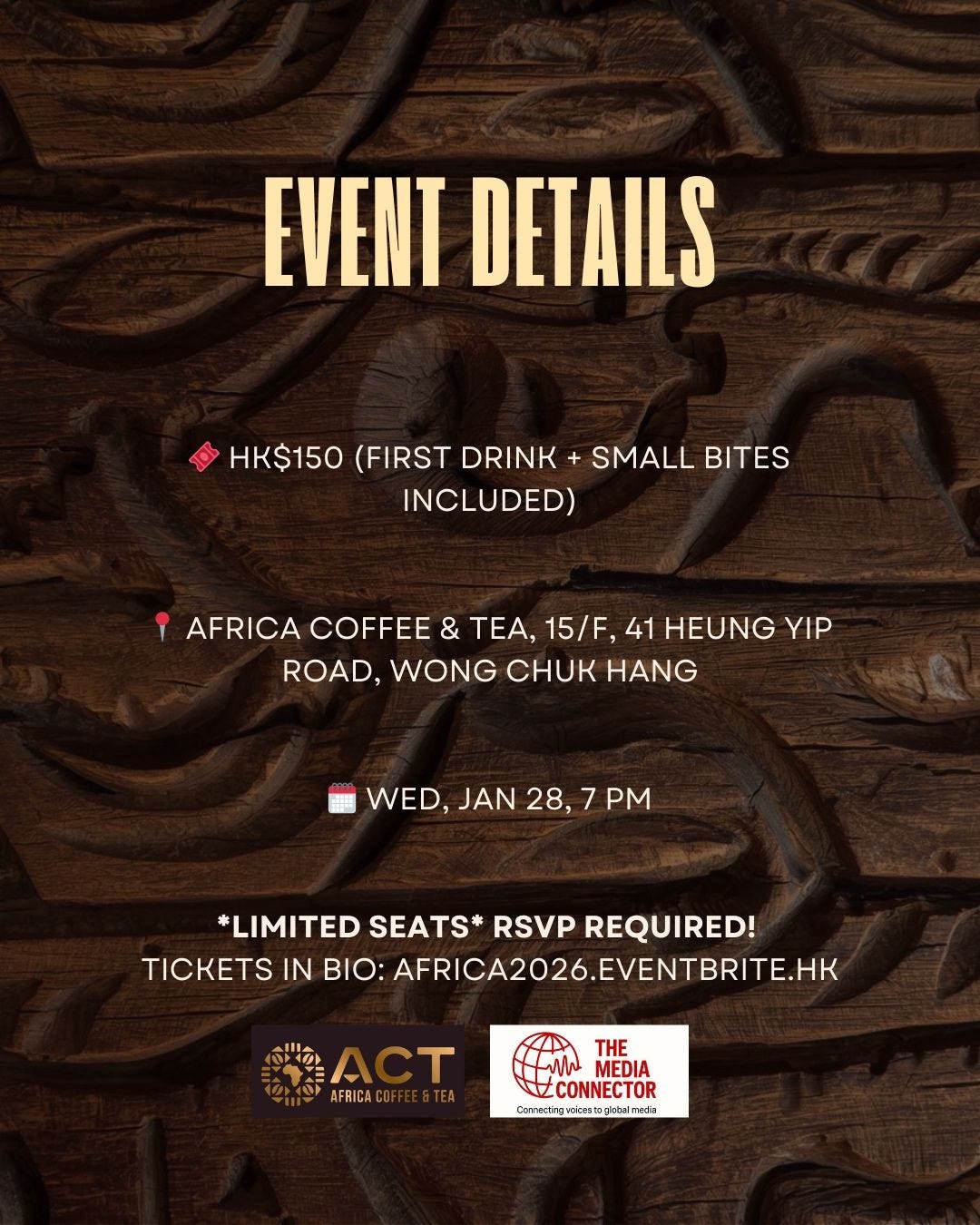
Want to learn more about Africa — and what’s in store for this dynamic continent in the year ahead? 🌍✨
Scroll down for details on “Africa 2026 Panel: The Future of Global Influence” - a not-to-be-missed Hong Kong power panel on January 28, 2026, moderated by me, and organized by Africa Coffee & Tea and The Media Connector. 👇
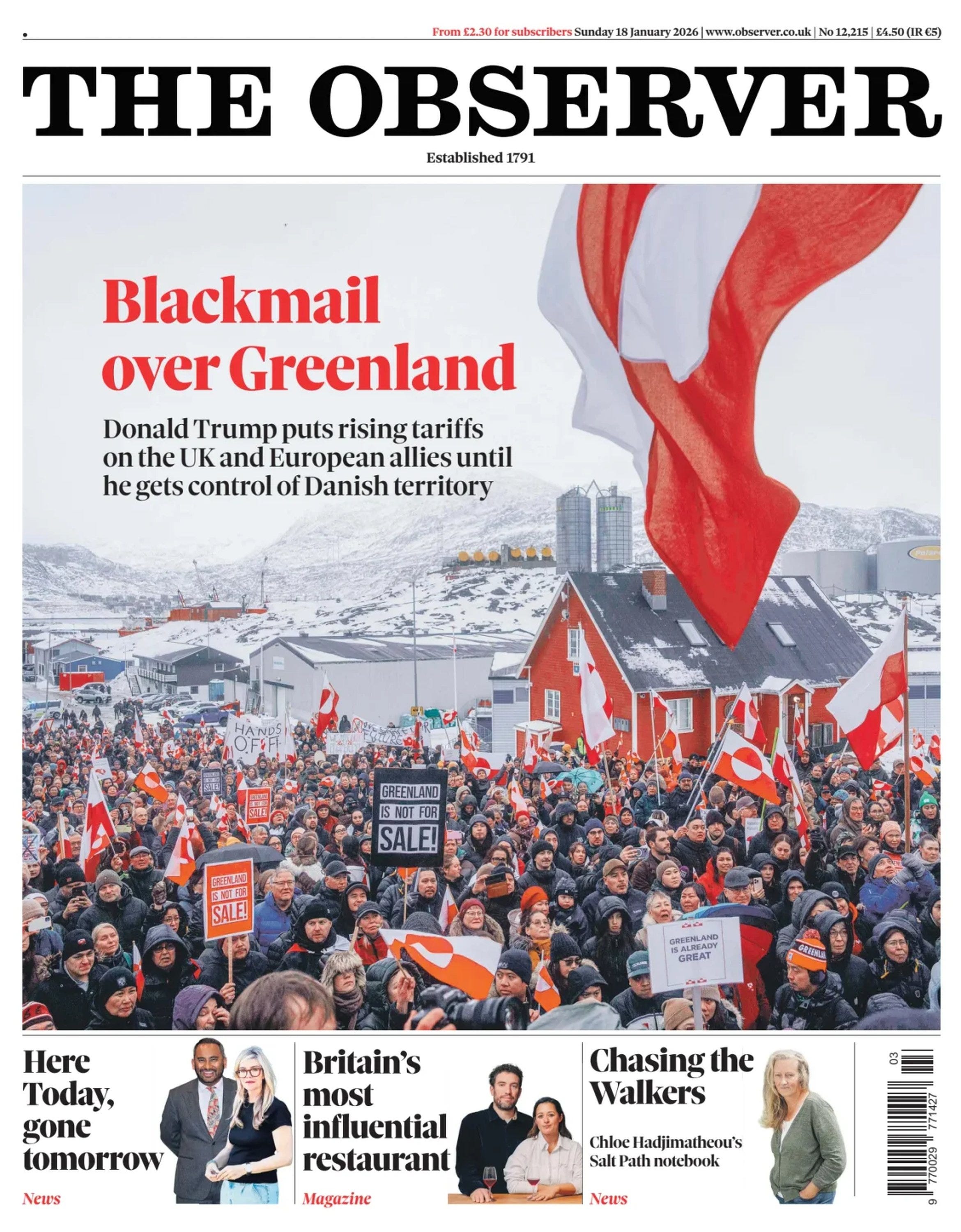
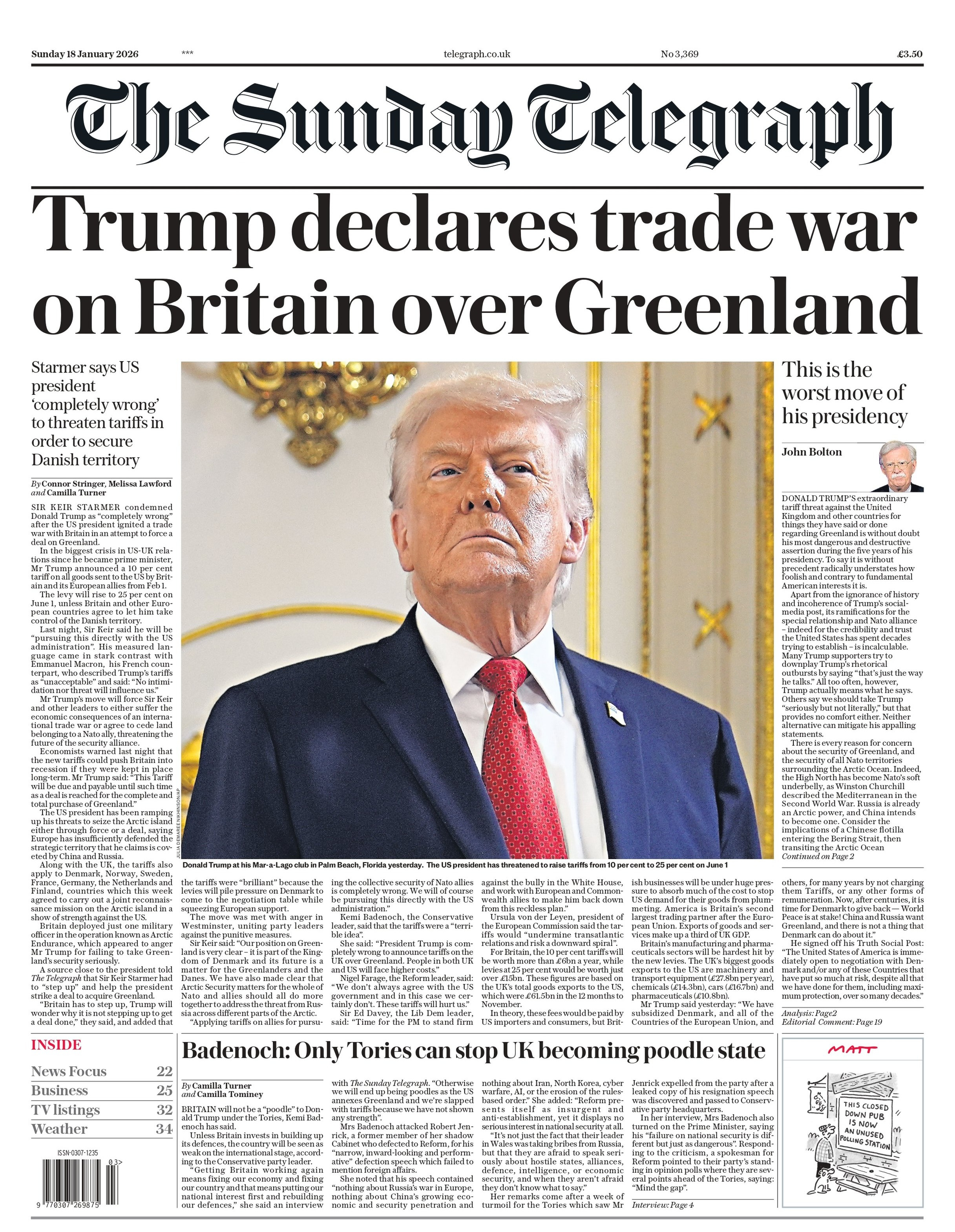
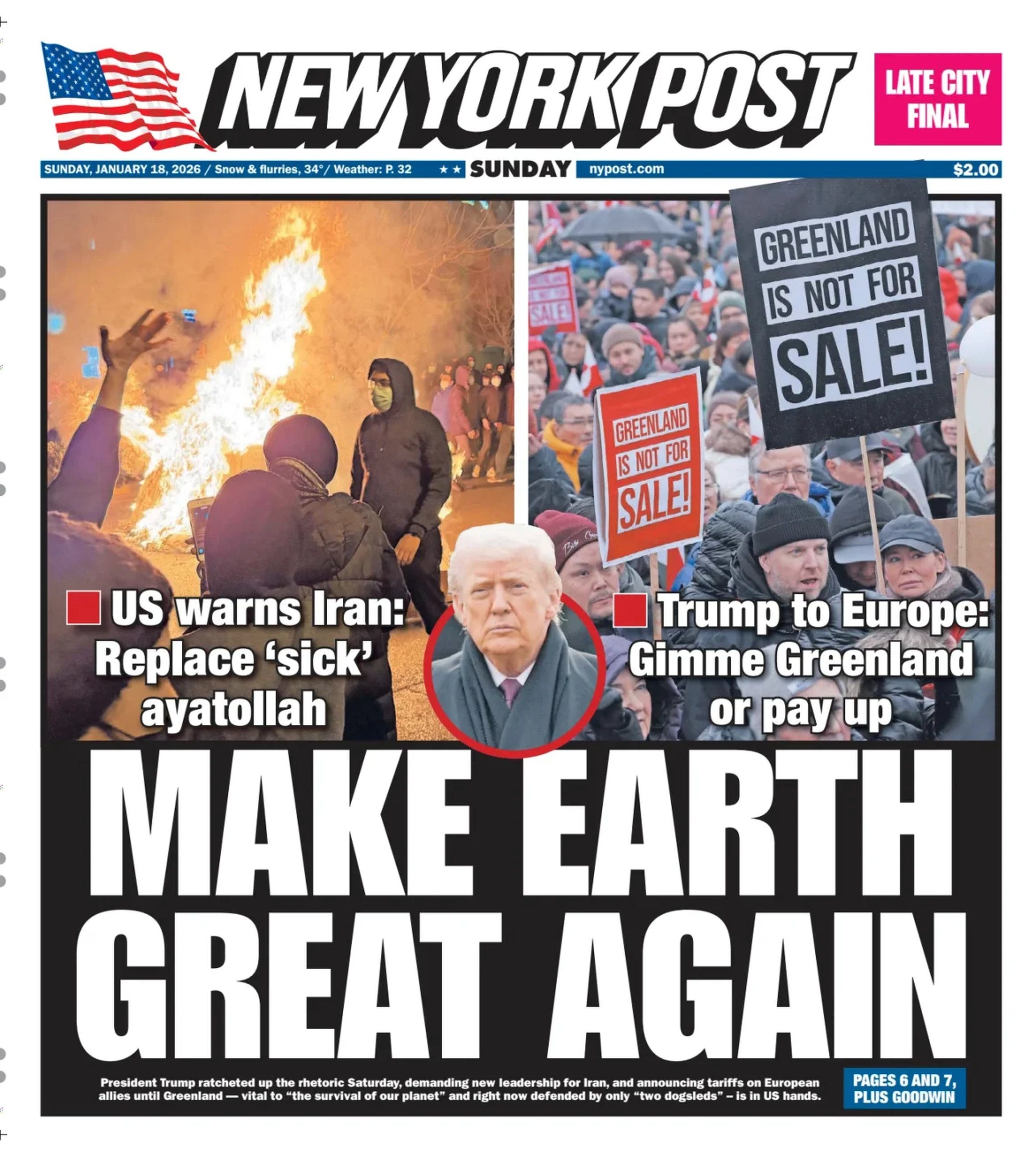
Denmark’s foreign minister Lars Lokke Rasmussen has been speaking with his Norwegian counterpart in Oslo about the Greenland crisis and in the wake of threats by Donald Trump to slam European partners with more tariffs until he gets control over the island. Rasmussen started by telling reporters that the war in Ukraine is at a critical point, and said that must not be forgotten during discussions over Greenland. He went on to say Denmark is trying to get Donald Trump to abandon the idea that he has to own Greenland. But despite the US president’s threats, Rasmussen said his country would like to continue to explore a diplomatic path forward. After meeting US vice president JD Vance and secretary of state Marco Rubio in Washington this week, Rasmussen said a high-level working group would be established to “explore if we can find a common way forward”. The group is expected to meet for the first time “within a matter of weeks”. - Sky News
Calls are growing louder for the European Union to deploy its “trade bazooka” against the United States in an unprecedented escalation. French President Emmanuel Macron is set to request the EU explores all available tools, including the bloc’s anti-coertion tool, according to a source close to the Élysée. The anti-coercion instrument adopted in 2023 to combat political blackmail through trade would allow the EU to restrict third countries from participating in public procurement tenders, limit trade licenses and shut off access to the single market. The tool has never been used and, while it would severely impact US services and products, it could also come with geopolitical ramifications - Euronews
UK, and European Union ambassadors are set to be holding an emergency meeting in Brussels. Cyprus, which currently holds the EU presidency, said it had called for the meeting of ambassadors from the union’s 27 countries. EU diplomats were quick to denounce Donald Trump’s tariff announcement, with European Commission President Ursula von der Leyen saying they would “undermine transatlantic relations and risk a dangerous downward spiral”.
US Treasury secretary Scott Bessent has said that the Europeans project weakness while his own country projects strength. that Trump “strongly believes we cannot outsource our security”. He added: “This fight for the Arctic is real, we would keep our NATO guarantees and if there were an attack on Russia, or from some other area, we would get dragged in. Europeans project weakness, US projects strength.…I believe that the Europeans will understand that this is best for Greenland, best for Europe and best for the United States,” he said.
Sunday Opinion
A Hypothetical with History: Moldova’s Union Debate, Then and Now
Putting Maia Sandu’s Podcast Answer in Context
By David Smith, Moldova Matters
If we have a referendum, I would vote for the unification with Romania
In an hour long episode of The Rest is Politics podcast, that line stood out. Moldova’s President Maia Sandu stated that, given the option, she would vote to unite her country with its neighbor and effectively eliminate her own elected position. This line has made waves inside and outside Moldova and led to a whole lot of confusion around the world. So let’s unpack what’s going on here a bit for the non-Moldovan audience.
A Unique Relationship in Europe
Moldova and Romania are neighbors that share a language and a lot of common history. The relationship between the countries doesn’t have any clear analogs elsewhere in Europe. In the middle ages modern day Moldova was part of the principalities that would later go on to form the Kingdom of Romania in 1881. But modern Moldova, historically called Bessarabia, was left out of this new nation because it had been annexed by the Russian Empire in 1812. When that empire disintegrated in 1917, Moldova declared independence and a year later voted to unite with Romania. The countries remained united until the Soviet Union re-annexed Bessarabia as part of their secret deal with Hitler in the Molotov–Ribbentrop Pact.
There are a lot of people on both sides of the River Prut that look back to this period of greater Romania nostalgically. Romania allows anyone with Romanian ancestors who were citizens before 1940 to reacquire their lost citizenship. Currently, there are no precise, public estimates of how many people in Moldova are dual citizens, but it is likely somewhere between a third and half of the population. This count includes President Maia Sandu, Prime Minister Alexandru Munteanu and many other politicians in the pro-EU camp.
Was This a Signal of a Change in Policy?
Short answer - no. In her interview Maia Sandu goes on to note that there is no popular demand for union and that it is not a realistic goal. She states that joining the EU is a realistic goal and that is what she and the government are committed to doing.
The context of the answer was important, the Rest is Politics hosts Rory Stewart and Alastair Campbell try to draw out a full picture of the people they interview starting with their childhood and early life. President Sandu was speaking about Moldova’s 1991 independence and how the swirl of ideas and movements included mass demonstrations for union. She noted that we’ll never know if there was a majority for union at that moment because no referendum was held. She answered the question in this context and made it clear it was a personal opinion and not a part of her political project or political ambitions.
Political Blunder or Careful Signaling?
That depends on who you ask. Union is usually considered to be the 3rd rail of Moldovan politics - you don’t touch this issue unless you have a political death wish. While small political parties have made their whole identities about union, most politicians recognize it is too divisive and far too unlikely to speak about. Maia Sandu has answered this question before in Romanian language interviews. She answered it exactly the same way, basically honestly giving a personal opinion. Some people find this refreshing in a politician, some find it to be a political blunder. If she did have a political calculus in the answer, the fact that she is not running for reelection may have played a role.
With that said, there is a case to be made that this was slightly more calculated than just that. When asked by the hosts to clarify why she would support it, President Sandu said:
“Look at what’s happening around Moldova today, look at what’s happening in the world. It is getting more and more difficult for a small country like Moldova to survive as a democracy and a sovereign country… and of course to resist Russia.”
For context we should go back to the Union of Bessarabia with Romania in 1918. Contrary to what many modern unionists claim, this was not principally a nationalistic or ethnically driven process. At that time Moldova was substantially more ethnically and linguistically diverse than it is today. The urban centers largely spoke Russian and while the large majority of the population were Romanian-speaking they were spread out in smaller towns and agrarian communities. The first parliament, the Sfatul Țării, actually debated and ultimately chose to join Romania while speaking in Russian, underscoring how little nationalism played in the decision.
So if this wasn’t totally a national project what was it? It was a decision based on national security.
As the Russian Civil War raged in the east, Bolshevik units, often acting as rogue raiding parties, made more and more incursions into the new Moldavian Democratic Republic. They burned estates and villages, occupied rail links and began an attempt to overthrow the Sfatul Țării to replace it with revolutionary committees. In January 1918 the Sfatul Țării requested military support from Romania and the Romanian army quickly restored order. This led to a debate about what ultimate political settlement would ensure security and resulted in the vote for union in April 1918.
This is important context for the President’s modern remarks and for Moldova’s current situation. Both in 1917 and in 2025 there was no mass political movement for union. The option was and is popular with a segment of the population but nowhere near a majority. At the same time, a vast majority of the country would look for almost any solution rather than rejoin a Russian Empire. That was true in 1918 and it is true today.
Whether or not it was intended, President Sandu’s comments can be read as an implicit warning to the EU. She implied that while we are standing at the front door waiting to get in, if you don’t open it, then we might just climb through the window.
Anyone paying attention to the events of the past few years cannot help but conclude that when this ends there will be no small, neutral countries between the EU and the new Russian Empire. Unlike Ukraine and Belarus, Moldova does have this extra option to find itself on the right side of that divide - a kind of geopolitical “pull in case of emergency” lever. So while people should really not read much into President Sandu’s comments on a podcast, it is relevant to remember that this complex history informs how Moldovans view their options in an ever more dangerous world.
Consider becoming a free or paid subscriber to Moldova Matters to keep up with the most important news about this small but very important country.
The journals….
Africa is no longer a "future story." It's a strategic force reshaping the world. With the world's youngest population, vast critical mineral resources, and growing geopolitical clout - reinforced by hosting the G20 Leaders Summit for the first time - Africa is moving decisively onto the global stage. As competition intensifies over resources, trade routes, technology, and diplomatic influence, understanding where Africa is heading is no longer optional for global business, policy, and media audiences.
Tickets available here and stay tuned for details to watch online.