

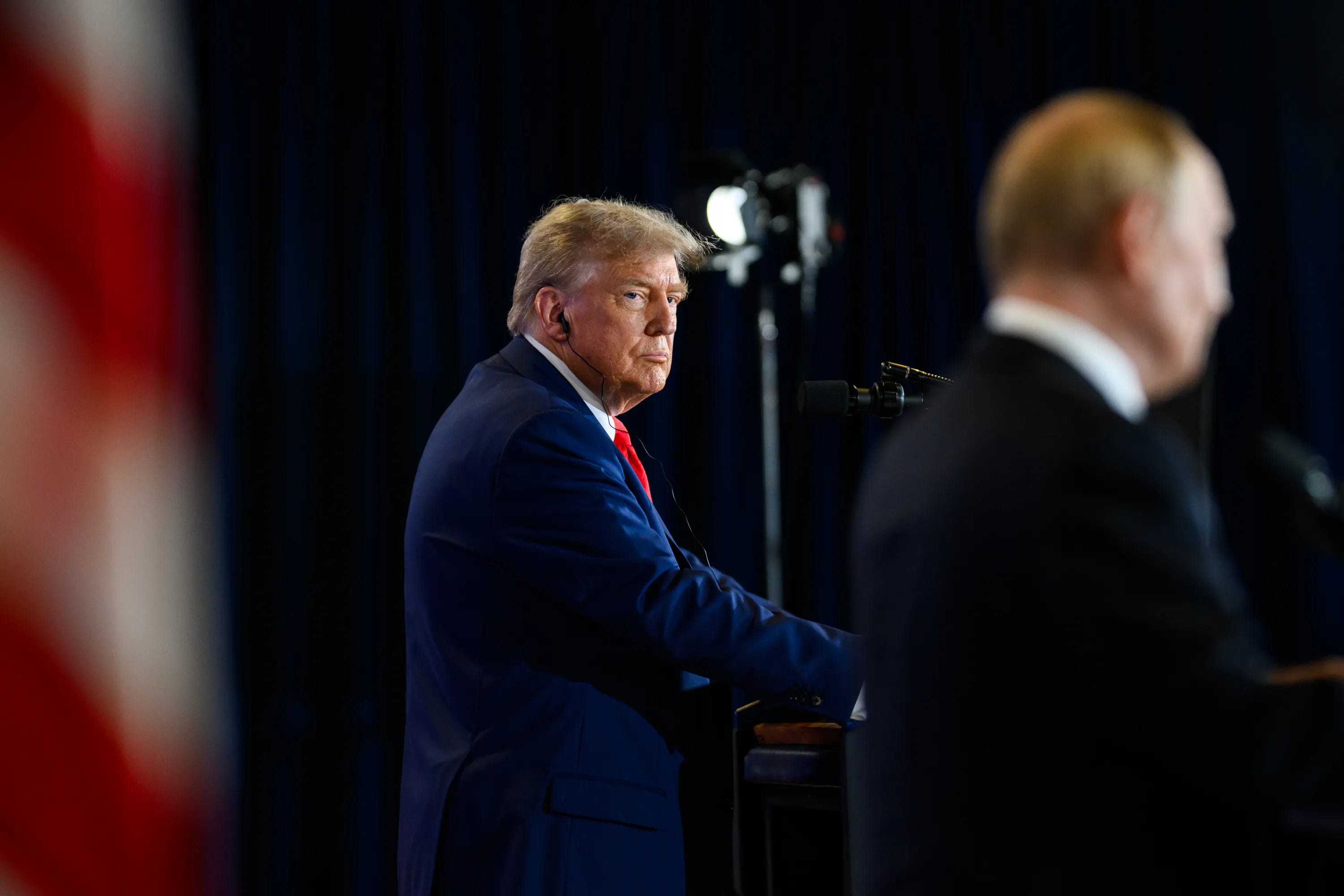
Trump’s first big foreign-policy play since the midterm drubbing opens tomorrow in Abu Dhabi, and it looks a lot like the last one. The trilateral talks on ending Moscow’s war against Ukraine run Tuesday and Wednesday, the first since February. That was when the Iran war pushed Ukraine off Washington’s desk. Last week voters punished him for that war at the ballot box: the results ended the Republicans’ trifecta of holding the White House, Senate and House.
US President Donald Trump is again telling us peace is near. He met privately at the White House on Thursday with Kirill Dmitriev, Russian President Vladimir Putin’s special envoy, but did not meet the Ukrainian officials who were visiting the same day. Afterwards he said a deal was “very close” and could involve “all of Europe.” If the war ends, he says, it will be because of him. We have heard both lines before. He said the US was getting very close to a deal at last year’s Thanksgiving turkey pardon. But borders and territory are not his to give away. Under Ukraine’s constitution, any change to its territory has to go to a national referendum, and Europe’s security order is for Europeans to decide.
Pay attention to the phrase Jared Kushner, Trump’s son-in-law and adviser, used last week. He said the talks would focus on a “new European security architecture.” In Moscow’s vocabulary, that means pulling NATO back from front-line states and capping the size of Ukraine’s armed forces. Ukrainian President Volodymyr Zelensky has already called the idea dangerous for Ukraine, and Europe has noticed too. The national security advisers of France, the UK, Germany and Italy are flying to Abu Dhabi, along with senior officials from NATO, the European Commission and the European Council. But they are not expected to be in the room for the main negotiations, because the Kremlin objects to their being there. Günter Sautter, German Chancellor Friedrich Merz’s security adviser, has the right line: no talk of a new security architecture until Russia agrees to a ceasefire. He also coordinates the German-led Berlin Format, which brings Ukraine, the E3, NATO, the EU and other partners together. Canada is one of them. Italy’s seat is new. Here in Rome, it is being read as a win for Prime Minister Giorgia Meloni, who pushed Brussels last week to settle once and for all who speaks for Europe at the table.
Now look at who is sitting at the table. Ukraine is sending Rustem Umerov, head of its foreign intelligence service, with Kyrylo Budanov and David Arakhamia. Moscow is sending its first team. Kremlin aide Vladimir Medinsky again heads the delegation as chief negotiator. For the first time it includes Deputy Foreign Minister Sergei Ryabkov, along with Yury Zhigarlovsky, a senior General Staff officer. Deputy Foreign Minister Mikhail Galuzin and military intelligence chief Igor Kostyukov are also coming. All of them met Putin on Friday at a Security Council meeting partly devoted to the talks.
Washington’s negotiators are the same two men as before. US special envoy Steve Witkoff and Kushner have represented the US at every previous session in this series. In that time they have barely moved the needle. The one clear result is a Russia with fewer restraints on it. Over countless meetings and summits, as I told Germany’s ARD today, the Russians have managed to get into the ears of the Trump circle.
Witkoff himself describes Abu Dhabi as “working-level negotiations.” A late addition of Secretary of State Marco Rubio does not change who has been running this file.
Moscow is also negotiating with missiles. Strikes on Dnipropetrovsk left 600,000 people without power on Saturday, and Zelensky accuses Russia of trying to black out the whole country before the talks.
This is supposed to be Track One diplomacy, government to government. But on the American side there is no structure behind it: no interagency process feeding in, no note-takers, no agreed readout. And that’s almost unheard of in good old-fashioned diplomacy. Both sides need to be held to account for what they agree to. We came out of Alaska with only one side saying what had been agreed, and that side was Russia. Moscow called it “the spirit of Anchorage.” The Kremlin has said it hopes Trump keeps up his peacemaking despite the Republican setbacks in the midterms. That tells you who expects to benefit.
There is a better venue on the table. When Zelensky was in Istanbul on Oct 31, Turkish President Recep Tayyip Erdogan showed interest in hosting negotiations at the leadership level. On Thursday, asked about a leaders’ summit aboard his plane home from South Korea, he said Turkey is doing everything it can to pave the way to peace and wants to take it up with Putin. I have argued for this forum for months. Turkey has more riding on Black Sea security than any other mediator, since its trade lanes and ports sit in the same waters as Odesa’s. Ankara also has a track record here: the two leaders agreed to work toward restoring a functioning Black Sea grain corridor, building on Turkey’s role in the 2022 deal.
Turkish money is already committed in Ukraine. Turkish firms are among the country’s biggest foreign investors, and Turkish contractors are rebuilding roads and bridges. Baykar, maker of the Bayraktar, is putting nearly $100 million into a drone plant in Kyiv that Russia has struck repeatedly, and it has kept building anyway. Ankara has a direct financial interest in a durable peace.
Erdogan also has Putin, Zelensky and Trump on speed dial. He told Trump in an Oct 28 call that Ankara stands ready to help. Turkey is a NATO member that still does serious business with Moscow: S-400 air defence systems, a Rosatom-built nuclear plant at Akkuyu, and millions of Russian tourists a year. That is leverage on both sides. A leaders’ table in Istanbul, with a Turkish chair, Europe in the room and an actual written record, is the kind of structure Abu Dhabi lacks.
If nothing comes out of Abu Dhabi in writing, signed by all three parties, the case for moving this to Istanbul only gets stronger.
News Briefs
France has accused Iran of being behind cyber-attacks that raised the temperatures of supermarket fridges and freezers. French Foreign Minister Jean-Noël Barrot said the attack was carried out by the Islamic Revolutionary Guard Corps (IRGC) of Iran. He said the attack was “unprecedented in both its scale and its level of aggression”, adding that the country would “implement sanctions at the European level against all those responsible for this attack”. The cyber-attack last month saw fridges and freezers in hundreds of supermarkets across France heated up, which spoilt fresh and frozen food estimated to be worth millions of euros. Then last week, dozens of supermarkets across seven other European countries were also impacted by a cyber-attack that targeted fridges and freezers. It is not known if the instances are linked. Iran is yet to respond to Barrot’s allegations. Barrot said of the attack on France’s supermarkets: “It marks the first large-scale cyberattack aimed at sabotage on our national territory, and it constitutes a major attack on the nation’s interests and the security of the French people.” He said the government had summoned the Iranian ambassador to Paris to “lodge a very strong protest against this extremely grave act”. - BBC
Britain’s rail network could be shut down for up to a week by a major cyber attack from a hostile state, costing the economy £1.8 billion, according to Department for Transport documents obtained by The i Paper. Experts call the threat realistic, and one expects an attack by 2028. The warning comes as Europe’s grey-zone war spreads: bomb hoaxes are grounding flights across the continent, and hackers are targeting supermarket fridges.
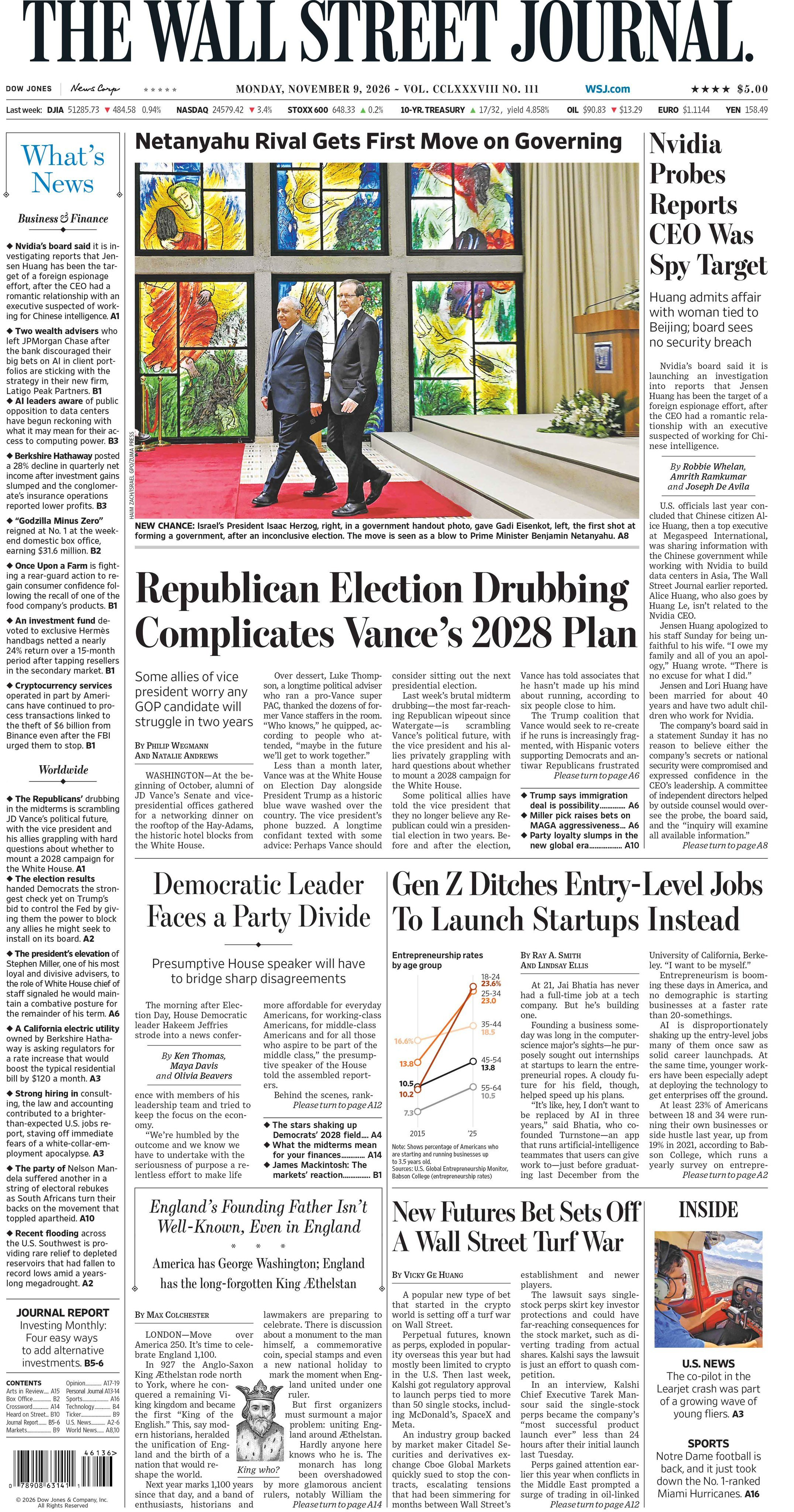
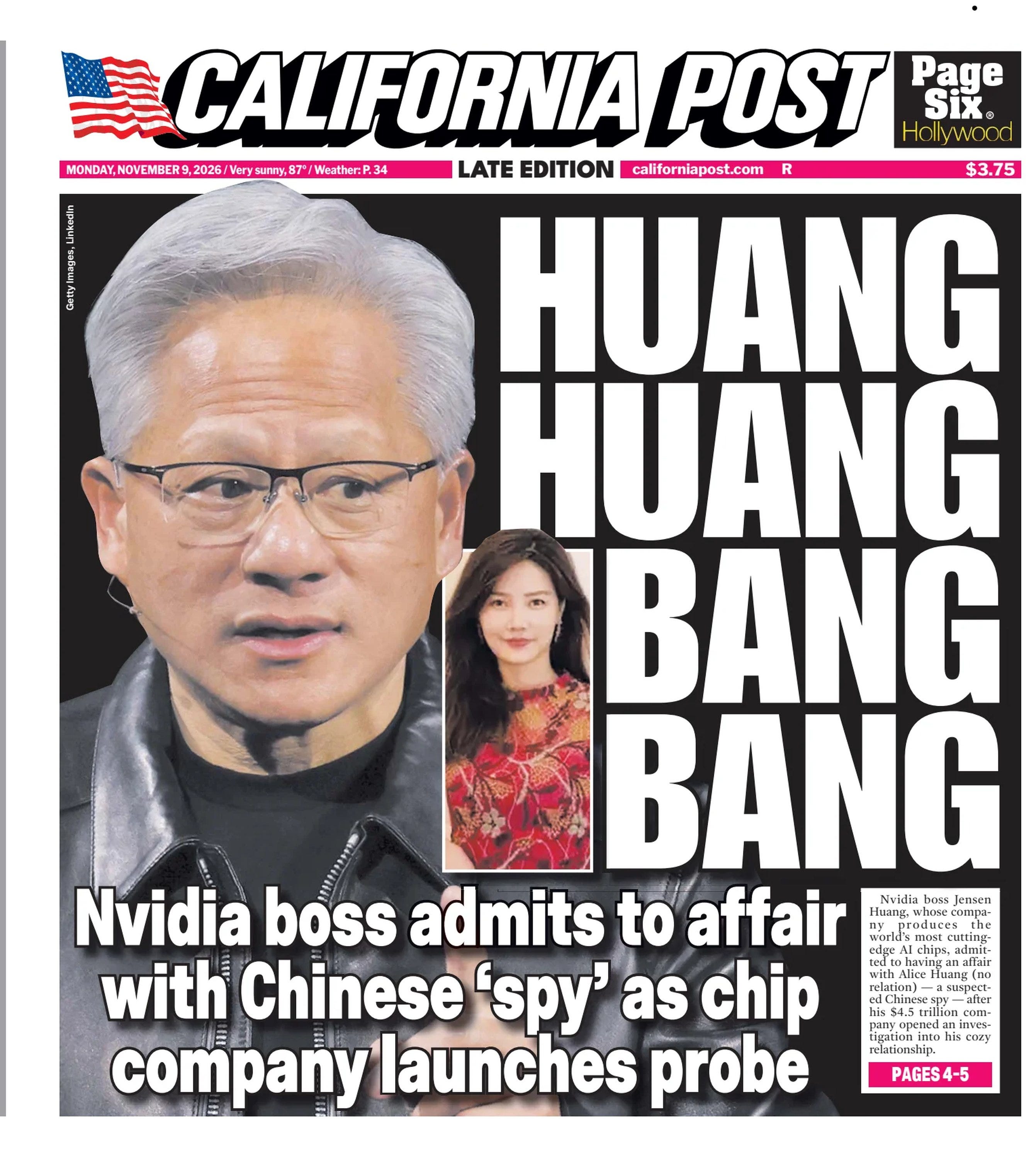
Nvidia shares fell after its board began investigating longtime CEO Jensen Huang over whether his extramarital affair exposed the giant chipmaker to a foreign espionage operation. Though US President Donald Trump lent the Nvidia boss his backing, the widening scandal — multiple outlets have reported Washington’s concern that the woman in question had ties to Chinese intelligence — intensified worries over Nvidia’s leadership: Huang has been CEO since its founding in 1993, the firm has no clear successor, and he has elevated his children to senior roles. For now, one analyst noted, Huang staying on had helped stanch declines in Nvidia stock: “If we genuinely thought he was going to step down,” he told Reuters, “it would be an absolute bloodbath.” - Semafor

Independent journalism doesn’t happen on its own. It takes time, travel, persistence- as well as readers who believe in the mission.
If you value World Briefing’s on-the-ground reporting - from the Black Sea frontier to other far-flung frontlines - and independent analysis that connects the geopolitical dots, please consider becoming a paid subscriber.
You’ll get subscriber-only insights, in-depth reporting, members-only videos and, coming in 2027, exclusive in-person and virtual briefings.
🌍 Upgrade to World Briefing Plus:
https://michaelbociurkiw.com/winter2026
Or support my reporting directly:
❤️ Patreon: https://patreon.com/Michael_Bociurkiw
☕ PayPal: https://www.paypal.com/ncp/payment/DGPNWZ6ERYYW2
Every subscription and contribution keeps me reporting, asking difficult questions and telling stories that might otherwise go untold.
The world isn’t getting any simpler. That’s why World Briefing matters. Thank you for being part of the journey!
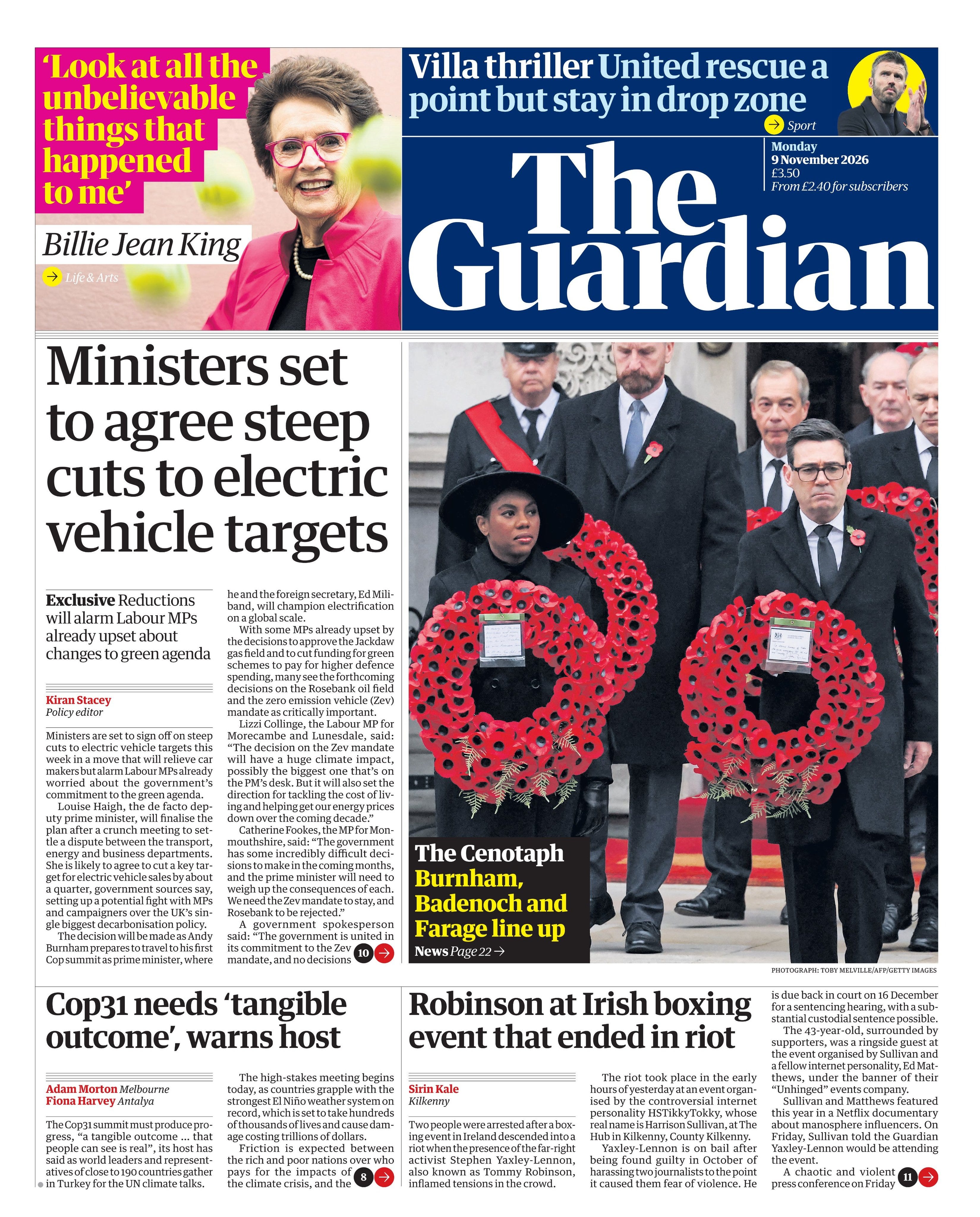
The UN’s annual climate conference opened in Türkiye, with policymakers facing unprecedented challenges as the El Niño weather phenomenon exacerbates the impact of a warmer climate. Semafor reported that although experts have warned that the world will be exceptionally hot in the coming months, the COP31 summit is expected to be light on substance as governments prioritize energy security in the face of soaring fuel prices driven by the Iran war and the AI buildout. The conference’s spirit of cooperation seems of another era too, The New York Times argued. Some, however, see hope in the rapid rollout of green energy over the Middle East conflict: China’s clean tech exports this year alone will cut emissions by an amount equivalent to Brazil’s annual release.
The Russian Union of Travel Industry (RST) said Monday that it requested the government to hold talks with authorities in the Maldives after the island nation’s largest bank began rejecting payments made by Russian tourists. The Bank of Maldives began returning payments on Oct. 18, with an estimated total volume of delayed or returned payments reaching $2 million. Some of the rejected payments originate from foreign third-party entities acting as middlemen. RST said it appealed last Friday to Russia’s ambassador in Sri Lanka and the Maldives, as well as a senior Russian Economic Development Ministry official, to “hold consultations” with Maldivian officials on the matter. “Industry players need to understand what drives this approach and how to ensure timely payment for hotel services,” RST board member Artur Muradyan said. Russian travel operators are forced to absorb repeated bank transaction fees while leaving hotel stays unpaid, RST executive Dmitry Arutyunov said. In several cases, Russian tourists were forced to pay twice for their rooms upon arrival or face eviction. Russia represents the second-largest source of incoming foreign tourism to the Maldives after China, according to the Kommersant business newspaper. Russian tourists made up 14.3% of all arrivals, with 258,100 visitors between January and October of this year. Travel agencies in Russia see the Maldives as one of the most profitable luxury destinations. The average booking price is around 585,600 rubles ($7,000) per package. Still, industry leaders have warned that Russian tour operators will be forced to reconsider their investments and promotion of the island nation if the banking issue remains unresolved - Moscow Times
The journals…
I am a 12 year Military Engineer veteran. While at RMC we were told in 1974 that Russia ( as leaders of the USSR) was the enemy and that you can never trust the Russians. Nothing changes.
Thank you for your insightful analysis and reporting.
Go Elks in the Grey Cup.
Michael. You nailed it when you highlighted that Ukraine’s land cannot be given up. Sending Kuschner and Witcoff to these sham talks besides their incompetence is unserious on behalf of the US. They are merely Putin Stooges.