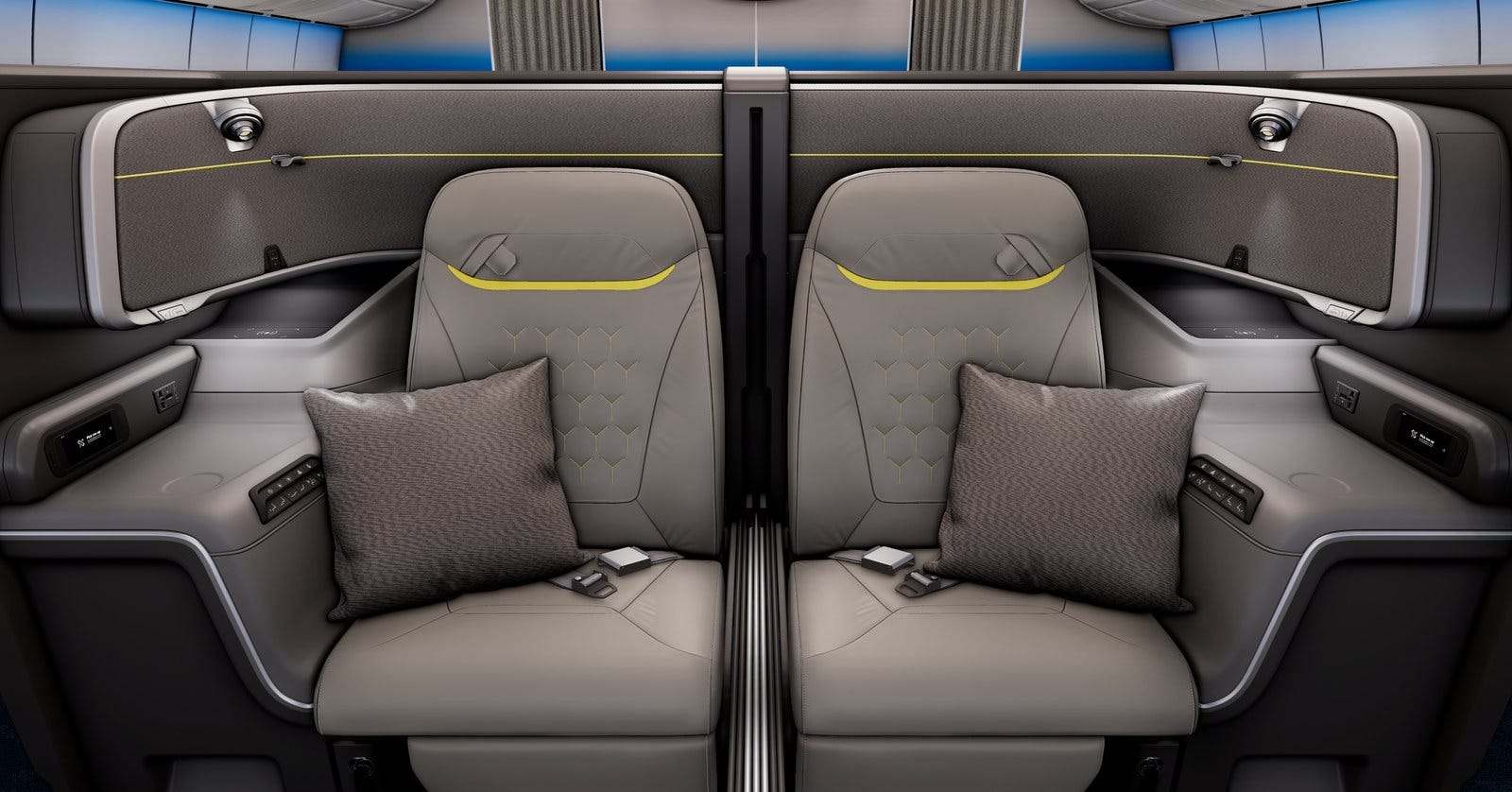
A suit with sneakers. That is how the head of BMW’s design studio pitched her new business class for Singapore Airlines: “a suit with a sneaker,” modern and fresh. Singaporeans reached for other comparisons. A dentist’s chair was one. “Scoot J” was another, after the group’s budget carrier, whose yellow now trims the seats.
This is not just any airline. For decades Singapore Airlines has set the bar the rest of the industry measures itself against. The A380 superjumbo, Boeing’s 787-10 and Airbus’s longest-range A350 all flew first in its colours, which is why plane-makers court it so hard. In 2007 it put the first double bed in the sky, then had to ask couples, straight-faced, not to get carried away, soundproofing not being part of the package. What SIA buys and installs, from multi-billion-dollar aircraft orders to new seats, rivals study.
So this was meant to be a triumph. A programme worth more than S$2 billion, spanning all four cabin classes and 72 long-haul jets, went on show on 6 November. Within days the yellow stripe had its own online petition. Management spent the best part of a week standing by the palette before CEO Goh Choon Phong told staff “we’ll see what is feasible.” There was no admission of error.
I interviewed Singapore’s founding father, Lee Kuan Yew, probably more times than any other foreign correspondent. Every question had to be submitted weeks ahead. That was the Singapore he built: nothing left to chance. At SIA’s launches, sober executives would stand beside a dazzling product and let it do the talking. This time the product said the wrong thing.
The real complaint isn’t grey and yellow. It is that nothing in the cabin says Singapore: three outside studios, three briefs, no single identity.
Flag carriers are never just companies. When British Airways swapped the Union Flag on its tails for world art in 1997, Margaret Thatcher, by then out of office, answered with a handkerchief, laid over the tail of a model jumbo while the television cameras rolled. By 1999 the flag had returned.
Singapore has long prided itself on controlling what happens within its borders than what comes from outside. Five weeks ago, its other showcase, the Formula 1 night race, ran under Indonesian wildfire smoke that briefly made the city state the world’s most polluted city. I once told Lee I could smell the smog in my hotel corridor; he looked exasperated. Some things even he could not manage. A fine city in a rough neighbourhood, I called it in Digital Pandemic.
The cabin is different. Nobody did this to Singapore. It is a self-inflicted wound, and not the first time Singapore Inc. has misread the room. In Suzhou, Lee misjudged his Chinese partners: local officials built rival estates next door, and his showcase industrial park lost about US$90 million. In India, SIA underestimated nationalist opposition, which killed its planned domestic airline. Its second attempt there is proving costly: a 25.1% stake in Air India cost it S$361.7 million in the past six months, about 2.7 times the group’s entire profit.
And in 2020, a government that traced COVID by Bluetooth failed to anticipate the disaster waiting in crowded dormitories housing 323,000 migrant workers. The warning signs were there: the dormitories had already experienced outbreaks of dengue, Zika, measles and tuberculosis. Migrant workers went on to account for 93 of every 100 confirmed cases. In Digital Pandemic, I called it Singapore’s biggest blunder, yet still put the country on the pandemic podium. I might have been too generous.
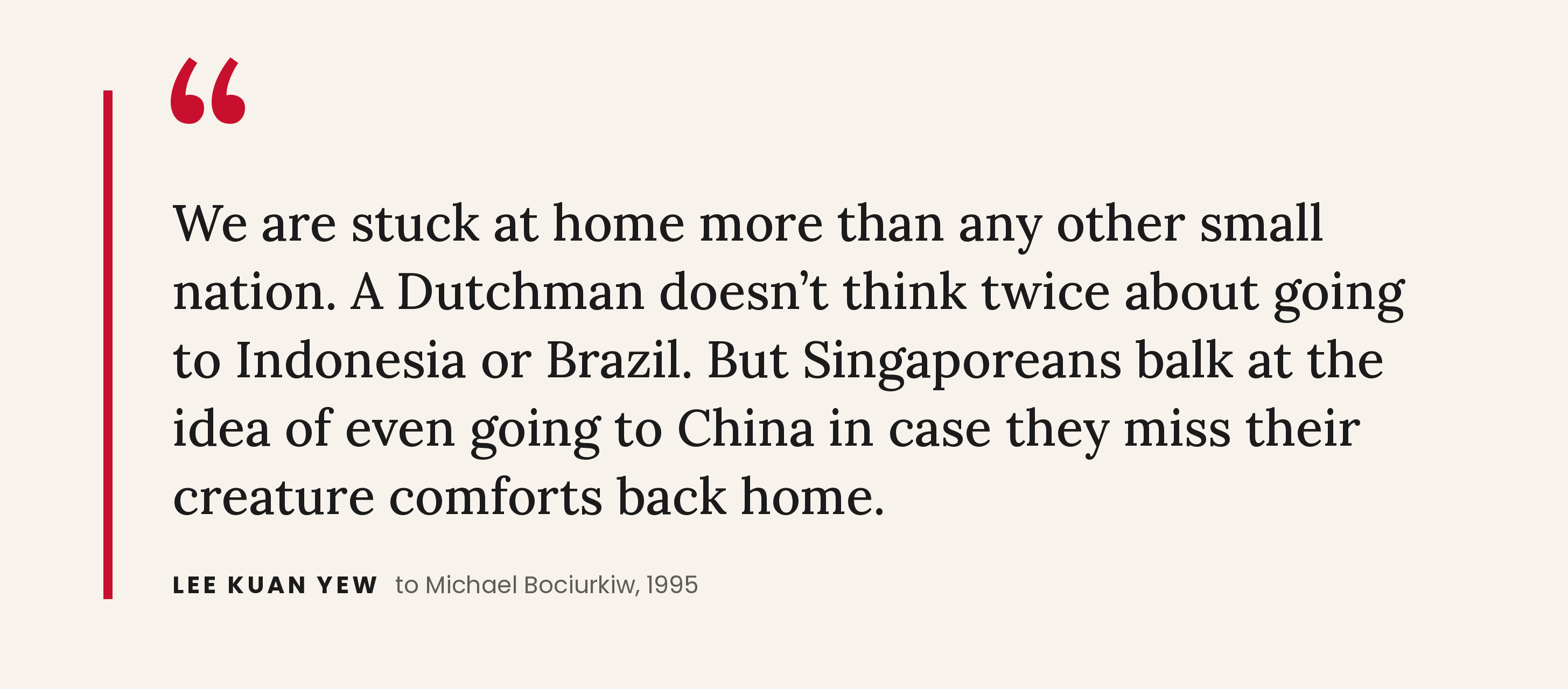
Lee saw it coming. In 1995 he told me he worried Singapore had become “such a cosy place” that its managers preferred to stay put. The seats don’t fly until the second half of 2027, and colours can be changed. Cosiness is harder to fix.
Singapore Airlines and Designworks have been asked for comment.
News Briefs
Europe may finally be getting a seat at the Ukraine peace table, if you take Steve Witkoff’s word for it. The claim came on Russian state TV after the US envoy’s Kremlin meeting with Vladimir Putin on Thursday: Europeans, he said, will be at the next round as partners whose participation matters to Washington. The Kremlin was cooler. Putin’s own message was that Washington should first get its allies to decide whether they want peace or war. No confirmation of a European seat came from his aide Yuri Ushakov, and a named European negotiator is the precondition, according to spokesman Dmitry Peskov. No such name exists yet, with EU capitals in at least three camps over who should speak for them. Dublin was the next stop for Witkoff and Jared Kushner, and the prospect of Europeans at the table went down well with Volodymyr Zelensky. His complaints followed all the same: fresh speed limits on the Starshield satellite service his troops rely on, and a US habit of discussing Europe’s security order with Moscow that he called “a bit strange.”
On the eve of a once-in-five-years arms control gathering in Geneva, the head of the International Committee of the Red Cross is warning governments not to let the future of warfare be “handed over to machines.” Mirjana Spoljaric’s appeal lands ahead of the Seventh Review Conference of the Convention on Certain Conventional Weapons, which runs 16–20 November and will weigh whether to open talks on a new protocol governing autonomous weapons. Her case: the industry’s promise of cleaner, more precise war has not survived contact with today’s high-tech battlefields, where civilians have fared no better. Nowhere is that less abstract than in Ukraine, where both sides are racing to field drones that find and strike targets with less and less human input. And there is precedent for drawing lines, since biological and chemical arms, anti-personnel mines and cluster munitions all fell under international bans or restrictions. The ICRC is not seeking a blanket prohibition; it wants unpredictable systems and those built to target people outlawed, with strict legal limits on the rest. A consensus report in September already gave negotiators a set of agreed elements to build on, endorsed by states with sharply different strategic interests. The question next week is whether governments are ready to negotiate.
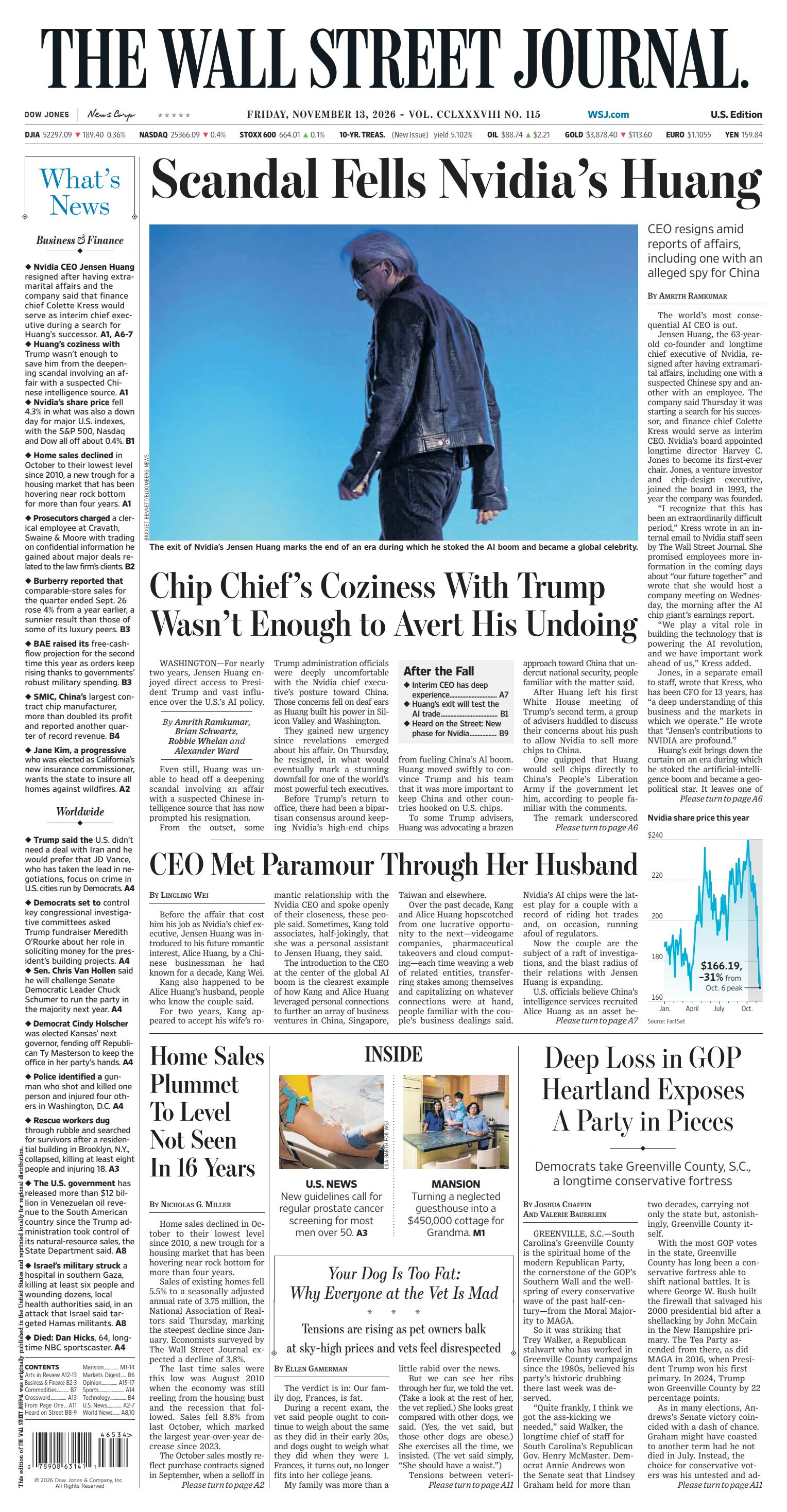
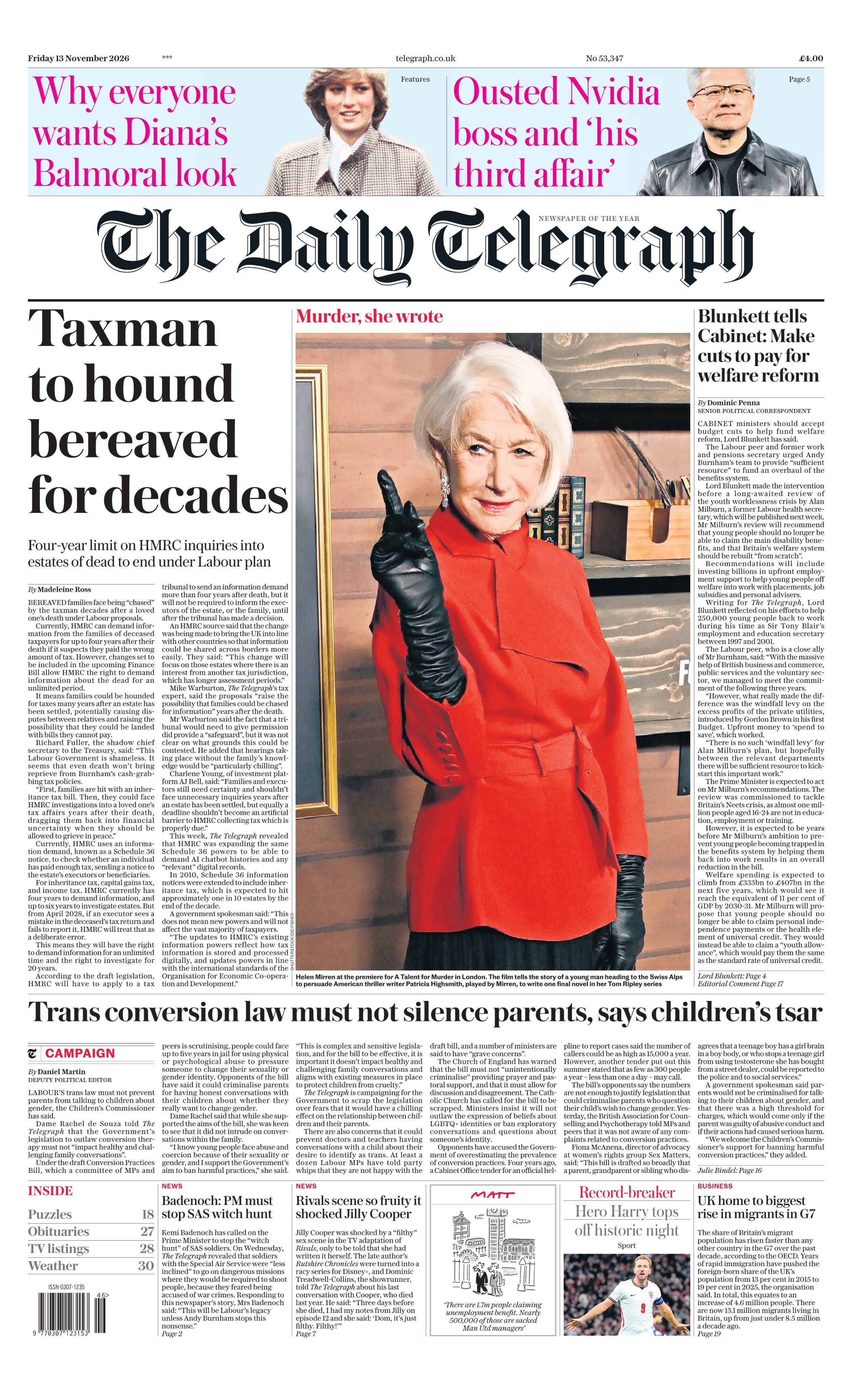
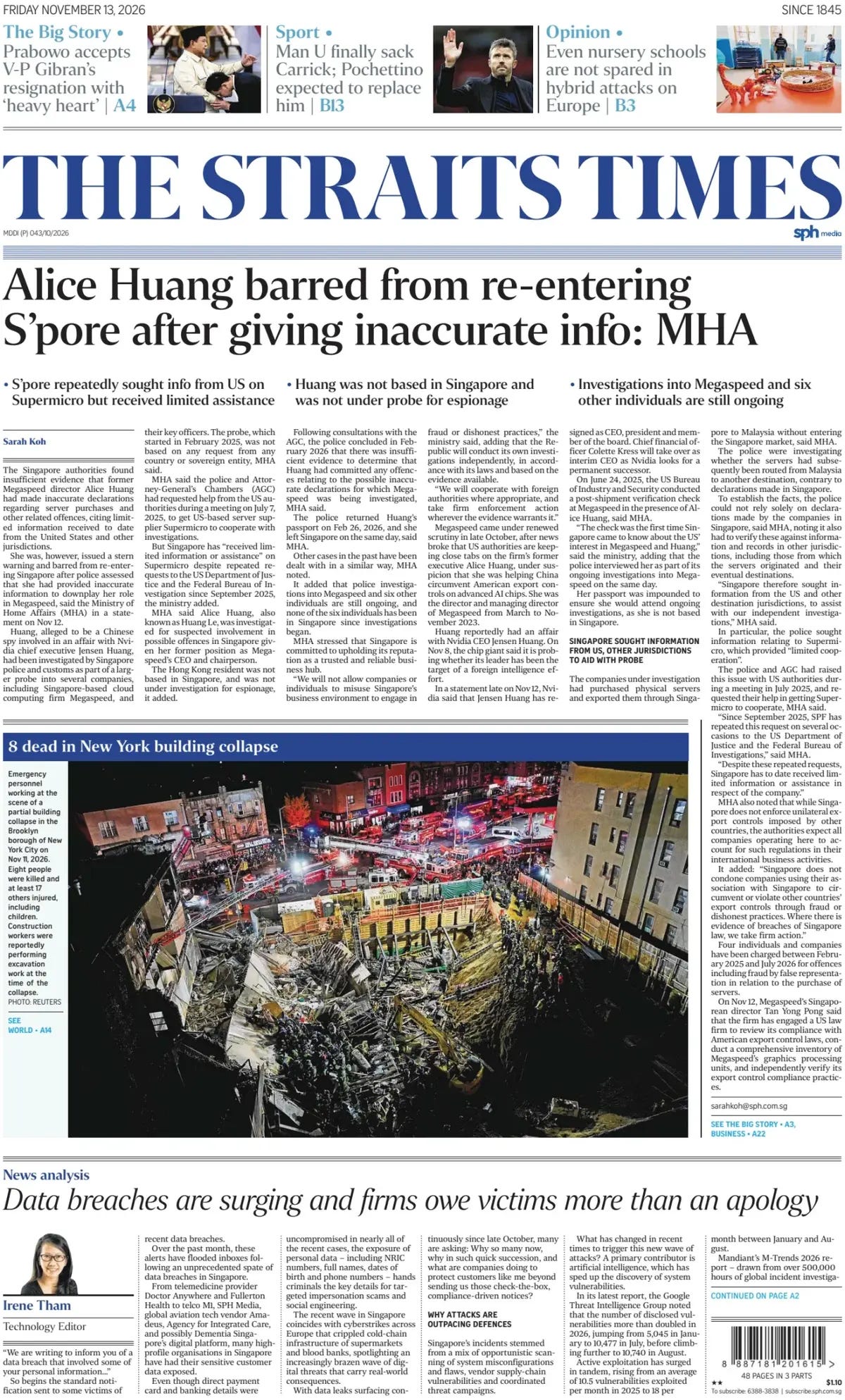
Singapore is not given to airing grievances with Washington in public. On Thursday it did. Confirming that it had barred Alice Huang, the businesswoman at the centre of the scandal that has just ended Jensen Huang’s 33 years running Nvidia, the home affairs ministry added a pointed aside: repeated requests to the US Justice Department and the FBI for help with its own chip probe had yielded “limited information or assistance.” It is one more strain on one of America’s most important partnerships in Asia. Since July a 12.5% American tariff has hung over a third of Singapore’s exports, justified by forced-labour claims the government strongly rejects. And this week it emerged that US$1 million went from the ambassador to a pro-Trump committee a month before his nomination, according to a Washington think tank. He is an orthopaedic surgeon whose Senate hearing went badly. American investigators, for their part, suspect restricted Nvidia chips were being diverted to China through companies based in the city-state.
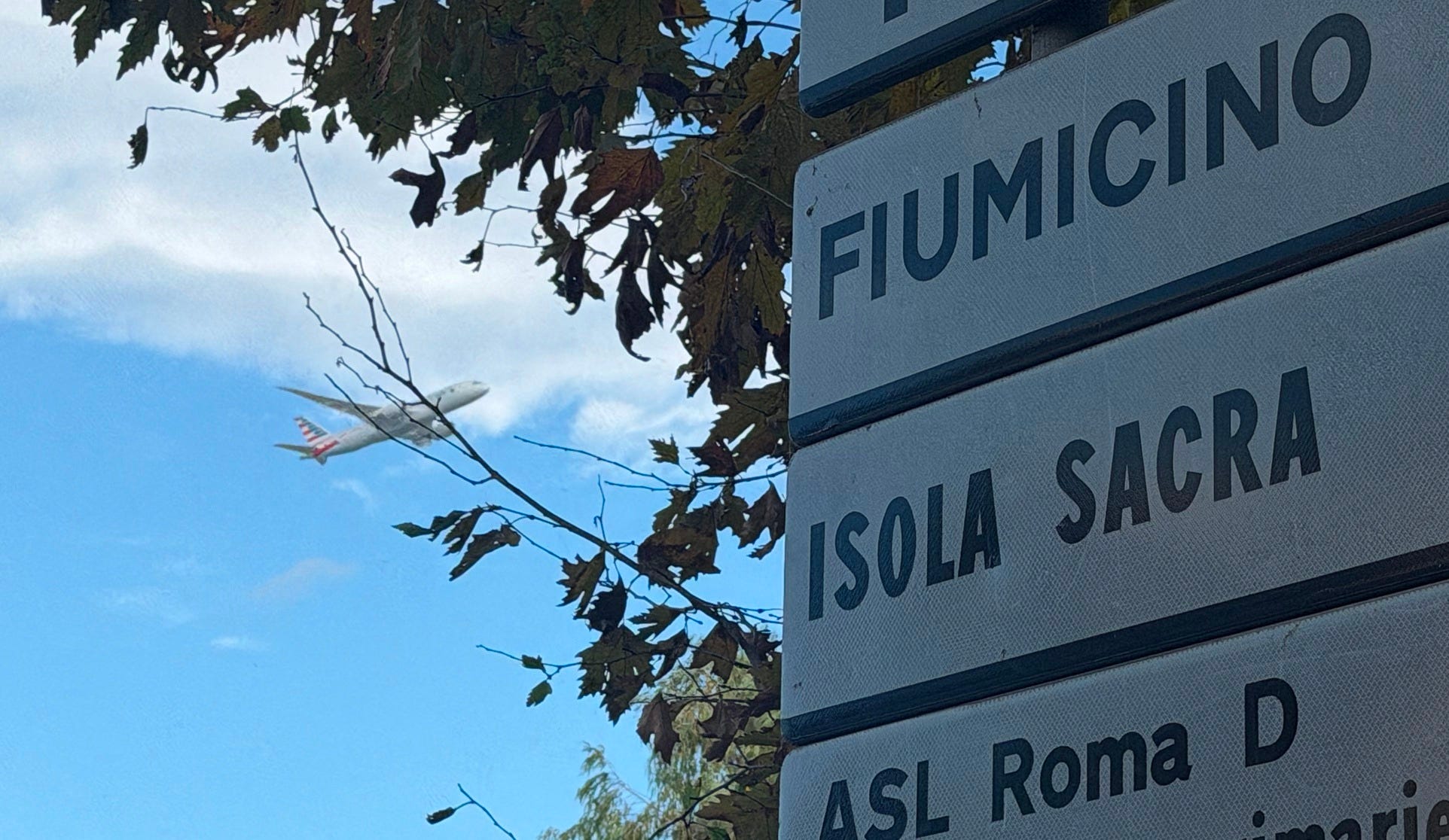
Here in Rome, I have yet to meet anyone who can explain why so many bars and restaurants have no seat on the toilet. Theories range from theft to hygiene to a national talent for hovering. Help may be at hand. Next week the World Toilet Organization (the other WTO, and arguably the one that gets things moving) convenes its World Toilet Summit near Bangkok. It promises 500 delegates from more than 30 nations, “curated stakeholder matchmaking” and an opening ceremony to which the media are cordially invited. It wraps up on 19 November, which the UN marks as World Toilet Day. Fittingly for this edition, the organisation was founded in Singapore, by a businessman known as Mr Toilet. The cause is no joke: billions of people still lack a safe one. But if any delegate can solve the Roman mystery, my inbox is open.
It will surprise nobody here in Italy: Italians are Europe’s best-dressed tourists, according to a “new” study from the fashion label Kaiia. They have never appeared on a worst-dressed list. The French came second and the Spanish third. Before anyone reaches for a linen jacket, a caveat: the report is a mash-up of 11 old surveys, the most recent from 2016, which makes it about as fresh as a shirt from the bottom of the suitcase. And the Swedes, in fifth, earned their best marks in the one poll where Swedes did the voting. No word on where a suit with sneakers would have placed.
The journals…