World Briefing Hot Take:
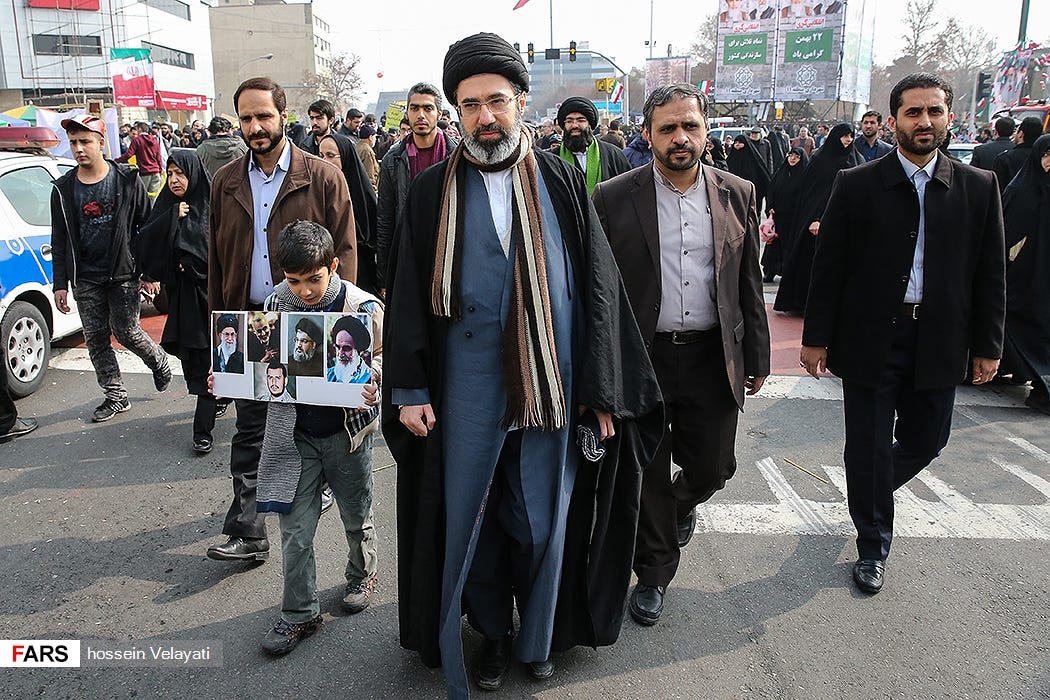
The killing of Ayatollah Ali Khamenei and the swift elevation of his son Mojtaba signal that Iran’s hardline establishment is closing ranks rather than softening in the face of war. But the conflict is no longer confined to Iran and Israel. Russian intelligence support, Ukrainian drone warfare expertise flowing to Gulf states, Israeli strikes expanding into Lebanon and the specter of U.S. special forces operations inside Iran all point to a rapidly widening theatre. Markets are already reacting - oil surging past $110 and equities sliding - underscoring a stark reality: this is no longer just a regional crisis but a geopolitical shockwave stretching from Tehran to global energy markets. And with no clear off-ramp in sight, the risk is that this war may only just be entering its most dangerous phase….
News Briefs:
The son of Iran’s former supreme leader has been named as his replacement, according to state media. Ayatollah Ali Khamenei was killed in the initial US-Israeli strikes on Iran on Saturday. His son, Mojtaba Khamenei, is a 56-year-old cleric who has never held government office. He survived the military strikes on Iran. Iran’s supreme leader has the final say in all matters of state. The assembly’s 88 members have been deciding who assumes the role after Khamenei’s killing. Under Iran’s system of vilayat-e faqih - guardianship of the Islamic jurist - the supreme leader must be a senior leader with political and religious authority. A three-person leadership council was formed to govern the country on a temporary basis during the immediate aftermath of the supreme leader’s death. Khamenei was never publicly recorded as naming a successor - Sky News
U.S. Defense Secretary Pete Hegseth said Friday that the United States is “not concerned” about reports that Russia is providing intelligence to Iran for targeting American military forces in the Middle East. Hegseth, who neither confirmed nor denied the reports, said in a CBS “60 Minutes” interview that the Pentagon was “tracking everything…Our commanders are aware of everything,” he said. “We have the best intelligence in the world. We’re aware of who’s talking to who…We’re not concerned about that,” Hegseth said, referring to Russia’s reported information sharing with Iran. “We mitigate it as we need to.” Earlier, sources told the Washington Post that Russia was providing targeting information to the Iranian military, including the locations of U.S. warships and aircraft. One official, who spoke on condition of anonymity, described it as a “pretty comprehensive effort,” though the full extent of Russia’s assistance remained unclear, the newspaper noted. The White House, like Hegseth, also downplayed the Washington Post report. “It clearly is not making a difference with respect to the military operations in Iran because we are completely decimating them,” White House Press Secretary Karoline Leavitt told reporters. “We are achieving the military objectives of this operation, and that is going to continue,” Leavitt said. Russia is one of Iran’s closest partners. It has condemned U.S.-Israeli attacks on the Islamic republic as an “unprovoked act of armed aggression.” In 2025, the two countries signed a strategic partnership agreement that includes provisions for countering shared threats. However, the pact stops short of mutual defense obligations, unlike the security agreement Russia has signed with North Korea.
Ukrainian President Volodymyr Zelensky stated on March 8 that an unspecified number of Ukrainian experts and military personnel will depart from Ukraine on March 9 to teach unspecified Gulf states Ukraine’s knowledge on how to destroy drones. Zelensky stated that Ukraine will provide the United States and countries in the Middle East with Ukraine’s expertise and military experience in combating Shahed drones, cruise missiles, and other aerial threats and noted that three unspecified Gulf states seek to buy Ukrainian Shahed interceptors. Zelensky has also spoken with several leaders from Middle Eastern states in recent days, including Bahraini King Hamad bin Isa al Khalifa and Saudi Crown Prince Mohammad bin Salman al Saud, to discuss insights into countering Iranian threats. Iran has fired thousands of drones targeting Gulf states since February 28, inflicting significant damage on US and Gulf military infrastructure and civilian areas and disrupting regional oil, gas, and international shipping industries. Ukraine can offer the United States and US allies in the Middle East unique insights into how to combat Iranian strikes because the Ukrainian military has institutionalized and operationalized the fighting experience that Ukraine has learned throughout the past four years of war. Several Ukrainian companies have the ability to export battle-tested interceptor drones to the United States and US allies. Reuters reported on March 7 that Ukrainian manufacturers of low-cost interceptor drones stated that they have the capacity to export large volumes of drones. SkyFall, a major Ukrainian drone and drone interceptor manufacturer, estimated on March 7 that it could produce up to 50,000 interceptor drones per month and could export 5,000 to 10,000 drones while still fulfilling Ukraine’s needs. Ukrainian drone manufacturer TAF Industries Head Oleksandr Yakovenko stated on March 8 that the UAE, Qatar, and Kuwait have already requested or expressed interest in importing Ukrainian interceptor drones. Yakovenko noted that it has taken several months to train drone interceptor operators and that training interceptor operators is the main limiting factor for countries looking to use Ukrainian technology. Ukraine’s institutional knowledge has enabled Ukrainian firms to rapidly develop and refine capabilities specifically tailored to counter Iranian-origin weapons, and continued investment into Ukraine’s defense industrial base is important for not just Ukrainian security but also for the United States and its allies - ISW
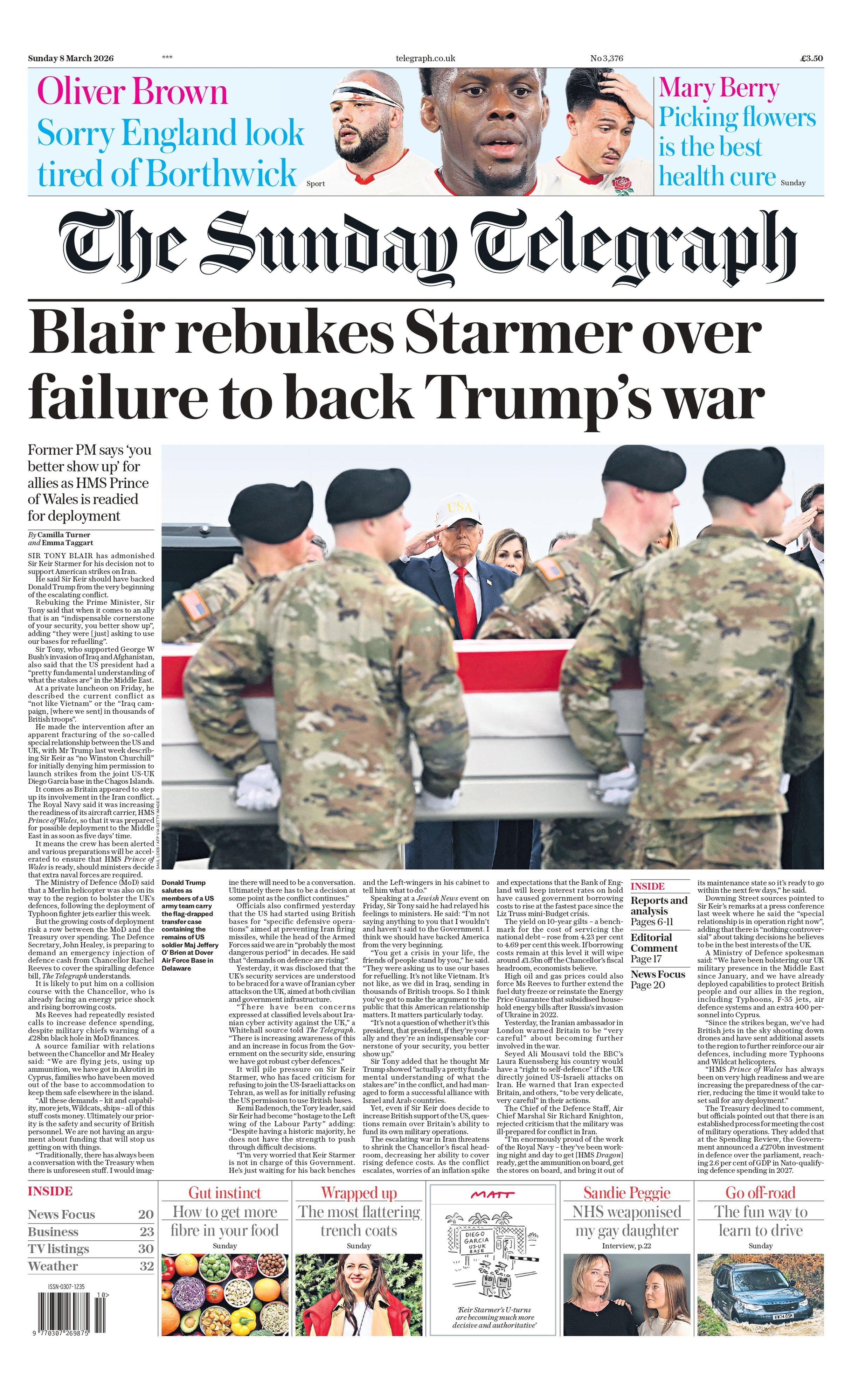
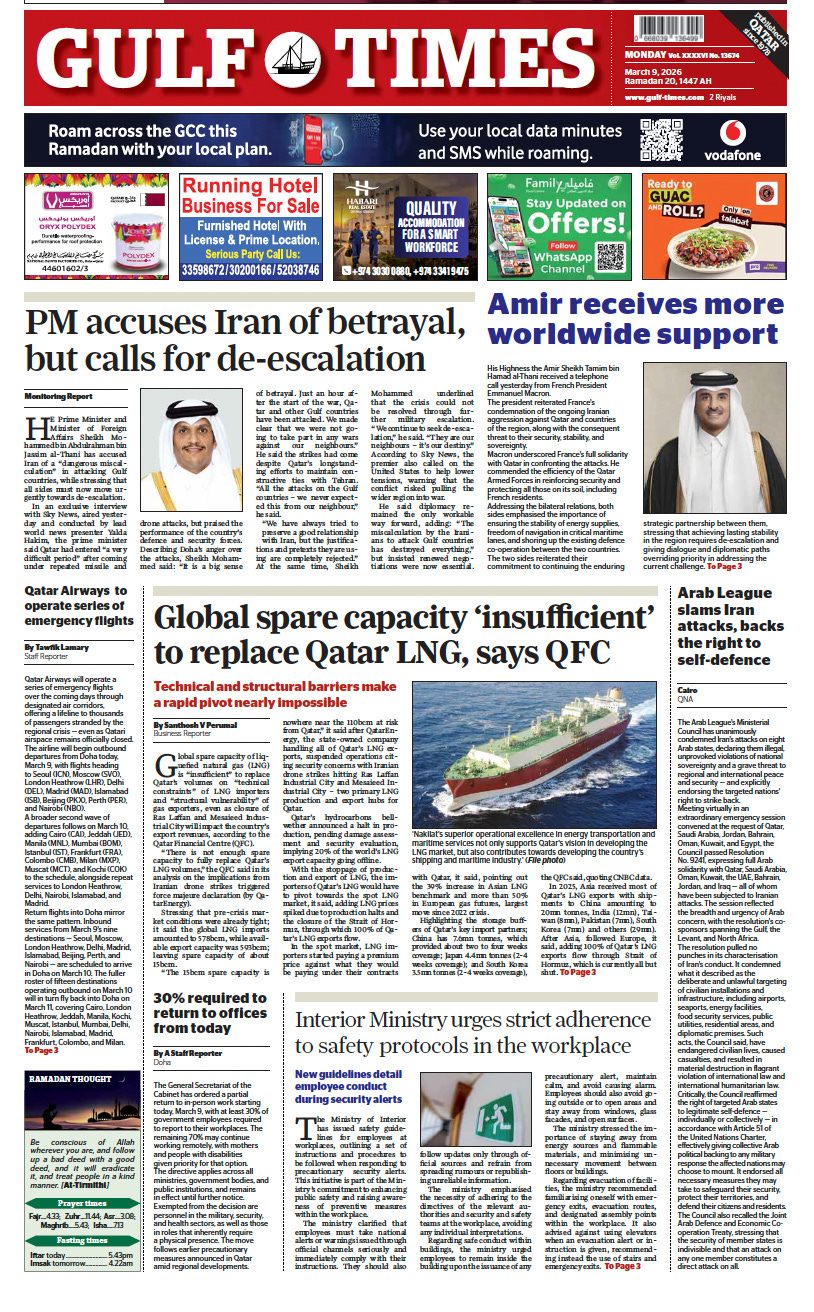
Global oil prices have jumped above $110 (£82.74) a barrel and stock markets have slumped as the escalating US-Israeli war with Iran has fuelled fears of prolonged disruption to shipments through the Strait of Hormuz. Iran on Sunday named Mojtaba Khamenei to succeed his father Ali Khamenei as Supreme Leader, signalling that a week into the conflict hardliners remain in charge of the country. The US and Israel launched fresh waves of airstrikes across Iran over the weekend, hitting multiple targets including oil depots. Major disruption to energy supplies from the region threatens to push up prices for consumers and businesses around the world. On Monday morning in Asia, Brent crude was almost 24% higher at $114.74, while Nymex light sweet was up by more than 26% at $114.78.
Tokyo stocks fell more than 6% on Monday morning as concerns mount over economic fallout of the U.S. and Israel’s war on Iran amid signs of tensions broadening across the Middle East. As of 10:30 a.m. in Japan, the Nikkei Stock Average was down 7% at 51,691.50 - Nikkei Asia
The Iranian attack on a Bahraini desalination plant put a focus on drinking water as a critical resource — and vulnerability — for the Gulf. Hundreds of Middle Eastern plants supply water to millions in the region, sustaining major cities. Even as Iran’s president apologized to Gulf nations, analysts see the strikes as Tehran’s attempt to impose costs on its neighbors and push them to oppose US and Israeli hostilities. Iran is “really going for the jugular,” an Arab Gulf States Institute scholar cited by Semafor said.
Israel renewed its assault on southern Lebanon early Sunday as the war entered its ninth day and Prime Minister Benjamin Netanyahu promised “many surprises” in the next phase of the conflict rippling across the region. The latest strikes in Lebanon killed at least 20 more people, pushing the death toll there above 300 after Israel ordered large swaths of the country to evacuate during an offensive that its military said would be aimed at stamping out Iran-supported forces there. The Israeli military has ordered tens of thousands of people in large swaths of the country, including parts of the Beirut area, to evacuate during an offensive that its military said would be aimed at stamping out Iran-supported forces there. It warned residents of southern Lebanon to move north on Sunday morning. Israel’s renewed offensive began last week after Hezbollah launched rockets toward northern Israel during the opening days of the war. The subsequent strikes have been the most intense since a November 2024 ceasefire - Euronews
As the Trump administration weighs whether to send ground troops into Iran, one option at the president’s disposal — developed by both US Central Command and the US’ Israeli allies — would send Special Operations units into the country to seize and destroy key nuclear sites. The option is one among many that is likely to be considered once the focus shifts to actually destroying Iran’s nuclear capabilities, according to military experts and those familiar with long-developed options on the table. The US Army’s special missions unit known as Delta Force has long readied a “counter-WMD mission, where their job is to go in and get loose — we call it loose nukes operations — where it could be any fissile material or centrifuges or anything else associated with that, to actually go in and get it and remove it,” said Jonathan Hackett, who served as a US Marine Corps interrogator and a special operations capabilities specialist. “They haven’t had to do that very often in the past, if ever, but they practice that. They’re proficient at that. That is one option that exists on the table that’s probably not widely noted in the press, but does exist,” he said - Semafor
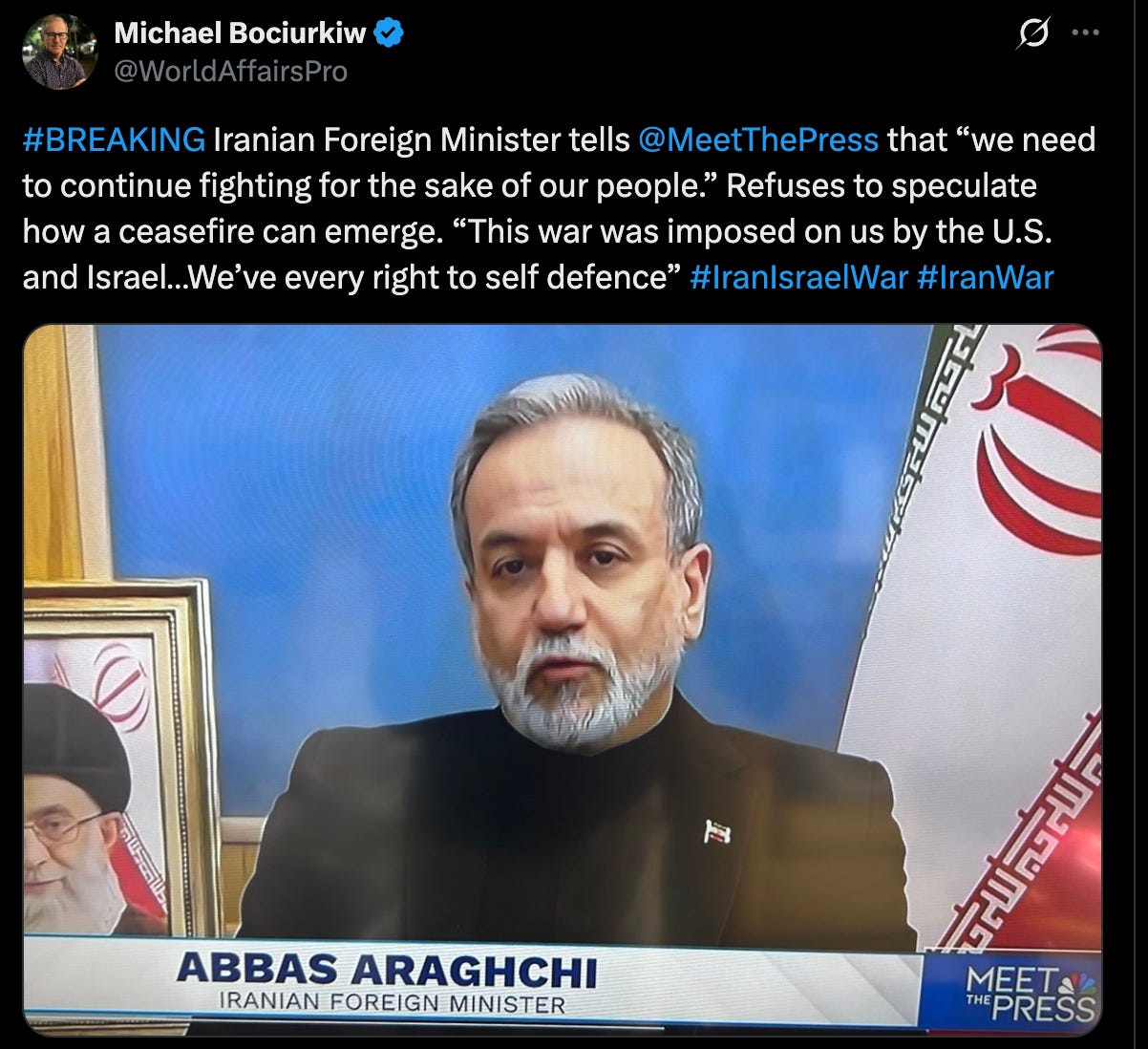
Chinese Foreign Minister Wang Yi on Sunday signaled Beijing’s ambition for a successful summit between President Donald Trump and Chinese leader Xi Jinping later this month — regardless of ongoing U.S. and Israeli attacks on China’s ally Iran. Wang praised “good interactions” between Trump and Xi that he said had created an “important strategic safeguard” for U.S.-China relations. And he teased the possibility of the leaders’ March 31-April 2 summit improving the often fractious ties between Beijing and Washington. “This year is a ‘big year’ for China-U.S. relations,” Wang said at a press conference on the sidelines of the annual meeting of China’s parliament,” per a Chinese Foreign Ministry transcript. China wants 2026 to be “a landmark year of sound, steady and sustainable development of China-U.S. relations,” he added. Wang’s comments suggest Beijing sees the upcoming summit as key to sustaining a U.S.-China trade truce following what Trump called an “amazing meeting” with Xi in South Korea in October. That encounter resulted in a cooling of a trade war between Washington and Beijing that raged through much of 2025. Trump agreed to reduce tariff levels on Chinese imports in exchange for China restarting purchases of U.S. agricultural products like soybeans and the elimination of Beijing’s restrictions on critical minerals exports. Beijing appears to be prioritizing the success of the summit over its concerns about U.S. military operations targeting Chinese allies Venezuela and Iran - Politico
Families of the 239 people who went missing when Malaysia Airlines Flight 370 disappeared 12 years ago are pressing authorities to continue their search for the aircraft after a renewed deep-sea search has so far proved fruitless. Malaysia’s Air Accident Investigation Bureau has said that a search of thousands of square kilometres of the seabed by marine robotics company Ocean Infinity has not produced any confirmed sightings of the wreckage, which disappeared on March 8, 2014, while flying from Kuala Lumpur to Beijing. Voice 370, a group that represents the families of some of those aboard the missing plane, is now urging the Malaysian government to extend Ocean Infinity’s contract and seek out similar arrangements with other deep-sea exploration companies now that Ocean Infinity’s vessel has been redeployed for other work. “The government pays nothing unless the aircraft is found. Any request by Ocean Infinity to extend the search contract should therefore be granted without hesitation,” the group said in a statement released on Sunday, the 12th anniversary of the flight’s disappearance. It added, “We will continue the search for MH730, and we will continue the fight for answers. We will never give up!!” - The Daily Beast
Colombians have headed to the polls to elect a new Congress and choose new presidential candidates on Sunday as the country remains on high alert for political violence, with rural regions dominated by armed groups and with the nation facing ongoing pressure from the administration of United States President Donald Trump. About 41.2 million eligible voters in Colombia will choose from more than 3,000 candidates vying for 102 Senate seats and 182 House seats. Alongside the congressional vote, Colombians will be deciding on presidential candidates for the country’s three key political blocs: the left, centre-left, and the right. The winners of the vote will go on to stand during the presidential election, whose first round is set for May 31. However, leading candidates, including leftist Ivan Cepeda, right-winger Abelarda de la Espriella and centrist Sergio Fajardo, will not be participating during the primary elections - Al Jazeera
From family weddings in India to high-level geopolitics in Brussels and reporting trips to South Africa, Preeti Bali has become something of a modern road warrior. But she admits that not long ago she was an anxious traveller. With experience - and the right support from My Savvy Traveller - those nerves gave way to confidence, proving that savvy travel is often the difference between stress and a seamless journey. Read the full story here
The journals….